Thursday, January 29, 2026
Home Blog Page 257

A Visit to the Great Smoky Mountains

0

Lovina’s Amish Kitchen
Lovina Eitcher,
Old Order Amish
Cook, Wife &
Mother of Eight


We have entered the final month of 2024. We have just enough snow on the ground to be able to say “We have snow!” The roads are probably icy though. With the temperatures staying in the 20s, I think we can say winter weather is here to stay. 

Daughter Susan is bringing her three boys here while she takes Jennifer, 6, to the eye doctor. She didn’t pass the eye exam in school, so Susan wanted to get an exam at an eye doctor. 

I remember when we had six children wearing glasses while going to school. It was a job just making sure they didn’t forget them or lose them. Now only three of our children need them. The others are fine without glasses for now. 

We had a great trip to the Smoky Mountains. Joe and I took the tram up to Ober Mountain one day. While up there we took a ride on the chairlift. It was very nice, but we were cold by the time we were back in our motel in Gatlinburg. But we discovered what “cold” was when we came back to Michigan. Brr!

We also went to Pigeon Forge a few times. There was so much to see, but I think the highlight of our trip was seeing a bear close to our motel when we came back one night. I have seen bears before, but to be only 20 to 30 feet away from one on the loose was exciting.

Ryan and Curtis are watching me write and are asking me questions. Sweet little boys are just being typical five-year-olds. They see that I have some gifts wrapped already and are telling me what they would like. Of course Ryan wants a hat . . . a black hat! Curtis wants a cup and a book and little toy people. The two little boys are walking around wearing Benjamin’s and Kevin’s hats. Ervin Jr. was a year old in November. He is still not walking, but it looks like it won’t be long. He has such a sweet smile. He claps his hands and “falls.” 

I made the boys grilled cheese for their lunch. They wanted cookies too. 

This is now later in the day. Susan is back, and Jennifer is okay for now to go without glasses. I’m sure that made Susan happy to not have an added expense with the factories having a few weeks off over the holidays. 

On Friday, I will go with Kevin to his appointment in Ann Arbor. I really hope the roads will be okay weather-wise for the two-hour drive. 

Friday evening, Joe and I plan to attend the Christmas dinner at his employer’s house. All the Metal & Truss workers will be there. We are always served a delicious meal. We will miss not having brother Albert and Sarah Irene among the guests. They were missed on our trip to the Smokies with the other employees and their families. It will be a hard Christmas on his family without him there. Rest in peace, dear brother. 

Nephew Steven is slowing gaining strength and has an appointment in Ann Arbor on Thursday. Daughter Lovina and Daniel are making a “sunshine box” of items for him to enjoy. 

Joe’s sister Susan had surgery again. I haven’t heard how she is doing since. She needs our prayers. Cancer is such a dreadful disease. God is above all, and may he give her strength to go on. 

Our community is saddened, as a 10-year-old boy will be laid to rest on Friday. He was killed yesterday morning while biking to school with his sister and two neighbors. It wasn’t far from his home. Our sympathy goes to the family. What a terrible tragedy. May God help them through this trial in life. 

On December 9, it will be four years since our son-in-law Mose was in an accident. The driver Dan was killed instantly, and Mose lived for five days although he never was conscious after the accident. He died on December 14. Gone but never forgotten. We have become great friends with Dan’s wife Jodi. She misses him so much! Let us pray for each other. God bless!

Lovina’s Amish Kitchen is written by Lovina Eicher, Old Order Amish writer, cook, wife, and mother of eight. Her three cookbooks, The Cherished Table, The Essential Amish Cookbook, and Amish Family Recipes, are available wherever books are sold. Readers can write to Eicher at Lovina’s Amish Kitchen, PO Box 234, Sturgis, MI 49091 (please include a self-addressed stamped envelope for a reply); or email [email protected] and your message will be passed on to her to read. She does not personally respond to emails.
 

Easy Come, Easy Go

0

Trent Loos
Columnist

As Thanksgiving 2024 is upon us, it is only fitting that I take a moment to remind everyone (including myself) that this nation’s first Thanksgiving was about thanking God for the opportunity to take care of his creation and be able to feed themselves through tough times. I thought today though I would take a look at the last 100 years in food production instead of the first 100.

All of us in farming have, at some point in time, bragged about how little the U.S. consumer pays for food as a percentage of their disposable income. Today, I am asking myself why have we in the business of growing food have decided that was a good idea.

All of sudden the talking heads, particularly through the campaign season, have enjoyed spouting off about “food inflation” and who is responsible. Guess which political party history tells us is not the problem: none of them! But I am here today to address the severity of “the problem.”

It is easy to find this from a government report.

The average price of food in the United States rose by 2.1% in the 12 months ending in October, after posting an annual increase of 2.3% in September, according to the latest inflation data published November 13, 2024, by the U.S. Labor Department’s Bureau of Labor Statistics (BLS). As recently as August 2022, the rate of inflation for food at 11.4% was the highest since May 1979.

But let’s get real for a moment and look at what is really happening. I thought it might be interesting to go back in history to compare two different eras of food costs to the American public.

1934 is regarded as the highest year in terms of percent of disposable income that food cost for U.S. consumers at 25%. So let’s take a glance at what food cost that year:

– Fresh eggs (1 dozen): $0.33 ($6.41 in today’s dollars)
– White bread (1 pound): $0.08 ($1.55 in today’s dollars)
– Sliced bacon (1 pound): $0.29 ($5.63 in today’s dollars)
– Round steak (1 pound): $0.28 ($5.44 in today’s dollars)
– Potatoes (10 pounds): $0.23 ($4.47 in today’s dollars)
– Fresh delivered milk (1/2 gallon): $0.22 ($4.27 in today’s dollars)

Government reports looked like this as the time:

Coming off a stock market crash the previous year, the nation was plagued by economic peril. By March 1930, more than 3.2 million people were unemployed. In an effort to protect American businesses and farmers, President Herbert Hoover signed the Smoot-Hawley Tariff Act, which raised taxes on imports. Foreign governments contested the legislation, leading to a decrease in foreign trade and weakening of the foreign economy. Hurting the American economy even further was a banking panic—a loss of confidence in the security of banks, resulting in people withdrawing their money in large numbers.

For personal interest, I thought I would compare that to the year I was born, 1966:

– Fresh eggs (1 dozen): $0.60 ($4.82 in today’s dollars)
– White bread (1 pound): $0.22 ($1.77 in today’s dollars)
– Sliced bacon (1 pound): $0.95 ($7.63 in today’s dollars)
– Round steak (1 pound): $1.11 ($8.92 in today’s dollars)
– Potatoes (10 pounds): $0.75 ($6.03 in today’s dollars)
– Fresh delivered milk (1/2 gallon): $0.56 ($4.50 in today’s dollars)

If you compare what food cost in 1934, 1966 and today, I am going to tell you that “food inflation” is political rhetoric. The truth of the matter is that “Cheap Food Policy” would have been better named the “Cheat Farmers Profit.” It is being reported right now that by mid-2025, our agricultural trade deficit will be at $45 billion. That is because the global food companies can import food cheaper than we can grow it here. We, the farming public, have been content to sit back and allow others to shape policies that enable this. While farmers are going out of business right and left, the consumer is in the grocery store this week buying turkeys for $.97/lb. and thinking it is wonderful.

The problem we should be focused on and the very reason I started writing this column 23 years ago is that we need a hard reminder that domestic food and fuel are a means of national security. Our security erodes every day that we, as taxpayers, pay another farmer to quit growing food through our government programs. And for the consumers out that care, you should know that this is happening at the most rapid rate in our nation’s history. One final giblet, the debt clock says you owe the federal government $106, 664 at the time of this writing.

The War On Food

0
lee pitts

Caren Cowan, owner and publisher of the New Mexico Stockman, always offers up a lot of food for thought in her monthly column. Speaking of food, Caren’s latest missive makes you wonder if supposedly smart people have any idea where their food comes from. For example, according to Caren, “Big banks are being urged to defund the farming industry to limit meat and dairy consumption.”

Caren also ran a story written by Frank Bergman from slaynews.com

Slay News – Home
Slay News – America’s leading independent media outlet – slaynews.com
slaynews.com
that claimed, “A collective of over 100 climate groups, led by Friends of the Earth, is pressuring JP Morgan Chase, Citigroup and other private banks to stop financing global meat and dairy companies.”

According to Martin Bowman of Feedback Global, “Industrial livestock companies are incompatible with a safe future for our planet, so it’s time for banks and investors to turn off the taps and stop providing financing that is enabling them to grow.” He specifically called on banks to quit lending money to food companies like Tyson, JBS and he called out Bank of America for holding over half of the 134 billion in loans to meat and dairy operators across the country.

It sounds like the green wienies want farmers to plow under all their banking customers in order to control the food that people ingest. While not a fan of the Big Four packers, I think that if the big banks do buckle under from the pressure from the climate fanatics, people will starve to death around the world. Which is probably what the Friends of the Earth want in the first place. They seem to think this world would be a lot better off without any people.

A disturbing report done for Great Britain by Oxford University and the Imperial College of London not only urged everyone to give up meat and dairy products, they also demanded that airports everywhere be closed and the general public banned from using airplanes. Anyone caught doing so would be jailed for violating the Climate Change Act. Of course, the university professors didn’t call for government employees, greenies, rock stars, Climate Czar John Kerry or university professors to quit flying, because their work is so important and their time so valuable.

In order to reach the United Nations and the World Economic Forum’s NET ZERO goals, the university professors also demanded that no new construction should be allowed. The U.N. and the World Economic forum also said that people should stop doing anything that causes emissions. Evidently they haven’t been amongst their fellow man after a bad bean day at the Mexican food restaurant otherwise they’d realize that this would rid the world of people too because we are huge emitters, if you get my drift, and I think you do. All of makes you wonder, ARE THESE PEOPLE NUTS?

Of course they are.

After the greenies finish ridding the world of ranchers they will come after the farmers because of the emissions caused by their tractors. This will mean everyone will start roaming the forests to find roots, shoots and berries to eat and then they’ll be killed by all the wolves, bears and mountain lions the government turned loose. Which begs the question, who will save the wolves, fairy shrimp and pond scum after all the humans starve to death?

Time will tell if the big banks “lose interest” and buckle under from the pressure from the coalition of greenies to stop loaning money to farmers and ranchers. As for myself, I quit the big banks over 40 years ago when I figured out that they were, in the words of President Andrew Jackson, “a den, of vipers and thieves.” Ever since I’ve banked with our small town bank.

Personally, I don’t think the big banks will stop loaning money to meat and dairy producers and I’ll tell you why. For years I spotted bids at the California Bankers auction for my auctioneer friend Jim. The biggest difference I noticed between the big bankers and the ranchers I hang around with is the ranchers have manure on the outside of their boots. The bankers held their convention at one the poshest locales in the state and I noticed when they were served their filet mignons and baked potatoes heaped with real butter and sour cream you’d have thought it was feeding time at the zoo.


KDA Warns Poultry Owners of HPAI Risk

0
Photo credit: Kristine Paulus

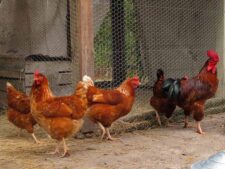
The increase in migratory bird activity brings the risk of a resurgence of highly pathogenic avian influenza (HPAI), which is primarily spread by wild waterfowl. Although Kansas has not confirmed a case of HPAI in a domestic/commercial flock since April 2024, the virus has been detected in wild birds across the state over the first few weeks of November, so the Kansas Department of Agriculture reminds poultry owners that the threat of exposure to susceptible birds in Kansas is high.

Anyone involved with poultry production from the small backyard chicken owner to the large commercial producer should review their biosecurity activities to assure the health of their birds. Find guidance on biosecurity on the KDA Division of Animal Health webpage at agriculture.ks.gov/AvianInfluenza.

Highly pathogenic avian influenza is a highly contagious viral disease that can infect chickens, gamebirds, turkeys, and other birds and can cause severe illness and/or sudden death in infected birds. This outbreak has seen illness and mortality in a wider scope of bird species than past outbreaks, including wild and domestic waterfowl. Attentively monitor your birds for symptoms of HPAI which include: coughing, sneezing, nasal discharge, and other signs of respiratory distress; lack of energy and appetite; decreased water consumption; decreased egg production and/or soft-shelled, misshapen eggs; incoordination; and diarrhea. Avian influenza can also cause sudden death in birds even if they aren’t showing other symptoms.

If these symptoms are observed in your birds, immediately contact your veterinarian. If you don’t have a regular veterinarian, contact KDA’s Division of Animal Health office toll-free at 833-765-2006.

According to the U.S. Centers for Disease Control and Prevention, the recent HPAI detections do not present an immediate public health concern. Birds and eggs from the infected flock will not enter the food system. As a reminder, the proper handling and cooking of all poultry and eggs to an internal temperature of 165 ˚F is recommended as a general food safety precaution.

As part of existing avian influenza response plans, federal and state partners are working jointly on additional surveillance and testing in areas around the affected flocks. The United States has the strongest avian influenza surveillance program in the world, and USDA is working with its partners to actively look for the disease in commercial poultry operations and live bird markets and in migratory wild bird populations.

For more information about HPAI, including current status of the confirmed cases in other states as well as more information about biosecurity for your flock, go to KDA’s avian influenza webpage at agriculture.ks.gov/AvianInfluenza or call KDA at 833-765-2006.

Kansas wildlife officials make changes to trout season

0

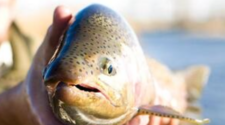
Anglers looking to hook a trout or two will find that some adjustments have been made to the special fishing season in Kansas.

Laura Clawson with the Kansas Department of Wildlife and Parks ( KDWP ) announced in a press release on Nov. 27 that wildlife officials have made changes to the season. Many of these changes were made after angler feedback. The KDWP has adjusted the season with the following:

  • Trout will be stocked around Dec. 1, Jan. 1 and Feb. 1 to align the season with the most popular months anglers go trout fishing. This also aims to reduce the risk to fish health from warmer waters still present in November.
  • Anglers can fish for trout without a permit after March 31. However, the daily creel limit of five trout and a possession limit of 15 will still be in place.
  • The KDWP will focus on fewer, higher-density stockings at each site to give anglers better opportunities to catch fish at popular locations. Cl ick here for a list of trout stocking locations in Kansas.

“The adjustments introduced last year were well-received, allowing us to offer anglers a quality experience while keeping costs manageable,” said Jeff Conley, a KDWP Fisheries program specialist. “All stocked trout will be a catchable size, with a few trophy-sized fish included to make the season more memorable.”

Clawson said the KDWP plans to stock around 62,000 pounds of rainbow trout at more than 30 bodies of water for the 2024-2025 season. Anglers can expect to occasionally catch rarer versions of the trout that are palomino or golden in appearance.

People who want to go fishing for trout in Kansas must have a fishing license and a $14.50 trout permit. Kansans who are 15 years old or younger are not required to have a fishing license but must have a $7 youth trout permit. You can learn more about trout fishing in Kansas by clicking here .