
Impact of Kansas’ horse industry was reviewed at the Kansas Department of Agriculture 2024 Kansas Equine Sector Session.
Justine Staten, executive director of the Kansas Horse Council, and additional leaders of the state’s horse endeavors presented information.
Through consolidation of the Livestock Sanitary Commission and the State Brand Commission in 1969, the Kansas Division of Animal Health (DAH) was created.
Currently, there are three DAH divisions: animal disease control, animal facilities inspection, and brands program.
In conjunction with the Animal Health Board and the Pet Animal Board, all work to ensure the health and welfare of Kansas livestock and domestic animals.
In 2011, the DAH joined with the Kansas Department of Agriculture which relocated to Manhattan in 2014.
High priorities for the equine sector, in a survey last year, included five areas.
Review of 2021 Kansas Equine Economic Survey showed 70,009 Kansas horses valued at $259 million, up from 103,000 Kansas horses valued at $289 million in 1996.
Horses were owned by 8,700 people in Kansas, which is .3 percent of the state population, while 20 percent reported owning additional equine outside of Kansas.
Total equine related assets were $1.4 billion in 2021, compared to $1.6 billion in 1996.
Generated income including 2,595 workers’ wages totaled $107 million while dollars spent annually on equine ownership and activities was $151 million.
There are 2.4 million acres of Kansas land used for horses with about one-half of them in the eastern one-third of the state.
Average parcel is 317 acres with a value of $137,000, while the average equipment asset value is $60,000.
State and local taxes generated by the equine industry in 2021 was $13 million with outputs and sales of $281 million.
Quarter Horses dominate Kansas horse breeds with an average age of 12, while 42 percent are for pleasure or recreation and 58 percent for working.
Kansas had 77,937 registered in the American Quarter Horse Association in 2023, up 1,975 from the previous year with 2,158 new registrations.
To add or improve the equine exposition infrastructure, new facilities are being constructed on the north end of the Kansas State University campus in Manhattan.
Elaborate plans are underway for a new American Royal facility for all livestock species including horses at Kansas City.
The area around the outer horse stall barn will be asphalted before the Kansas State Fair at Hutchinson this year. The 4-H horse show is September 12-13-14.
Various county arenas are getting facility improvements either by local organizations or as county driven projects.
For meeting the consumer demand for entry level equine experiences, action is supported to advocate for such a priority.
A state Extension equine specialist is needed while presently being a “work in progress.”
Horses have always been livestock, although the definition was blurred due to 1990’s marketing campaigns to reclassify these animals as pets.
The 2018 Farm Bill declared “Horses Are Livestock,” and the Kansas Constitution states that “Horses Are Livestock.”
Changing this would have negative effects. There are tax implications, veterinary medication and research, animal keeping requirements, and contradict domestic equine liability law.
A video has been created to educate viewers that horses are classified as livestock and is being shared through social media.
Live horse races are coming in the spring of 2026 to Eureka Downs.
Terms have been signed to direct 3 percent of revenues from 1,000 historical horse racing machines starting in 2025 to support a Kansas horsemen’s fund.
A new racing specific equine economic impact report is needed as efforts are underway to revive both Quarter Horse and Thoroughbred racing, Live racing would benefit both agriculture and commerce in Kansas.
Additional priorities for the Kansas horse industry include restoring federal appropriations for horse exports and processing, an equine check off program, and developing equine handling protocol for emergency response and law enforcement.
Additional information can be found at www.Kansashorsecouncil.com.
+++30+++
Horses Remain Important Part Of Kansas Economy
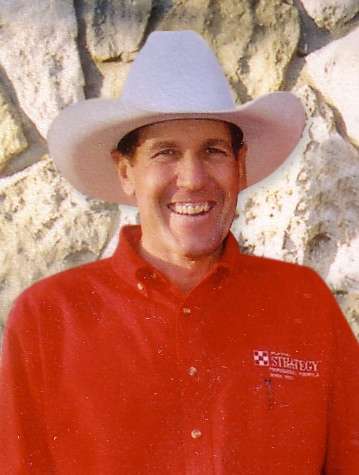
Reflections From Boys State
Attendance at Boys State Of Kansas more than half a century ago was a memorable experience.
For a grocery store carryout boy, wannabe cowboy, it was like nothing before and still seems a rather unusual time.
Exact occurrences back then cannot be recalled, but recent reports of this year’s Boys State were a reminder.
Selection to attend was evidently made by high school faculty from junior class boys. Sponsor was the American Legion which paid fees, but attendees were responsible for transportation there and back.
A good friend classmate rode along when Dad and Mom drove to the University of Kansas KU. It was one of the few times ever recalled when they provided a ride to such an event.
Never having been to the Lawrence campus, that alone created a certain nervous tension for a country boy. Uncertain when changes were made, but Boys State is now at Kansas State University in Manhattan with college credit for attending.
Arrival was Sunday afternoon with the weeklong sessions seeming an awfully long time to be away from home.
Purpose was to learn “government, political, and leadership skills through role play civic exercise.” Uncertain if that objective was met, but it sure seemed like a “military type environment.”
Boys who had attended Boys State previously served as leaders and always demanded attention. They made several-times daily inspections and required addressing them by their full name which was a personal difficulty.
There was a parade every day with participants obligated to march across campus. Personally, taking a camera along to get photographs was heavily reprimanded by one of the “officials.”
Perhaps the best part of Boys State was a dance one evening where girls from somewhere were brought in to serve as partners. They really were not all that happy to be there, but grudgingly would dance one time when asked.
Developing friendships was said to be a benefit of Boys State, but not one longtime acquaintance was made.
A Boys State slideshow program was presented afterward at a civic club meeting. It must have been boring, because a couple club members seemed anxious for it to be over.
Boys State was a once in a lifetime opportunity that seemingly sadly did not have much positive aftereffects.
Reminded of Proverbs 1:6: “There’s something for the experience to learn fresh wisdom.”
+++ALLELUIA+++
XVIII–34–8-19-2024
Awakenings
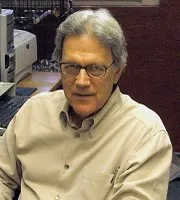
The small college campus comes alive this month, in these parts vibrant and paintable. Bethany College is its own park in Lindsborg with paths along gardens and water features. In North Newton, the great limestone castles of Bethel College. In Salina, Kansas Wesleyan seems a hive of new construction along its venerable landscape. McPherson College bustles beyond its great brick arch.
School is in and colleges are busy, suddenly aroused and taking deep breaths and looking about as though they had just come out of a long nap.
It’s a common scene: Vans and wagons tossed against the curb, doors open, piles of clothing and boxes of whatnot lying about, trains of people bearing armloads in and out of doorways and along the halls like stewards overloaded, preparing to pitch camp after a long day on safari.
Early days are for searching: a place to park, for the lost power cord, the missing back pack, a better chair, a code to log in; or for negotiating ‒ a place to park, a bigger closet, a later class, a reluctant window, an open window, a not-so-reluctant roommate.
On campus the stale air leaves unopened rooms, chatter revives vacant halls and in the dorms the occasional snap of a bed sheet announces another semester bivouac.
Dining halls come to life with the thrum of greeting and gossip, the thumps of bags on table top, the scents of kitchen, the running symphony of chatter, the moan of moving chairs, the scrape and clatter of utensils and trays.
On the practice fields, shouts and whistles, cleats tear into the ground, more shouts, more whistles, more sweat.
In town the coffee houses resupply for the course of hanging out, the return of laptops and their masters, the recipe for chai latte. Food stores restock the ramen.
The small campus is a landscape of ripe anticipation, of finding new exposures and renewing old ones, of adventure and understanding, of days to welcome the departure of summer heat for the chill and wet of autumn, even the icy clamp of winter.
The grounds are astir, people moving along the walks, among the gardens, past the statues and fountains, the beds with grasses moving in the breeze. Here are the luscious filaments of opening week, prelude to autumn, its brisk dawns and freshly laundered air. Summer, its vacant stare of oppression and heat, is doomed to memory.
Youth has returned, carrying promise and energy, and the grit and pluck of inspiration. The students move over the grounds as though skating to music, and the campus seems to cohere – a really thrilling thing to watch, bodies at last freed in their persistent attempt to catch up with the spirit.
A campus brings to a town the revivifying energy of youth, of classes for the enrolled and lessons for us all.
Wheat state or weak state?
Headlines about increases in local property taxes, and college and vo-tech tuition, have become bleak and familiar. They are largely the result of two things: rising costs, and selfishness in Topeka.
Rising costs are bound to catch up with an economy that has bounced along, resisting inflationary pressure for several years, and while oil prices remain relatively low.
The long and not-so-benign neglect in Topeka should be no surprise, either. For years richer and poorer, legislators and governors have embraced control, hacked taxes, and hoarded state revenues. This year we see a bogus billion-dollar “tax relief” plan followed by a $4 billion offer to move a couple of Kansas City sports franchises across the river into Kansas.
Cities, counties and rural schools are left again to spin in futility.
*
The 2016 elections brought some relief, an influx of new and progressive legislators and a resurgence of keen and prudent veterans such as Republican Steve Johnson of Assaria, an astute chairman of the House Tax Committee who’s now the state treasurer.
Johnson and other reformers realized that time and patience were needed to overcome the damage left by the Brownback Administration, its efforts to dismantle much of state government and snap its crucial ties to local government.
Funds dedicated by law to cities and counties were raided or sidelined yearly over two decades. Local governments, having cut budgets and avoided tax increases for several years, were forced to measure tax increases against further cuts in vital services including public safety, and the mutilation of funding for schools.
Colleges, universities and technical schools, facing a double whammy of federal and state neglect, ask students and their families to pay more of the bill. Revenue from student tuition at state universities has grown to surpass the billions in state aid to those six institutions.
For years, legislators turned their backs. State spending is now in the black because a Democratic governor and sensible legislators from both parties quashed a mash of foolish schemes ‒ a flat tax and other breaks for the rich among them ‒ and put local school funding back on course.
*
Nonetheless, local governments continue to shoulder more of the load and, in many cases, are forced to raise taxes to pay for it. For too long Topeka has slapped costly mandates and tax lids on local government while insisting that the burden for schools, cities and counties was a local affair to be solved only with local taxes.
Election years bring timidity in Topeka, an aversion to spending and a fear of taxes. This year brings an opportunity for voters to show their support for local government and for a more equitable share from Topeka. It’s also an opportunity for candidates to show their faith in the citizenry and a commitment to help their communities ascend.
After lo, these years, candidates should realize that the problems of communities and local governments are a statewide problem. Only with
strong cities and counties will we have a strong state. The alternative is more weakness at both ends.
American Horse Council Works For Benefit Of Horse Industry Nationwide
Different than when they were the main form of transportation, horses still have a significant role in our nation.
Julie Broadway, president of the American Horse Council, spoke at the recent Kansas Board of Agriculture Equine Sector Session.
“The American Horse Council is the only national association representing every segment of the horse industry,” Broadway said. “It is the unified voice of the equine industry on federal legislation and regulatory issues in Washington, D.C.”
They serve as “stewards” on the pulse of matters that may affect the equine and equestrian ecosystem.
“Our mission is to protect and strengthen the United States equine industry,” Broadway said.
In total, 39 million, or 31 percent, of households contain horse enthusiasts with an average age of 39. Of that, 1.23 percent (average age 38) own horses while 19.4 percent (average age 25) participate in horse activities but do not own a horse.
About 9.85 percent spectate (average age 27) at horse events but do not own horses or participate in horse events.
There are 6.65 million horses in the United States including 195,000 Amish and institutional horses. This total is down from 7.2 million horses in 2017.
However, those horses were responsible for 2.2 million jobs, up from 1.4 million jobs.
In 2023, horses added $177 billion to the United States economy compared to $122 billion in 2017.
Horses created $122 billion in salary, wages, and benefits in 2023, up from $79 billion six years earlier.
About 62 percent of horse owners own or lease property totaling 12.5 million acres.
Noteworthy, according to Broadway, Kansas has 120,800 horses with 345,000 horse enthusiasts.
For recreational purposes, horses in 2023 had a direct value of $14.5 billion with added value of $36.7 billion all together creating 466,969 jobs.
All types of racing horses have a direct value of $16 billion with $36.4 billion added value creating 491,232 jobs.
Working horses are valued at $2.6 billion with $6.5 million added value opening 86,223 job opportunities.
Of the nation’s horse population, Quarter Horses total 2.06 million while Thoroughbreds number 1.03 million.
Paint Horses number 984,152, Standardbred 501,497, mules and donkeys 307,844, Arabians 213,830, Warm Bloods 190,546, Miniatures 181,695, Tennessee Walking Horses 160,858, ponies 118,202, and Appaloosa 108,231.
Populations for other horse breeds are available: [email protected].
Horses create employment for 155,000 in Texas with an income total of $5.8 million, adding $6.5 million to the economy outputting $10.37 million.
Additional top ten states in horse worker employment and income includes California, Florida, Oklahoma, Kentucky, Ohio, Pennsylvania, New York, Missouri, and Indiana.
More than 2 million people nationwide volunteer for horse activities, including 5,800 for competitions.
Back Country Horsemen’s Association reports 207,000 volunteer hours. PATH International, the Professional Association of Therapeutic Horsemanship International, has 49,705 volunteers.
As of 2022, 73 percent of equine sanctuaries were filled with an average stay of 303 days.
There is a shortage of workers in the horse industry with 800 survey responses indicating the largest need for grooms, barn managers, and trainers.
Working to have horses as a part of the Farm Bill, Broadway listed nine areas in which support has been requested.
They include marketing assistance $200 million, animal vaccine bank $150 million, and animal disease response $70 million.
Among regulatory issues being pursued include rules to eliminate soring, re-entry of horses to competitions, changes in quarantine, miniature horses’ inclusion as service animals, worker safety during heat, fire codes, and water for equine facilities.
Legislative issues of concern to the American Horse Councial include but are not limited to federal tax policies, labor visas, veterans act, biking on trails, program funding, and Save American’s Forgotten Equine (SAFE) Act.
+++30+++
