
Different than when they were the main form of transportation, horses still have a significant role in our nation.
Julie Broadway, president of the American Horse Council, spoke at the recent Kansas Board of Agriculture Equine Sector Session.
“The American Horse Council is the only national association representing every segment of the horse industry,” Broadway said. “It is the unified voice of the equine industry on federal legislation and regulatory issues in Washington, D.C.”
They serve as “stewards” on the pulse of matters that may affect the equine and equestrian ecosystem.
“Our mission is to protect and strengthen the United States equine industry,” Broadway said.
In total, 39 million, or 31 percent, of households contain horse enthusiasts with an average age of 39. Of that, 1.23 percent (average age 38) own horses while 19.4 percent (average age 25) participate in horse activities but do not own a horse.
About 9.85 percent spectate (average age 27) at horse events but do not own horses or participate in horse events.
There are 6.65 million horses in the United States including 195,000 Amish and institutional horses. This total is down from 7.2 million horses in 2017.
However, those horses were responsible for 2.2 million jobs, up from 1.4 million jobs.
In 2023, horses added $177 billion to the United States economy compared to $122 billion in 2017.
Horses created $122 billion in salary, wages, and benefits in 2023, up from $79 billion six years earlier.
About 62 percent of horse owners own or lease property totaling 12.5 million acres.
Noteworthy, according to Broadway, Kansas has 120,800 horses with 345,000 horse enthusiasts.
For recreational purposes, horses in 2023 had a direct value of $14.5 billion with added value of $36.7 billion all together creating 466,969 jobs.
All types of racing horses have a direct value of $16 billion with $36.4 billion added value creating 491,232 jobs.
Working horses are valued at $2.6 billion with $6.5 million added value opening 86,223 job opportunities.
Of the nation’s horse population, Quarter Horses total 2.06 million while Thoroughbreds number 1.03 million.
Paint Horses number 984,152, Standardbred 501,497, mules and donkeys 307,844, Arabians 213,830, Warm Bloods 190,546, Miniatures 181,695, Tennessee Walking Horses 160,858, ponies 118,202, and Appaloosa 108,231.
Populations for other horse breeds are available: [email protected].
Horses create employment for 155,000 in Texas with an income total of $5.8 million, adding $6.5 million to the economy outputting $10.37 million.
Additional top ten states in horse worker employment and income includes California, Florida, Oklahoma, Kentucky, Ohio, Pennsylvania, New York, Missouri, and Indiana.
More than 2 million people nationwide volunteer for horse activities, including 5,800 for competitions.
Back Country Horsemen’s Association reports 207,000 volunteer hours. PATH International, the Professional Association of Therapeutic Horsemanship International, has 49,705 volunteers.
As of 2022, 73 percent of equine sanctuaries were filled with an average stay of 303 days.
There is a shortage of workers in the horse industry with 800 survey responses indicating the largest need for grooms, barn managers, and trainers.
Working to have horses as a part of the Farm Bill, Broadway listed nine areas in which support has been requested.
They include marketing assistance $200 million, animal vaccine bank $150 million, and animal disease response $70 million.
Among regulatory issues being pursued include rules to eliminate soring, re-entry of horses to competitions, changes in quarantine, miniature horses’ inclusion as service animals, worker safety during heat, fire codes, and water for equine facilities.
Legislative issues of concern to the American Horse Councial include but are not limited to federal tax policies, labor visas, veterans act, biking on trails, program funding, and Save American’s Forgotten Equine (SAFE) Act.
+++30+++
American Horse Council Works For Benefit Of Horse Industry Nationwide
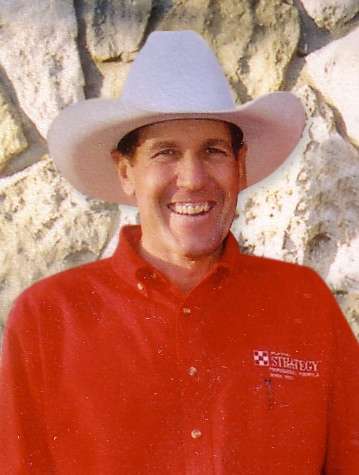
Fly Control Isn’t Simple
“Flies are a disease-carrying menace in homes and all-around barnyards.”
Doesn’t matter whether at the desk, in a soft chair, or ready for supper, a fly always becomes a pest.
It’ll land on the hand or face agitating until the flyswatter comes out and then won’t stay still. Eventually a direct swat will stop that irritation, but soon another fly shows up out of nowhere.
There are different philosophies about controlling the flying bugs but the swatter is really the safest. Various fly traps and tapes are installed in some homes and do help keep numbers down.
Fly spray is an option for control but it can be very hazardous. Often, people don’t consider that anything to kill something must be poison.
If the sprays destroy flies, the chemicals are also dangerous to people and the environment.
Volumes of flies are pestering all livestock around the ranch. It is common to see cattle almost completely covered with the little black pests.
Again, there are different opinions about the best way to control livestock flies. Fly traps do help in the barnyard, and some ranchers put insecticide-filled backrubs where livestock frequent to reduce the problem.
Others apply a pour-on insecticide that is supposed to work for a longer time on pastured livestock.
Certain livestock minerals have insecticide in the ingredients which is claimed to be a continual fly deterrent.
Perhaps not done so much as in earlier years, regular spraying of herds with insecticide reduces fly populations.
Usually not considered by the stockmen worrying about the fly problem is that they are applying poison to their livestock.
It may reduce fly populations somewhat temporarily, but the poison must be dangerous. It is harmful to the handler, all animals, birds, plants, water, and the entire environment.
Anything that’s sole purpose is to kill is unsafe for widespread use.
Flies are especially attracted to certain horses, so most handlers are eager to apply insecticide. This is often done with bare hands taking no precautions for personal dangers.
Leg wraps can be used on horse legs to reduce fly irritation which can lead to bleeding in extreme cases. Face masks reduce fly problems which are frequent issues around the horse’s ears, eyes, and nose.
Reminded of Exodus 8:31: Moses l got rid of the flies so there wasn’t a fly left.”
+++ALLELUIA+++
XVIII–33–8-12-2024
Words Matter
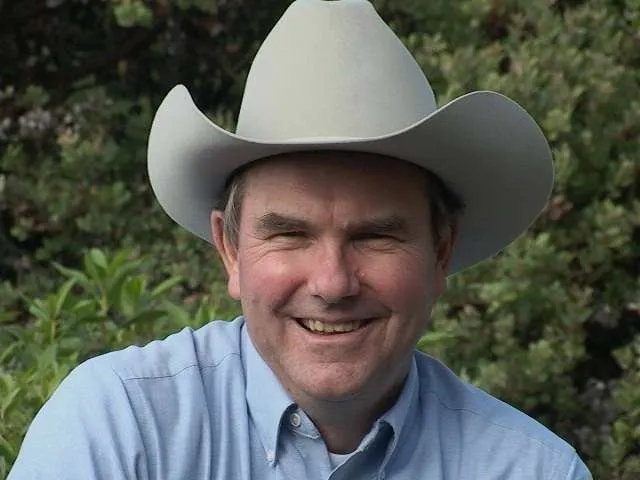
It’s been my general observation that people who have something really good to sell aren’t the best at marketing, and the people who are great at marketing often don’t have anything good to sell. So it is with ranchers. We have a really great product to sell but we aren’t the best at marketing. In fact, we need a complete marketing makeover. We are still living in the Marlboro cowboy age while even America’s saloons are going smokeless. Our heroes are John Wayne, Roy Rogers and Gene Autry but if you mention those names to today’s millennials they’ll say in unison, “Who?”
The secret to marketing these days is to confuse the public by never calling something by what it really is. For example, if a wolf kills one of your calves it’s not cold blooded murder, it is a livestock depredation incident.
See how much nicer that sounds?
Every time I read or hear of an example of this tickle talk I write it down and I’ve acquired quite a collection. Shopping is retail therapy, a toupee is a hair replacement system and state and federal governments are nontraditional organized crime. Due to so many divorces, weddings are now being referred to as temporary commitment ceremonies. If your dog is a crossbred mutt it is now a dog of undetermined origin. People no longer sleep on mattresses but sleep systems. And illegal aliens are now guest workers.
If you’re fat you’re differently sized and if your short you are gravitationally challenged. If you plan your motor trips by stopping at truck stops, now known as travel plazas, you are engaging in timed voiding. A used car is a certified pre-owned vehicle, an undertaker is an after-life director, an elderly person in an assisted care facility is an undead corpse, and a hooker is a low cost provider of relationship management. Even the military gets in on the word game. I’m told that the Navy Seals refer to night as one cycle of darkness. I’m the most politically INCORRECT person in the world but even around our house we refer to the kitchen as the burn unit.
Amidst all this politically correct talk we in the cattle business are still using words like slaughterhouse, manure and fat. I know it would make my grandpa rotate horizontally in his subterranean post-life enclosure to hear me say this, but I think we should be transitioning away from the word “cowboy”. The Marlboro man doesn’t sell cigarettes any more and media personalities with decision making disorders have assigned too much negative feedback to the word cowboy. They consider cowboys barbaric and it’s not because they string barb-wire. That’s probably another word we should reimagine.
I hate to be verbally repetitive but it’s probably time to vocationally relocate, disemploy, deselect and non renew the cowboy. It carries just too much excess baggage. Perhaps something like vehicularly housed, non-physically challenged, producer of non-scented organic beef would confuse our image enough. Or perhaps you prefer an outdoor product specialist or biomass conversion technologist who watches over biomass converters, heretofore known as cows.
Better yet, we need to find a job description that includes the two magic words, so how does sustainable environmentalist sound? Or, sustainable agrarian product environmentalist and maintainer of sustainable open space. Too long? Want something a little more catchy, then how about fabricator of non-carbohydrates, or provider of environmental services?
Henceforth Angus should be known as cattle of color, a cow that was raped by a bull and got pregnant has been infected with progeny and any antibiotics you give to save an animal’s life shall be referred to as UCM’s: universal cattle medicines.
I know I’m just an intellectually unremarkable keyboard jockey with an appearance deficit, cranial deforestation and a recto-cranial insertion but I really do think that ranchers are going to have to undergo a complete marketing makeover. We tend to put forth a face that is overly Caucasian and chronologically challenged while we need to focus on an image that is more feminine and more representative of humankind. To be quite frank, we’re perceived as a bunch of old male carnivorous geezers. To really confuse our customers we should henceforth be known as non-vegan persons of cow. Both the product we produce and the people who produce it aren’t old, just finely aged.
Enjoying Moments with the Grandchildren

Lovina’s Amish Kitchen
Lovina Eitcher,
Old Order Amish
Cook, Wife &
Mother of Eight
It is 5:15 a.m. and the house is very quiet because my husband Joe and sons Benjamin and Joseph have already left for their daily jobs.
Daughter Verena left at around 4 a.m. to go across the road to help daughter Loretta while Dustin is at work. Those two little boys (Denzel, 2, and Byron, 1) are a handful to watch and keep Verena and Loretta busy. Loretta and Dustin are trying out a new bed for them, which is a bigger crib. The boys always slept separately before, so they decided to let them sleep together. The little lads were excited about their new bed and wanted to go to bed extra early. The first night after everyone was settled for bed, Loretta heard these two little boys start tearing up with each other. Dustin was already asleep, so Loretta told them to be quiet and go to sleep. Byron thought it was a game and mouthed something back every time. Byron is a little chatterbox, and the boys think this new bed is for playtime. Gradually (maybe), these two will get adjusted to the new bed and actually sleep a while in it. Haha!
This is only the beginning of the many adventures these two will have, I’m sure. While we were letting Byron walk from one of us to the next to get him to start walking, Denzel stood there and watched. Pretty soon Denzel started walking towards us, wobbly like he was starting to walk too. They sure are little sweeties to have around.
Son Kevin is the only one here at home with me. He is still asleep, so all is quiet. My plan for today is sewing clothes for son Joseph and Grace’s wedding. (Oops… no I didn’t get it all done last week.) I need to wash the dishes before I start, but I thought I’d first write this column then maybe catch a few winks before I start at the sewing machine. I need to have someone look at my sewing machine. It needs a tune up. I think the thing I dislike the most about sewing is making buttonholes. Especially when the machine is giving me problems. I know if I take time, I should find the problem, but I don’t have that time right now when I have a deadline to get the clothes sewn.
Last Friday, I went to town to the bank and to get some groceries. I hadn’t been in quite a few weeks. I came out of the store and saw three little boys with straw hats pretty much all the same size standing there. Their backs were turned towards me, but I knew right away who those three little boys were: Isaiah, Ryan, and Curtis. Then I spotted daughter Susan along with Kaitlyn and Jennifer. Son-in-law Ervin didn’t have to work that day, so they decided to bring the whole family to town to get groceries. I had to take a few minutes to hug them and hold nine-month-old Ervin Jr. When Ervin and Susan go somewhere, they often get asked if they have several sets of twins because of their blended family with all their children who are very close in age. I was leaving just as they were starting to shop, so I went and left treats for the children in their buggy for their 12-mile ride home. Susan said they were so excited, and it kept them occupied on the way home.
Daughter Elizabeth wasn’t in church on Sunday since she was having another of her hard headaches. They really do seem like migraines. Allison, 4, came to church with her daddy Tim. She is a sweet little blue-eyed girl with blond hair and definitely favors her daddy. She came to sit beside me during the services. I asked her quietly why her mom wasn’t there. I asked if T.J. was sick. She misunderstood me and said, “No, T.J. is five,” and put her hand up to show five fingers. Haha! She was excited to tell me they brought their pony Cody and their “new” pony buggy. It isn’t new but new to them; they bought sister Emma’s pony buggy.
August 22 is sister Verena’s 58th birthday. She has many lonely days. She was sick last week but is feeling much better now. We wish her many blessings in the year ahead.
I will share a recipe for Peach Zucchini Jam.
God’s blessings!
Peach Zucchini Jam
2 cups peeled and chopped peaches
2 cups grated zucchini
2 tablespoons lemon juice
4 cups granulated sugar
1 (3-ounce) package fruit pectin
In a large pot, combine the peaches, zucchini, and lemon juice. Cook over medium heat until the mixture starts to simmer. Gradually stir in the sugar, one cup at a time, making sure each addition is dissolved before adding the next.
Bring the mixture to a boil, stirring frequently. Once boiling, add the fruit pectin and stir well to combine. Boil the jam for 1-2 minutes, continuing to stir constantly to prevent burning. Remove the pot from heat and let it sit for a few minutes, skimming off any foam that forms on the surface.
Pour the hot jam into jars, leaving 1/4-inch headspace. Wipe rims of jars with a dampened paper towel. Adjust lids and process in a boiling water canner. For canning time, check with your local extension office or the National Center for Home Food Preservation website.
Lovina’s Amish Kitchen is written by Lovina Eicher, Old Order Amish writer, cook, wife, and mother of eight. Her three cookbooks, The Cherished Table, The Essential Amish Cookbook, and Amish Family Recipes, are available wherever books are sold. Readers can write to Eicher at Lovina’s Amish Kitchen, PO Box 234, Sturgis, MI 49091 (please include a self-addressed stamped envelope for a reply); or email [email protected] and your message will be passed on to her to read. She does not personally respond to emails.
Kansas Turnpike Authority updates

Cashless Tolling News
Milestones continue to be reached as part of KTA’s conversion to cashless tolling. Here’s a few things to know:
DriveKS is Kansas’ new toll payment system. At www.DriveKS.com you can view transactions, pay your toll, order a KTAG and more.
A new DriveKS app, with the same online functionality as the website, is now available in the App Store and Google Play.
Toll statements began being issued August 1 through the DriveKS system. Learn how the DriveKS billing process works and read the news release.
Toll booth removal and lane reconfiguration is underway. Read the toll plaza construction news release to learn which eight toll plazas will be first.
How To Best Use DriveKS
DriveKS incorporates many toll management features customers have been asking for – vehicle info and nicknames, communication preferences, ability to filter transactions and more. However, we know getting used to something new can be hard. We’re here to help!
Check out these ‘how-to’ videos or view the entire DriveKS playlist. The DriveKS FAQs are also a good resource. Remember, to check back for updated information as we fine-tune the new system. Don’t find your answer? Contact our Customer Service Team by email, phone or walk-in.
How to: Understand your DriveKS Statement
How to: Update your License Plate
How to: Add a Rental or Visitor Vehicle to your Account
Annual Customer Survey
Provide your feedback in our annual Customer Satisfaction Survey and you could win one of six $50 Amazon gift cards! Your participation will help us prioritize what is most important to our customers. Prior feedback collected has resulted in electric vehicle charging stations, increased overhead bridge clearance, and KTA’s transition to cashless tolling. Take the survey today.
Construction Report
Construction at toll plazas due to cashless tolling is underway, but we’ve also been busy with other roadway improvements. Learn the latest project status in this month’s construction report.
DriveKS logo
1-800-USE-KTAG
