Tuesday, February 3, 2026
Home Blog Page 332

Reducing water use in landscaping

0

K-State extension agent offers tips for reducing water consumption for outdoor plants

As temperatures rise and the time between rains decreases, many homeowners begin to increase the frequency of watering their outdoor plants, and when a whole community of folks engage in watering it can impact both the amount and quality of water available, said Sedgwick County extension horticulture agent Matthew McKernan.

“July, August and September are the peak months for outdoor water use and in a lot of places, up to 40% or more of the municipal water is used for landscaping and irrigation purposes,” McKernan said.

Keeping that in mind and recognizing that water demands are increasing, McKernan added: “Much of Kansas has experienced drought over the last few years and it can have a big impact on our community lakes, ponds and waterways that cannot be refilled with water in just one or two rainfall events.

“As surface water decreases, people turn to groundwater for lawns and gardens and that can lead to water quality issues because water is being pulled from the ground faster than it can recharge.”

To best manage this limited resource, McKernan offers tips on ways that homeowners can use water efficiently when caring for outdoor plants.

“One simple thing that people can do is grouping more drought-tolerant plants together in the landscape so that the irrigation system can water more efficiently,” McKernan said. “A lot of native plants are naturally going to be more drought tolerant.”

For a list of drought-tolerant plants and trees, McKernan recommended people check out these two handouts, which are available online: Water Wise Plant List for South Central Kansas and Drought Tolerant Trees of South Central Kansas.

He also had advice on watering.

“When we irrigate, we want to water slowly, deeply and infrequently,” McKernan said. “It is best to use irrigation systems that deliver water directly to the soil so that the water doesn’t blow away in the wind or evaporate off the leaves. The best time of day to water is the morning.”

He recommends using a drip irrigation system with pressure-regulated emitters so that every hole in the system is sending out the same amount of water, which is different than soaker hoses that tend to put out more water at the beginning of the line than the end.

“Another irrigation option to consider is a smart irrigation system that adjusts the water that is applied based on the needs of the plant and the conditions outside, rather than a set schedule,” McKernan said.

Regarding the frequency of the watering, he recommends limiting it to one to two times/week to enhance root growth.

“By encouraging periods of mini drought, the plants will grow their roots deeper into the ground allowing them to naturally withstand longer periods of drought,” McKernan said.

The pace of the water absorption will vary depending on the soil type.

“Most of the water waste in irrigation occurs when we are watering too much and the water is running off the surface because the soil can only absorb so much water in a given amount of time,” he said.

To keep this water waste from happening, he recommends watering in zones for shorter periods of time and then rotating back through once the water has been absorbed.

McKernan said these are just a few ways that people can be good stewards of the water resource. “We all have an opportunity to do better with how we manage our water use, especially in times of intense drought. By working cooperatively together to use water wisely, we can make sure that water is available for everyone.”


USDA and the Heartland Regional Food Business Center Make Available Over $3.7 Million to Farm and Food Businesses in First Round of Business Builder Grants

0

The U.S. Department of Agriculture (USDA) and Heartland Regional Food Business Center (RFBC) today announced the availability of over $3.7 million in Business Builder Grants to support small, mid-sized, and diverse food and farm entrepreneurs. These grants will promote business expansion, job creation, business capacity building, and increase local products in the local market. The funding is available for projects in Iowa, Missouri, Kansas, Oklahoma, Nebraska, and northwest Arkansas.

Kansas Rural Center(KRC) is one of 34 Heartland Center partners working to fill gaps in resources available to local food and farm businesses that are ready to start and grow. Kansas Rural Center’s new positions of Food Business Navigator and Food Business Educator have been created in response to the technical needs of farmers in the region. These positions aim to provide professional guidance to beginning farmers and those interested in growing their business.

In May 2023, USDA awarded $360 million to finalists to establish 12 USDA Regional Food Business Centers and a National Intertribal Food Business Center to provide essential local and regional food systems coordination, technical assistance, and capacity building. These Centers assist small and mid-sized producers and food and farm businesses with the goal of creating a more resilient, diverse, and competitive food system. The Heartland Regional Food Business Center, led by the University of Nebraska-Lincoln and rural Missouri community development corporation New Growth, focuses on expanding the local and regional food system in Iowa, Missouri, Kansas, Oklahoma, Nebraska, and northwest Arkansas. It conducts this work as a regional team with 14 Key Partners and 20 Collaborators across the five states.

Local and regional food systems are essential to the overall food supply chain and the new Regional Food Business Centers are the cornerstone of our efforts to support them. The Centers provide technical assistance to create new value chain connections, expanding supply to and demand from new and existing markets, improving viability and increasing market value of products, aiding with business and succession planning, and fostering connections at both state and national levels. Projects funded through the Heartland Center’s Business Builder program will further the Center’s vision of making the region a place where locally produced food will be a major contributor to a resilient and safe food supply through regional networks that make local food an easy, everyday choice, supporting healthy people, community economies, and sustainable ecosystems.

“The Regional Food Business Centers are a cornerstone of USDA’s food system transformation efforts, serving to help farmers, ranchers, and other food businesses access the resources and technical assistance they need to access new markets,” said USDA Under Secretary for Marketing and Regulatory Programs Jenny Lester Moffitt. “The Center’s Business Builder Grant program will empower the region’s small and mid-sized farmers and food businesses to launch and expand their operations by establishing new revenue streams and gaining investors. This program is crucial to achieving the vision the Biden-Harris Administration and USDA has of a food system that fosters opportunities for regional food businesses and rural economies.”

“The Business Builder grant opportunity will inject much needed capital for building and strengthening local food systems in the Heartland,” said Katie Nixon, Heartland Center Co-Director and leader of the Food Systems Program at New Growth. “We are excited and ready to provide technical assistance to applicants on their ideas and applications. We are here to support our food and farm businesses in their efforts to feed their communities.”

“Kansas Rural Center has been working to assist farmers in their endeavors since 1979,” says Tom Buller, Executive Director of KRC. “Our staff is passionate about finding and filling the needs of those contributing to the local food system and we are excited to be working in partnership with Heartland Regional Food Business Center to provide additional support to local farmers.”

The USDA Heartland Regional Food Business Center has received a total of $11.15 million for their Business Builder program. The Center’s Business Builder program will accept proposals semi-annually for competitive subawards of $5,000 to $50,000 each. The Heartland Center will prioritize:

Small farms and small businesses in urban and rural areas that operate along the local and regional food value chain
Food and farm entrepreneurs who are indigenous, immigrant, people of color, veterans, and otherwise disadvantaged, such as those with physical disabilities.
Food and farm entrepreneurs who are eager and ready to build their enterprises, from startup through growth.
Food and farm entrepreneurs who are unsure of eligibility and where to go for assistance and unfamiliar with resources.

The Heartland Center is accepting applications for its first-round funding through October 15, 2024. The Center will host an informational webinar on how to apply for Business Builder grants on Aug. 28, 2024, from 12 to 1 p.m. CT. For additional information, visit the Heartland Center’s website.

Heartland Business Builder Contacts:

Katie Nixon

Co-Director Heartland RFBC

417-282-2936 Ext. 1310

[email protected]

Para Español:

Sergio Sosa

402-212-3049

[email protected]

Kansas Rural Center is led by and for farmers and ranchers who strive to help each other and to support the growth of a sustainable food and farming system here at home, in Kansas. We envision a future of thriving family farms, revitalized communities, a clean environment, healthy local and regional food systems, and viable livelihoods for farmers, including opportunities for the next generation who will grow our food.

KansasRuralCenter.org

This institution is an equal opportunity provider.


Why once-covered fields in southwest Kansas lost their watermelon crops

0

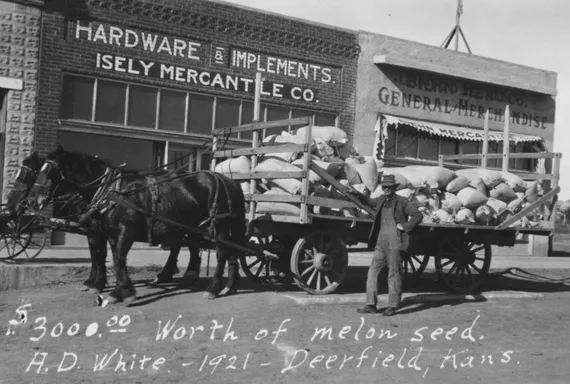
Slices of sweet watermelon are synonymous with summer, but 100 years ago, the fruit was also synonymous with southwest Kansas when the area was the watermelon capital of the country.

Despite being surrounded by agriculture, the only watermelons you will find in Kansas now will probably be growing in a home garden.

Driving to Lakin just west of Garden City, the topography won’t really stand out to visitors. There are thousands of acres growing a few crops, most likely corn, alfalfa or sorghum. You will see the occasional grain elevator and train tracks leading up to them.

But this region, home to a multibillion dollar grain industry, was started by vine-ripened fruits before modern, large-scale grain production changed the game.

The water resources needed to grow these melons started to run out, causing an agricultural shift in the area and foreshadowing the same struggles farmers are facing now. By looking into the agricultural past, Kansas farmers might see how they could reimagine the future of the state’s ag industry.

Fields of watermelons once covered southwest Kansas

Southwest Kansas and its watermelon history has slipped through the cracks and been largely forgotten. Julie Grubbs McCombs from the Kearny County Museum noticed old photos of farmers in the county with fields of watermelons.

“I do public relations for the museum and like to find stories that will get people interested. McCombs said. “I go through the archives on microfilm and these watermelons kept popping up.”

New “To the Stars” Standard License Plate to Begin Appearing on Kansas Vehicles

0

The Kansas Department of Revenue announced today that the new standard license plate design, “To the Stars,” is now available. The new design was overwhelmingly chosen by Kansans in a December 2023 public vote, winning 53% of the total vote. The “To the Stars” design will replace the current “Ad Astra” standard license plate designs.

The design features the Kansas Statehouse Dome within a cutout of the state set against a blue, white, and yellow gradient background. Paying tribute to our state motto, “Ad Astra per Aspera,” the phrase “To the Stars” is inscribed along the bottom of the design.

The new design will be used for all new plate issuances, including replacements for any remaining embossed plates. Kansans, who were issued a plate with the “Ad Astra” design as the replacement for their embossed plate, will not be reissued another plate with the new design. However, any Kansan who has the “Ad Astra” design but wants the “To the Stars” design can visit their local county treasurer’s office to transfer their registration to a plate with the new design.

More information on the ongoing embossed plate replacement project can be found at https://www.ksrevenue.gov/dovnewplate.html

Keeping chickens cool in the summer

0
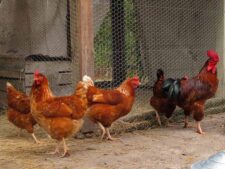
Photo credit: Kristine Paulus

For most of us, summers are getting hotter and drier. Heat stress and dehydration are the number one cause of death for chickens during extreme heat. Before we talk about how to keep your chicken flock cool during summer, let’s quickly discuss why they get hot & overheated. Chickens get hot because they are covered in insulating feathers and they cannot sweat. Down chicken feathers are great at insulating the body and trapping heat because they are soft and fluffy.

Thermoregulation in Chickens

Thermoregulation is how a chicken regulates its core body temperature. There are seven Temperature Zones that chickens can experience. The Ideal or Comfort Zone is when air temperatures are at 70-75F, this is the optimal temperature for chicken health. As air temperatures rise to 76-90F, chickens enter the Warm Zone, they move away from each other, eat less, and drop their wings to their sides. At 91-105F chickens experience Heat Stress and start panting, drinking more, and egg production decreases or ceases. Temperatures above 105F become fatal as the chicken’s core temperature becomes too high. On the other hand, air temperatures of 51-65F start to chill chickens, they will ruffle their feathers and eat more feed to stay warm. Chickens experience Cold Stress when air temperatures are at 26-51F, chickens start to shiver, congregate together for warmth, and egg production will slow and even cease completely. Air temperatures below 25F are a fatal cold zone for chickens and if exposed to these temperatures without water, shelter, or protection from the elements, the chicken’s core temperature drops too low. Temperature Zones vary depending on breed, age, weight, climate, how well the chickens have acclimated to the climate, and health (The Chicken Health Handbook, Gail Damerow, pages 103-107). Browse chicken cage parts for DIY bird cage ideas.

How Chickens Keep Cool

Chickens have an internal body temperature of 105-107F. And when the outside temperature is above 80F, it’s hot for chicks, in general. Chickens keep cool during heat in a few different ways. During the summer the combs and wattles on chickens became larger and redder, not just from being in production. Combs and wattles get larger and redder in the summer because the chickens are pumping blood through them. The blood cools quickly and returns to the rest of the body cooling the chicken. Here you can check out chicken cages to keep them in healthy conditions.

Panting is another way that chickens keep cool. Chickens don’t have sweat glands so they cannot sweat and that is why they pant with their beaks open. Chickens also hold their wings out from their body to dissipate heat. Dust bathing is another way that chickens keep cool during the hot summer. My chickens especially like peat moss to dust bathe in during the summer, and year round. I purchase bales of peat moss and dump them into my run. Chickens will stay in the shade during the hottest parts of the day. Water consumption increases and you’ll notice that you will need to refill your waterer more often.

Best Ways to Keep Poultry Cool in Hot Summers

So how can you help to keep your chickens cool when the temperature is above 80F? The three best things to provide your chickens to keep cool are water, shade, and air flow. I like to freeze water bottles and place them in my waterer. At the end of the day I wipe off the water bottles and refreeze them to use again. I purchase bales of peat moss and dump them into my run for the chickens to scratch and dust bathe in. Potting soil works well too. Sometimes I’ll wet the peat moss down to make it less dusty. Some poultry owners install fans in their poultry areas to provide airflow.

The HatchingTime grow out pens and breeder cage systems are designed with wire style panels that provide air movement between all compartments. Some chickens will stand in shallow water to cool down. Frozen treats encourage chickens to eat and stay hydrated during hot weather. My chickens love frozen watermelon rinds. Rich in antioxidants and electrolytes, watermelon is a great treat in hot weather for humans and poultry alike. Chickens will eat less feed when it’s hot so make sure that their feeders are topped off in the morning when they eat the most. Silo feeders and waterers ensure that your birds will have food and water for days.

Heat Tolerant Chicken Breeds

All chicken breeds can handle the heat, but certain breeds handle heat and high temperatures better than others. Some of the most heat tolerant are Mediterranean chicken breeds like the Leghorn, Ancona, White-Faced Black Spanish, Andalusian, Minorca, Catalana, and Sicilian Buttercups. Other heat tolerant breeds are Turkens or Naked Necks, Lakenvelders, Dominiques, Sumatras, and American Gamefowl are just a few. The most heat tolerant chicken breeds are light weight, have large combs and wattles, clean legs, and less downy fluff. If you live in an area that has cold winters and hot summers you might be wondering what chicken breeds you should raise. Heat tolerant breeds readily adapt to the cold by growing more down feathers to keep them warm. Chickens don’t molt out feathers because of heat, they molt in the fall when the shorter days triggers them to molt.

Pay extra attention to all your chickens during hot weather and keep a close eye on your cold tolerant or heavily feathered birds. Make sure that there is plenty of ventilation and air flow in your nest boxes as hens can quickly overheat as they crowd together to lay their eggs. Make sure your chicken coop is adequately ventilated as well. Enjoy the warm weather and spend some time outside with your chickens.