LEAVENWORTH, Kansas — About 20 people who are without homes gather in a shelter each day in the relatively rural community of Leavenworth off the Missouri river in Northeast Kansas.
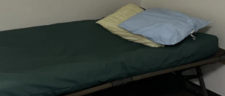
On any given day, that number of people is close to filling up the shelter’s day center space that’s a little larger than a home living room. Then at night, as many as 50 homeless people — including families with young children — will seek out a place to sleep at the night shelter operated by the Leavenworth Interfaith Community of Hope.
Myranda Agnew, the executive director for the shelter, said since the shelter opened about six years ago, more and more people are seeking help.
“There are some days where we are completely full,” Agnew said. “It’s even harder to be in here when we have kids.”
Homelessness in Kansas is growing. Federal data shows the state’s number of people without housing grew by 10% between 2022 and 2023. It’s not only rising in the large urban areas, but in smaller, tucked away towns like Leavenworth — a community of a little more than 35,000 people.
Critics argue the state isn’t doing enough to help and is leaving local communities and advocacy groups without enough resources to tackle the problem. There’s also a divide among rural and urban lawmakers. Some rural Legislators aren’t interested in spending state dollars on an issue they see only pertaining to urban areas like Wichita and Topeka.
Surveys show that at any one time, more than 2,000 people are homeless around the state. But that does not count people who may be sleeping on a friend’s couch or otherwise don’t have stable housing.
A bill in the Kansas Legislature aimed to help communities like Leavenworth by providing $40 million worth of grants to build new infrastructure, like shelters and day centers. But it also came with some caveats, like barring homeless encampments on public land.
That idea didn’t sit well with groups that serve people without homes. Some groups serving homeless individuals are growing frustrated with the state’s lack of action. Christy McMurphy, with the Kansas Statewide Homeless Coalition, said there is a need for the state to help.
“There are gaps that the state could help us fill,” McMurphy said.
Urban vs Rural
Republican Representative Leah Howell pitched the $40 million funding plan. She said she has a sibling who has faced homelessness in the past.
The Wichita-area lawmaker said the state helping build shelters would be a good place to start its involvement in addressing the growing problem, because only cities and counties are currently funding these projects.
“That was an area that was really more of a statewide need,” Howell said.
The bill would have provided grant funding for cities and counties to apply for and use toward building and expanding homeless shelters. But the bill never made it out of the House committee. A similar bill in the Senate didn’t make it much further.
Howell said part of the reason the bill stalled is because some rural lawmakers think homelessness only affects urban areas.
Republican Representative Duane Droge of Eureka, a rural town of just 3,000 people, said during a hearing on the bill that rural residents don’t want their taxes going to cities that fail to enforce local laws on homeless populations. He said examples include vandalism and jaywalking.
“Why do they have to step in and help,” Droge said, “if the urban area is basically not doing the things that most of Kansas thinks they should do?”
But the Leavenworth shelter shows that smaller towns support people without homes, too. Agnew said there are likely homeless people in many rural communities throughout the state, but residents don’t see them. They may be sleeping in their cars or bouncing around sleeping on the couches of friends and family.
In her community, some locals argue the shelter is taking in outsiders, but Agnew said that’s not true.
“Everybody we serve here has some connection to Leavenworth,” Agnew said. “Many went to school here. These are our local residents.”
‘Criminalizing homelessness’
Howell said she tried to address the concerns of rural lawmakers with a provision requiring cities and counties to enforce local ordinances, like barring people camping on public land, or else they would lose the funding.
She said during a hearing that giving the funding to local governments also makes sure that voters have oversight of how the funds are used and holds local leaders accountable.
Howell also believes barring homeless encampments is the right thing to do.
“I firmly believe that they are not acceptable ways for human beings to live,” Howell said. “I know some people really disagree with me.”
Addressing minor crimes committed by people without housing was also a sticking point for lawmakers when they began working on the issue last year. Republican Rep. Francis Awerkamp, who represents the small town of St. Marys, proposed a bill in 2023 that would punish local governments for allowing camping on public lands by taking away state funds.
Groups from across the state opposed that bill, with some calling it a statewide mandate to criminalize homelessness. That bill also died in committee.
McMurphy said cracking down on minor offenses leads to jails filling up, and does not help address the underlying causes. She said trading that for the state’s funding is not worth it.
“If they’re going to be harmful,” McMurphy said, “we don’t need them to help us.”
Needs beyond space
While space is an important commodity for groups that serve homeless people, it’s not the only area of need. Agnew said her organization would apply for every grant available. But she would want to use those funds for more than just building shelter — particularly funding a larger staff.
Currently, the Leavenworth shelter employs the equivalent of five full time positions. They are responsible for staffing the shelter 24 hours a day.
“We need people,” Agnew said. “We need to have (staff) here to ensure people are being seen.”
Advocates also believe the state needs to do more to prevent residents from ever becoming homeless.
Christina Ashie Guidry, director of policy and planning for the United Community Services of Johnson County, said lawmakers could do that by taking a proactive approach. She suggests the state help fund the development of more affordable housing and more transitional housing for people getting out of homelessness.
The bottom line, she said, is that Kansas needs more homes.
“Homelessness is a problem in Kansas, but it’s very solvable,” Ashie Guidry said. “And we know that underlying all of this is the fact that there isn’t enough housing in Kansas.”
While lawmakers have yet to take significant action, Ashie Guidry said she’s hopeful that better help is coming because each year more lawmakers are interested in finding solutions.
The entire Kansas Legislature is up for election this fall and that will likely lead to some new faces considering the issue in the future.
“I expect that as we continue this work and as our legislators listen to their own experts in the state of Kansas,” Ashie Guidry said,“they will be able to effectively craft legislation that better addresses these issues.”
Kansas News Service ksnewsservice.org.