Friday, February 6, 2026
Home Blog Page 373

Barbecue index’ details inflation’s effects on consumers, producers

0

Enjoy your barbecue with family and friends this July 4; it will probably be the last one you will see under $100 for 10 people for the foreseeable future.

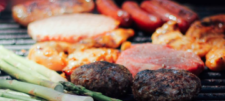
That was the conclusion of a panel of commodity experts from RaboBank, who presented their traditional annual “barbecue index” June 26 as an informal way of assessing prices and consumer behavior. The RaboBank team assumed a guest list of 10 people and analyzed prices for beverages, beef, buns, chicken, cheese, potatoes, lettuce and tomatoes, with avocados included this year. Pickles and corn were not included. The team calculated the total cost at $99.

While overall inflation is back to something like normal, said Tom Bailey, senior analyst of consumer foods, “the devil is in the details” for consumers. While financial markets and the stock market are doing well, ordinary consumers are disconnected from that success and continue to be squeezed by higher food prices. Average wages have risen 29% since 2019, but food prices have risen by 30%. “Food prices are as good as they are going to get for some time,” he concluded. Consumer sentiment is slightly improving in recent months, but consumers “have thrown in the white flag.”

Consumers now have to work nine hours for that 10-person barbecue, an 8.32% increase from 2019. It is five times more expensive to eat out than at home. Demand for food services is down, while value groceries are doing well; Aldi revenues are up 14% in the past year. Food service still makes up 56% of total consumer food spending, with groceries at 44%, but “a shift is coming,” Bailey said.

The total cost of the hypothetical barbecue was up by 2% from last year, and up by 29% from 2019. Beer made up the single biggest portion of the barbecue expense, at 40% of the total cost, with beef making up 14%. Chicken prices actually went down 3% from the same time last year, and lettuce was down 2%. Ground beef was up 4%, and white bread or buns were up by 1.7%.

Beef trends

Senior beef analysis Lance Zimmerman discussed the multi-year cycling behind beef prices. Cow herds have been trending steadily downward since 1994, due to a variety of factors, including input costs of production, geopolitical trends, drought, the COVID lockdowns and supply chain whipsaws and the woes of restaurants. Now the move is to install “slow but consistent incentives to rebuild herds,” Zimmerman said.

In the last 12 months, beef supplies have been relatively steady, with prices kept high by expanding domestic demand. One reason is an increase in carcass weights, by 30%, as producers feed cows longer. Beef exports have also declined, partly due to increased demand and partly to the strong U.S. dollar. Finally, an increase in beef imports from Canada, Australia, Peru and Brazil have contributed to a 3 to 4% increase in per capita beef supply for April.

U.S. consumers are enjoying the highest-quality beef ever, Zimmerman said, with growth in demand for many premium cuts. Although consumers have to work more hours for a pound of beef, prices are nowhere near the pain points of 2014, he said. Beef is still a good value overall, and more of the beef dollar is finding its way to the farmgate.

Beef culling down

In response to a question about the H5N1 virus, the RaboBank team said that while H5N1 is highly pathogenic to bird populations, it is considered lowly pathogenic in cattle and humans alike. Cowherd liquidation in both beef and milk cow populations is actually down throughout 2024. The year-to-date culling rate for the U.S. beef cow herd is at 10.1%, compared to 11.4% last year. The U.S. milk cow culling rate is at 30.2% compared to 34.6% in that same period last year.

Animal protein analyst Christine McCracken added that chicken and pork remain good options for the grill. Beef is three times the price of chicken per pound, and pork is twice the per-pound price of chicken. She said retail chicken promotions were up this year.

Dairy trends

The overall dairy Consumer Price Index is lower than at this time last year, but prices have risen for many dairy products, said dairy analyst Lucas Fuess. Fluid milk prices are lower, but prices for cheese and ice cream are slightly higher than last year.

Weaker cheddar output and exports have elevated cheese prices, and increasing domestic demand for butter—which is used to make ice cream—has driven up ice cream prices. Ice cream is also losing market share to other frozen treats as competition picks up in the frozen treat sector. “Ice cream doesn’t always win” in competition with other frozen treats, he said.

Generational shift in beer?

Beverage analyst Jim Watson noted beer’s weak market position, as he said beer volumes are not responding to the lower prices of the past 18 months.

“The beer industry has structural problems,” he said. Beermakers are still trying to clear a massive inventory overhang from the COVID lockdowns. Persistent price increases going back about 15 years have separated beer trend lines from those of wine and spirits. This has led to a “generational difference” in how beer is viewed by emerging consumers. Brands matter, however; the two most popular imported beers, Modelo and Corona, continue to enjoy solid numbers.

Big 12 Football Preseason Media Poll: Utah, Kansas State picked to finish top of league in 2024

0

Less than one day after the new Big 12 went into effect, the 2024 Big 12 Football Preseason Media Poll was released and to no surprise, it came with a different look at the top.

Fresh off of winning leaving the Pac-12, Utah was tabbed as the preseason favorite to win the Big 12 Conference in its first season by the media. The Utes finished 8-5 last season with notable wins against now-Big 12 foe Baylor, then-No. 22 UCLA and then-No. 18 USC.

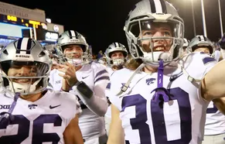
Kansas State (19), Oklahoma State (14), Kansas (5) and Arizona (3) rounded out the top five in the preseason poll, with each receiving first-place votes.

Led by first-year starter sophomore Avery Johnson, the Wildcats were picked to finish second in the Big 12 by the media for the second consecutive season. As Will Howard’s back-up last year, Johnson was a considerable amount of playing time as K-State utilized the then-freshman quarterback’s running ability and game as he finished with 296 rushing yards on 52 carries with seven rushing touchdowns on top of completing 37-of-66 pass attempts for 429 yards and five touchdowns.

Deion Sanders’ Colorado Buffaloes came in No. 10 in the preseason poll. Led under center by Coach Prime’s son, Shedeur Sanders, Colorado lost eight of its final nine games last season after starting the season 3-0 with wins coming against TCU, Nebraska and Colorado State.

Oklahoma State running back Ollie Gordon was named the Big 12 Preseason Offensive Player of the Year. Gordon ran for 1,732 yards on 285 carries last season for the Cowboys while finishing with 21 rushing touchdowns. Colorado’s Travis Hunter was named the Big 12 Preseason Defensive Player of the Year while UCF’ freshman quarterback KJ Jefferson was named the Big 12 Preseason Newcomer of the Year.

Jr. Con Artists (Best Of)

0
lee pitts

Let me ask you a question and I want an honest answer. Don’t hold back. Do I look like an idiot? Do I have the word “sucker” written on my forehead and is it visible to everyone but me? Here’s the reason I ask.

As you may or may not know 4-H and FFA kids will do almost anything to get a buyer at the fair for their project animals. And apparently, some rare juvenile delinquents are not above running a con.

I was walking past the lamb pens at our local county fair during sucker season when I noticed a sad beast with pleading soulful eyes and a watery nose. I am not referring to a lamb but the kid in the straw with it. The nine year old boy, whom I knew, was hugging the lamb as tightly as he could.

“Is that you Billy? That’s a good looking little lamb you have there.”

“Oh, thank you Mr. Pitts. I’ve raised her since her mother abandoned her at birth. I call her Ali Baa Baa and she’s such a nice lamb I sure wouldn’t want to sell her and be responsible for her death. You wouldn’t buy Ali would you? She could run and play with the rest of your sheep and maybe she’d have good babies for you?”

One look at Ali Baa Baa convinced me that she was not breeding ewe material. (Southdown sheep haven’t been in fashion since Truman was President.) But I could not get that sorrowful sight out of my head. Every time I went through the lamb barn at our fair there was Billy clutching his lamb and crying his eyes out.

I’m a real softy so when the day of the Junior Livestock Auction came I was sitting in the front row. Little Billy led Ali Baa Baa into the sale ring and the bidding started at a buck a pound. But evidently I was not the only one who felt sorry for the pitiful kid and his lamb because the bidding quickly rose to five dollars. I didn’t understand why this lamb would be worth so much more than the rest, her Southdown breeding and all, but every time I thought about not bidding another crocodile tear would roll down Billy’s face.

I was eight hundred dollars poorer but the warm feeling in my heart was compensation enough. But that warm feeling quickly defrosted. Ali Baa Baa turned out to be one disgusting creature. She balled all night and was always underfoot, trying to suck your knee cap. And the warm glow I had experienced turned out to be caused by a stab to the heart.

When I attended the buyer appreciation dinner Billy and his father were unaware that I was in a rest room stall when they came in to wash up.

“Boy, we sure nailed Pitts didn’t we?” chuckled Billy’s father.

“Yeah, we pulled his leg of lamb! Ha, ha, ha,” said Billy. “Every time I saw old Pittsy coming by my pen I would jump in with Ali, hug her and look as sad as if you had cut off my allowance. I almost felt sorry for him.”

“I know what you mean,” said Billy’s father. “I could barely keep from laughing myself. And I don’t think he ever caught on that it was me bidding him up. That was real smart Billy, putting that tack in your shoe while you were in the sale ring. Those tears of pain looked like genuine tears of sorrow. I’m real proud of you son.”

The two con artists were laughing at my expense as they left the latrine.

Later that night they put on their sorrowful expressions and came over to personally thank me for buying Ali Baa Baa. “We sure do want to thank you for giving Ali a good home,” said the father. “I don’t know if little Billy could have stood the thought of having poor Ali killed.”

Then Little Billy got a real concerned look on his face that I think was genuine and asked, “By the way, how is Ali?”

I took one look at the two disgusting creatures in front of me and replied… “Deeeelicious!”

Who says revenge doesn’t taste sweet?

Blue-green algae showing up early in Kansas waterways

0

Warm temps, rain have hastened presence in some areas.

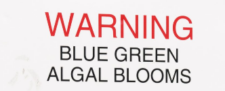
Reports of harmful blue-green algae in Kansas waterways have been coming in unusually early this year, possibly a result of warmer late-spring weather and more rain events, according to a Kansas State University fisheries and aquatics specialist.

Blue-green algae are not algae at all, but rather a type of bacteria called cyanobacteria. The bacteria thrive in warm, nutrient-rich water and — under the right conditions — can form blooms, called harmful algal blooms, or HAB.

Certain varieties of blue-green algae can produce toxins that are linked to illness in humans and animals.

“I have already seen harmful algal blooms in Kansas this year, and the Kansas Department of Health and Environment has several advisories out already,” said Joe Gerken, the fisheries and aquatics specialist with K-State Research and Extension.

Gerken said the HAB season seems to be starting earlier each year. Blooms typically occur when water temperatures are above 75 degrees Fahrenheit, although there are some cool season species.

“It is more common for blooms to occur thoughout the summer months, with a peak in August,” Gerken said.

In water, blue-green algal blooms are often described as looking like spilled green paint, or sometimes like pea soup. Blooms are not always large, and may cover only a small portion of the waterway with little visible algae present. Blooms can produce a swampy odor when the cells break down.

Humans and animals can become sick from harmful algal blooms if they have contact with water, or breathe in airborne droplets. Some of the signs of HAB illness include vomiting, diarrhea, rash, eye irritation, cough, sore throat and headache. Symptoms may begin as quickly as hours after exposure, or up to two days.

In addition, water contaminated with HAB may cause aquatic life to die. Landowners are encouraged to maintain ponds and other waterways. Gerken said the Kansas Department of Wildlife and Parks has a publication that provides guidance on producing fish and wildlife in Kansas ponds.

Those who suspect they – or their pets — may have become ill due to exposure with harmful algal blooms, should seek the advice of a medical professional or veterinarian.

More information on HAB and waterways in Kansas with suspected or confirmed contamination is available online from the Kansas Department of Health and Environment.