• Home
  • News
  • Auctions
  • Blog
    • Alfers, Mike
    • Buchman, Frank
    • Gilliland, Steve
    • Hoeme, Tammie
    • Loos, Trent
    • Lovina’s Amish Kitchen
    • Marshall, John
    • Miller, Amanda
    • Pitts, Lee
    • Pugh, Sandy
    • Ringer, Roger
    • Schrag, Duane
    • Shank, Richard E
    • Uhrig, Debbie Dance
    • Yield, Milo
    • Yoder, Dylan
  • Agriculture
  • Classifieds
    • View All Classifieds
    • Add Classified Ad
    • Manage Account
      • Manage Your Ads
  • Recipes
  • More
    • Events Calendar
    • Health
    • Horticulture
    • Outdoors
    • Obits
    • Rural Living
    • Digital Edition
LogoRural Messenger

LogoRural Messenger

Saturday, February 7, 2026
  • Subscribe
  • Digital Edition
  • Contact Us
  • Service & Rates
  • 620-465-4636

LogoRural Messenger

  • Home
  • News
  • Auctions
  • Blog
    • Alfers, Mike
    • Buchman, Frank
    • Gilliland, Steve
    • Hoeme, Tammie
    • Loos, Trent
    • Lovina’s Amish Kitchen
    • Marshall, John
    • Miller, Amanda
    • Pitts, Lee
    • Pugh, Sandy
    • Ringer, Roger
    • Schrag, Duane
    • Shank, Richard E
    • Uhrig, Debbie Dance
    • Yield, Milo
    • Yoder, Dylan
  • Agriculture
  • Classifieds
    • View All Classifieds
    • Add Classified Ad
    • Manage Account
      • Manage Your Ads
  • Recipes
  • More
    • Events Calendar
    • Health
    • Horticulture
    • Outdoors
    • Obits
    • Rural Living
    • Digital Edition
Home Blog Page 392

KU News: KU establishes $11 million biomedical center to advance women’s health using big data

By
Guest Columnist
-
June 9, 2024
0

From the Office of Public Affairs | http://www.news.ku.edu

Headlines

KU establishes $11 million biomedical center to advance women’s health using big data

LAWRENCE — A new $11.3 million grant from the National Institutes of Health will establish a multidisciplinary biomedical center at the University of Kansas to research big data’s potential to improve women’s health. The award is a component of the NIH Institutional Development Award Program and will be KU’s fifth Center of Biomedical Research Excellence (COBRE) since the program’s inception in the 1990s.

Dyche Hall Grotesque Renewal Project honored with historic preservation award

LAWRENCE – The Dyche Hall Grotesque Renewal Project received the Medallion Award, the highest award bestowed by the Kansas Preservation Alliance, at the 2024 Kansas State Preservation Conference on May 17 in Newton. The project, led by local artists Karl Ramberg and Laura Ramberg and University of Kansas architecture faculty members Keith Van de Riet and Amy Van de Riet, began in 2017 and combined traditional stonecraft with modern 3D imaging to recarve the eight limestone grotesques perched on Dyche Hall, which houses the Biodiversity Institute and Natural History Museum at KU.

Education in an AI World summer conference to be hosted for educators

LAWRENCE — The School of Education & Human Sciences at the University of Kansas will host the 2024 Strategies for Educational Improvement Summer Conference for the region’s PK-12 educators as a hybrid professional development event. This year’s conference, Tomorrow Is Here: Education in an AI World, will take place from 8:30 a.m. to 3 p.m. June 14 in the BEST Building at KU’s Edwards Campus.

Spain still struggles over interpretation of its Golden Age, author writes in new book

LAWRENCE — As headlines about the Catalan independence movement show, the threat of Spain’s dissolution is ever present. And, as such, all sides try to exploit the country’s literary legacy for their own benefit. “If you want to understand the chaos of Spain, pay more attention to how they’re using their classics, because that gives you a sense of the current state of things,” said Robert Bayliss, University of Kansas professor of Spanish and author of “The Currency of Cultural Patrimony: The Spanish Golden Age.”


Full stories below.


————————————————————————


Contact: Brendan Lynch, KU News Service, 785-864-8855, [email protected], @BrendanMLynch

KU establishes $11 million biomedical center to advance women’s health using big data


LAWRENCE — A new $11.3 million grant from the National Institutes of Health will establish a multidisciplinary biomedical center at the University of Kansas to research big data’s potential to improve women’s health.

The award is a component of the NIH Institutional Development Award Program and will be KU’s fifth Center of Biomedical Research Excellence (COBRE) since the program’s inception in the 1990s.

“This is part of NIH’s EPSCoR effort to enhance research in states like Kansas that historically have received a smaller portion of the pie,” said principal investigator Heather Desaire, Dean’s Professor and Keith D. Wilner Chair in Chemistry at KU, who will serve as the center’s director. “We’re going to leverage big data to improve women’s health. All of the research projects within the center will have a component of using large data sets or machine learning, and an application area related to women’s health in some way — especially looking at health disparities that women incur. We’re talking about diseases like ovarian cancer, breast cancer, multiple sclerosis and Alzheimer’s disease, which are more prevalent in women.”

By funding research projects, supporting faculty, improving lab facilities and boosting collaboration across scholarly fields, the center will harness complex datasets to tackle biomedical issues vital to women. The leading collaborators at KU come from a range of laboratory sciences as well as behavioral and social sciences.

Five KU faculty will lead biomedical research projects, each of which could serve as a springboard to further funding opportunities. The research project leaders are Rebecca Whelan, associate professor of chemistry; Meredith Hartley, assistant professor of chemistry; Amber Watts, associate professor of psychology; Jarron Saint Onge, professor of sociology and population health; and Misty Heggeness, associate professor of public affairs & administration and associate research scientist at KU’s Institute for Policy & Social Research.

Additionally, the new grant will support three new tenure-track faculty hires at KU in the departments of Chemistry, Psychology and Sociology, whose research will focus on the intersection of big data and biomedical research benefiting women. A Research-Engaged Faculty Fellows Program also will be established under the grant.

The new center at KU will expand education and training of students in handling complex datasets as well.

“Psychology is leading the charge in developing a data science curriculum at KU,” Desaire said. “They’re very tied into this grant, and that will be an area where there will be synergy in teaching and training students.”

Moreover, the Kansas Board of Regents has awarded the new center matching funds earmarked toward training students in data science, boosting the state’s workforce in the burgeoning field.

The researchers, students and faculty involved will be backed by a new Biomedical Datasets and Services Core Lab at KU supported under the NIH award that will serve other research efforts at KU and even private industry, too.

“This core lab is run by Donna Ginther (Roy A. Roberts and Regents Distinguished Professor of Economics at KU) and will focus on biomedical data sets, which is a new expansion of the scope of her center’s past work,” Desaire said.

The Datasets and Services core will be run under the umbrella of the Institute for Policy & Social Research, a center Ginther heads at KU.

“The five project leaders will be served by the datasets core, as will anybody in the entire KU community who needs statistics support, dataset analysis or help finding a dataset relevant to a project they are pursuing,” Desaire added.

The multimillion-dollar economic boost to Kansas through direct spending and new research positions is just one way the center will benefit the region. Planned research also will draw data from regional communities that often find themselves overlooked in biomedical studies. For instance, according to Desaire, most clinical trials operate out of city hospitals, leaving women living in rural communities under-researched.

“If you live out in western Kansas, the chances of you participating in those types of things are smaller,” said the KU researcher. “Sometimes it’s a matter of having somebody specifically ask the question, ‘How do you know these health factors impact somebody’s overall health in rural settings versus urban settings — where we have most of the data from?’”

Heggeness, one of the project leaders, will focus on telemedicine, another growing means to provide health care to people in less populated areas of the state.

“The telemedicine project is specifically addressing rural health issues that are relevant to Kansas,” Desaire said.

The final objective of the Centers of Biomedical Research Excellence program is to train and retain highly qualified faculty so that even beyond the COBRE funding, new ideas can be launched and developed in states like Kansas.

“My very first grant funding was a research project on Bob Hanzlik’s COBRE grant here at KU in 2002,“ Desaire said. “The program was invaluable in my development as a grant-funded scientist. Now, over 20 years later, it’s exciting to get to pay it forward and help other faculty accelerate their research.”

-30-

————————————————————————

The official university account for X (formerly Twitter) is @UnivOfKansas.

Follow @KUnews for KU News Service stories, discoveries and experts.

————————————————————————


Contact: Natalie Vondrak, Natural History Museum/Biodiversity Research Institute, [email protected]

Dyche Hall Grotesque Renewal Project honored with historic preservation award


LAWRENCE – The Dyche Hall Grotesque Renewal Project received the Medallion Award, the highest award bestowed by the Kansas Preservation Alliance, at the 2024 Kansas State Preservation Conference on May 17 in Newton.

The project, led by local artists Karl Ramberg and Laura Ramberg and University of Kansas architecture faculty members Keith Van de Riet and Amy Van de Riet, began in 2017 and combined traditional stonecraft with modern 3D imaging to recarve the eight limestone grotesques perched on Dyche Hall, which houses the Biodiversity Institute and Natural History Museum at KU.

The original grotesques were created by Joseph Roblado Frazee and his son Vitruvius and kept a watchful eye over Jayhawk Boulevard for over 100 years. In 2017, the limestone creatures were removed due to deterioration and were on view at the KU Natural History Museum, while the new, hand-carved statues were created by the Rambergs.

By November 2020, all eight grotesques were complete, and by 2022, they were placed atop Dyche Hall.

“Having the Medallion Award bestowed to the Grotesque Renewal Project is the perfect ending to an amazing project,” Amy Van de Riet said. “This award is a reflection of the stewardship of the KU Biodiversity Institute, the generosity of donors and the community of Lawrence to have retained such talented stone carvers.”

Other contributors are project manager Lori Schlenker, associate director of collections and facilities at the KU Biodiversity Institute and Natural History Museum; project consultant and architect Julia Manglitz at TreanorHL; and the more than 80 donors who gave to the overall rejuvenation project.

The KU Natural History Museum is part of the KU Biodiversity Institute, a KU designated research center studying the biological diversity of the planet. The museum is open to the public 9 a.m. to 5 p.m. Tuesday-Saturday and noon-4 p.m. Sunday with free admission, though donations are welcome. Learn more at the museum website.

-30-

————————————————————————

Subscribe to KU Today, the campus newsletter,

for additional news about the University of Kansas.


http://www.news.ku.edu

————————————————————————


Contact: Aspen Grender, School of Education & Human Sciences, [email protected], @KUSOEHS

Education in an AI World summer conference to be hosted for educators


LAWRENCE — The School of Education & Human Sciences at the University of Kansas will host the 2024 Strategies for Educational Improvement Summer Conference for the region’s PK-12 educators as a hybrid professional development event.

This year’s conference, Tomorrow Is Here: Education in an AI World, will take place from 8:30 a.m. to 3 p.m. June 14 in the BEST Building at KU’s Edwards Campus. Leaders in education will discuss the rapidly changing educational landscape during TED-style “EduTalks” on the exciting opportunities and complex challenges offered by artificial intelligence.

The event will include “AI Playground” activities in the afternoon, with opportunities for hands-on experience with a variety of AI tools, and ample time for Q&A and networking. An in-person American Sign Language (ASL) interpreter will be provided.

“With the explosion of emerging AI technologies, we are pleased to being together experts to help teachers navigate the best ways to have AI impact their teaching and the work in schools,” said Rick Ginsberg, dean of the School of Education & Human Sciences. “Adding some hands-on sessions to allow teachers to practice varying approaches and techniques is an exciting addition this year.”

Morning sessions include:

“From AI to IA: Co-evolve with Artificial Intelligence,” Yong Zhao, professor, Department of Educational Leadership & Policy Studies, KU
“From Chalkboards to Chatbots – Teaching in an AI World,” Ronnie Williams, coordinator of instructional resources, Greenbush Education Service Center, Girard
“AI: Looking Forward,” James Basham, professor, Department of Special Education, KU
“AI From the Classroom,” Jessica Tickle, teacher, Shawnee Mission School District
“The Intersection of the Human Brain and AI in the Classroom,” Lisa Dieker, professor, Department of Special Education, KU
“AI Guidance for Educators,” Stephen King, education program consultant, Career Standards and Assessment Services, Kansas State Department of Education

AI Playground sessions include:

“Hone Your AI Skills: Using AI for Lesson Planning”
“Exploring AI”: Become an AI prompt engineer. Tips for writing good prompts. Led by Dean Rick Ginsberg.

See the full schedule at the event website.


The event is free and open to the public, but registration is required by 5 p.m. June 10.


-30-

————————————————————————

Don’t miss new episodes of “When Experts Attack!,”

a KU News Service podcast hosted by Kansas Public Radio.


https://kansaspublicradio.org/podcast/when-experts-attack

————————————————————————


Contact: Rick Hellman, KU News Service, 785-864-8852, [email protected], @RickHellman

Spain still struggles over interpretation of its Golden Age, author writes in new book


LAWRENCE – At first blush, Spain seems like a solid nation. But as headlines about the Catalan independence movement and its exiled leader Carles Puigdemont show, the threat of dissolution is ever present. And, as such, all sides try to exploit the country’s literary legacy for their own benefit.


“If you want to understand the chaos of Spain, pay more attention to how they’re using their classics, because that gives you a sense of the current state of things,” said Robert Bayliss, University of Kansas professor of Spanish and author of the new book “The Currency of Cultural Patrimony: The Spanish Golden Age” (Liverpool University Press).

The “currency” of the title refers both to the contemporary nature of the debates over Spanish nationalism and the money that governments and other institutions have spent over the past century promoting canonical works from the period just before and after 1600.

Bayliss looks at the history of three Golden Age texts — Lope de Vega’s 1619 play “Fuenteovejuna,” Miguel de Cervantes’ 1605-1615 novel “Don Quixote” and the legend of “El Cid” — exploring how each has been staged and seen throughout the modern era, and how that history, in turn, has affected the way they are viewed today.

“Don Quixote” is undoubtedly Spain’s urtext, Bayliss said. It’s why Spain sponsors Cervantes Institutes around the world to spread its culture and promote tourism.

The cumulative uses of these texts for centuries, the KU researcher said, continually add new meaning to them.

“It’s like a snowball effect where it rolls down the hill and gets bigger and bigger,” Bayliss said. “Their reappearance in popular culture is especially worth examining during times in Spanish history marked by cultural crisis or calamity.

“When Spain finds itself in crisis, Spaniards are prompted to ask, ‘Who are we? Where do we find inspiration?’ This is when the classics become newly current, as they are engaged to provide answers. So ‘Don Quixote’ was used to stimulate tourism in the 1950s during Francisco Franco’s fascist regime, just as the character was engaged to inspire Spaniards after the Spanish-American War in 1898. So we have all these texts written about how he’s an allegory for the Spanish nation, and he’s fighting the windmills of the Industrial Revolution, or communism, or whatever the case may be at the time.”

The meanings impressed upon Lope de Vega’s play “Fuenteovejuna” and the legend of “El Cid” are somewhat more contested, in Bayliss’ telling.

The KU researcher sketches the historical roots of the knight/prince Rodrigo Díaz de Vivar, (1043-1099) known as El Cid, following as he is transformed from 12th century ballad to Golden Age play to the 1961 Hollywood blockbuster “El Cid” starring Charlton Heston to the 2003 animated film “El Cid: La Leyenda” (The Legend).

This last iteration, Bayliss notes, was not only affected by its proximity to the 9/11 terror attacks, the subsequent U.S. invasion of Iraq, and the Spanish socialist backlash against that, but also the Heston movie.

Thus, he writes, the film “re-codes an already (geo)politically re-coded narrative, through a discursive re-coding of one midcentury Hollywood genre (Hollywood Epic) through the lens of another (Disney).”

He continues: “The upshot of how this film might inform debates on immigration from Northern Africa is clear enough: While good, Spanish Muslims contribute to the nation’s cultural strength and diversity, the bad foreign Muslim power is an Other whose exclusion should motivate policy reforms.”

Bayliss writes that Vega’s “Fuenteovejuna … dramatizes the medieval uprising of a rural village against its tyrannical and sexually predatory Comendador,” or knight/commander. He said it “makes the small town into an allegory for national civil strife.”

The book explores how, during the reign of Franco, his supporters were able to find support for their version of the essentially Spanish national character in “Fuenteovejuna.” Then the author covers the reaction against that interpretation (and that of Golden Age literature as a whole) in the democratic period that followed, starting in the late 1970s.

Bayliss said Lope de Vega remains adaptable to the present moment, as a 2023 staging of his play “La Villana de Getafe” (“The Old Woman Villager of Getafe”) in the town of that name near Madrid proved. City leaders from the culturally conservative Vox Party objected.

“It was some sort of avant-garde interpretation with a lot of surrealist sexual innuendo blown up in everybody’s face, and so they decided that was too scandalous and they canceled it,” Bayliss said. “Others said, ‘How can you censor this most Spanish of playwrights?’ So it was a case in point of how Golden Age texts end up in the middle of all these culture wars.”

Bayliss writes that he expects that to continue: “Amid these cultural-narrative twists and turns, references to the Spanish Golden Age remain a reliable constant.”

-30-


————————————————————————


KU News Service

1450 Jayhawk Blvd.

Lawrence KS 66045

Phone: 785-864-3256

Fax: 785-864-3339

[email protected]

http://www.news.ku.edu


Erinn Barcomb-Peterson, director of news and media relations, [email protected]


Today’s News is a free service from the Office of Public Affairs

KU News: KU establishes $11 million biomedical center to advance women’s health using big data

By
Guest Columnist
-
June 9, 2024
0

From the Office of Public Affairs | http://www.news.ku.edu

Headlines

KU establishes $11 million biomedical center to advance women’s health using big data

LAWRENCE — A new $11.3 million grant from the National Institutes of Health will establish a multidisciplinary biomedical center at the University of Kansas to research big data’s potential to improve women’s health. The award is a component of the NIH Institutional Development Award Program and will be KU’s fifth Center of Biomedical Research Excellence (COBRE) since the program’s inception in the 1990s.

Dyche Hall Grotesque Renewal Project honored with historic preservation award

LAWRENCE – The Dyche Hall Grotesque Renewal Project received the Medallion Award, the highest award bestowed by the Kansas Preservation Alliance, at the 2024 Kansas State Preservation Conference on May 17 in Newton. The project, led by local artists Karl Ramberg and Laura Ramberg and University of Kansas architecture faculty members Keith Van de Riet and Amy Van de Riet, began in 2017 and combined traditional stonecraft with modern 3D imaging to recarve the eight limestone grotesques perched on Dyche Hall, which houses the Biodiversity Institute and Natural History Museum at KU.

Education in an AI World summer conference to be hosted for educators

LAWRENCE — The School of Education & Human Sciences at the University of Kansas will host the 2024 Strategies for Educational Improvement Summer Conference for the region’s PK-12 educators as a hybrid professional development event. This year’s conference, Tomorrow Is Here: Education in an AI World, will take place from 8:30 a.m. to 3 p.m. June 14 in the BEST Building at KU’s Edwards Campus.

Spain still struggles over interpretation of its Golden Age, author writes in new book

LAWRENCE — As headlines about the Catalan independence movement show, the threat of Spain’s dissolution is ever present. And, as such, all sides try to exploit the country’s literary legacy for their own benefit. “If you want to understand the chaos of Spain, pay more attention to how they’re using their classics, because that gives you a sense of the current state of things,” said Robert Bayliss, University of Kansas professor of Spanish and author of “The Currency of Cultural Patrimony: The Spanish Golden Age.” 

Full stories below.

————————————————————————

Contact: Brendan Lynch, KU News Service, 785-864-8855, [email protected], @BrendanMLynch

KU establishes $11 million biomedical center to advance women’s health using big data


LAWRENCE — A new $11.3 million grant from the National Institutes of Health will establish a multidisciplinary biomedical center at the University of Kansas to research big data’s potential to improve women’s health.

The award is a component of the NIH Institutional Development Award Program and will be KU’s fifth Center of Biomedical Research Excellence (COBRE) since the program’s inception in the 1990s.

“This is part of NIH’s EPSCoR effort to enhance research in states like Kansas that historically have received a smaller portion of the pie,” said principal investigator Heather Desaire, Dean’s Professor and Keith D. Wilner Chair in Chemistry at KU, who will serve as the center’s director. “We’re going to leverage big data to improve women’s health. All of the research projects within the center will have a component of using large data sets or machine learning, and an application area related to women’s health in some way — especially looking at health disparities that women incur. We’re talking about diseases like ovarian cancer, breast cancer, multiple sclerosis and Alzheimer’s disease, which are more prevalent in women.”

By funding research projects, supporting faculty, improving lab facilities and boosting collaboration across scholarly fields, the center will harness complex datasets to tackle biomedical issues vital to women. The leading collaborators at KU come from a range of laboratory sciences as well as behavioral and social sciences.

Five KU faculty will lead biomedical research projects, each of which could serve as a springboard to further funding opportunities. The research project leaders are Rebecca Whelan, associate professor of chemistry; Meredith Hartley, assistant professor of chemistry; Amber Watts, associate professor of psychology; Jarron Saint Onge, professor of sociology and population health; and Misty Heggeness, associate professor of public affairs & administration and associate research scientist at KU’s Institute for Policy & Social Research.

Additionally, the new grant will support three new tenure-track faculty hires at KU in the departments of Chemistry, Psychology and Sociology, whose research will focus on the intersection of big data and biomedical research benefiting women. A Research-Engaged Faculty Fellows Program also will be established under the grant.

The new center at KU will expand education and training of students in handling complex datasets as well.

“Psychology is leading the charge in developing a data science curriculum at KU,” Desaire said. “They’re very tied into this grant, and that will be an area where there will be synergy in teaching and training students.”

Moreover, the Kansas Board of Regents has awarded the new center matching funds earmarked toward training students in data science, boosting the state’s workforce in the burgeoning field.

The researchers, students and faculty involved will be backed by a new Biomedical Datasets and Services Core Lab at KU supported under the NIH award that will serve other research efforts at KU and even private industry, too.

“This core lab is run by Donna Ginther (Roy A. Roberts and Regents Distinguished Professor of Economics at KU) and will focus on biomedical data sets, which is a new expansion of the scope of her center’s past work,” Desaire said.

The Datasets and Services core will be run under the umbrella of the Institute for Policy & Social Research, a center Ginther heads at KU.

“The five project leaders will be served by the datasets core, as will anybody in the entire KU community who needs statistics support, dataset analysis or help finding a dataset relevant to a project they are pursuing,” Desaire added.

The multimillion-dollar economic boost to Kansas through direct spending and new research positions is just one way the center will benefit the region. Planned research also will draw data from regional communities that often find themselves overlooked in biomedical studies. For instance, according to Desaire, most clinical trials operate out of city hospitals, leaving women living in rural communities under-researched.

“If you live out in western Kansas, the chances of you participating in those types of things are smaller,” said the KU researcher. “Sometimes it’s a matter of having somebody specifically ask the question, ‘How do you know these health factors impact somebody’s overall health in rural settings versus urban settings — where we have most of the data from?’”

Heggeness, one of the project leaders, will focus on telemedicine, another growing means to provide health care to people in less populated areas of the state.

“The telemedicine project is specifically addressing rural health issues that are relevant to Kansas,” Desaire said.

The final objective of the Centers of Biomedical Research Excellence program is to train and retain highly qualified faculty so that even beyond the COBRE funding, new ideas can be launched and developed in states like Kansas.

“My very first grant funding was a research project on Bob Hanzlik’s COBRE grant here at KU in 2002,“ Desaire said. “The program was invaluable in my development as a grant-funded scientist.  Now, over 20 years later, it’s exciting to get to pay it forward and help other faculty accelerate their research.”

-30-

————————————————————————

The official university account for X (formerly Twitter) is @UnivOfKansas. 

Follow @KUnews for KU News Service stories, discoveries and experts.

http://www.twitter.com/kunews

————————————————————————

Contact: Natalie Vondrak, Natural History Museum/Biodiversity Research Institute, [email protected]

Dyche Hall Grotesque Renewal Project honored with historic preservation award


LAWRENCE – The Dyche Hall Grotesque Renewal Project received the Medallion Award, the highest award bestowed by the Kansas Preservation Alliance, at the 2024 Kansas State Preservation Conference on May 17 in Newton.

The project, led by local artists Karl Ramberg and Laura Ramberg and University of Kansas architecture faculty members Keith Van de Riet and Amy Van de Riet, began in 2017 and combined traditional stonecraft with modern 3D imaging to recarve the eight limestone grotesques perched on Dyche Hall, which houses the Biodiversity Institute and Natural History Museum at KU.

The original grotesques were created by Joseph Roblado Frazee and his son Vitruvius and kept a watchful eye over Jayhawk Boulevard for over 100 years. In 2017, the limestone creatures were removed due to deterioration and were on view at the KU Natural History Museum, while the new, hand-carved statues were created by the Rambergs.

By November 2020, all eight grotesques were complete, and by 2022, they were placed atop Dyche Hall.

“Having the Medallion Award bestowed to the Grotesque Renewal Project is the perfect ending to an amazing project,” Amy Van de Riet said. “This award is a reflection of the stewardship of the KU Biodiversity Institute, the generosity of donors and the community of Lawrence to have retained such talented stone carvers.”

Other contributors are project manager Lori Schlenker, associate director of collections and facilities at the KU Biodiversity Institute and Natural History Museum; project consultant and architect Julia Manglitz at TreanorHL; and the more than 80 donors who gave to the overall rejuvenation project.

The KU Natural History Museum is part of the KU Biodiversity Institute, a KU designated research center studying the biological diversity of the planet. The museum is open to the public 9 a.m. to 5 p.m. Tuesday-Saturday and noon-4 p.m. Sunday with free admission, though donations are welcome. Learn more at the museum website.

-30-

————————————————————————

Subscribe to KU Today, the campus newsletter,

for additional news about the University of Kansas.

http://www.news.ku.edu

————————————————————————

Contact: Aspen Grender, School of Education & Human Sciences, [email protected], @KUSOEHS

Education in an AI World summer conference to be hosted for educators


LAWRENCE — The School of Education & Human Sciences at the University of Kansas will host the 2024 Strategies for Educational Improvement Summer Conference for the region’s PK-12 educators as a hybrid professional development event.

This year’s conference, Tomorrow Is Here: Education in an AI World, will take place from 8:30 a.m. to 3 p.m. June 14 in the BEST Building at KU’s Edwards Campus. Leaders in education will discuss the rapidly changing educational landscape during TED-style “EduTalks” on the exciting opportunities and complex challenges offered by artificial intelligence.

The event will include “AI Playground” activities in the afternoon, with opportunities for hands-on experience with a variety of AI tools, and ample time for Q&A and networking. An in-person American Sign Language (ASL) interpreter will be provided.

“With the explosion of emerging AI technologies, we are pleased to being together experts to help teachers navigate the best ways to have AI impact their teaching and the work in schools,” said Rick Ginsberg, dean of the School of Education & Human Sciences. “Adding some hands-on sessions to allow teachers to practice varying approaches and techniques is an exciting addition this year.”

Morning sessions include:

  • “From AI to IA: Co-evolve with Artificial Intelligence,” Yong Zhao, professor, Department of Educational Leadership & Policy Studies, KU
  • “From Chalkboards to Chatbots – Teaching in an AI World,” Ronnie Williams, coordinator of instructional resources, Greenbush Education Service Center, Girard
  • “AI: Looking Forward,” James Basham, professor, Department of Special Education, KU
  • “AI From the Classroom,” Jessica Tickle, teacher, Shawnee Mission School District
  • “The Intersection of the Human Brain and AI in the Classroom,” Lisa Dieker, professor, Department of Special Education, KU
  • “AI Guidance for Educators,” Stephen King, education program consultant, Career Standards and Assessment Services, Kansas State Department of Education

AI Playground sessions include:

  • “Hone Your AI Skills: Using AI for Lesson Planning”
  • “Exploring AI”: Become an AI prompt engineer. Tips for writing good prompts. Led by Dean Rick Ginsberg.

See the full schedule at the event website.

The event is free and open to the public, but registration is required by 5 p.m. June 10.

-30-

————————————————————————

Don’t miss new episodes of “When Experts Attack!,”

a KU News Service podcast hosted by Kansas Public Radio.

https://kansaspublicradio.org/podcast/when-experts-attack

————————————————————————

Contact: Rick Hellman, KU News Service, 785-864-8852, [email protected], @RickHellman

Spain still struggles over interpretation of its Golden Age, author writes in new book


LAWRENCE – At first blush, Spain seems like a solid nation. But as headlines about the Catalan independence movement and its exiled leader Carles Puigdemont show, the threat of dissolution is ever present. And, as such, all sides try to exploit the country’s literary legacy for their own benefit.

“If you want to understand the chaos of Spain, pay more attention to how they’re using their classics, because that gives you a sense of the current state of things,” said Robert Bayliss, University of Kansas professor of Spanish and author of the new book “The Currency of Cultural Patrimony: The Spanish Golden Age” (Liverpool University Press).

The “currency” of the title refers both to the contemporary nature of the debates over Spanish nationalism and the money that governments and other institutions have spent over the past century promoting canonical works from the period just before and after 1600.

Bayliss looks at the history of three Golden Age texts — Lope de Vega’s 1619 play “Fuenteovejuna,” Miguel de Cervantes’ 1605-1615 novel “Don Quixote” and the legend of “El Cid” — exploring how each has been staged and seen throughout the modern era, and how that history, in turn, has affected the way they are viewed today.

“Don Quixote” is undoubtedly Spain’s urtext, Bayliss said. It’s why Spain sponsors Cervantes Institutes around the world to spread its culture and promote tourism.

The cumulative uses of these texts for centuries, the KU researcher said, continually add new meaning to them. 

“It’s like a snowball effect where it rolls down the hill and gets bigger and bigger,” Bayliss said. “Their reappearance in popular culture is especially worth examining during times in Spanish history marked by cultural crisis or calamity.

“When Spain finds itself in crisis, Spaniards are prompted to ask, ‘Who are we? Where do we find inspiration?’ This is when the classics become newly current, as they are engaged to provide answers. So ‘Don Quixote’ was used to stimulate tourism in the 1950s during Francisco Franco’s fascist regime, just as the character was engaged to inspire Spaniards after the Spanish-American War in 1898. So we have all these texts written about how he’s an allegory for the Spanish nation, and he’s fighting the windmills of the Industrial Revolution, or communism, or whatever the case may be at the time.”

The meanings impressed upon Lope de Vega’s play “Fuenteovejuna” and the legend of “El Cid” are somewhat more contested, in Bayliss’ telling.

The KU researcher sketches the historical roots of the knight/prince Rodrigo Díaz de Vivar, (1043-1099) known as El Cid, following as he is transformed from 12th century ballad to Golden Age play to the 1961 Hollywood blockbuster “El Cid” starring Charlton Heston to the 2003 animated film “El Cid: La Leyenda” (The Legend).

This last iteration, Bayliss notes, was not only affected by its proximity to the 9/11 terror attacks, the subsequent U.S. invasion of Iraq, and the Spanish socialist backlash against that, but also the Heston movie.

Thus, he writes, the film “re-codes an already (geo)politically re-coded narrative, through a discursive re-coding of one midcentury Hollywood genre (Hollywood Epic) through the lens of another (Disney).”

He continues: “The upshot of how this film might inform debates on immigration from Northern Africa is clear enough: While good, Spanish Muslims contribute to the nation’s cultural strength and diversity, the bad foreign Muslim power is an Other whose exclusion should motivate policy reforms.”

Bayliss writes that Vega’s “Fuenteovejuna … dramatizes the medieval uprising of a rural village against its tyrannical and sexually predatory Comendador,” or knight/commander. He said it “makes the small town into an allegory for national civil strife.”

The book explores how, during the reign of Franco, his supporters were able to find support for their version of the essentially Spanish national character in “Fuenteovejuna.” Then the author covers the reaction against that interpretation (and that of Golden Age literature as a whole) in the democratic period that followed, starting in the late 1970s.

Bayliss said Lope de Vega remains adaptable to the present moment, as a 2023 staging of his play “La Villana de Getafe” (“The Old Woman Villager of Getafe”) in the town of that name near Madrid proved. City leaders from the culturally conservative Vox Party objected.

“It was some sort of avant-garde interpretation with a lot of surrealist sexual innuendo blown up in everybody’s face, and so they decided that was too scandalous and they canceled it,” Bayliss said. “Others said, ‘How can you censor this most Spanish of playwrights?’ So it was a case in point of how Golden Age texts end up in the middle of all these culture wars.”

Bayliss writes that he expects that to continue: “Amid these cultural-narrative twists and turns, references to the Spanish Golden Age remain a reliable constant.”

-30-

————————————————————————

KU News Service

1450 Jayhawk Blvd.

Lawrence KS 66045

Phone: 785-864-3256

Fax: 785-864-3339

[email protected]

http://www.news.ku.edu

Erinn Barcomb-Peterson, director of news and media relations, [email protected]

Today’s News is a free service from the Office of Public Affairs

Sunflower Cluster of Dog Shows this weekend

By
Guest Columnist
-
June 7, 2024
0

HUTCHINSON, Kan. — Hundreds of breeds of dogs will compete at the 2024 free Sunflower Cluster of Dog Shows at the Kansas State Fairgrounds June 6-9.

“The Sunflower Cluster of Dog Shows is a cooperative effort among the Hutchinson, Salina and Wichita Kennel Clubs and the Wichita Dog Training Club,” Ruth Lloyd, member of the Hutchinson Kennel Club, said. “We all work together on that, and they have competition. It’s sanctioned by the American Kennel Club and they have competition for conformation which is like what you see on Westminster show, except not quite as fancy. We don’t generally dress in evening wear.”

Other events at the shows include obedience and rally obedience, best in breed, best in show and dock diving. For conformation events, a dog must be a purebred.

“The dog has to be AKC registered and in order to go to all the trouble of that of seeking a championship, the owner has to believe that the dog is a good specimen of its breed standard,”  Lloyd said. “Every recognized breed has a breed standard that tells you what that dog is supposed to be both in terms of appearance and in terms of temperament and so forth.”

There are trophies for various levels throughout the competitions.

“What trophy is available depends on how many are in entered your breed and whether somebody in particular wanted to sponsor that trophy,” Lloyd said.

Seven different types of dog breeds are split into different categories that include, sporting, herding, working, hound, terrier, toy and non-sporting. Lloyd said usually the best in breed category trophy can be a dog related-item or cash for their win.

“Each of those win the best of breed winners and each of those groups compete against each other,”Lloyd said. “The judge will pick first through fourth out of each group and the first place winner in each group gets a trophy and then the big trophy of course is best in show and there are two best in show.”

The seven winners out of each breed group will compete for best in show.

“That’s the big trophy and then there is a reserve best in show. There also is an owner-handle best in show and reserve,” Lloyd said “Owner handle is strictly limited to those dogs who  actually are shown by their owners, no professional handlers in that event.”

Lloyd said children are encouraged to attend the shows but to make sure parents caution their child on approaching other dogs.

“We do ask parents, please don’t let your child run up to a strange dog unless you first check with the dog’s owner and make sure that’s okay,” Lloyd said. “That’s a good practice no matter whether you are at a dog show or at the park, you know.”

A cardiology, radiology and ophthalmology clinic will be on site. Some additional events at the shows include a 4-6 month old puppy beginner competition and a junior handler clinic with the professionals.

Lloyd said the AKC only allows kennel clubs to do two shows per year. The Hutchinson Kennel Club show will be on Thursday, June 6 and Sunday, June 9. The Salina Kennel Club show is on Friday, June 7 and the Wichita Kennel Club show is on Saturday, June 8.

Specific show times, entries, judge information and rules and regulations is available at this link.

Master Gardeners Garden Tour is Saturday June 8th

By
Guest Columnist
-
June 7, 2024
0

The annual Master Gardeners Garden Tour is Saturday in Reno County.

“We’ve got Gardener’s Dream at 3007 Northwestern,” said Kay Deaver with the Master Gardeners. “Then we’ve got Natives Pathway at 3004 Cornell. Highlands Hidden Treasure at 10120 East Snokomo. Quilt and Iron Garden here in town at 119 West 9th. And then the HutchCC Demo Garden behind the Student Union where parking is.”

You can get advanced tickets from any Master Gardener for $10, or pay $12 at any of the gardens on Saturday. The event is from 9 a.m. to 2 p.m.

“We have to put flowers in the garden,” Deaver said. “Those flowers are expensive. They’re getting more expensive every year. We do get some test flowers from Ball, but what we use the funds for is to buy the flowers. Then we also have some major projects. Then, of course, we fund the flowers and the plants in the demonstration gardens, both at the HutchCC campus and at the Reno County Extension Office. Then we have garden programs at the Hutchinson YMCA and the Garden for Good out at the Hutchinson Correctional Facility. Plus, we have a monthly educational booth at the Reno County Farmer’s Market every third Saturday. And then we have Lunch and Learn educational programs. And then we’re available for small groups anytime.”

There are also prizes and vendors at the Demo Garden Saturday.

“We have not only the Garden Tour, but we have a fair, so you can come shop at HutchCC,” Deaver said. “All of those vendors and some of the local nurseries have given prizes. So you’ll be able to sign up, and there’s a contest, and there’s entry forms at the gardens. You can sign up at every single garden. Plus, we’ve brought back from 2019, we’re having the scavenger hunt. So you can pick up a piece of paper, and every garden, there’s things to find. And every garden has little, oh, things like maybe there might be a rabbit, a statue of a rabbit, or a thing, a metal flower, and if you find those things, you write down the, you know, what garden you found it in. When you’re done, you turn it in and put your name and a phone number, and you could win a prize.

Vendors at the Garden Fair on the HutchCC Campus include:

•Bloom Inc
•Hidden River Prairie Nursery
•Hutchinson Horticulture Club
•Hutchinson Iris Club
•Inland Ocean Woodworking
•Owl’s Lavender Patch
•Teardrop Farm Daylily Patch
•Three Doors North

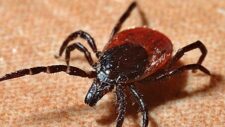
Reno County warns against ticks

By
Guest Columnist
-
June 7, 2024
0

Tick season is here.

Ticks can spread a variety of bacteria, viruses, and parasites. Protect yourself from tick bites by being aware, making sure to wear long pants and sleeves and applying EPA-approved tick repellent when outdoors.

Each year, Reno County has a few cases of tickborne illnesses, such as Lyme disease, Rocky Mountain spotted fever, ehrlichiosis, and tularemia.

Symptoms generally include fever and chills, aches and pains or rashes, and can be fatal if not treated properly.

Also, check your pets for ticks to reduce potential exposures. For more information visit https://www.cdc.gov/ticks/index.html.

1...391392393...4,792Page 392 of 4,792

Latest Stories

  • Red Cross: 20K donations uncollected due to winter storms, give blood now February 6, 2026
  • Connection Over Perfection: A 2026 Goal February 6, 2026
  • 2026 KRC Food and Farm Conference. February 6, 2026

LogoRural Messenger

Kansas News, Auctions & Classifieds

  • Contact Us
  • Services and Rates
  • Submit

Trending

Kansas News

Red Cross: 20K donations uncollected due to winter storms, give blood now

Kansas News

Connection Over Perfection: A 2026 Goal

Agriculture

2026 KRC Food and Farm Conference.

Categories

  • Kansas News3878
  • Blogs3332
  • Agriculture2495
  • Horticulture2039
  • Kansas Community News1898
  • Recipes1428
  • Outdoors1265

© Rural Messenger