

Chigger season tips to beat the itch
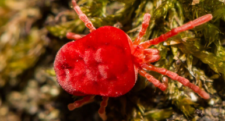
AgriLife Extension entomologist talks all things chiggers, from why they make you itch to ways to avoid them.
If you’ve ever dealt with a bug bite, especially the annoying itchiness of chigger bites, you will want to be ready to avoid them the next time you are outdoors.
Chiggers are the larval stage of a group of mites containing many species found around the world. The six-legged larvae are generalist parasites and feed on lizards, birds and small mammals like mice and rabbits. However, as many of us know, they are not limited to those animals. The other stages of the chigger life cycle – nymphs and adults – are predators of other very small mites and insects.
There are a few things people should know about these tiny biting pests that might help them avoid a big itch, said Bryant McDowell, Texas A&M AgriLife Extension Service integrated pest management program specialist and entomologist in the Department of Entomology in the Texas A&M College of Agriculture and Life Sciences.
McDowell has already received several calls about chiggers from curious Texans. He expects the number of people suffering from chigger bites will increase as spring wraps up and we enter the summer season.
“Last year, it seemed like chigger outbreaks came earlier in the year, but late spring and early fall are really their prime seasons,” he said. “Anytime you mix temperatures above 80 degrees and moisture, that is the recipe for chigger infestations.”
What you need to know about chigger bites
Victims of their bite know the unrelenting itch that follows. But they may not know the details of how these pests spread their misery.
These near-microscopic mites hitch a ride, where they move along their host’s body to a feeding site and attach to the skin. Chiggers tend to settle in areas where clothing fits tightly to the body like socks and waistlines or in moist areas like armpits or behind the knees. They have a knack for concentrating in especially bothersome places.
They do not burrow into the skin, nor do they feed on blood. Instead, they inject saliva into the upper layers of the skin. The saliva contains enzymes that dissolve skin cells enabling the attached chigger to suck up the dissolved cells and lymph.
Over the chigger’s feeding period, the process of salivation and drinking or sucking of the dissolved skin cells is repeated many times creating a tiny tube through the skin layers.
Our bodies react to the enzymes and feeding process with an itching, allergic reaction producing inflammation typically with redness, swelling and sometimes welts.
Treating the itch
The itch and other reactions to the chigger bites typically occur several hours after the chiggers have fed and detached. Thus, we are left with treating the itch, inflammation and potential secondary infections with over-the-counter medications.
The bites are itchy for a few days and can take up to two weeks to disappear, McDowell said.
Chiggers typically exit the host soon after they’ve fed and do not burrow into the skin. Because of this, he said the home remedy of applying nail polish to suffocate them or bleach to kill them will only potentially add to the skin irritation.
“There are a number of ways you can try to relieve the itch, but once you’re bitten there is no stopping the reaction,” he said. “The deal is done. So, the best practice is avoidance and prevention.”
Don’t be a victim: avoid chigger bites
Avoiding habitats with high probabilities of supporting chiggers, using preventive measures with repellents, appropriate clothing and post-exposure cleansing can reduce the impacts of chiggers.
Chigger infestations can be random, “wrong place at the wrong time,” occurrences for hikers, trail walkers or anyone venturing off the beaten path, McDowell said. Often, they prefer undisturbed, unkept areas with taller grasses, vines and other low-growing plants. The vegetation provides cover for host animals of chiggers and protection from sunlight and heat.
McDowell said those overgrown areas, especially when combined with moisture, can create ideal conditions for infestations. So, he cautions about areas with tall grass around ponds, creeks and rivers as they could be problematic. Managing vegetation to prevent chigger harborage in areas with high human use such as parks or around homes can reduce exposure. But occasionally even manicured lawns can harbor chiggers under the right conditions, McDowell said.
Taking care when returning indoors
Given their randomness, he suggests removing clothes worn outdoors and showering as soon as you get home from any trek through taller grass or after activities in areas that might be hospitable to chiggers. Use a washcloth or something abrasive that will scrub them away.
Quick action can reduce the number and severity of bites.
“If you’ve been in an area that you think might have chiggers, the best thing to do is to take a shower as soon as possible,” he said. “Scrubbing with soapy water will take care of any chiggers on your body, but again, it may be too late to address bites that occurred.”
To reduce the chances of exposure to chiggers, McDowell recommends wearing long pants, tucking pant legs into socks, and using repellents or deterrents like DEET, sulfur powder or plant-based oils. Permethrin-based products can be used on clothing for a longer residual. These products should not be applied to the skin and only directly applied to clothing and allowed to dry before wearing.
Gardeners enter home stretch for onions, tomatoes

K-State horticulture expert shares tips for successfully growing two garden staples
If gardeners are crying about their onions right now, it’s not because they’re slicing them in their kitchen. But they may soon.
“(Late May) is the time of year that onions grow and develop rapidly,” said Kansas State University horticulture expert Cynthia Domenghini. “Regular watering – if the soil is dry – and a light fertilization are helpful to maximize growth.”
In soils that tend to be alkaline, Domenghini suggests using ammonium sulfate (21-0-0) at the rate of ½ cup per 10 feet of row. The number combination refers to the rates of nitrogen, phosphorus and potassium contained in the fertilizer.
“You can use lawn fertilizer (such as 29-5-5, 27-3-3, or similar) but only use 1/3 cup per 10 feet of row,” she said. “Make sure the lawn fertilizer does not have a weed preventer or weed killer included. Sprinkle the fertilizer 2-3 inches alongside the row and water in. Do not fertilize after the onions start to bulb.”
Domenghini said that as onions develop, as much as 2/3 of the bulb remains out of the soil. She said that is normal and there is no need to cover the bulb with soil.
Tomatoes
Another garden favorite – tomatoes – could benefit from mulching as long as soils are warm enough and not saturated with water, according to Domenghini.
“Tomatoes prefer even levels of soil moisture, and mulches provide that by preventing excessive evaporation,” she said.
Mulch also helps to suppress weeds, moderate soil temperatures, and prevent the formation of hard crust on the soil. Crusted soils restrict air movement and slow the water infiltration rate.
Domenghini said hay and straw mulches are “very popular for tomatoes, but may contain weed or volunteer grain seeds.” Grass clippings can be used as mulch, but should be applied in a thin layer – “only 2-3 inches thick,” Domenghini said.
“Do not use clippings from lawns that have been treated with weed killer until some time has passed,” she said. “With most types of weed killers, clippings from the fourth mowing after treatment may be used.”
Domenghini and her colleagues in K-State’s Department of Horticulture and Natural Resources produce a weekly Horticulture Newsletter with tips for maintaining home landscapes and gardens. The newsletter is available to view online or can be delivered by email each week.
Interested persons can also send their garden and yard-related questions to Domenghini at [email protected], or contact your local K-State Research and Extension office.
Inverse Bucket List

Awhile back, one of the greeters at church whose daughter was getting married was telling me about the excursion to buy his suit for the wedding. When asked why he was not wearing a tux’ for the occasion, he replied “I think it’s on my bucket list that I will never wear a tuxedo for anything.” That got me to thinking; there are numerous things that I too will never do, so why not come up with “an inverse bucket list” of things in the outdoors that I simply never want to do. Bear in mind, the items on this list reflect only my opinion, are listed in no particular order and are possibly subject to change given the circumstances.
I will never milk a skunk!
Pure skunk essence is in high demand by trapping lure manufacturers, and is also used in minute amounts as a carrier in perfume to hold the scent and help it last longer. Lots of trappers extract the essence from skunks they catch by inserting a small hypodermic needle into the scent glands and carefully sucking out the essence, then depositing it into some sort of sealed glass container. I thoroughly admire trappers who do this as they are going the extra mile to harvest and use all parts of those amazing critters, but I’ll probably never do it myself. I’m often like a bull-in-a-china-closet and in looking at the process of extracting the essence from a skunk, all I see are endless possibilities for the entire adventure to go south.
I will never keep a carp for table fare.
Big, strong and built like aquatic tanks with scales, carp are possibly second only to wipers as the hardest fighting fish found in Kansas waters, and avid carp fisherman would probably argue with assessment. I found the International Carp Fishing Association, the American Carp Fishing Association and various other state organizations, all dedicated to the sport of catch-and-release carp tournament fishing. The guys and gals of these clubs are as infatuated with carp fishing as any bass or walleye tournament fishermen. Once again, I thoroughly respect these folks for their appreciation of a creature that’s often known as a trash fish and has over the years been the brunt of more jokes and ridicule than congress. However, given the number of other fine-eating fish found in Kansas, I’ll probably never keep one for dinner.
I will never eat possum or grubs.
I have tasted numerous kinds of wild game meat, including bear, beaver, raccoon and bobcat, and most taste amazingly good, though bear and raccoon are slightly greasy. I guess opossum is also edible and in fact is considered classy cuisine in some parts of the country. In response to the suggestion of eating possum, I once heard someone say “No I will never eat possum; I’ve seen too many of them crawl out of a rotting carcass of some sort.” My sentiments exactly; possums are four legged vultures and to me eating one would be no different than eating a vulture. So no, I will never eat possum!… Likewise with grubs; I watch the survival shows and see the guys fishing big fat grubs out of trees and rotten logs, hear them tell how tasty and crunchy they are roasted over an open fire, and listen to them rave about all the
protein and nutrients they provide a hungry person. Sorry, but I think I’d rather chew off my left foot! If God had wanted me to eat grubs, He would have given me feathers or a white stripe down my back.
I will never spend another winter night in a tiny camping trailer.
When I was just a kid, probably in my early twenties, I accepted an older coworker’s invitation to go deer hunting with him in Pennsylvania. We were staying in his tiny camping trailer in some deserted state park, and early the first morning we stepped out into ten or so inches of fresh snow and absolutely miserable freezing temperatures. We walked up and down hills and through pine trees all day long and were absolutely beat by days end as I remember. We decided to go to a little tavern out in the middle of nowhere to get a hot evening meal, and my friend had a beer or two with his meal. On the counter, as in many old country taverns back then, was a glass gallon jar of pickled hard-boiled eggs, and my friend began eating those eggs along with his beer and dinner. Back then I had no idea what a potent combination beer and pickled boiled eggs could be. That night I would rather have slept out in the snow than in that tiny trailer with him.
These are just a few of the things on my “inverse bucket list” and I hope they gave you a chuckle or two. But as I think about it, who knows, in our world today maybe it’s just as important for us to know what we WILL NOT do as it is to know what we will; continue to Explore Kansas Outdoors.
Steve can be contacted by email at [email protected].
Our Kansas Summer

The summer is a time for relaxation, family, and grilling outside. (That last one was thrown in there in case you’re a middle-aged dad). More than that, I would venture to say that the summer is a time of personal gain. People work on their houses, lawns, and start projects they know won’t see completion until 2030. Regardless of what endeavor you plan to embark upon this summer, it can be pretty fun to see what others are up to. And for us Kansans, we have a lot to look forward to. So come along and see what’s happening around you this summer.
In Kansas, we have quite the spectacle arising this year for at least 10 days in June. The Pony Express, once the pinnacle of communication in North America, now long forgotten, will ride again throughout its historic route. Riders for the Pony Express rode about 75 to 100 miles a day on horseback and handed off their letters in a relay formation to the next rider, ensuring that Americans of old got their mail on time. The Express however was quickly replaced by a steam engine after a short tenure of only 18 months. Perhaps the postal service thought that was too short too because starting on June 17th over 700 riders will deliver letters across the country from St. Joeseph, Missouri to Sacramento, California. The Riders will cross through Kansas on Highway 36 during this process. The two opportunities to see them will be at 9 a.m. on June 18 in Marysville, and 11 a.m. in Hollenberg. You can also follow along online on an interactive map that will be available starting at 3 p.m. on June 17th.
Kansas has a couple of things going for it this summer with the continued support of the “Sunflower Summer” app that is available on mobile devices everywhere in the State. This app allows you to browse parks, museums, arts and sports opportunities, and more. Additionally, there are often coupons and promotions for certain parks that are available off the app all year round. I personally used the app last year to visit Tanganyika Wildlife Park for no entry cost as a part of my family. It’s a wonderful example of the Kansas Government supporting citizens’ desires to see more of our wonderful state.
One of the most wonderful things about living in this great state of ours is the incredible natural scenery that we have to offer. There are so many different trails, campgrounds, plus state and county parks that Kansas has to offer that I wouldn’t be surprised if a couple were hiding right in plain sight. Harvey County West Park is a prime example of this. While it may not be the largest and most illustrious park in Kansas, it offers a quiet tranquility unrivaled by many other lakes. Or how about Lake Afton? There are so many natural land areas ready for exploration. All it takes is a short trip away.
Many of you may be wondering, why are you talking about parks and camping the week after Memorial weekend. Well, if you’re like me, you can’t get enough of the outdoors anyhow. Besides, as Kansans, we live off the land, and our homes are built upon it, why shouldn’t we continuously find ways to explore it? With that being said, I know it’s easy to get caught up in all the home improvement, car improvement, and overall business that the summer seems to generate from us. Take some time to relax, and explore this lovely place we call home.
