Thursday, February 12, 2026
Home Blog Page 440

Coyote tales & ears

0
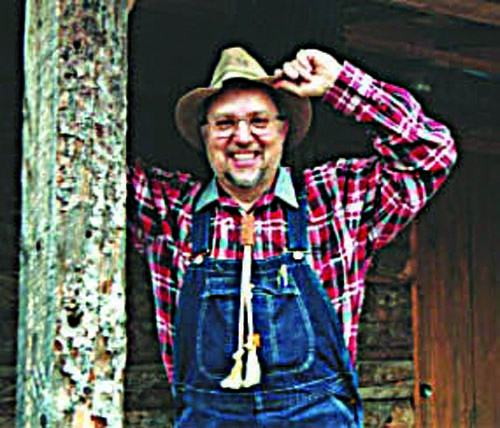
Thayne Cozart
Milo Yield

These nice spring days in the Kansas Flint Hills bring back fond childhood memories — about coyotes. Yep, coyotes. Why? Because coyotes were the apex predator to a kid growing up in southeast Kansas around 1950. And, April wuz the month when coyotes had their annual litter of pups. One of my favorite spring rituals wuz riding horses with my buddy, ol’ K. D. Budd, looking for litters of coyote pups.

But, why the hunt? Those were the times when cottontail rabbits — the coyote’s main meal — were so plentiful that hunting clubs from Pennsylvania made it profitable for kids to box-trap rabbits and export them to the Keystone State. I forget the exact price kids could make trapping rabbits, but I think it was 25-cents each. At any rate, it wuz enuf easy windfall money that we kids saw the coyote as a low-life competitor for the bonanza that had fallen into our laps.

A word of warning, if you’re squeamish at all about killing wildlife stories, I’d quit reading now because collecting bounties on dead coyotes was socially acceptable when I wuz growing up –well before the advent of People for the Ethical Treatment of Animals (PETA).

And, back in those days, coyotes were the main killers of farmstead domestic chickens, too. So, our parents had no love loss for Mr. Wily Coyote either. Truth of the matter wuz that the Yield family back in those days ate a lot of wild rabbit meat, too, during the winters.

In fact, coyotes were so abundant, and considered an expendable nuisance by everyone, that the county treasurer would pay a bounty of $2 for every set of coyote ears brought to the treasure’s office in the county seat.

All of the above information is to explain why I’m recollecting coyote memories from my childhood for this column.

As best that I recall, K.D. and I “cashed in” on four litters of coyotes. To find them, every Saturday and Sunday in April and early May we rode our horses — mine wuz Mousey and his wuz Starlight — through limestone pastures looking for coyotes. The dens were found mostly dug under flat limestone formations or back in the cracks in limestone ledges.

Our biggest “find” was a double. We found two litters of coyote pups under the same big flat limestone rock. The litters were of different ages. The oldest had six pups that had their eyes open. The youngest had eight pups and were only a few days old.

K.D. and I had no trouble extracting the pups from their respective dens. And, we had no compunction at all about dispatching all the pups and cutting off their “bounty ears” with our pocketknives. In fact, we celebrated when we realized the huge pile of penny candy that our $28 of bounty money would buy. It would be like at least $280 in money today. We’d hit the jackpot.

Another litter we found wuz in the bluffs above Marmaton River. Collecting that bounty money wuz way more exciting. K.D. found the den, but when he shined a flashlight in it, what he mostly saw wuz teeth — snarling teeth — that belonged to Mama Coyote, who was in the den, too. The snarling made the hair rise on the back of our necks.The adult coyote stayed in the den while K.D. fetched his 22-rifle from his saddle scabbard. With the rifle, we added a set of adult coyote “bounty ears” to our payout. I forget how many pups were in that den, but I sure remember Mama Coyote.

K.D. and I found the fourth litter of coyote pups a few miles south of Bronson, Kan., not far from where old Hwy 54 turns east toward Uniontown. Getting those pups from the den proved a bit unnerving, too. The pups were plenty active, toothy, and big enuf to strenuously object to removal from the den.

To extract them from the den K.D. got creative. K.D. wuz four years older than me so he did the extraction. He put on a thick pair of leather gloves. When he stuck his arm back in the den, the aggressive coyote pups would bite his gloved hand and K.D. would clamp down and pull them out one by one. I think there were six pups in that litter.

Before I quit this coyote bounty story I’ve got to tell about collecting the bounty from the county treasure’s office. The secretaries in the office never liked to see us “bounty collectors” coming. They’d wrinkle-up their noses and go “Ugh! How many you got?” Never once did they count and confirm how many coyote ears we were collecting on. Looking back, I think we could have lied about the number and got paid for phantom coyote ears.

I know the above stories sound crass and cruel. And, they would be considered so these days. But, back around 1950 it was expected, acceptable, and no one got bent out of shape.

***

This next memory about “coyote drives” clinches the low regard people in general had about coyotes 70-80 years ago in the Post WWII era. For me as a kid, participating in an organized coyote drive was nirvana. Excitement just didn’t get any better.

Here’s how it worked. In the spring, coyote drives were advertised and held each weekend in different communities. Several hundred hunters, each armed with only a shotgun, would disperse around the perimeter of four square miles and walk toward an open field or meadow in the center. A small airplane flying overhead would waggle its wings to keep the lines advancing equally.

As a kid, I couldn’t carry a shotgun, but I walked along with Dad or a neighbor. As the coyotes were pushed towards the center of the drive, they would make a mad dash to escape the trap. Some escaped. Most didn’t. A few folks usually got peppered with shotgun pellets, but I don’t recall anything serious.

After a morning and and afternoon drive, all the dead coyotes would be laid out on a hay rack and counted. Farmers and stockmen were happy the predators were gone. I have no idea who collected the bounty, but I imagine it wuz the drive organizers who had spent money to pull the drive off. At any rate, it wuz exciting to a little farm kid and the memories are still vivid today.

***

Words of wisdom for the week: “If you want to kill time, why not try working it to death?” Have a good ‘un.

There are thousands of varieties of tomatoes out there to try

0

There are thousands of varieties of tomatoes out there to try. I am asked the question of what is the best tomato for our area. The answer is what ever grows best and tastes best for you! Standard slicers have some disease resistance. Determinate tomatoes produce most of their fruit early in the season and less later. They also have shorter, more manageable vines. Indeterminate tomatoes produce large vines and bear fruit through the season except when hot, summer temperatures prevent pollination and fruit formation. Here is a list of possibilities for you to find and try! (Just wait until May after the chance frost has passed!)


Roma

Little Napoli (H; determinate, compact)

Plum Crimson (H; determinate)

Plum Dandy (H; indeterminate)

Pony Express (H; nematode resistant)

Margherita VF (H; determinate)

Roma VF (heirloom, semi-determinate)

Super Marzano VF (H; indeterminate)

Grape/Cherry Type

Esterina (H; yellow, indeterminate)

Juliet (H; indeterminate)

Mountain Belle (H; determinate)

Sun Gold (H; yellow, indeterminate)

Suncherry (H; indeterminate)

SunSugar (H: yellow, indeterminate, excellent flavor, prone to cracking)

Supersweet 100 (H; indeterminate)

Tumbling Tom (H; determinate)

Sweet Olive (H; determinate)


Standard Slicers

Amelia (H; some disease resistance)

Beefy Boy (H; short internode indeterminate)

Big Beef (H; large fruit, productive, indeterminate)

Carolina Gold (H; yellow, determinate)

Celebrity (H; highly disease resistant, vigorous determinate plant, large fruit)

Chef ’s Choice (H; large fruit, indeterminate)

Florida 47 (H; determinate)

Florida 91 (H; heat tolerance, determinate)

Jetsetter (H; indeterminate)

Jet Star (H; an older indeterminate variety, very good yield, very good crack resistance. This was the top recommended variety for years. Some disease resistance.)

Mountain Fresh Plus (H; determinate)

Mountain Gold (yellow, determinate)

Mountain Spring (H; crack resistant, determinate)

Primo Red (H; early, productive, strongly determinate)

Scarlet Red (H, determinate)

Sun Leaper (H) and Sunmaster (H; heat set types that continue setting fruit at

higher temperatures than standard varieties.)

Heirloom Slicers (indeterminate)

Amanda Orange (orange, very large fruit, highly fluted)

Black Krim (dark, red-purple, fruit, higher yield than most heirlooms)

Cherokee Purple (pink-purple fruit)

Mortgage Lifter (red fruit, fluted)


This is by no means the entire list of actual tomato varieties there are in the world! So as you can see there are many varieties to choose from.

Vieyra Honors Foundation

0

According to the most recent Census data, “Reno County, KS has a large population of military personnel who served in Vietnam, 1.36 times greater than any other conflict.” Today, there are 3,030 veterans living in Reno County. Of those, 1044 served in the Vietnam War.  Vietnam War Veterans Day is celebrated each year on March 29th.  KS4Vets, formerly Central Kansas Veteran Community Partnership (CKVCP), hosted a dinner for local Vietnam Veterans, including a ceremony to remember those who were Killed in Action (KIA).

In all, 17 Reno County Vietnam Veterans were KIA.  One of those 17 was PFC Henry Lee Fisher.  Fisher was born on May 31, 1947 in Haven, Kansas to Kermit and Chlodine Fisher. He was the second oldest of four children. The Fisher Family are lifelong Haven residents and all four kids graduated from Haven High School with Henry graduating in 1965. Fisher’s father proudly served in the Army during WWII so both of his boys chose to follow in his footsteps and serve their country. Upon graduating high school, Fisher enlisted along with two high school buddies. Fisher was rejected the first time due to a hernia that was found during his physical. Perhaps he could have walked away right then but he chose to return to Haven, have the hernia repaired, and went back and enlisted. Fisher joined the Army and became part of the 16th Infantry 1st Infantry Division and was eventually sent to the frontlines of Vietnam. Sadly, he would never return home. He was just 20 years old.

This winter, Fisher’s family worked with KS House of Representatives to pass House Bill 2481 to dedicate the portion of K96 from the east to west borders of Haven, Kansas as the PFC Henry Lee Fisher Memorial. The family is responsible for raising the $12,000 necessary to complete this project.  To date, they have raised half of the funds needed.  While KDOT does all of the work and maintenance of the highway, the family must pay for the signage.  Together, with the help of Vieyra Honors Foundation (VHF), a fundraising event has been planned for Thursday, May 9, 2024 from 7-10 PM at the Baker Ballroom located at 17 E 2nd in Downtown Hutchinson with proceeds going toward the PFC Henry Lee Fisher Memorial.   This event will feature a live performance by Hutchinson’s very own country music singer/songwriter Morgan Wilk, a full taco bar, and a silent auction that is packed with more than ten amazing items.  Tickets are just $35 and can be purchased online (vieyrahonorsfoundation.org/events) or phone (620.960.8215).  This event will not only honor PFC Henry Lee Fisher but all Reno County soldiers who were KIA in the Vietnam War to ensure that their ultimate sacrifice for our freedoms must never be forgotten.

VHF is a local nonprofit organization whose mission is to support veterans’ programs in Reno County by providing resources through fundraising and awareness initiatives.  Registration, VHF merchandise and more details about VHF can be found on their website:  https://www.vieyrahonorsfoundation.org/.

Abilene and Smoky Valley Railroad to become official Kansas heritage railroad

0

Kansas will soon have an official state heritage railroad and it’s in the historic city of Abilene.

A week ago, the Kansas Legislature passed HB2481, which, among other things, designated the Abilene and Smoky Valley Railroad (A&SV) as the heritage railroad and also named the Atchison, Topeka and Santa Fe 3415, a 4-6-2 Pacific-type engine as Kansas’ Official Steam Locomotive. The bill is awaiting Gov. Laura Kelly’s signature, which is expected to come soon.

Ross Boelling, president and general manager for A&SV, said this designation is an honor and speaks to the work that volunteers have put into making this heritage railroad a reality.

Our organization was founded three decades ago on the idea of preserving the legacy of railroads as builders of our state,” Boelling said. “It’s great to make our mission an official Kansas tradition. More importantly, this designation is a great recognition of our volunteers and the tens of thousands of hours they have dedicated to the A&SV.”

This new designation will help in various ways, including in grant writing as the railroad looks to raise funding for the 3415 locomotive, which went out of commission last year to undergo a Federal Railroad Administration mandatory overhaul.

Boelling said a new capital campaign for the overhaul is expected to be kicked off soon, and this new designation will be used to enhance this and other funding options.

Additionally, a new logo for the A&SV Railroad has been designed, incorporating the 3415 locomotive and the state designation.

‘American Pickers’ is coming back to Kansas. Here’s how you could get on the show

0

The History Channel’s “American Pickers” series is headed back to Kansas in search of historical relics and valuable antiques.

The show, which explores the fascinating world of antique “picking,” plans to film episodes of the hit television series in Kansas in June. It follows skilled pickers in the business as they hunt for America’s most valuable antiques.

“They are always excited to find historically significant or rare items, in addition to unforgettable characters and their collections,” a news release said. “As they hit the back roads from coast to coast, the pickers are on a mission to recycle and rescue forgotten relics.”

The goal is to give historically significant objects a new lease on life while learning a thing or two about America’s past along the way.

“The ‘American Pickers’ TV Show is looking for leads and would love to explore your hidden treasure,” the release said.

The show is asking Kansans to contact them if they know about extraordinary items with fascinating tales.

There is a caveat, however. “American Pickers” doesn’t want to hear from stores, flea markets, malls, auction businesses, museums or anything open to the public.

Show producers ask that interested parties send their name, phone number, location and description of the collection with photos to [email protected], post them to the show’s Facebook page (@GotAPick) or call (646) 493-2184.