Thursday, February 12, 2026
Home Blog Page 441

Cheers Kansas Festival on May 11 in Wamego

0

The Kansas Department of Agriculture’s From the Land of Kansas program is sponsoring the inaugural Cheers Kansas event starting at 1:00 p.m. on Saturday, May 11, 2024, at the Wamego City Park. The Cheers Kansas wine festival is an afternoon of sampling Kansas wines, enjoying a taste of local Kansas foods, and listening to live music.

This event offers the public an opportunity to meet Kansas wine and food producers: Oz Winery, Liquid Art Winery & Estate, Red Rock Hill Vineyards, Z&M Twisted Vineyard – Lawrence, Smoky Hill Vineyards & Winery, Rowe Ridge Vineyard & Winery, Grace Hill Winery, Stone Pillar Vineyard & Winery, Irvine’s Just Beyond Paradise, Trivedi Wine, Valley Trails Winery, Wyldewood Cellars Winery, Bourgmont Vineyard & Winery, Highland Vineyards and Winery, Bauer Farms, Flint Hills Pints, Brunkow Family Lamb, Just Nuts, Cocoavino, Alma Creamery, MKC Kitchen, and Prairy Market & Deli.

Tickets are now on sale at shop.fromthelandofkansas.com/cheers-kansas-event. Tickets include a logo wine glass, wine samples and/or food samples, live music performances, and a wine tote. Proceeds from this event will benefit the Highland Community College viticulture and enology academic program. Three ticket options are available:

  • $15 Food Only Ticket: 6 food samples
  • $30 General Admission Ticket: 12 wine and 6 food samples
  • $50 VIP Ticket: Early access starting at noon, with 14 wine and 8 food samples

Events like Cheers Kansas support the goals of From the Land of Kansas to support businesses that grow, produce, process or manufacture products in Kansas, and to provide consumers with local, Kansas-grown food. Find out more about From the Land of Kansas and find member companies at FromtheLandofKansas.com.

Raymer Society Consignment Art Auction, Sat. April 27, 2024

0

The 2024 Spring Raymer Society Consignment Art Auction will be held Saturday, April 27th at 11am at the Trinity United Methodist Church, 224 S. Main, Lindsborg. Doors will open at 9am. Consigned to the auction are original works by Lester Raymer, including 1 metal sculpture, 4 oil paintings, 3 ceramic works; tiles and uglies, and 4 lino-cuts. Also up for auction will be 9 works by Birger Sandzén, including 7 lithographs, a lino-cut and dry point etching. In addition, there will be works from many Sandzén students, Prairie Print Makers, Kansas and Midwest, national and international artists. The consigned art will be on display at the Red Barn Studio Museum through Thursday, April 25th. The art will also be available for preview at the Methodist Church, 9:00 am on the day of the auction.                                

If you prefer to participate in person, online, phone or absentee bidding, visit our website auction.redbarnstudio.org/home/ to explore the catalog and start bidding online. If you don’t already have an account with us, click “Login” in the top right corner and select “Not registered? Click here” to create an account. Remember to enter your credit card information to bid online securely. For phone bidding or absentee bidding, call the Red Barn Studio at 785-227-2217.

The funds raised will support the Raymer Society’s mission to preserve and promote the work and memory of Lester Raymer and to provide public opportunities for artistic and cultural enrichment. For more information and to view auction items visit our website at redbarnstudio.org or call 785-227-2217 for more bidding information.

Funding for the Red Barn Studio Museum comes in part from the Kansas Department of Commerce Creative Arts Industries Commission and the National Endowment for the Arts.

Common poisonous plants to avoid this spring

0

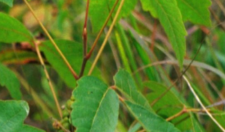
For gardeners or those that enjoy the outdoors, spring fever is one thing, but itching rashes and painful blisters are another thing entirely. Poisonous plants can turn a wonderful pastime into an unfortunate experience. A working knowledge of common poisonous plants is the best defense against an itchy outcome.

“Poison ivy (Toxicodendron radicans) and poison oak (Toxicodendron pubescens) are the most commonly encountered poisonous plants in the area that can result in skin irritation/allergic reaction,” said Nancy Loewenstein, an Alabama Cooperative Extension System forestry and wildlife specialist.

Other poisonous plants that may be found in Alabama are stinging nettles (Urtica sp.) and spurge nettle or tread softly (Cnidoscolus stimulosus). These plants have stinging hairs that can also cause painful reactions.

Identifying These Plants is Important

The ability to identify poisonous plants when you are outdoors will help prevent a dreadful experience. It is also important to recognize look-a-like plants, as many grow in similar conditions.

For gardeners or those that enjoy the outdoors, spring fever is one thing, but itching rashes and painful blisters are another thing entirely. Poisonous plants can turn a wonderful pastime into an unfortunate experience. A working knowledge of common poisonous plants is the best defense against an itchy outcome.

“Poison ivy (Toxicodendron radicans) and poison oak (Toxicodendron pubescens) are the most commonly encountered poisonous plants in the area that can result in skin irritation/allergic reaction,” said Nancy Loewenstein, an Alabama Cooperative Extension System forestry and wildlife specialist.

Other poisonous plants that may be found in Alabama are stinging nettles (Urtica sp.) and spurge nettle or tread softly (Cnidoscolus stimulosus). These plants have stinging hairs that can also cause painful reactions.

Identifying These Plants is Important

The ability to identify poisonous plants when you are outdoors will help prevent a dreadful experience. It is also important to recognize look-a-like plants, as many grow in similar conditions.

Hummingbirds arriving soon

0
Prepare for hummingbird season by planting bird-friendly plants and hanging hummingbird feeders in the landscape.

Warmer weather means flowers will soon bloom, but it is not only colorful plants and shrubs that will appear in the landscape. Hummingbirds are expected to arrive in Oklahoma at any time.

Hummingbirds are not only fun to watch, but they’re also great pollinators, said David HillockOklahoma State University Extension consumer horticulturist.

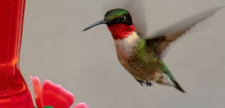
“While there are several species of hummingbirds that find their way to the Great Plains every year, the ruby-throated hummingbird is the most common,” he said. “Maintaining a garden with native trees, shrubs and herbaceous plants will create a natural habitat the birds find attractive. They are especially fond of red tubular and trumpet-shaped flowers.”

Bird-friendly plants

Plants such as trumpet vine, trumpet honeysuckle, bee balm and the red cardinal flower are a few good choices. Planting nectar-rich flowers that bloom from spring through fall will help ensure the hummingbirds remain throughout the season. These fast flyers need a constant and diverse supply of flowers to feed on through the fall.

“Native plants not only provide nectar for the hummingbirds, but they also attract insects that are a crucial part of a hummingbird’s diet,” Hillock said. “In addition to plants, water and shelter are two key elements that are essential for the well-being of the hummingbirds. Also, avoid using insecticides in areas where the hummingbirds congregate.”

Those who may not have an outdoor space in which to plant a garden can still enjoy the presence of hummingbirds by hanging feeders, said Tim O’Connell, wildlife ecologist in OSU’s Department of Natural Resource Ecology and Management.

Feeding hummingbirds

“Hummingbirds are migrating from the Yucatan Peninsula, and it takes them 18 hours to make it to the Gulf Coast,” O’Connell said. “They put down about 10 miles in from the coast and, amazingly, they can do this long journey. They don’t glide like other birds. They’re flapping the whole way here, and they’re exhausted. It’s an amazing physiological feat.”

To help replenish their energy and encourage them to hang around for the season, O’Connell suggests placing feeders strategically throughout the landscape.

“Hummingbirds are territorial birds. Even if putting out a feeder with multiple ports, you’ll likely have only one hummingbird at a time. As soon as one starts feeding, another will fly in and try to run off the other,” he said. “Bird enthusiasts should set up several single-port feeders and space them out in the landscape.”

O’Connell also suggests using a feeder that has a wide opening. This makes the feeder easier to fill, and more importantly, easier to clean. If reusing feeders from previous years, make sure they’re clean. Soak them in a bleach/water solution to eliminate any mold from all parts of the feeder. Rinse thoroughly and refill them.

It’s easy to make hummingbird nectar at home with a mixture of four parts water to one part sugar. Mix until the sugar is dissolved. Avoid adding red food coloring to the mixture. The red color of the feeder is enough to attract the hummingbirds. They don’t have an acute sense of smell and rely on eyesight to find food sources.

Extra nectar can be stored in the refrigerator for a couple of weeks, but the feeders need to be cleaned every few days, especially in the heat of the summer.

Hummingbirds are prone to injury due to collisions with windows. To protect the birds, streak the outside of windows with bar soap to break up the reflection. Learn more about the research OSU is conducting on bird/window collisions.

With warmer weather on the way, Hillock said families can get a lot of enjoyment from learning about the various birds in yards, gardens and green spaces.

“Check out a bird book from the library and spend time together as a family observing and learning about the various birds in your landscape,” he said.

OSU Extension offers additional information on attracting birds to the landscape.

Student-run car show attracts unique vehicles

0

One-of-a-kind classic automobiles will be displayed during the 24th Annual C.A.R.S. Club Motoring Festival at McPherson College on Saturday, May 4, 2024, from 9 a.m. to 2 p.m. In addition to the hundreds of remarkable cars, “The Path to Pebble” documentary will be shown throughout the day.

This year, a few unique cars are expected on the field, including a 1912 Simplex and a 1939 Alfa Romeo 6C with a fascinating history. The car was owned by Italian dictator Benito Mussolini, given to his mistress, and used in an attempted escape in 1945. Other cars include those from the General Motors collection —the 1968 Chevrolet Astro II, the 1972 Silver Arrow III, and the 2025 Cadillac Celestiq Concept.

Each year, the student-run car show attracts rare vehicles from across the country. This year, it expects 350 to 400 vehicles to be displayed throughout the campus grounds. Alongside the rare classic cars, automotive restoration students also present vehicles they are restoring.

“The car show serves as one of the biggest networking and alumni-gathering events for the college,” said Joseph Cyr, car show chair. “Every year, hundreds of cars ranging from student projects and local show winners to Pebble Beach best-of-show contenders, converge on the college lawn for a unique day celebrating McPherson’s heritage as a leader in the antique automobile industry.”

The event will feature “The Path to Pebble,” a film that chronicles the incredible story of McPherson College’s decade-long journey to compete at the Pebble Beach Concours d’Elegance with a vehicle restored by students. The 1953 Mercedes-Benz 300 S Cabriolet secured a second-in-class win at the prestigious Concours in August 2023. The documentary has not been widely released yet, and this will be one of the few times to see it. It will be shown in Brown Auditorium at 10:30 a.m. and 1 p.m. Admission to the car show and documentary is free.

In addition to the wide variety of classic automobiles, the event will feature entertainment provided by the McPherson College Jazz Band and the McPherson High School Jazz Band. The awards presentation will begin at approximately 2 p.m. Building tours of Templeton Hall, home of the McPherson College Automotive Restoration Program, will be available from 9 a.m. to 1 p.m. Complimentary trolley service will be available between campus and Main Street from 9:30 a.m. to 1:30 p.m. Food trucks will also be available on campus to purchase food and beverages.

Car enthusiasts are encouraged to participate in a Cruise-in on Friday, May 3, on Main Street in McPherson beginning at 6 p.m. No registration or entry fee is required for this event, which serves as a sneak peek at what will be on the show field and an opportunity for any car or motorcycle owner to display their rides in an informal show.

Pre-registration for the May 4 event is available online at a discounted rate until April 20.

Registration can also be made on the day of the show; however, only vehicles pre-registered are entered for judging. Details are at www.mcpherson.edu/autorestoration/cars.