Thursday, February 12, 2026
Home Blog Page 442

In a remote Kansas farm town, this chef is inspiring pride through locally-sourced food

0
One of the best restaurants in Kansas opens four days a week on the wind-swept plains, an hour beyond the nearest stoplight. In a county that’s lost more than half of its population, Fly Boy Brewery & Eats offers a renewed sense of hope — and a cheeseburger worth driving for.

It’s rush hour on a Friday evening in Sylvan Grove, Kansas, and Main Street is mostly empty, save for the rare truck or tractor.

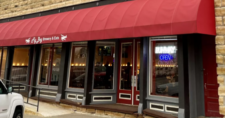
But inside one of the rough limestone buildings, Fly Boy Brewery and Eats are filling up.

“We eat here as often as we can,” said Sandy Labertew, sitting at a table of eight. “Because the business is in Sylvan and we want to do as much as we can to keep things open here.”

Like thousands of other small towns, Sylvan Grove was built around agriculture, to supply and educate big families running lots of small farms in the area. There was a rail stop here where the grain went out and money came in.

Those days are long gone. Now the families are small, and the farms themselves are generally enormous and are increasingly owned by people living in distant cities. The railroad pulled out years ago. Since 1880, the county has shed 65% of its population.

It’s tough to make a living out here, and not the most obvious place to buy a restaurant. But that’s exactly what Grant Wagner did three years ago.

“I just got tired of making food for rich people,” Wagner said. “I wanted to go back to making food that I cared about for people I cared about.”

Wagner grew up in Bennington, Kansas, another little town where Wagner says people knew how to work with their hands, fix stuff, and make do.

Like many ambitious rural kids, he left town after high school. Wagner went to culinary school and worked his way up through some of the best restaurants in the Kansas City metro, like Bluestem and Justus Drugstore.

Eventually, Wagner became executive chef at JJ’s on the Plaza, where he says customers might drop $2-3,000 on dinner.

“I couldn’t relate to the people that I was cooking the food for, and cooking, it’s a passion project, making any kind of food,” said Wagner.

When he quit JJ’s about a decade ago, Wagner moved back to central Kansas. He did consulting for local restaurants, helping them open and, often, helping them close.

That’s how he met the original owners of Fly Boy: Clay and Linda Haring, who hired him to plan their menu and run the kitchen.

Wagner left to operate a food truck, but in the middle of the pandemic, he got a call from the Harings. They were going to close Fly Boy — or sell it to him.

Wagner called up his friend Lucas Hass. They put the money together and went into business.

These days, on Fly Boy’s busiest nights, Wagner says they’ll serve 300 people, more than the entire population of Sylvan Grove.

Some of his customers are hunters from out of town, some are traveling to or from nearby Wilson Lake, and some drive in two hours from Wichita for a steak or a top-flight cheeseburger.

Fly Boy works off a pretty standard menu for a steakhouse or brewpub, with an interesting selection of beers that are made on-site, like the Hotel Oscar Whiskey (a light honey-infused ale), Tail Spin IPA, and BarnStormer Brown.

Prices range from under $10 for a kid’s burger meal, to almost $40 for a Kansas City Strip. Prime rib is a favorite special, but another week they might serve house-made gnocchi in Gorgonzola cream sauce, with spinach, steak, and curried pecans.

All the cuts of meat are vacuum sealed and slow-cooked, a French process called sous vide, before they’re finished on a grill or super-hot oven. Wagner says this means the steaks and prime rib are cooked perfectly to temperature, every time.

Wagner said the technique still isn’t seen much in these parts of Kansas.

“Outside of Kansas City or maybe Wichita, I don’t know any other restaurants are actually using sous vide to cook,” said Wagner. “It was something I learned at the Justus Drugstore. Chef Justus taught me how to do that.”

Most importantly, Wagner says everything on the menu is made from scratch, most of it using local ingredients.

“I’ve got 100% local beef, and man it is fantastic,” said Wagner. “A lot of our produce is coming from within 60 miles.”

Fly Boy uses honey from right down the street in one of their beers, local cucumbers for the pickles, and mushrooms grown in a local basement.

Lucas Hass, Fly Boy’s co-owner and brewer, says this commitment to local sourcing isn’t so much about the environment, as it is about supporting the economy in a place that’s seen its vitality ebb away.

“You gotta do what you gotta do to survive out here, but where we can we try to support local, because it keeps it here,” said Hass. “I really hate seeing so much of our wealth being vacuumed to a different coast.”

Fly Boy’s approach to quality and local sourcing is appreciated up and down Main Street.

“It’s just a wonderful place. It’s just a place to be proud of,” said Ramie Schulteis, from behind her desk at the Sylvan Grove Public Library.

“The food is fantastic, and it is a fun place for local people to go and enjoy themselves,” said Schulteis. “The service is amazing, the drinks are good, and it’s also important for our economy.”

Schulteis says some Fly Boy customers stay in one of a few short-term rental properties in town.

And of course, the restaurant creates jobs. Hannah Pahls, a junior at Sylvan Grove High School, was hired on as a server here last year. She says she’s proud to be part of a small-town success story.

“This restaurant, it’s been through everything. It’s been through COVID… I just feel like it’s a big inspiration to the town being so well known here in Lincoln County,” said Pahls before starting her shift.

The idea that a restaurant can inspire a town may seem overblown if you’re living in a city with plenty of them.

But in a region where towns are shrinking and restaurants are closing, Fly Boy has given Sylvan Grove a renewed sense of pride.

It’s proving that there are still ways for creative young people to make a living in small towns and that rural people will reward high standards, even if it means paying $16 for a cheeseburger.

“We deserve this,” said Labertew. “Rural America is kind of going by the wayside, but there are reasons to come back.”
 

Trail takes tourists to sites in Kansas cities mentioned in ‘Gunsmoke’ TV western series

0

Images of cowboys and gunslingers still resonate with the public, long after the Old West came to an end.

Tourism professionals for Wichita, Dodge City, Abilene and Hays announced an effort last week seeking to capitalize on that.

They said they were launching the “Gunsmoke Trail” to encourage tourists to take a road trip through those four cities, each of which was mentioned on the long-running, Emmy Award-winning TV western series “‘Gunsmoke.”

What was ‘Gunsmoke?’

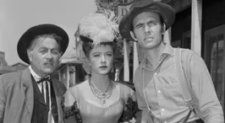
Set in the 1870s in Dodge City, “Gunsmoke” aired for 20 seasons, from 1955 to 1975, on CBS-TV.

It focuses on Marshal Matt Dillon, played by James Arness, as he works to preserve law and order in the Old West.

“Gunsmoke” was the longest running prime-time live-action series on American TV until its record was broken in 2019 by “Law & Order: SVU.” It can be streamed on Paramount+.

“Gunsmoke” featured “iconic characters telling the story of frontier life in the Old West,” said a news release put out last week by Visit Wichita, which is teaming up to offer the trail with the convention and visitors bureaus of Abilene, Dodge City and Hays.

Trail provides opportunity to ‘showcase our cowboy heritage’

The opening of the Gunsmoke Trail provides an opportunity for Wichita residents to “showcase our cowboy heritage,” said Brandy Evans, vice president of marketing for Visit Wichita.

The trail’s attractions in that city take visitors “back in time,” she said.

Melissa Dixon, executive director of the Hays Convention and Visitors Bureau, said the collaboration between those involved with the trail is a “a win-win for all of our communities.”

Why does the Old West still resonate with people today?

One reason the American frontier still resonates with tourists is because people remain interested in the conflicts of “good vs. evil” and “man vs. nature,” which played out again and again in the Old West, said Deb Goodrich, formerly of Topeka. Goodrich is Garvey Texas Foundation historian-in-residence at Fort Wallace in western Kansas.

Images of Old West inhabitants — such as the cowboy, the lawman, the gunslinger, the saloon girl, the pioneer and the Native American — stick with people because they are powerful, vivid and easy to grasp, Goodrich added.

Such images remain very much a part of this country’s cultural identity, she said.

Many Europeans consider the cowboy to be the “symbol of America,” though cowboys actually make up a relatively small percentage of the people here, Goodrich said.

Goodrich and the Garvey Texas Foundation aren’t involved with the Gunsmoke Trail.

How can I access the trail and what will it offer?

The Gunsmoke Trail is easily accessible through a mobile “passport” program, which allows smartphone users to check in at different stops, earning points for prizes, Visit Wichita’s news release said.

The passport functions like a mobile app but requires no app download, it said.

The release said Wild West-themed attractions to which visitors will be directed include the following:

• In Wichita, Old Cowtown MuseumWichita-Sedgwick Country Historical MuseumOld Town Wichita, the Keeper of the Plains, the Chisholm Trail, the Mid-America All-Indian Museum and Historic Delano District.

• In Abilene, Hitching Post Restaurant and Saloon and the World’s Largest Belt Buckle.

• In Hays, the Historic walking Tour on the Bricks in downtown Hays, where bronze plaques mark the sites of the first shops, saloons and shootout.

• In Dodge City, Boot Hill Museum, the Santa Fe Depot and the Dodge City Trail of Fame.

As reported in the Topeka Capital Journal


Splitsville

0
lee pitts

I am happy to announce the messy divorce between two bosom buddies who deserved each other. I am referring to the imminent split between the greenies and the animal rightists. Until now the two groups marched in each others parades, attended each others rallies and shared mailing lists. If you were an Earth Firster no doubt you had a PETA membership card in your purse or wallet. The two factions were joined at the hip and incessantly lawyered up and voted in lockstep, much to the chagrin of aggies everywhere. But recently the two have been seen cheating on each other and their uncoupling is getting nasty, much to the delight of farmers and ranchers. We’re absolutely elated to divulge that this is not a trial separation either but a permanent splitage of the sheets.

The problems in the marriage started when the greenies giant wind machines turned out to be BIG Bird Blenders slicing and dicing our feathered friends as if they were carrots in a juicer. This was something no true animal rightist could condone. And how should a greenie feel about the previously hated ranchers who lease their land to climate change whackos to put up these BIG Bird Blenders?

The same can be said about the huge solar arrays that quickly became infertile deserts completely devoid of animals, including all the fuzzy little creatures so beloved by animal rightists. If the animal rightists sided with the greenies on this issue were they really being true to their cause? It’s easy to see how they could become conflicted to the point of needing counseling.

The biggest point of discord between the animal rightists and the greenies are the huge fires that have been turning days into nights with their smoke. Prior to these horrific infernos it would be seen as heresy for a greenie or an animal rightist to be seen or heard speaking with a rancher. It was the greenies who wanted the cows, sheep and goats off all public land and then much to their surprise, the dried grass and forbs furnished the fuel for the largest fires in American history and these fires didn’t just burn up the much hated cows and sheep, they fried every animal in their path, even turning endangered species into crispy critters. Some animal rightists even advocated bringing back the four-legged lawn mowers, restarting the chainsaws and suggested that perhaps ranchers weren’t quite so evil after all. That made the greenies so mad at the animal rightists they threw all their belongings out in the street.

I got a front row seat and a chance to see up close and personal how this drama played out. Where I’ve lived for the past 40 years I am bordered by the Pacific Ocean and a huge state park. Prior to building our home I consulted with the local firemen and asked how much fire danger I was subjecting my wife and I to. To a man every fire fighter said they had never seen or even heard of a fire in my area because the morning fog invariably wets things down. But this did not stop the state from sending in the Civilian Conservation Corp to denude a demilitarized zone all around our development. This caused all the furry creatures to relocate and all of a sudden gophers were denuding flower gardens, hordes of raccoons started tipping over trash cans and a growing chorus of coyotes serenades us every night. When a mountain lion was seen walking down the main street in broad daylight people demanded action.

I hope I’m not being too conceited when I tell you that I have gained a certain reputation over the years amongst my neighbors as an exceptional gopher trapper and so it was only natural for neighbors to ask me for my help. When one gentleman, who previously wouldn’t even speak to me and had a “Mercy For Animals” bumper sticker on his Smart Car, asked me for help in killing his gophers I was aghast. “But I thought you were an animal lover?” I asked.

To which he replied. “I don’t give a —- about no stinking gophers. I’m telling ya I want them dead, dead, dead.”

I think that alone should be enough to get a first degree conviction for hypocrisy by any jury filled with PETA members.


Two Nights Of Ranch Rodeo Featured At EquiFest Of Kansas

0

Winners in the ranch rodeos during EquiFest of Kansas at Salina have been announced by Justine Staten, executive director of the Kansas Horse Council, EquiFest sponsor.

Triple Bar K Ranch Horses led by Brady Karaffa of Plainville placed first overall in Friday evening’s team division.

Second place team Friday was Gibbs Cattle led by Anthony Newman, Monett, Missouri, with the third place overall Friday team being Lonesome Pine Ranch lead by Bud Higgs of Cedar Point.

Lonesome Pine Ranch won the team sorting event Friday, and Gibbs Cattle topped Friday’s wild cow milking.

The winner in the double mugging Friday evening was K Cross Performance Horses lead by Aaron Killingsworth of Westmoreland. Friday’s trailer loading winner was JC Cattle/Lyons Ranch, lead by Justin Brown of Dwight.

Gibbs Cattle came back to be the first-place team in Saturday’s ranch rodeo while winning both the double mugging and the wild cow milking events.

CRB Cattle lead by Cody Brock of Onaga was the second-place team on Saturday evening with Lonesome Pine Ranch coming in as the third-place team.

JC Cattle/Lyons Ranch won Saturday’s team sorting, and Nelson Angus led by Mike Nelson of Leonardville placed first in the trailer loading event Saturday.

+++30+++


CUTLINES


Triple Bar K Ranch Horses led by Brady Karaffa of Plainville placed first overall in Friday evening’s team division of the ranch rodeo during the EquiFest of Kansas at Salina. (Kirkwood Kreations Photography)


Gibbs Cattle led by Anthony Newman, Monett, Missouri, placed first overall in Saturday evening’s team division of the ranch rodeo during the EquiFest of Kansas at Salina. (Kirkwood Kreations Photography)


Draft Horse Races Major Attraction At EquiFest

Teams came from three states for the draft horse races featured in five divisions of competition at the EquiFest of Kansas in Salina.

Winners were announced by Justine Staten, executive director of the Kansas Horse Council, EquiFest sponsor.

Reverse psychology: Tristan Musa, St. George, driving Cindy and Claire, 3.16.69; Clay Sharp, Stilwell, driving Duke and Dan, 3.28.44; and Tifani Lee, Royse City, Texas, driving Dolly and JP, 3.36.12.

Right of passage: Roger O’Neil, Junction City, driving Mike and Cap, 1,13.34; Aschzer Musa, St. George, driving Daisy and Ricky, 1.18.91; and Keenan Musa, St. George, driving Dillon and Lincoln, 1.20.75.

Double jeopardy: Clay Sharp, Stilwell, driving Duke and Dan, 2.45.85; Tifani Lee, Royse City, Texas, driving Dolly and JP, 2.47.53; and Tony Garrett, Douds, Iowa, driving Travis and Hope, 2.50.19.

Feed team: Tony Garrett, Douds, Iowa, driving Travis and Hope, 1.12.78; Eli Avery, Westmoreland, driving Pete and Gordy, 1.13.03; and Branden Harp, Mt. Pleasant, Iowa, driving Alice and Queen, 1.14.41.

Gambler’s choice: Clay Sharp, Stilwell, driving Duke and Dan, 2.41; Tristan Musa, St. George, driving Cindy and Claire, 2.37; and Brian High, Krum, Texas, driving Mavrick and Rooster, 2.4.

+++30+++


CUTLINES


Feed team competition was a highlight of the draft horse races at the EquiFest of Kansas in Salina. (Kirkwood Kreations Photography)


One of five divisions in the draft horse races was gambler’s choice at the EquiFest of Kansas in Salina. (Kirkwood Kreations Photography)


Journalism lost (1): the editorial

0
john marshal


The news today is often about complicated matters that even experts have trouble unraveling. Taxes, budgets, the economy and political madness are among today’s many mazy knots. In another time, newspapers put the facts of such matters into plain language, sifted reality from rumor and let readers take it in.

Opinion pages followed, helping readers to understand difficult truths and reach conclusions about them. The newspaper’s opinion or the editor’s view were guideposts, often subtle, sometimes vivid or sharp.

Most daily newspapers in Kansas are now owned by giant corporations and compressed into midget siblings online or in print. They have abolished editorial pages or squeezed the life out of them.

This leaves readers to the Internet jungle of occasional fact and frequent rumor, a tangled landscape that favors the scroller more than the reader. Hawkers peddle versions of truth and suspicion, click-bait for the unaware, the gullible. The regimen of presenting fact and context is abandoned or smothered.

*

Olden editorials had three goals: To persuade, or to analyze and inform, or to entertain. These purposes weren’t mutually exclusive. An entertaining editorial, well-crafted, could be more persuasive than a thrashing from the Daily Planet.

In Kansas, editorials reflected the persuasion of the editor, or of the newspaper. Great editors managed their opinion pages with insight and precision. Among them were the renowned William Allen White of the Emporia Gazette, Clyde Reed ( Parsons Sun), Rolla Clymer (El Dorado Times), Whitley Austin (Salina Journal), Stuart Awbrey (Hutchinson News) and Emerson Lynn (Iola Register). They were ferociously educated , painfully curious, and recognized nationally.

They encouraged readers to write. Awbrey in 1978 boasted that The Hutchinson News published more letters to the editor than any other newspaper in the country. No one challenged him.

The Kansas editors were experienced. They rubbed elbows with serious thinkers, public leaders and perceptive colleagues. They were deeply involved in their communities.

Today’s hired publishers are in the corporate clutch of survey results, policy wonks and profit mongers. They are more inclined to shove a reader’s complaint onto a focus group or a “business model” than to find out what was wrong (or right). They might understand the numbers in a bond proposal or tax rate, but not the thinking or the history that led to them. They are easy prey for technology’s siren chorus.

We are left with the infrequent corporate editorial page, if at all. Thoughtful examination of important matters – our schools, cities and counties, our state, our lives – threatens the ledger. The occasional guest editorial and syndicated columnist are for balance, one view from the far right and one from the far out.

Symmetry (false equivalence) is the word, lest readers think the opinion page is biased.

Editorial “fairness” risks death from an open mind. A good opinion page is not about bias versus balance. It is about helping people think. Editorials, columns and cartoons may not persuade readers to act, and they seldom persuade them to act in the way an editor hoped. But if they stimulate thought on a particular problem, if they prompt reexamination of attitudes toward the world around us and the people who live in it, the editorial page will have served a purpose.

In America’s growing news deserts and opinion jungles, readers are without a guide, abandoned to the dry winds and the storms gathering on the horizon.