Friday, February 13, 2026
Home Blog Page 451

Reno County KIA Vietnam Veterans Honored

0

According to the most recent Census data, “Reno County, KS has a large population of military personnel who served in Vietnam, 1.36 times greater than any other conflict.” Today, there are 3,030 veterans living in Reno County. Of those, 1044 served in the Vietnam War.  Vietnam War Veterans Day is celebrated each year on March 29th.  KS4Vets, formerly Central Kansas Veteran Community Partnership (CKVCP), hosted a dinner for local Vietnam Veterans, including a ceremony to remember those who were Killed in Action (KIA).

In all, 17 Reno County Vietnam Veterans were KIA.  One of those 17 was PFC Henry Lee Fisher.  Fisher was born on May 31, 1947 in Haven, Kansas to Kermit and Chlodine Fisher. He was the second oldest of four children. The Fisher Family are lifelong Haven residents and all four kids graduated from Haven High School with Henry graduating in 1965. Fisher’s father proudly served in the Army during WWII so both of his boys chose to follow in his footsteps and serve their country. Upon graduating high school, Fisher enlisted along with two high school buddies. Fisher was rejected the first time due to a hernia that was found during his physical. Perhaps he could have walked away right then but he chose to return to Haven, have the hernia repaired, and went back and enlisted. Fisher joined the Army and became part of the 16th Infantry 1st Infantry Division and was eventually sent to the frontlines of Vietnam. Sadly, he would never return home. He was just 20 years old.

This winter, Fisher’s family worked with KS House of Representatives to pass House Bill 2481 to dedicate the portion of K96 from the east to west borders of Haven, Kansas as the PFC Henry Lee Fisher Memorial. The family is responsible for raising the $12,000 necessary to complete this project.  To date, they have raised half of the funds needed.  While KDOT does all of the work and maintenance of the highway, the family must pay for the signage.  Together, with the help of Vieyra Honors Foundation (VHF), a fundraising event has been planned for Thursday, May 9, 2024 from 7-10 PM at the Baker Ballroom located at 17 E 22nd in Downtown Hutchinson with proceeds going toward the PFC Henry Lee Fisher Memorial.   This event will feature a live performance by Hutchinson’s very own country music singer/songwriter Morgan Wilk, a full taco bar, and a silent auction that is packed with more than ten amazing items.  Tickets are just $35 and can be purchased online (vieyrahonorsfoundation.org/events) or phone (620.960.8215).  This event will not only honor PFC Henry Lee Fisher but all Reno County soldiers who were KIA in the Vietnam War to ensure that their ultimate sacrifice for our freedoms must never be forgotten.

VHF is a local nonprofit organization whose mission is to support veterans’ programs in Reno County by providing resources through fundraising and awareness initiatives.  Registration, VHF merchandise and more details about VHF can be found on their website:  https://www.vieyrahonorsfoundation.org/.
USDA makes $1.5 billion available to help farmers advance conservation and climate-smart agriculture

0
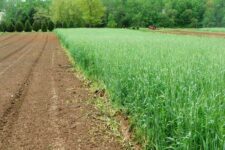
Building-Soils-With-Cover-Crops
Photo: Klesick Family Farm

Agriculture Secretary Tom Vilsack today announced the availability of an historic $1.5 billion in fiscal year 2024 to invest in partner-driven conservation and climate solutions through the Regional Conservation Partnership Program (RCPP) as part of President Biden’s Investing in America agenda. The U.S. Department of Agriculture (USDA) is accepting project proposals now through July 2, 2024, that will help farmers, ranchers, and forest landowners adopt and expand conservation strategies to enhance natural resources while tackling the climate crisis. These projects in turn can save farmers money, create new revenue streams, and increase productivity.

The investments in climate-smart agriculture that USDA has made since the beginning of the Biden-Harris Administration, and will continue to make through the Inflation Reduction Act and Partnerships for Climate-Smart Commodities, are estimated to support over 180,000 farms and over 225 million acres in the next 5 years.

Today’s investment is made available through the Farm Bill and the Inflation Reduction Act, the largest climate investment in history, which has enabled USDA’s Natural Resources Conservation Service (NRCS) to boost funding for RCPP. Additionally, NRCS is announcing progress on its effort to streamline and simplify RCPP and improve processes and implementation.

“We had unprecedented demand for the Regional Conservation Partnership Program last year, showing the robust interest in conservation from farmers and ranchers,” Secretary Vilsack said. “Through the increase in funding from President Biden’s Inflation Reduction Act, we’re able to invest even more this year in this important program, increasing our impact across the landscape. We’re looking forward to seeing what the more streamlined and customer-oriented Regional Conservation Partnership Program can do to get more conservation on the ground in the coming months and years.”

There are two separate funding opportunities being announced today: RCPP Classic and RCPP Alternative Funding Arrangements (AFA). RCPP Classic projects are implemented using NRCS contracts and easements with producers, landowners and communities in collaboration with project partners. Through RCPP AFA, the lead partner works directly with agricultural producers to support the development of innovative conservation approaches that would not otherwise be available under RCPP Classic. NRCS will set aside $100 million for Tribal-led projects to be used between both funding opportunities.

The 2024 RCPP funding priorities are climate-smart agriculture, urban agriculture, conservation, and environmental justice. This funding advances President Biden’s Justice40 Initiative, which aims to ensure that 40 percent of the overall benefits of certain climate, clean energy, and other federal investments flow to disadvantaged communities marginalized by underinvestment and overburdened by pollution. Today’s action also advances President Biden’s America the Beautiful initiative, a 10-year, locally led and nationally scaled conservation initiative that includes the voluntary efforts of farmers, ranchers and private landowners.

NRCS encourages proposals led by historically underserved entities or Indian tribes.

Project proposals for RCPP are being accepted through the RCPP portal. Details on the RCPP Classic and RCPP AFA funding opportunities are available on Grants.gov.

NRCS will be hosting webinars to provide additional information. Learn how to participate at the RCPP website.

More about RCPP

RCPP is a partner-driven approach to conservation that funds solutions to natural resource challenges on agricultural land. By leveraging collective resources and collaborating on common goals, RCPP demonstrates the power of public-private partnerships in delivering results for agriculture and conservation.

In November 2023, NRCS announced more than $1 billion for 81 RCPP projects across the country. View the interactive map of awarded projects here.

Since the beginning of the Biden-Harris Administration, NRCS has invested a total of $1.8 billion in 256 RCPP projects covering 49 states and territories.

More about the RCPP Improvement Effort

Through a concerted effort in 2023 using feedback and expertise from partners, employees, leadership and stakeholders, NRCS identified several improvements to RCPP that the agency has implemented and will continue to implement in the months and years ahead. In fiscal year 2024, NRCS is:

  • Streamlining RCPP agreement negotiation to allow simultaneous execution of program partnership and supplemental agreements;
  • Updating policy and business tools to streamline the development of RCPP agreement deliverables and reducing the need for nationally approved waivers;
  • Conducting annual comprehensive training for state program managers and support staff; and
  • Delegating additional authority to State Conservationists to support locally led projects.

NRCS will continue to invest in creating a new business tool to support greater automation of RCPP agreement development, obligating funding to partners, and quicker processing of payments.

NRCS is working on model easement deeds to streamline implementation of RCPP easements that use common deed terms for specific land uses.

This year, NRCS aims to reduce negotiation time from 15 months to 6 months, with the goal to reduce the time even further in future years.

For the full list of RCPP improvements NRCS has identified, please visit our website.

In addition to improving RCPP, NRCS is also working to make improvements to its Agricultural Conservation Easement Program and Conservation Stewardship Program to make them function better for producers, partners and staff.

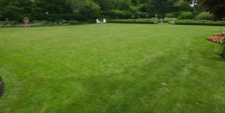
Best Practices for Lawn Maintenance

0
John Deere

Lawns are growing which means many of us have resumed maintenance. Here are
some guidelines for lawncare to minimize your costs and the environmental impact.
Proper maintenance is a proactive approach to reduce weed growth and other stresses
to the lawn.

Optimal mowing height depends on the type of grass, lawn
use and time of year. Mow at the high end of the
recommended range for each species to improve drought
resistance by encouraging deeper roots. Only one-third of
the grass leaf should be cut at a time. Removing more
results in physiological stress and possible heat or cold
injury. If the lawn has become overgrown and needs more
than one-third removed it will need to be done gradually with
a few days between each mowing.

Mowing frequency should be based on the growth rate of the
lawn. Following a set schedule may result in excessive
clippings left on the grass. Proper timing of mowing means
the grass clippings are shorter and can be returned to the
lawn. This contributes nitrogen back to the lawn. Long clippings can block sunlight to
the live turf and promote disease so they should be bagged and removed.

Maintaining a sharp blade on the mower is essential for a clean cut. A dull mower blade
tears the grass and causes the tips to turn whitish.

Mow using a different pattern each time to prevent soil compaction and turf wear from
the mower wheels. The grass blades lean the direction of the mower’s path so changing
the pattern each time allows the grass to stand more upright.

Trees can be severely damaged if bumped by the mower. Even what appears to be a
minor wound can result in death for the tree. Cultivate the soil surrounding trees to
prevent grass and weeds from growing up close to the trunk.

Watering

Apply water in the early morning. Nighttime watering promotes disease development.
Wait as long as possible between watering. Signs the turf needs water include: darker
bluish-green color and footprints remain in the lawn when someone walks across rather than leaf blades bouncing back in place. Soak the soil to a depth of 6-8 inches and wait for signs more water is needed.

Fertilizing

Fertilize only to maintain a moderately green color during favorable weather and
minimally or not at all during times of weather stress. Over-fertilizing increases the water
and mowing requirements. Do not fertilize when heavy rain is expected and never dump
excess fertilizer into storm drains or sewers. The timing of fertilizer applications should
be based on turfgrass species.
• Fescue and bluegrass – September and November (optional in May)
• Bermudagrass and zoysiagrass – between May and August
• Buffalograss – June

Watering the Landscape

0

Whether establishing a new landscape or enjoying mature trees and shrubs from years
ago, water is a concern for gardens of all stages.

Considerations for the New Landscape

• Steep slopes encourage water runoff and erosion. Choose drought tolerant
groundcovers, trees and shrubs for these locations. Consider terracing to further
prevent erosion and water loss.
• Wind increases the amount of water loss through transpiration. Creating a screen
with a fence or low water use trees and shrubs can protect more sensitive plants.
• Trees can shade the landscape and reduce the
soil and air temperature thus reducing amount
of water lost. Choose low water use trees.
Research turfgrass species prior to planting to
understand their water requirements. Avoid
species that are high water users and design
turf areas with efficient irrigation.
• Design the landscape so plants with similar
water requirements are together. A low water
use plant situated in a high-water area will
result in the plant receiving too much water which can cause damage and waste.
• Choose drought tolerant plants for south or west-facing areas of the landscape
where there is maximum sun exposure.
Considerations for the Established Landscape
• Water deeply, but no deeper than the root zone, and slowly to avoid runoff.
Water infrequently to promote deeper root growth
• Loosen the soil and add mulch. Soil compaction decreases water absorption.
Mulch can help prevent compaction. Mulch can also be used to create a basin
around trees to help contain water near the root zone.
• Monitor irrigation system for leaks and malfunctions. If you don’t have a smart
irrigation system, be sure to turn the irrigation off when we have rain.
• Maintain weeds so there isn’t competition for the water applied.

Find out more in our KSRE Publication Water and Conservation in the Home
Landscap

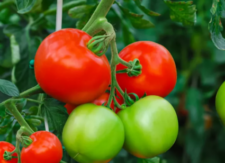
Is it Tomatoe Time yet?

0

Tomatoes are the most popular home garden vegetable, and
all spring gardeners are eager to get them into the garden.
Optimal growing temperatures for tomatoes range from 70- to
75-degrees F during the day and 60- to 65-degrees F at night
making late April to May a safer time to transplant. Cold garden
soils do not promote growth in tomatoes and plants will have to
be protected if there is a danger of frost when planted too
early.

This is a great time to do some tomato planning, however.
Remove any remaining plant debris from the garden. When the
soil is not saturated work compost into the top six inches. Plan
enough space in the garden to provide tomatoes up to two feet between plants. This will
promote air flow and reduce the risk of disease. If possible, use an area of the garden
where tomatoes, peppers, eggplant, potatoes and tomatillos have not been grown for
the past three years. This is called “crop rotation” and will help prevent the spread of
diseases/pests that have overwintered in the soil.

Plan for how you will support your plants. This depends in part on
the type of tomato. Determinate varieties have more compact
growth and can typically be supported by traditional tomato cages
commonly sold at garden centers. Sturdy tomato cages can be
made using wire fencing. Indeterminate varieties can reach over
five feet tall. It is still important to provide support for these vines
so they are not lying on the ground. In this case staking or
trellising and pruning may be necessary.

Many problems with tomatoes are exacerbated by wet, humid
conditions. Providing good airflow within each plant and between
plants as well as consistent and properly-timed water minimizes this risk. Water on the
leaves and water splashing onto plants from the soil are two occurrences that can
spread disease. Using drip irrigation or a soaker hose reduces this problem and enables
the gardener to provide consistent moisture to the targeted area.

When the time is right to purchase tomato transplants, select dark green, short,
compact plants with sturdy stems about as thick as a pencil. Plants that outgrown their
container may be root bound and suffer shock when transplanted. Planting guidelines
will be highlighted later in the month, or you can read more by following the link to our
KSRE Tomato Publication.