Saturday, February 14, 2026
Home Blog Page 463

Spring Gardening Checklist

0

It’s officially spring, and it’s time to start thinking about gardening season! Consider these tips to help you prepare. Included are links from the Utah State University Extension Gardeners Almanac.

  • Consider taking soil samples to determine fertilizer needs.
  • Plant seeds of cool-season vegetables (peas, lettuce, and radishes) as soon as the soil is workable.
  • Consider planting peas in the garden every 2-3 weeks (until early May) to extend the harvest.
  • If you didn’t do it in the fall, add organic matter to the vegetable garden to help build and amend soil.
  • Avoid compacted soil in the garden by not tilling when wet or saturated.
  • Consider backyard composting or vermiculture (composting with worms).
  • If storing bulbs, check their condition to ensure they are firm. Remove any soft or rotten bulbs.
  • If locally available, plant bare-root trees and shrubs. Keep the exposed roots moist until planted.
  • Remove protective trunk wrap and burlap from trees after the snow has melted.
  • Fertilize spring-flowering bulbs such as tulips, daffodil, fritillaria, and crocus.
  • Plant cold-hardy pansies and primrose.
  • Subscribe to Utah Pests IPM Advisories for timely tips on controlling pests in your yard and garden.
  • Learn how to prune berries and fruit trees such as apples, pears, peaches, cherries, plums, and apricots.
  • Attend a USU Extension-sponsored pruning demonstration near you. Contact your local county Extension office for information.
  • Apply horticulture oils at bud break (delayed dormant) in fruit trees to control overwintering insect pests.
  • Apply pre-emergent herbicides in late March to mid-April to control annual weeds in the lawn, such as crabgrass and spurge.
  • Sharpen lawn mower blades to prepare for the mowing season. Set mower height at 2 1/2 to 3 inches, and mow at this height all summer.
  • Consider including a native fruiting species in the landscape, such as chokecherryelderberryserviceberry or currant.

Pests and Problems:

  • Download the Utah Home Orchard Pest Management Guide.
  • Learn about damping-off, a fungal disease that affects new seedlings.
  • Take control measures during bud break for aspen leaf spot, which may be prevalent during cool, wet springs.
  • Take control measures during bud break for anthracnose, also prevalent during cool, wet springs.
  • Control rust mites in apple and pear trees after leaves have emerged and expanded to 1/2 inch.
  • Apply dormant oil to pears when leaf buds swell. This smothers eggs of the pear psylla that are laid on buds by overwintering adults.
  • Further gardening information can be found at garden.usu.edu. Here you will find fruit, vegetable, and herb growing guides, as well as information on soil, lawn, yard, tree, shrub, and flower care. In addition are monthly tips, the basics of gardening, information on events, classes, and more.
  •  Click here to see our video on March gardening tips.
  • Take an online gardening course, and use promo code “Grow5” for $5 off!
Bird flu has sickened dairy cows in Kansas, but ‘milk supply remains safe,’ USDA says

0
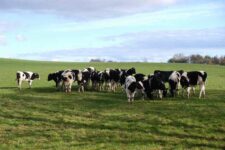
Photo credit: thskyt

Bird flu has sickened dairy cattle in Kansas and other states, but federal agriculture officials say the milk supply remains safe.

The U.S. Department of Agriculture’s Animal and Plant Health Inspection Service announced Monday that milk samples of sick cattle from two Kansas dairy farms and one in Texas tested positive for highly pathogenic avian influenza, more commonly known as bird flu.

The Kansas Department of Agriculture said in a news release that these are the first cases of bird flu in commercial dairy operations in the state.

U.S. Sen. Roger Marshall, R-Kansas, said in a statement that his office has been in close contact with federal and state officials and industry stakeholders.

The tests come as the USDA, the Food and Drug Administration and the Centers for Disease Control and Prevention have worked with state veterinary and public health officials to investigate sick dairy cows in Kansas, Texas and New Mexico.

“Initial testing by the National Veterinary Services Laboratories has not found changes to the virus that would make it more transmissible to humans, which would indicate that the current risk to the public remains low,” the USDA news release said.

“At this stage, there is no concern about the safety of the commercial milk supply or that this circumstance poses a risk to consumer health,” the USDA added. “Dairies are required to send only milk from healthy animals into processing for human consumption; milk from impacted animals is being diverted or destroyed so that it does not enter the food supply.

“In addition, pasteurization has continually proven to inactivate bacteria and viruses, like influenza, in milk. Pasteurization is required for any milk entering interstate commerce.”

Federal officials said the disease appears to have been introduced to the cattle herds by wild birds, and that about 10% of the herds exhibit symptoms.

The Kansas Department of Agriculture encouraged dairy producers to monitor their herd and contact their local veterinarian if cattle appear infected. Symptoms are mostly in older dairy cows and include a drop in milk production, loss of appetite and changes in manure consistency.

Federal officials said reporting the illnesses will authorities monitor the situation and minimize the impact.

The state agency also encouraged producers to minimize wildlife access to water and feed sources for their cattle.

The agriculture department said the Kansas Department of Health and Environment has been notified.

As reported in the Topeka Capital Journal

Kansas Wheat: News Release: Two new K-State wheat varieties will be available to farmers this fall

0
Kansas Wheat

Contact: Marsha Boswell, [email protected]

KS Bill Snyder wheat honors legendary football coach
Two new wheat varieties have been released from the Kansas State University wheat breeding program and are being licensed by Kansas Wheat Alliance seed associates for farmers to plant this fall. Hard red winter (HRW) wheat KS Bill Snyder, named after the legendary football coach, will be available in limited supply this fall. The variety was developed with funding from Kansas wheat farmers and donors to the Kansas Wheat Commission Research Foundation. KS Mako, also a hard red winter variety, has an excellent yield record, will make a splash in seed fields this summer and will be available to farmers this fall.


Coach Bill Snyder was honored at a luncheon on March 14 in Manhattan. Select wheat farmers, seed growers and industry professionals were in attendance to hear from K-State’s retired football coach. Marty Vanier, whose family was the lead donor of the Research Foundation’s Fields Forward Campaign, and former Senator Pat Roberts also provided remarks. Vanier listed Snyder’s 16 goals for success, and how each of these goals aligns with the wheat breeding program.


Roberts said, “This combines two of my favorite things in the world — Kansas agriculture and Coach Bill Snyder.” He continued, telling attendees that the naming of the wheat variety KS Bill Snyder brings a new level of excitement to a new generation of agriculture students. “Stakes are high in ag research,” he said. “We need a stable and affordable food system, and Kansas Wheat is rising to this challenge by honoring Bill Snyder.”


In his remarks, Coach Snyder talked about how he drove by the agricultural research plots every day on his drive from home to work.


“The people here are very special, and what you do is meaningful,” Snyder said. “When I came here in 1989, I learned that Kansas State people are truly special. They asked, ‘What can we do for you?’ That’s the Kansas State farmer way.”


Coach Snyder went on to say how humbled he is to be honored with the naming of a wheat variety.

KS Bill Snyder

KS Bill Snyder — the wheat variety — was the result of the long-running breeding program at the K-State Agricultural Research Center at Hays, led by Dr. Guorong Zhang, Kansas State University wheat breeder, and his team. The program focuses on the development of new and improved varieties of both HRW and hard white (HW) winter wheat for western Kansas.


KS Bill Snyder is a medium maturity and medium-short height variety that was #1 in the Southern Regional Performance Nursery (SPRN) in 2022. KS Bill Snyder has a solid disease package with good to intermediate resistance of stripe, leaf and stem rust, along with moderate resistance to wheat streak mosaic virus (Wsm2 gene) and intermediate resistance to Triticum mosaic virus. It is also resistant to soilborne mosaic virus, allowing it to move into central Kansas, where it has shown decent yield potential. KS Bill Snyder, along with its very high yield potential, also has good drought tolerance, high tillering capacity, excellent straw strength and good quality.

KS Mako

KS Mako is a high yielding wheat variety out of the K-State Manhattan breeding program. Developed by K-State wheat breeder Dr. Allan Fritz, it is medium maturity and medium height with Jagger and LCS Chrome in its pedigree. This variety has a yield performance similar to KS Providence and other top yielding varieties in the central Kansas corridor and has also performed well in western Kansas, with decent drought tolerance.


KS Mako has very good quality and above average protein at a given yield level. It carries the Wsm2 gene, giving it some of the best wheat streak mosaic virus resistance for a central Kansas adapted wheat variety. KS Mako is intermediate to moderately susceptible to leaf and stripe rust and susceptible to FHB. It will be a solid companion variety to KS Providence, with quality that should get it on preferred variety lists.


The K-State wheat breeding program is supported by the Kansas Wheat Commission, Kansas Crop Improvement Association, Kansas Wheat Commission Research Foundation and Kansas Wheat Alliance. With all these resources combined, the program continues its tradition of providing great wheat varieties designed specifically to meet the needs of Kansas wheat producers and their customers.


To find a seed associate near you with these new wheat varieties, visit kswheatalliance.org.

“True Self-Care”

0


During our most recent family movie night, we watched one of my favorites: Encanto. At one point in the movie, a character who has been gifted supernatural strength confesses that she fears she will crumble under the weight of all that is expected from her. Although she accomplishes amazing things, it never feels like enough. She never feels like she, herself, is enough.

Popular culture suggests she should prioritize “self-care,” which is usually represented by manicures or massages and long soaks in the tub, or perhaps half an hour of meditation or spin class.

Now, to be clear, I’m a big fan of massages and getting my nails done, and I spend a lot of my professional time nagging people about exercise, as my patients can certainly attest. But I’d suggest this perspective on self-care is at best incomplete. Protecting your mental well-being goes well beyond little escapes, and even beyond tending to your physical health.

The specifics of true self-care are unique to each individual, because each individual is unique, in their needs, their desires, and their circumstances. You simply can’t meditate quality daycare into existence, or a nasty coworker into a team player, or a loved one into sobriety.

Self-care, meaningful self-care, means being able to recognize that you are human, and you have limits and that it’s not just ok, it’s critical, to acknowledge and respect those limits. The demands vying for your time and energy are endless. Those resources, however, are not. True self-care means standing up for your right to be the one who decides how you will allocate them.

This means setting boundaries, and that’s an incredibly difficult thing to do. With those limits will naturally come guilt, because you simply can’t do everything for everyone, or even all the things you yourself want to do. No one else can decide where your lines are, and no one else will hold those lines on your behalf.

In order to hold those boundaries, you must be kind to yourself. Most of us have a perpetual self-commentary of criticism that tells us we could do better, we should do better, we aren’t enough. Honest self-reflection is important, but why does that so often mean a laser focus on where we fell short, without recognizing how far we came? We internalize the message that if we can’t keep up with demands that escalate until we crack, the fault is ours. It’s not. To draw these boundaries, and make that self-compassion meaningful, we each must clarify our own values.

Spending our limited energy in ways that conflict with the ideas we hold most dear is the antithesis of self-care. We need a clear idea of what those values are to hold that line. Massages and meal delivery services can be great tools, but the real key to protecting your mental well-being is a lot harder to define and a lot harder to do.

Debra Johnson, M.D. is part of The Prairie Doc® team of physicians and currently practices family medicine in Brookings, South Dakota. Follow The Prairie Doc® at www.prairiedoc.org and on Facebook featuring On Call with the Prairie Doc® a medical Q&A show providing health information based on science, built on trust for 22 Seasons, streaming live on Facebook most Thursdays at 7 p.m. central.

The Worst Jobs I’ve Ever Had

0
lee pitts

Here are the ten worst jobs I’ve ever had.

#10- Turning over hay bales- As a teenager I worked on a ranch hauling hay from the fields to the hay shed. Before the bales could be stacked on the truck the bales had to be turned over so the elevator could pick them up. I walked along kicking over the bales knowing that under one out of ten bales there’d be a snake and in one out of ten of those instances it would be a rattler. Needless to say, it kept me on my toes!

#9- Smudging- I grew up in the “citrus capital of the world” and one of my jobs in high school was having my own smudge crew. Before it got down to 28 degrees I’d call up my team members and we’d go light smudge pots which burned a thick nasty oil that turned the air black in our valley. I darn near froze to death and I had a smoker’s cough at age 18 without ever having smoked anything. Smudging did have one bright side. The following morning we had to refill the pots and that was an accepted excuse for missing school.

# 8- Mucking out stalls- I liked being around the horses but it was at a riding academy for rich girls. When they’d see me at school they’d look down their snooty noses at me and pinch them as if I stunk. I give this as the reason why I never had a single date in high school.

#7- Picking lemons- I did this for a rich lady my mom sewed for. I picked with a professional crew who could average 50 boxes per day, while the best I ever got up to was 19. This job also had a good side. The lady saw I was a hard worker and hired me to park cars for her when she had fancy parties. What other 16 year old can say they drove both a Corvette and a Rolls Royce?

#6- Compressor plant- I was the assistant to a mechanic in a compressor plant in the oilfields in one of the hottest spots in America. We’d work in short 15 minute bursts inside the plant where it got up to 125 degrees and then run outside to cool down where it was only 115.

#5- Teaching college- Believe it or not, I taught at a junior college part time. I taught animal science to classes of six or eight urban kids who only took the class because they thought it would be an easy A. I hated teaching, felt guilty taking their money and never gave anyone an A.

#4- Killing rabbits- One of my more profitable enterprises in high school was raising rabbits to sell to misplaced Okies and Arkies who grew up eating rabbit. The cute white bunnies still visit me in my nightmares.

#3- Painting trees- Another job in the citrus industry was painting the trunks of lemon trees with a nasty substance that was called something like “bore-dough”. It stopped ants and spiders from crawling up the tree trunks and I think it’s the reason I’ve been a chronic in the sick pen most of my life.

#2- Selling ads- I was hired at the ripe old age of 21 to travel a territory for a livestock paper. I was supposed to sell cattle auction ads in return for my working the upcoming sale as a ring man. My territory included southern California, Arizona, Utah and Clark County, Nevada which contained not a single cow. My commission was 33% but driving two days to Utah and back and paying all my expenses for one third of $350 didn’t seem like a good way to get rich.

#1- Dusting furniture- I began my career at the age of ten dusting furniture every Friday for my Grandpa who owned a furniture store. On one side of the store were the appliances, couches and carpet which really didn’t require that much dusting. Naturally, my older brother got to dust that side of the store. I had to dust the building next door which contained unfinished wooden furniture, every square inch of which had to be dusted. Rubbing salt in the wound, we both got paid the same dollar.

I’ve never dusted a piece of furniture since then!.