Saturday, February 14, 2026
Home Blog Page 462

NOTORIOUS

0

April is the last month to see the exhibit NOTORIOUS at the Rice County Historical Society.

This engaging exhibit explores a selection of so-called notorious figures from Kansas past. The visitor may question why these historical figures were deemed notorious. Kansas history is filled with colorful characters that have shaped the state we know today. Through the passage of time, perspectives change and reality can give way to legend. Lines begin to blur exactly who truly deserves the title NOTORIOUS.

The exhibit was designed and produced by Smoky Hill Museum, a division of Salina Arts and Humanities, a department of the City of Salina, Kansas. The exhibit team: Rosa De La Cruz, Susan Hawksworth, Hannah Mahnken, Nona Miller, Joshua Morris, Kay Quinn, and Jennifer Toelle.

The Rice County Historical Society/Coronado Quivira Museum is located at 105 West Lyon, Lyons, Kansas. Hours of operation are Tuesday to Friday from 10:00 a.m. to 4:00 p.m. and Saturday from 10:00 a.m. to 1:00 p.m. Call (620) 257-3941 for more information.

Garden Calendar

0
Photo courtesy of Getty Images & Family Features

GARDEN CALENDAR

Planting

Crop Type of Planting Timing
asparagus crowns mid-March to mid-April
beets seed late-March to early-April
bok choy seed/transplant late-March to early-April
broccoli transplant late-March to early-April
cabbage transplant late-March to early-April
carrots seed late-March to early-April
cauliflower transplant late-March to early-April
chicories seed/transplant late-March to early-April
collards seed/transplant late-March to early-April
kale

fennel

kohlrabi

lettuce

seed/transplant

seed

seed

seed

mid-March

mid-March to early-April mid-March to early-April

mid-March to early-April

leeks transplant mid-March
mustard seed late-March to early-April
onion

parsnips

peas

sets/plants

seed

seed

mid-to late-March

mid-March to early-April

mid-March

potatoes seed mid-March to early-April
radish

rhubarb

seed

crowns

mid- to late-March

March to April

rutabaga seed mid- to late-March
spinach seed mid- to late-March
strawberries transplant mid-March to early-April
Swiss chard seed/transplant late-March to early-April
turnip seed mid- to late-March


Planting Strawberries

0

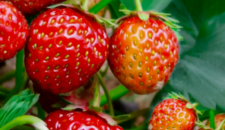
From mid-March through early-April it’s strawberry planting time in Kansas. As long as the soil is ready to be worked (not frozen or saturated) you can plant. If your soil hasn’t been tested for a few years, it is best to have that done to inform your fertilization practices. Strawberry plants can be purchased from a reputable garden center.

Spring into composting by reviving a compost pile after winter

0
Photo credit: K-State Horticulture

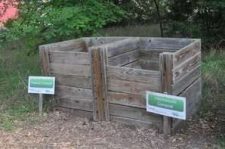
If you haven’t touched your compost bin or pile all winter, don’t worry, you are not alone. It could be filled with kitchen scraps to the top or left untouched since the fall. Getting a compost pile going again after the long, cold winter can be intimidating, but it is possible with a little bit of time and careful management. For a successful compost pile, assess a starting point, turn the pile, manage inputs, and repeat for a hot pile in no time.

Assessing the Pile

As soon as the outdoors allows for a workday in the garden, check to see how the compost pile or bin is doing. Be sure to see if there have been any unintended additions over the winter, such as large branches or trash. It is also important to check if any parts of the bin are broken; maybe the wood is cracked, or the plastic is broken. Following the inspection, decide if repairs are needed before going ahead.

Now that the bin is structurally sound, see if any part of it is still active or if it froze through. Active compost piles produce heat. Look for some finished compost at the bottom or middle of the pile or steam coming off the pile. If the pile has either of these things, the pile is likely still cooking.

Turning the Pile

The next step is to turn the compost pile. This will take some muscle. Use a pitchfork to mix the materials and incorporate air into the pile. Composting is a recipe; the beneficial organisms that do the work need the right combination of air, water, carbon, and nitrogen. The goal is to provide the perfect home for these organisms to do their work, so compost is created at the end of the process. After the winter thaw, compost piles are likely to be wet and soggy rather than dry. If a pile is wet, don’t add water and just turn it. If a pile is dry, adding water will add moisture.

Managing Inputs

Next up is adding more brown and green material to the pile. These are carbon and nitrogen sources. In general, add about three parts carbon material to one part nitrogen by volume. This means that for every bucket of greens added, add three buckets of brown material. Some carbon sources include dry leaves, straw, pine needles, and sawdust. Some nitrogen sources include fruit and vegetable kitchen scraps, grass clippings, and plant trimmings.

Always continue to monitor the pile. Water it when dry and turn it at least once a week. Follow these steps to get a compost pile working again in no time.


Yard and Garden: planting and growing onions

0

Onions perform best in well-drained, slightly acidic, fertile soils in full sun

With spring upon us, it’s time to think about planting in home gardens. In Iowa, onions are a popular addition to the vegetable garden as they are easy to grow and take up little space. In this article, horticulturists with Iowa State University Extension and Outreach answer questions about growing onions.

What is a suitable planting site for onions?

Onions perform best in well-drained, slightly acidic, fertile soils in full sun. The planting site should receive at least six hours of direct sun daily. Heavy soils can be improved by incorporating organic matter, such as compost, into the soil.

While some sources claim onions are “light feeders,” onions require higher fertility levels than most other vegetables. Apply about two pounds of all-purpose garden fertilizer, such as 10-10-10, per 100 square feet and till into the soil before planting. Four to five weeks after planting, side-dress with additional fertilizer. Sprinkle one pound of an all-purpose garden fertilizer per 100 feet of row. Place the fertilizer in a narrow band about 2 to 3 inches from the base of the onion plants.

When planting, space rows 12 to 15 inches apart with plants 4 to 6 inches apart when grown for mature storage onions, and closer (1 inch apart) when grown for green onions.

Since onions do not create a canopy of foliage, they do not compete well with weeds. Gardeners can also plant three to four onions in a cluster, spacing the clusters 6 to 12 inches apart, making it easier to weed with a hoe between plants rather than hand pulling.

Which onion cultivar should I plant?

When considering onions for a home garden, the suggested onion cultivars in Iowa include:

  • ‘Blush’ (brownish pink skin, globe-shaped, excellent storage).
  • ‘Candy’ (yellow-brown skin, globe-shaped, short-term storage).
  • ‘Patterson’ (yellow-brown skin, globe-shaped, excellent storage) .
  • ‘Redwing’ (deep red skin, globe-shaped, excellent storage).
  • ‘Red Zeppelin’ (deep red, globe-shaped, excellent storage).
  • ‘Sierra Blanca’ (white, globe-shaped, short-term storage).
  • ‘Stuttgarter’ (light brown skin, flattened globe, excellent storage, from sets).
  • ‘Walla Walla’ (yellow-brown skin, flattened globe, short-term storage).
  • ‘Yellow Sweet Spanish’ (yellow-brown skin, globe-shaped, short-term storage).

Onions rely on photoperiod or day length to determine when bulb development begins. Short-day cultivars meet their photoperiod requirement and begin to form bulbs earlier in the growing season than long-day cultivars. Intermediate (or day-neutral) cultivars meet their requirement between short and long-day cultivars.

Long-day and intermediate-day onion cultivars are the best choice for gardeners in Iowa and other northern areas. The amount of onion foliage present at bulb initiation is important. More foliage means more food available to produce bigger bulbs. Short-day cultivars generally produce small bulbs in northern areas because of the small amount of foliage present when the bulb forms. Long-day and intermediate-day cultivars can produce more foliage before bulb initiation starts, so they produce larger bulbs. Intermediate-day cultivars may produce slightly smaller bulbs than long-day cultivars since they will begin bulb initiation slightly earlier in the season.

Which planting method is best when growing onions?

Onions can be grown from transplants, sets, or seeds. Gardeners typically select their planting method based on cost, use, availability and ease of planting.

Growing onions from plants is the preferred planting method for many home gardeners. Onions sold as plants are typically sold in bundles of small bulbs with green leafy growth on top. This method is easy, but the selection of specific cultivars available at garden centers can be limited.

Growing onions from sets (small bulbs) is easy. However, onion sets are typically sold as red, white or yellow onions, so specific onion cultivars are usually not available. Since the cultivar is unknown, the flavor, use and keeping quality of onions grown from sets vary considerably.

Growing onions from seeds is the most difficult planting method for most home gardeners, though it is the least expensive. Challenges include poor germination rates and long lead times, as transplants must be started early to be ready to plant in the garden in early to mid April. However, specific onion cultivars are readily available by seed, providing more variety. Onion seed typically loses vigor quickly, and new seeds should be purchased each year.

What is the proper way to plant onion plants?

Plant onion plants or transplants as soon as the ground can be worked in spring, typically from early April to early May. Select healthy green transplants and plant them 1 to 1½ inches deep.