Wednesday, February 18, 2026
Home Blog Page 520

Horses Scared Of Coyotes While Donkeys Will Confront Them

0
Frank J Buchman
Frank Buchman

Why do donkeys kill coyotes, while horses often run from them?

Donkeys have a formidable reputation in the animal kingdom, and it’s not just because of their stubbornness, said researcher Scott Krager, Portland, Oregon.

They are known to be coyote slayers, and there is some fascinating evolutionary biology behind this, Krager continued.

First off, donkeys are not typical prey animals. Unlike horses, who are flight animals with a strong sense of running away at the first sign of danger, donkeys have a different mindset.

They are more contemplative, sizing up their opponents with a steely-eyed determination that says, “Not today, buddy.”

Donkeys have a natural dislike for canines, which most likely stems from their longstanding role as protectors of sheep and goats. Their ancestry has wired them for this protective stance.

When a coyote or any threat presents itself, the donkey’s instinct is to face the threat and confront it. They use their powerful kick, sharp hooves, and serious bite to fend off predators rather than take flight.

In contrast, horses have been traveling and war companions for humans for millennia, selected for speed and endurance.

Their best chance at survival has been to hoof it out of there as fast as possible, making ‘flight’ their go-to defense mechanism.

If you see a horse in the wild and it spots a threat, chances are it is going to bolt faster than that coyote can plan an attack.

So, when you compare the two, donkeys come off as the tough cousin who is always ready to throw down for a brawl, while horses are the ones who would diplomatically leave the scene to steer clear of conflict.

Living in Portland, Oregon, Krager said, “I have seen my fair share of wildlife, and it’s always a blend of wonder and understanding these nuanced behaviors that keeps me intrigued.”

Donkeys might not be a common sight in the city, but they do embody the rugged spirit that our wilder outskirts evoke.

It’s a fascinating dynamic, a reminder that in the animal kingdom, as with much of life, roles can differ wildly.

Donkeys are there to remind us that sometimes standing on your ground is just as important as the ability to run away.

+++30+++

Optimism For Better Days

0

Cold weather rapidly multiplies problems on the ranch.

Exactly how much is too complex to figure for one who barely passed his college algebra course. But some people say it doesn’t have anything to do with algebra, rather it’s a math equation, add, subtract, multiply, divide.

Whatever, freezing temperatures day after day add up to more and more “confuedalties.” Now that isn’t a word, according to the dictionary and knowledgeable editors, but a “made-up” term Mom said frequently. As appropriate description as one can give of the turmoil everyone across the nation faced in record winter conditions.

“The water won’t run” is typically the first alarm heard warning that pipes are frozen because of freezing temperatures. There is not adequate insulation to keep water thawed as cold air leaks through the tiniest crack.

More hay bales around the home are the first step while heaters blow on every visible in-house water line. When water runs, it is best to leave the faucet dripping to help prevent freezing.

Electrical power is often taken for granted until there isn’t any and then it becomes very important. Hard to do much on the ranch without electricity nowadays, and it’s often difficult to restore.

Ice in ponds and creeks can be chopped to provide livestock water supply unless it’s frozen solid in shallow areas. Pumps must start and stop frequently during the cold causing damage so eventually that water won’t run either.

Heating systems that have not ever caused problems before typically go on the blink when the cold continues. Fortunately, there are people who know how to repair them, and they are generally congenially understanding cooperative to help.

Snow can be called “pretty,” but is very dangerous when impossible to travel through. Dedicated highway crews work long hours and can’t keep up with the increasing intensity. Strong winds cause drifts that intensify problems sometimes such that even bulldozers can’t open the roadways.

It becomes impossible to get into pasture gates even when there is enough feed to be distributed. Then trucks and tractors go haywire won’t start, fuel line’s clogged, something, so there’s no way to get livestock fed.

At least there’s some moisture and spring is just weeks away giving optimism for better days ahead.

Reminded of Job 37:12: “No one can escape the weather, it’s there.”

+++ALLELUIA+++

XVIII–5–1-28-2024

Cattlemen’s Congress livestock show results

0

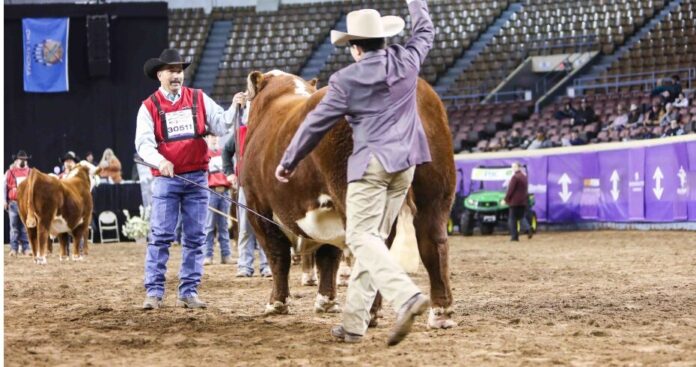
The fourth annual Cattlemen’s Congress livestock show was held Jan. 4 to 21 in Oklahoma City, Oklahoma. Cattlemen from across the U.S. gathered for the event to exbibit cattle, livestock judge, attend sales and meetings. Here are some highlights of the livestock show placings. The supreme champion junior female was an Angus exhibited by Samantha Van Vorhis; the supreme champion open female was also an Angus, and was exhibited by Jack Dameron; the supreme champion bull was a Simmental owned by Jones Show Cattle, Elmore Cattle Services, Diamond J Simmentals, XTB Cattle Co., and Minnaert Show Cattle.

The grand champion prospect steer was exhibited by Zavrie Wiss; the grand champion prospect heifer was shown by Tripp Yocham and the grand champion market steer was exhibited by Mason Grady. The champion American junior female was exhibited by Nolan Seale; the champion American open female was exhibited by Traci Middleton and the champion American open bull was owned by B.R. Cutrer, Inc.

The grand champion super ROV Angus female was exhibited by Jack Dameron; the grand champion open Polled Hereford female was exhibited by Madilyn Norvell; the grand champion open Horned Hereford female was owned by Fallon Gohr and Gunnar Gohr; the grand champion Polled Hereford bull was owned by Buck Cattle Company, Weldon and 6 Mile Creek LLC. and the grand champion Horned Hereford bull was owned by Copeland and Sons LLC, Running P Cattle Co.

The grand champion Fullblood Maine-Anjou female was owned by Fancy Creek FM/Prairie Cros.; the grand champion Maine-Anjou bull was owned by Ebersole Cattle Company; the grand champion Maine-Anjou bull was owned by Kenzie Glenny; the grand champion Maine-Angus bull was owned by Buck and Morton Cattle Co. grand champion MaineTainer bull was owned by Hadley Dunklau.

The grand champion junior and open Maine-Anjou Female was owned by Mcklay Gensini; the grand champion ShorthornPlus bull was exhibited by Mitchell Barros; the grand champion Shorthorn bull was owned by Armstrong Farms and Little Cedar Cattle Co.; the grand champion open ShorthornPlus female was exhibited by Kealyn Cahoon; the grand champion open Shorthorn female was exhibited by Carter Wickard; the grand champion junior Shorthorn female was exhibited by Keagan Steck and the grand champion junior ShorthornPlus female was exhibited by Grady McGrew.

The grand champion junior open Maine-Angus female was exhibited by Sara Sullivan; the grand champion junior and open MainTainer female was exhibited by Brenna Wilkins; the grand champion junior Chiangus female was owned by Mallory Johnson and Lillie Skiles; the grand champion open Chiangus female was also owned by Mallory Johnson and Lillie Skiles and the grand champion Chiangus bull was owned by Winegardner Show Cattle and Maci Scher.

The grand champion junior purebred Simmental female was shown by Hadley Hendrickson; the grand champion Percentage Simmental female was exhibited by Sara Sullivan; the grand champion open Fullblood Simmental female was exhibited by Garrett Jones; the grand champion junior Fullblood Simmental female was exhibited by Cade Tate and the grand champion open Fullblood Simmental bull was owned by Ohlde Heritage.

The grand champion Percentage Simbrah female was exhibited by Colt Richter; the grand champion junior Simbrah female was shown by Nolan Seale; the grand champion open Simbrah female was exhibited by Jakob Sansom; the grand champion Percent Simbrah bull was owned by Hagan Cattle and the grand champion Simbrah bull was owned by Hagan Cattle.

The grand champion junior and open Chianina female was exhibited by Sara Sullivan; the grand champion junior Chi-Composite female was exhibited by Greyson Belcher and the grand champion Chianina bull was owned by Winegardner Show Cattle & Fitz Genetics. 

The grand champion junior Grey Brahman female was exhibited by Mollie Cutrer; the grand champion junior Red Brahman female was exhibited by Brynn Caldwell; the grand champion junior Grey Brahman bull was shown by Landon MacFarlane and the grand champion junior Red Brahman bull was shown by Bailey Malone.

The grand champion junior Brangus female was exhibited by Roxton Stone; grand champion junior Red Brangus female was exhibited by Truitt Marks; the grand champion junior Ultra Brangus female was exhibited by Carlee Taylor; the grand champion junior and open Santa Gertrudis female was shown by Luke Nelson; the grand champion Santa Gertrudis bull was shown by Landon Stem; the grand champion Star 5 Santa Gertrudis female was owned by Pitchford Cattle and the grand champion Star 5 Santa Gertrudis bull was shown by Creyton Cummings.

The grand champion junior Beefmaster female was exhibited by Kayl Tassin; the grand champion open Beefmaster female was exhibited by Kalli Ellis; the grand champion open Beefmaster bull was owned by Blue Ribbon Beefmasters SKAGGS; the grand champion junior and open Braford female was exhibited by Madison Mize; the grand champion junior Braford bull was shown by Joseph Natali; the grand champion junior F-1 Braford female was exhibited by Madison Sanders and the grand champion open Braford bull was owned by Robert and Carol Miller.

The grand champion Belted Galloway female was exhibited by Maddey Tebbe; the grand champion Belted Galloway Bull was also shown by Maddey Tebbe; the grand champion open Red Brahman female was owned by Circle T Cattle Co. LLC; the grand champion Grey Brahman female was owned by B.R. Cutrer, Inc.; the grand champion Grey Brahman bull was also owned by B.R. Cutrer, Inc. and the grand champion Red Brahman bull was owned by Deterring Red Brahmans.

The grand champion open Black Brangus female was owned by MP Brangus; the grand champion open Red Brangus female was owned by KO’s Cattle Service; the grand champion open Black Brangus bull was owned by Burns Brangus; the grand champion open Red Brangus bull was owned by Trios Cattle and Genetics; the grand champion open Ultra Brangus female was exhibited by Traci Middleton and the grand champion open Ultra Brangus Bull was exhibited by Roxton Stone.

The grand champion Optimizer female was exhibited by Brooklyn Matlock; the grand champion Optimizer bull was owned by T Bone Cattle Company & White Oak Salers; the grand champion Salers female was shown by Morgan Leeann Street; the grand champion Salers bull was owned by Tierra Sol Cattle Company; the grand champion Purebred Simmental bull was owned by Diamond J Simmentals, XTB Cattle Co., Minnaert Show Cattle; the grand champion Percentage Simmental bull was owned by TC Reds & Sunset Oaks Simmentals and the grand champion Purebred Simmental female was shown by Laramie Sasser.

Exhibitors can mark their calendars for the 2025 Cattlemen’s Congress, which is planned for Jan. 4 to 16, 2025 in Oklahoma City.

Feds adopt GREET standard for sustainable fuel

0

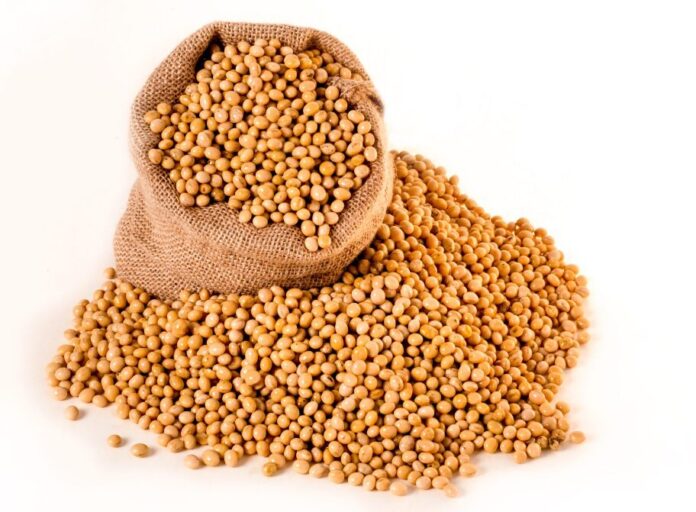
As reported in High Plains Journal, Soybean producers got some welcome and long-awaited news on Dec. 15 when the U.S. Department of the Treasury and Internal Revenue Service announced the Biden administration will adopt an updated GREET model to measure lifecycle emissions from sustainable aviation fuels. The new guidelines will be released early this year and will apply to the Sustainable Aviation Fuel Credit (40B) established by the Inflation Reduction Act. The SAF Credit applies to fuels sold between Jan. 1, 2023 and Dec. 31, 2024. After that, SAF fuel will be included in the Clean Fuel Production Credit, also established by the Inflation Reduction Act (45Z).

GREET stands for Greenhouse Gases, Regulated Emissions, and Energy Use in Transportation. It’s an assessment tool that measures the life-cycle carbon impacts of vehicle technologies, fuels, products, and energy systems. Ag interests had been urging federal agencies to adopt the GREET standard for years.

The news was important to soybean producers because biofuels including SAF are rapidly expanding markets for non-food uses of soybean oil. Soybean oil has a growing number of industrial uses, but SAF is one for which there is no substitute in the foreseeable future for aircraft to reduce their carbon emissions.

“Incentives in the Inflation Reduction Act are helping to scale production of low-carbon fuels and cut emissions from the aviation sector, one of the most difficult-to-transition sectors of our economy,” said Secretary of the Treasury Janet Yellen.

U.S. Secretary of Energy Jennifer M. Granholm said, “Sustainable aviation fuel will provide low carbon fuel made here in America to help decarbonize the hardest to reach areas in the transportation sector, and DOE is committed to supporting this effort which will lead to cleaner skies for all.”

The Treasury Department said its new guidance provides “clarity” around eligibility for the SAF Credit. The credit incentivizes the production of SAF that achieves a lifecycle greenhouse gas emissions reduction of at least 50%, as compared with petroleum-based jet fuel. Producers of SAF are eligible for a tax credit of $1.25 to $1.75 per gallon.

SAF that decreases greenhouse gas emissions by 50% is eligible for the $1.25 credit per gallon amount, and SAF that decreases GHG emissions by more than 50% is eligible for an additional $0.01 per gallon for each percentage point the reduction exceeds 50%, up to $0.50 per gallon. While soybean oil is the single largest source of sustainable oil to convert into SAF, it competes with other oils. Under the new guidance, numerous SAF fuel pathways can already qualify for the credit at the 50% reduction threshold through the Renewable Fuel Standard, including valid biomass-based diesel, advanced biofuels, cellulosic biofuel, or cellulosic diesel.

Fuels that achieve a 50% or greater reduction in lifecycle GHG emissions under the most recent Carbon Offsetting and Reduction Scheme for International Aviation standard will continue to qualify under this guidance.

Eligibility for tax credit values above the 50% reduction for fuels not using CORSIA will be based on an updated GREET model that is currently being developed by the Environmental Protection AgencyDepartment of TransportationU.S. Department of Agriculture, and Department of Energy. The interagency working group has committed to releasing an updated version of DOE’s GREET model by March 1.

It is likely that this work will also be used in the new Clean Fuel Production Credit for all low-carbon fuels, which goes into effect in 2025. Scott Gerlt, chief economist for the American Soybean Association, pointed out to High Plains Journal that, while the decision is welcome, it’s more about the future than the present. The tax credit program is in its second year and will extend for another three years with decreasing payouts.

While SAF is a promising growth market, it’s not yet as profitable as renewable diesel. “Recently there has been a level of pullback in demand for soybean oil,” Gerlt said, explaining, “Higher diesel prices are making biofuels less profitable.”

The tax credit policy makes biofuel slightly more attractive.

California also uses GREET as its low-carbon standard. Gerlt said recent crush expansion announcements have slowed. Even if every currently announced plant were built, the expansion would only consume about 15% of domestic soybean production. This is well below the 50% of soybeans that are exported. “We’re not going to wipe out export demand” any time soon because of the expansion of domestic crush plants, he said.

The main challenges to U.S. soybean producers in the coming year will be from stepped-up soybean production in Brazil and Argentina, Gerlt said. The next most important concern is where and at what cost soybean meal will be used.