Wednesday, February 18, 2026
Home Blog Page 519

Nobel Peace Prize winner highlights Feb. 7 K-State Garden Hour

0

Nobel Peace Prize winner Charles Rice will highlight Kansas State University’s popular Garden Hour series on Feb. 7 when he gives a talk on strategies related to successfully gardening in a changing climate.

The K-State Garden Hour is a free, online series held on the first Wednesday of each month from noon to 1 p.m. In 2023, organizers report that 13,794 participants were drawn to at least one presentation in the series.

Rice is a Kansas State University Distinguished Professor of Soil Microbiology who was a co-winner of the 2007 Nobel Peace Prize for his work with the United Nations’ Intergovernmental Panel on Climate Change.

His Feb. 7 talk will cover the difficulty of gardening in the extreme weather of Kansas, as well as information on how to adjust gardening practices in response to climate changes. Rice gave a similar talk during the International Master Gardener Conference in Overland Park, Kansas last summer.

The 2024 K-State Garden Hour series kicked off on Jan. 3 with a presentation on using nature’s décor in floral design. Matthew McKernan, one of the series’ organizers, said that session is available to view online.

Upcoming Wednesday sessions include:

  • March 6 – Selecting and planting fruit trees for Kansas.
  • April 3 – Companion plants for your garden.
  • May 1 – Understanding water sources for your garden.
  • June 5 – Growing cut flowers for the home and farmers market.
  • July 3 – Success with cacti and succulents.
  • Aug. 7 – Establishing a more environmentally sustainable lawn.
  • Sept. 4 – Season extension in the vegetable garden.
  • Oct. 2 – Evergreens in Kansas.
  • Nov. 6 – Rabbit, mole and deer mitigation.
  • Dec. 4 – Home hydroponics.

Full descriptions of each topic are available online. McKernan said all sessions are recorded and available shortly after to view online, as well.

“We want to invite all gardeners to participate in the 2024 series,” McKernan said. “Whether you join the presentations live or view the recordings, we hope each month brings inspiration to every level of gardener.”

Since the K-State Garden Hour began in 2020 – during the height of the COVID pandemic – McKernan said 62,887 participants have viewed the monthly discussions. He notes that 97% of the participants said the webinars have contributed to improvements in their physical and emotional health, including 98% who said they are more physically active, and 99% saying they have experienced more personal optimism through gardening.

Also, 70% of participants in the K-State Garden Hour reported making at least five efforts to improve water quality in their community, and 69% reported implementing at least five water conservation practices as a result of the webinar series.

The series has always been available for free, but McKernan said some assistance may be needed to keep it that way. Those who wish to make tax-deductible contributions to the K-State Garden Hour – McKernan said contributions pay for an annual Zoom webinar license – can do so through the KSU Foundation.

By Pat Melgares, K-State Research and Extension news service
Gold Standard Bull Stuff

0
Thayne Cozart
Milo Yield

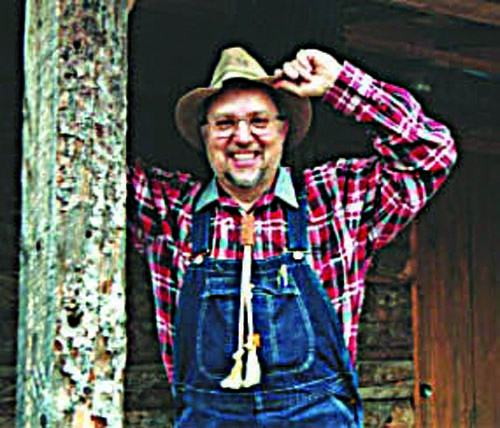
Well, kind readers, this old geezer of an aggie column writer has finally reached a significant milestone — at least on a personal basis. This column finishes 50 years of weekly “bull stuff” from me — ranging from mostly humorous (hopefully) to occasionally serious.

I’m gonna say I’ve reached the GOLD STANDARD because gold is the commonly acknowledged symbol for commemorating any 50-year anniversary. I won’t claim my column is the gold standard in quality, because that’s a measurement only you readers can decide. But, I will claim that it’s gold standard for pure numbers and for persistence. Not many writing folks can make that claim.

Before moving on and taking any credit that’s due to column longevity, I acknowledge that I didn’t even originate my pen name or the title for my original column. The inventive mind of my old biz partner and life-long friend, Elpee Peavine, conjured up the name “Milo Yield” and the column’s FARM TALK title, “Viewing the Field.”

I can’t truthfully say it’s been a totally “fun” journalistic ride for more than 2,500 weeks. However, I have managed to stick to the deadline through thick and thin, regardless of numerous career moves, physical moves, health issues, equipment or technology failures.

But, writing this column for five decades of weeks hasn’t been drudgery either. It’s also been a lot of fun. I believe that my effort has brought chuckles to lots of folks most weeks. And, I’ve personally met hundreds of readers down through the years.

I also hope that my occasional plunge into serious matters about agriculture, economics, and politics might have educated a bit, too. I might have even offended a few folks with my comments or opinions. If so, for that I apologize.

So, I guess that elevates “SATISFYING” to my best personal measurement for reaching 50 years of column writing.

***

A 50th anniversary of anything offers a time for reflection. So, now I’m going to switch into a reflective mode. Back when my first column published in FARM TALK on February 5, 1974, it wuz written on an electric typewriter. Then it had to be retyped on a complicated contraption half as big as a refrigerator called a Compugraphic Junior to get it on a strip of paper into could be pasted into a page for offset printing. The commercial printing company for that first copy of my column wuz the Kansas Offset Printing Company (KOPCO) in Caney, Kan.

Several upgrades in Compugraphic typesetters followed the Junior. That took the column up to the 1980s as publishing reached the era of the first Apple 3E desktop computer. That was a generational change in preparation of copy for printing — both in ease and expense. The first Apple computers quickly morphed into vast improvements in digital publishing, and eventually into the internet. Now, today, I type my columns on a fancy Apple desktop computer, then e-mail it to all the papers that publish it. The publications then put the finished product into digital pages, and electronically transmit them to the commercial printer.

Now, today, you can read my column the old way on paper, or electronically if you choose. In short, I’ve witnessed and participated in a monumental 50-year evolution in publishing reading materials.

***

Now I’m gonna reflect on the changes I’ve lived through in agriculture during the past 50 years. Back in 1974, most counties had several hundred full-time and part-time commercial farmers and ranchers. Most farms were still diversified with various mixes of livestock and crops. Counties had dozens of viable agricultural biznesses, including a full spectrum of all tractor and equipment dealerships.

In 1973, commodity prices were at 80 percent of parity prices, thanks largely to the “Great Russian Grain Steal” that caught both the federal government and the grain trade flatfooted. Those parity commodity prices greatly enabled FARM TALK to gain an economic foothold to get it started. Those were the days when dealership lots were largely empty because farmers/ranchers with money and credit had bought them out. Aggies welcomed a new farm newspaper that enabled them to shop regionally, not just locally.

Sadly, the parity price index has been on a 50-year slide since 1973. That slide precipitated the half-century hollowing out of rural America. And, the saddest fact of all is that the federal government, the U.S. Department of Agriculture, and the land-grant university system has claimed all along that it’s all been a great success in modernization, production efficiency, wise resource use, and feeding the nation and the world cheaply.

From what I’ve witnessed, that official claim is the ultimate “Gold Standard of Bull Stuff.” Anyone with eyes should see that our national farm policy has not been a ballyhooed success, but an observable national failure.

To wit: Because of economic pressure, the rural population has been decimated. Rural communities are crumbling into obscurity. Schools have consolidated. Agribusinesses have merged. University Extension Districts have consolidated. Commodity production has corporatized. Commodity processing and international trading is dominated by a few conglomerates. Our natural resources are unnaturally stressed.

The several hundred commercial farms and ranches in each county have shriveled to a scant dozen. Now, I don’t blame those enterprises for getting big. They had to to survive and for that I commend them. And, I acknowledge, all through the past 50-years Americans have been well-fed. That is commendable. But, it’s not been done cheaply, because no one has added up the social and economic “hidden costs” of our cheap food policy. I contend those hidden costs run into untold billions of dollars that are added to the nation’s food bill, even though not acknowledged by officialdom.

***

Starting my next 50 years of column writing next week, I’ll try to get back on track with more rural humor and less pontificating. Until then, my words of wisdom for this week are original. They are: “Every consumer is an intuitive economist.”

Pay attention and have a good ‘un.

The state budget (1)

1
john marshal

By early October each year, the agencies of state government are busy calculating their budgets for the next fiscal year. Scores of agents and bureaucrats are involved, figuring costs and revenues of departments and domains throughout the executive, judicial and legislative branches.

Appraisals and estimates, one division and one office at a time, flow in bits and pieces to the governor’s office for review by the budget director and a dozen analysts. The final accounting in late December becomes what is known as “the governor’s budget.”

The budget document, roughly 900 pages, is published (on line only) in two volumes; it is a balance sheet of income and outgo, a blueprint for the cost of state government. This year it covers fiscal year 2025 ‒ from July 1, 2024 through June 30, 2025.

The governor presents a budget plan to the legislature in early January. The legislature has roughly 90 days to examine the document, make changes, offer alternatives. This involves a lot of arguing among political tribes and two of the three branches of government ‒ the executive (headed by the governor), and legislative (Speaker of the House and Senate president). When the governor is a Democrat and the legislature is dominated by Republicans, fireworks can be expected. The judicial branch (courts) looks on with an arched eye.

Usually by mid-May, the legislature and governor have come to terms and a budget is passed by the House and Senate and signed into law by the governor.

*

This year the quarreling began even before Gov. Laura Kelly submitted her spending blueprint. This is expected. Billions of dollars are at issue, a conjunction of plans and proposals that impact the lives of every Kansan ‒ the price of groceries and gasoline, the schools and colleges they attend, the roads they drive, the health care they need, the taxes they pay, and that’s for starters.

It’s odd that news reports about the budget rarely ‒ if ever ‒ mention the money involved, the total spending or how it compares with prior budgets. The reports are usually about one program or another, their political strain and chances for success. The money involved is ignored, the big picture unmentioned. This hints that few legislators and fewer reporters have actually read the budget.

*

The state budget comes in two parts:

(a) Total spending: The governor proposes $26.5 billion overall. This is a $1.3 billion, five percent increase in actual and estimated spending of $25.2 billion this year. This includes all revenue sources, federal grants and aid, user and license fees, interest payments and so forth.

(b) The operating fund: Within that $26.5 billion, the governor proposes an $11.2 billion general fund which pays the government’s day-to-day operating expenses. This is a 13 percent ($1.3 billion) increase over the current $9.9 billion and reflects proposals to invest roughly half a current $2.8 billion surplus in tax cuts, reforms and incentives.

Debates focus heavily on the operating fund ‒ often called “the budget” ‒ because it is financed chiefly by state sales and income taxes. Lawmakers are well aware that the operating fund can gain or lose force with each adjustment of taxes, and with each quiver of the Kansas economy.

(Next: Parts of the total)

Horses Scared Of Coyotes While Donkeys Will Confront Them

0
Frank J Buchman
Frank Buchman

Why do donkeys kill coyotes, while horses often run from them?

Donkeys have a formidable reputation in the animal kingdom, and it’s not just because of their stubbornness, said researcher Scott Krager, Portland, Oregon.

They are known to be coyote slayers, and there is some fascinating evolutionary biology behind this, Krager continued.

First off, donkeys are not typical prey animals. Unlike horses, who are flight animals with a strong sense of running away at the first sign of danger, donkeys have a different mindset.

They are more contemplative, sizing up their opponents with a steely-eyed determination that says, “Not today, buddy.”

Donkeys have a natural dislike for canines, which most likely stems from their longstanding role as protectors of sheep and goats. Their ancestry has wired them for this protective stance.

When a coyote or any threat presents itself, the donkey’s instinct is to face the threat and confront it. They use their powerful kick, sharp hooves, and serious bite to fend off predators rather than take flight.

In contrast, horses have been traveling and war companions for humans for millennia, selected for speed and endurance.

Their best chance at survival has been to hoof it out of there as fast as possible, making ‘flight’ their go-to defense mechanism.

If you see a horse in the wild and it spots a threat, chances are it is going to bolt faster than that coyote can plan an attack.

So, when you compare the two, donkeys come off as the tough cousin who is always ready to throw down for a brawl, while horses are the ones who would diplomatically leave the scene to steer clear of conflict.

Living in Portland, Oregon, Krager said, “I have seen my fair share of wildlife, and it’s always a blend of wonder and understanding these nuanced behaviors that keeps me intrigued.”

Donkeys might not be a common sight in the city, but they do embody the rugged spirit that our wilder outskirts evoke.

It’s a fascinating dynamic, a reminder that in the animal kingdom, as with much of life, roles can differ wildly.

Donkeys are there to remind us that sometimes standing on your ground is just as important as the ability to run away.

+++30+++

Optimism For Better Days

0

Cold weather rapidly multiplies problems on the ranch.

Exactly how much is too complex to figure for one who barely passed his college algebra course. But some people say it doesn’t have anything to do with algebra, rather it’s a math equation, add, subtract, multiply, divide.

Whatever, freezing temperatures day after day add up to more and more “confuedalties.” Now that isn’t a word, according to the dictionary and knowledgeable editors, but a “made-up” term Mom said frequently. As appropriate description as one can give of the turmoil everyone across the nation faced in record winter conditions.

“The water won’t run” is typically the first alarm heard warning that pipes are frozen because of freezing temperatures. There is not adequate insulation to keep water thawed as cold air leaks through the tiniest crack.

More hay bales around the home are the first step while heaters blow on every visible in-house water line. When water runs, it is best to leave the faucet dripping to help prevent freezing.

Electrical power is often taken for granted until there isn’t any and then it becomes very important. Hard to do much on the ranch without electricity nowadays, and it’s often difficult to restore.

Ice in ponds and creeks can be chopped to provide livestock water supply unless it’s frozen solid in shallow areas. Pumps must start and stop frequently during the cold causing damage so eventually that water won’t run either.

Heating systems that have not ever caused problems before typically go on the blink when the cold continues. Fortunately, there are people who know how to repair them, and they are generally congenially understanding cooperative to help.

Snow can be called “pretty,” but is very dangerous when impossible to travel through. Dedicated highway crews work long hours and can’t keep up with the increasing intensity. Strong winds cause drifts that intensify problems sometimes such that even bulldozers can’t open the roadways.

It becomes impossible to get into pasture gates even when there is enough feed to be distributed. Then trucks and tractors go haywire won’t start, fuel line’s clogged, something, so there’s no way to get livestock fed.

At least there’s some moisture and spring is just weeks away giving optimism for better days ahead.

Reminded of Job 37:12: “No one can escape the weather, it’s there.”

+++ALLELUIA+++

XVIII–5–1-28-2024