Thursday, February 19, 2026
Home Blog Page 529

Tips to keep pipes from freezing

0

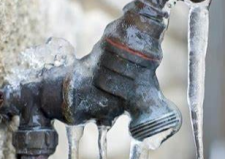
In anticipation of the impending extreme temperatures forecasted to start on Friday, January 12th, with lows well below freezing, the City of Hutchinson Public Works Department recommends the following to help prevent the risk of frozen pipes and potential water-related issues in residences.

Preventive Measures: To safeguard against frozen pipes within your home, consider the following tips:

· If pipes run through cabinets or vanities, open doors to allow warmer room temperatures to circulate.

· Maintain a small, steady trickle of water through the pipes. The minimal additional water cost is typically outweighed by the expenses associated with repairing a broken water pipe.

Dealing with Frozen Pipes: In the event that pipes within your home freeze, observe the following guidelines:

· Immediately shut off the water. Refrain from attempting to thaw pipes without first turning off the main shut-off valve.

· Safely thaw pipes using warm air. Use a hair dryer or a space heater to warm the air around the frozen section, ensuring constant supervision of space heaters and avoiding the use of kerosene heaters or open flames.

· Exercise caution when restoring water flow. After successfully thawing the pipes, gradually turn the water back on and inspect pipes and joints for any potential cracks or leaks caused by freezing.

For emergency assistance, the Water Division can be contacted at (620) 694-1900, responding to water emergencies 24 hours a day. Proactive measures taken now can lessen the risk of water-related disruptions during this extreme weather period.

Stay informed, stay prepared. Your cooperation is important to maintaining a reliable water supply during challenging weather conditions.
The electricity went out—now what?

0

Winter storms can cause power outages, and with that, food safety concerns. While we all enjoy a nice gentle snowfall winter storms are another story. Keeping food safe during a power outage is not hard but does require a little planning.

Some ideas to consider include:

• Keeping the doors closed. If your refrigerator or freezer is kept closed then the foods will stay cold longer. Placing a blanket over a deep freezer will insulate the appliance helping to keep the food cold longer. Freezers that are fuller also hold colder temperatures better than a half full freezer.

• Using a food thermometer. A food thermometer inside appliances will help monitor safe temperatures. Refrigerators should be kept under 41 degrees. Foods that reach temperatures above that will need to be thrown away after four hours. A freezer should be set at 0 degrees. When a power outage happens, frozen foods need to be below 32 degrees to prevent thawing.

• Utilizing a cooler. Another way to prevent food from spoiling is to move it into coolers and adding ice. The ice should cover the foods and be replaced as often as necessary to keep foods below 41 degrees.

• Dry ice is a great way to keep frozen foods cold but is hard to find and may not be available during a winter storm.

Frozen foods should be kept frozen, and if thawed will need to be kept below 41 degrees. Thawing and re-freezing food is not recommended for nutritional value and should be avoided under normal circumstances. If the power outage is due to a winter storm, foods may be able to be kept colder outside but should be placed in coolers with ice out of the sun and out of reach of animals.

When determining if food is safe to consume, keeping track of the temperature and how long it has been temperature compromised is important. Any foods that are not frozen or below 41 degrees for an unknown time should be thrown away.

When deciding whether a food is safe to consume, consider the color and texture of the food. Foods should be thrown away if there is any doubt. Use the mantra “When in doubt, throw it out.” Tasting a food for spoilage is tempting but is not recommended as some bacteria can not be tasted and could make you very ill.

Don’t like the new Kansas license plate? You have more than 50 options

0

Kansans selected a new license plate design with one option garnering 53% of the vote in a five-way race.

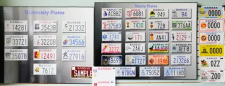
The one most resembling the original design, which Gov. Laura Kelly rescinded after public backlash to allow a vote, got the fewest votes at just 5%. Regardless of the new standard plate, drivers are allowed to choose more than 50 different license plates across Kansas

Dozens of options charge an additional fee to display designs featuring nonprofits, colleges and the military. In 2022, the most popular options were the Gadsden Flag plate that benefits the Kansas Rifle Association, the In God We Trust plate and the one available only for firefighters.

Old plates can be cycled out if they receive too little interest. A 2021 law discontinues license plate designs that fail to get 125 orders over a period of two years.

New plate designs can also be approved any legislative session. The process typically includes a legislator advocating for a specific design for a constituent or nonprofit, and once a bill is passed at least 250 individuals must seek out the plate for it to enter production.

Cumulatively the plates raised $2.5 million in 2022, ranging from $550 to Ottawa State University to $590,150 for the Kansas State Alumni Association.

New alternative license plates are typically an uncontroversial affair, but occasionally they incur some public backlash. Some legislators spoke against the popular Gadsden Flag plate being added to the list of alternative plates due to its namesake, Christopher Gadsden, owning slaves.

Legislators on both sides of the aisle have questioned whether the number of license plates available to Kansans is getting out of hand.

“I’m just of the opinion that license tags are to identify vehicles,” Rep. John Carmichael, D-Wichita, told the Capital-Journal earlier this year. “If you want to make a political statement, then buy a bumper sticker — you’ve got a complete right to do that.

“But just as a general proposition, I don’t think that the state of Kansas should be in the business of selling license plates for the purpose of allowing people to express their political or social views.”

As reported in the Topeka Capital Journal

Patience is key to meeting goals, says K-State expert

0

Kiss urges ‘kinder…gentler’ approach to goal-setting

When it comes to pursuing goals, Kansas State University family resource management specialist Elizabeth Kiss thinks even a little progress means a lot.

“Often when it comes to goal-setting, we think it’s all or nothing,” Kiss said. “We think, ‘I have to do this’ or “I have to be focused…’ That is not necessarily the best or most successful way to achieve what you’re looking for.”

Instead, she said, take the long view on goals.

“Think about this: there are 168 hours in a week,” Kiss said. “How much of that time do we actually need to achieve our personal, financial, health or other goals? Some things only take about an hour a week. You can make a big amount of progress on a project by spending an hour or two a week on a regular basis.”

Put into practice, Kiss notes a couple examples: If you want to read a book, but feel overwhelmed, spend just 5-10 minutes a day reading. Or if a goal is to get in better physical shape, dedicate 15-20 minutes a few times a week as an entry point.

Kiss said: “Take a kinder, more gentler approach to your goals.”

In her job, Kiss spends a good deal of time helping individuals and families use their family’s resources – including money – to achieve their goals. Her approach to goal-setting works when managing the family’s finances, too.

“If you want to increase your family’s emergency fund…what you could to do is plan to put aside a small amount each month, perhaps as little as $10 per month,” she said. “That might not seem like a lot, but over a year, that’s $120 for your emergency fund that you didn’t have previously.”

Kiss encourages families to talk about goals, particularly when it comes to spending money. When appropriate, involve kids, she says, particularly as they grow older and transition into helping with such expenses as vehicles, insurance, weddings and more.

“Many of us are fearful that we will out-live our money; we wonder how we are going to stay active, interested, curious…all of those things,” Kiss said. “That all has to do with family resource management. I always say that successful money management is that you get to the end of your life and you have some money left…and you’re meeting your goals, whatever they are.”

K-State Research and Extension has an online publication titled, How Are You Doing? A Financial Checkup, to help keep people on path to meet their life’s goals. The publication is available online from the K-State Research and Extension bookstore.

“Sometimes – whatever goals you’re setting – you don’t take your intended actions,” Kiss said. “Don’t beat yourself up. Wherever you’re at, just keep thinking ahead. Share your goals, write them down and review them periodically; but don’t obsess over them.”

More information on personal well-being, including family resource management, is also available at local extension offices in Kansas.

Keep dogs safe this winter

0

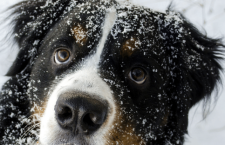
As the days inch further and further into winter and frigid temperatures, Dr. Pavlovsky, director of the University of Illinois Veterinary Medicine South Clinic, has important winter safety tips for those caring for pets.

Just like humans, our pets can develop hypothermia, or a drop in their body temperature, after being outside in cold temperatures for too long. Hypothermia becomes even more likely for dogs that are housed outdoors.

“There is no straightforward answer to how cold is too cold and how long is too long to remain outside, because there are so many variables,” Dr. Pavlovsky says. “For most dogs, it is probably safe to be outside for a very short period—just enough time to eliminate—even in extreme cold. However, to be safe, it’s probably best to discuss this with your veterinarian, because there may be individual recommendations fitting one pet but not another.”

Likewise, how long dogs can be outside in relatively cold temperatures depends on the individual pet. However, Dr. Pavlovsky points out, “It is reasonable to assume that prolonged direct contact with snow and ice is more likely to result in frostbite.”

Dr. Pavlovsky also explores signs of cold exposure, ice melt products that may harm pets, and protection for pets when traveling during the holidays.