Thursday, February 19, 2026
Home Blog Page 535

Kansas food sales tax will drop again on Jan. 1. Here’s how much you’ll save

0

When you go to the grocery store in 2024, you might notice a slightly smaller tax on your food purchases.

Starting Jan. 1, the state sales tax on grocery food will drop from 4% to 2%. For $100 in groceries, that means $2 less in tax.

The tax cut is the second of three installments in the gradual elimination of the state’s 6.5% sales tax on grocery food. After the Legislature and Gov. Laura Kelly enacted the tax cut in 2022, the food sales tax dropped to 4% in 2023, now it goes to 2% in 2024 and it will hit zero in 2025.

“Our state feeds the world, yet too many Kansans struggle with high costs at the grocery store,” Kelly said in a Dec. 16 tweet. “On January 1, we’re axing the food tax again to give Kansans some much needed relief. No Kansan should have to stress about how they’ll afford to feed their family.”

Kelly said in a Dec. 9 tweet that Kansans saved more than $187 million in taxes on food in 2023, and the savings will exceed $337 million in 2024.

The tax cut only applies to groceries. Restaurant meals will still be taxed at the full 6.5%, as will non-food items at retailers.

Local sales taxes also remain in place. In Topeka, the local sales tax rate is 1.5%. Shawnee County has a 1.35% tax, which includes a 0.65% sales tax for Washburn University and 0.2% for the Gage Park Improvement Authority. Some improvement districts have additional taxes.

Also effective Jan. 1 is a 0.5% reduction in the corporate income tax.

As reported in the Topeka Capital Journal

Power family foods with peanuts

0

Sharing a meal with family and friends brings people together, especially when favorite recipes are on the table. Whether there’s a cause for celebration or a gathering of loved ones is simply overdue, serving up delicious dishes is a sure bet to get everyone involved.

Leaning into a versatile ingredient like peanuts, which make these dishes possible, can take your gatherings to the next level. They complement a wide range of recipes from appetizers and snacks to main courses and desserts.

Plus, they contain 26% protein and fulfill approximately 30% of a 4 to 6-year-old’s and 26% of a 7 to 10-year-old’s recommended daily allowance per serving, making them a kid-favorite source of energy. They contain six essential vitamins—vitamin E, folate, riboflavin, thiamin, niacin and vitamin B6—and seven essential minerals—phosphorus, iron, magnesium, potassium, zinc, copper and calcium.

Often referred to as “nutrition in a nutshell,” there’s a good chance your peanut supply came from the United States’ leading grower: Georgia. With approximately 4,000 active peanut farmers, the state produces 52% of the country’s peanuts.

To find more family-friendly recipe ideas powered by peanuts, visit GAPeanuts.com.

Mexinut Dip

Recipe courtesy of the Georgia Peanut Commission

Yield: 4 cups

1 can (11 1/2 ounces) condensed bean with bacon soup

1 cup shredded cheddar cheese

1 can (10 ounces) tomatoes and green chiles

2 tablespoons finely chopped onion

1 tablespoon hot chili powder

1/2 cup peanut butter

corn chips or crackers

In 2-quart microwave-safe container, combine soup, cheddar cheese, tomatoes and green chiles, onion, chili powder and peanut butter. Cover with glass or plastic lid.

Microwave on high 2 1/2 minutes; stir. Microwave 2 1/2 minutes, or until cheese is melted.

Stir before serving with corn chips or crackers.

Healthy Habits for Immune Support

0

Many factors play into keeping us free from sickness, it is no secret that eating a well-balanced diet helps keep us healthy by supporting our immune system. Keeping our immune system strong is especially important during cold and flu season. Eating a regular diet that includes the following nutrients can help our bodies fight off sickness by keeping our immune system strong.

Immune-Boosting Nutrients

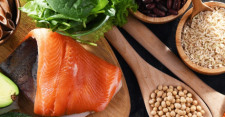
  • Protein: Protein builds and repairs our body’s tissues and plays an important role in building the cells that power our immune system. Several good sources of protein are eggs, lean meat, seafood, beans, and soy products.
  • Vitamin A: Vitamin A keeps our skin and tissues healthy, which helps protect against infections. Examples of foods with vitamin A are sweet potatoes, broccoli, spinach, carrots, red bell peppers, eggs, or foods labeled as “Vitamin A fortified.”
  • Vitamin C: Vitamin C is well-known for aiding in the prevention of sickness, which it does by stimulating the production of antibodies. Vitamin C is found in citrus fruits, such as oranges and grapefruits, and in a variety of other fruits and vegetables, such as red bell peppers, strawberries, tomato juice, and foods fortified with Vitamin C.
  • Vitamin D: Vitamin D is produced by the body in response to sunlight, which we often don’t get enough of during the winter months in South Dakota. Not getting enough vitamin D can increase our susceptibility to illnesses. Examples of dietary sources of Vitamin D include oily fish, such as salmon, and dairy products, such as milk.
  • Vitamin E: Vitamin E protects our bodies from damage and helps keep our immune system strong. Several good sources of Vitamin E are sunflower oil, nuts, seeds, spinach, broccoli, and fortified grains products, such as breakfast cereal.
  • Zinc: Zinc aids in wound healing and, like Vitamins A, C, and E, it is an antioxidant that has anti-inflammatory actions. Examples of zinc sources include meat, seafood, whole grain products, seeds, nuts, and beans.
  • Probiotics and Prebiotics: Probiotics and prebiotics help train our body’s immune cells on which bacteria are good and bad. Good bacteria in the gut can help reduce inflammation. Inflammation is a defense mechanism the body performs to remove harmful and foreign bacteria. If our bodies are on defense for too long, they can become worn down, resulting in a weakened immune system. A few sources of pro and prebiotics include Greek yogurt, sauerkraut, kombucha and kefir.

Eating Patterns and Lifestyle

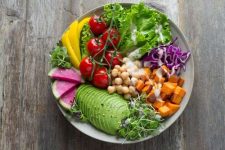
Eating 1 to 4 cups of vegetables and 1 to 3 cups of fruit each day, in addition to consuming whole grains, protein, and healthy fats will help keep our immune systems functioning at their best! For age-adjusted recommended intakes for each food group, check out MyPlate.

We can make other lifestyle changes to help boost our immune systems in addition to eating a healthy diet. Check out our article, Boost Your Immunity with Simple Lifestyle Changes, to learn more.

How to make healthy eating habits stick in the new year

0

Experts provide 10 tips on making healthy eating attainable and sustainable

The start of the new year offers a chance to reflect on the past and set goals for the future. Many of us aim to improve ourselves, but, unfortunately, New Year’s resolutions are often quickly abandoned because they are unrealistic or too difficult to maintain.

This is especially true for resolutions centered around physical health, like healthy eating. Instead of relying on strict rules and super-human discipline, Texas A&M AgriLife Extension Service experts have shared tips for establishing realistic healthy eating goals that can endure through January and beyond.

Don’t force the New Year’s Day start date

Though it might seem counterintuitive, allowing yourself the flexibility to start implementing new habits when you’re ready, rather than forcing yourself to adhere to the calendar, may help them to stick better.

“At New Year’s, there is still so much going on,” said Jenna Anding, Ph.D., RDN, professor and AgriLife Extension specialist in the Department of Nutrition at the Texas A&M College of Agriculture and Life Sciences, Bryan-College Station. “Starting new habits on Jan. 1 works for some people, but, for others, it doesn’t. If you’re ready to embark on changing a particular behavior, pick a day that you know you can start with confidence.”

Set small, measurable goals

Many resolutions are defined with vague or broad language like “lose weight,” “eat healthy” or “improve fitness.” By making goals that are specific and measurable, they will also be easier to achieve.

“If the goal is specific, then you have something that you know you’re working toward,” Anding said. “For example, if you want to include more vegetables in your diet, commit to one or two more servings of vegetables a day. Or, if you’re currently eating out for four or five meals a week, try to cut it back to three. And when that change becomes comfortable, and a true habit, then you can work on something else.”

Use milestones and reward yourself when you reach them

In addition to a broader, overarching goal, establish tiny, attainable ones along the way. For someone planning to lose 30 pounds, for example, setting the goal to lose 5 pounds every two months can help with making steady progress.

“If you have small, incremental goals, you’ll get that internal sense of satisfaction and accomplishment every time you meet one,” Anding said. “That’s going to help with motivation and can really help keep people on track.

“And, when you reach a milestone, remember to treat yourself,” she said.

Practice mindfulness

Miquela Smith, AgriLife Extension health program specialist, Lubbock, suggests practicing mindfulness to pay attention to what the body really needs, which can prevent overeating. She defines mindfulness as the practice of bringing your thoughts into the present moment.

“When people overeat, they often don’t even realize they’ve done so, because they’re eating while their mind is somewhere else,” Smith said. “The practice of being engaged with your body and being present in any given moment can help us make healthier choices, because we’re going to pay attention to our fullness cues.”

For those looking to start practicing mindfulness, she recommends integrating it into activities you’re already accustomed to.

“Start with something that you enjoy doing,” Smith said. “Eat a few meals a week with no distractions. Keep the TV turned off and the phone put away, and, instead, fully engage your senses while you’re eating. For example, before taking a bite, describe in your mind what the food looks and smells like.”

Consider other dimensions of health

Health requires balance. Experts have defined eight dimensions of wellness that factor together to make up a healthy, happy life. Smith encourages people to take stock of how they’re doing holistically.

“We are more than just our physical health,” Smith said. “You can’t be well if you ignore all the other dimensions of your life — your social, occupational or intellectual well-being, for example. And you don’t need to tie your entire self-worth or view of success to one single dimension.

“If you’re taking care of yourself in a holistic way, then that’s success,” she said. “Just remember that physical health is important, but it doesn’t have to be the one dimension that defines you.”

Don’t use the scale as your guide

Even if a healthy eating goal is part of a plan to lose weight, nobody should be a slave to the scale. For changes to be sustainable and truly healthy, they shouldn’t be constructed around what will lead to the most weight loss in the shortest amount of time.

Start by establishing healthy routines that you can maintain, which will likely help with weight loss later.

“Look at what you can do to be more physically active, or consider what is the one thing you might want to improve about your diet,” Anding said. “If you’re just starting out on a health journey, make weight loss secondary.”

Make cooking at home as enjoyable as possible

Food that is made at home is usually much healthier than food from a restaurant, and making the meals yourself allows more control over ingredients.

“If you’re having trouble convincing yourself to cook at home, do whatever you can to make it more enjoyable,” Anding said. “This might include listening to music or a podcast you enjoy, bringing others in to help you cook or starting off with some of your favorite home-cooked meals.”

Identify obstacles to healthy choices

Like any new change, slip-ups and setbacks are inevitable, but they don’t have to be devastating. If you have a bad day, examine what may have triggered it.

“Nothing is going to change overnight,” Anding said. “And we all slip up, but tomorrow is another day. We always get another chance. Take a look at what led you to an unhealthy choice and prevented you from accomplishing what you wanted to achieve.

“Maybe you didn’t eat healthy one day because you were at a sporting event or it was a holiday party and everyone brought dessert. That’s fine. The key is to not beat yourself up and try to get back on track as quickly as you can,” she said.

Make use of established healthy eating styles

A healthy diet is one that is rich in vegetables, fruits, whole grains, nuts, seeds, lean meats and dairy products, but you don’t have to construct an entirely new eating style on your own if that seems daunting.

The Mediterranean diet emphasizes using plant oils, vegetables, fish and nuts, and has been shown to help with heart health and reducing inflammation.

The Dietary Approaches to Stop Hypertension, DASH, eating pattern is designed to limit sodium intake and improve heart health as well. Like the Mediterranean diet, it is also rich in vegetables and fruits.

Lastly, the Mediterranean-DASH Intervention for Neurodegenerative Delay, MIND, diet incorporates aspects from both diets and has been linked with improved brain health and cognition.

“All three of these are great eating patterns to adopt,” Anding said. “Choose one or two things about these diets that you want to try, and then gradually switch from a typical American diet to one of these other three.”

Build a support system

There’s no denying that implementing these changes is going to be hard at times. Because this process is a very personal endeavor, it’s natural to think that it should be done in isolation. But making a successful lifestyle change will be much easier if the people around you are aware of your goals.

“For anybody embarking on a health journey, let family and friends know so they can be supportive,” Anding said. “And surrounding yourself with people who are trying to accomplish a similar goal is good too. That way, you have a support system and a source of accountability.”

Further information

To find more resources on healthy eating and nutrition, visit AgriLife Extension’s nutrition website. Or, if you’re looking for menu ideas, check out Dinner Tonight, where you can find plenty of recipes as well as tips, tricks and techniques for making delicious and nutritious meals for the family.


 

Preparation is key to a successful calving season

0
K-State veterinarian reviews steps for cattle producers before and after calving.

Kansas State University veterinarian Gregg Hanzlicek said being prepared ahead of calving season is the best way for producers to ensure they will bring home the newborn calves successfully.

“We’re approaching the end of the second trimester and moving into the third trimester which means the metabolic demands of that cow or heifer are going to increase tremendously,” Hanzlicek said.

A key to having a successful calving and production season is for cows and heifers to be in the appropriate body condition, which according to Hanzlicek is a score of 5 to 7. He said he has seen many cattle in the 3 to 4 range in the past few months.

“We’re far enough away from calving that we can add condition to these cows and heifers without (creating) an economic burden,” he said. “It really comes down to having a formulated ration that is balanced for protein and energy.”

For those wanting to add scour vaccines to their prevention program, “it’s time to decide what vaccine they are going to use,” Hanzlicek said. “Look at the label and schedule on the calendar when they need to start vaccinating the cows and heifers.”

Hanzlicek said heifers will require two doses of the scours vaccine, while cows need one. The timing of those vaccines is “very, very important,” he said.

Also, Hanzlicek recommends establishing a clean calving area to help reduce the risk of scours. “There’s two major risk factors for scours,” he said. “One is the lack of colostrum consumption. The other is a contaminated environment that the babies are born into.”

Hanzlicek recommends having a location to move the pairs off the calving area to keep the calving facility less contaminated with the scour organisms.

Getting the calf here safely is another factor to consider, “Most operations are going to have to help at least one animal during the calving season,” Hanzlicek said. The last national survey indicated that 1 of every 100 heifers and 2 of every 100 adult cows will need assistance.

Being prepared to pull a calf is important. Hanzlicek said producers should have the following items on hand:

• Clean straps or chains;

• Obstetric sleeves;
• Lube;

• Working calf pullers; and

• Veterinarian’s phone number.

Intervening at an appropriate time is important. “If we intervene too early and the cow or heifer is not dilated, we can injure the tissues and hurt the calf,” Hanzlicek said. “If we intervene too late, a lot of times that’s when we end up with stillborn calves.”

According to Hanzlicek, once a cow has reached the second stage of labor, they should give birth within 30 minutes. A heifer should calve within an hour. Second stage labor is when the heifer or cow can be observed experiencing uterine contractions, or the water-bag or calf’s feet are visible.

If assistance from the producer is needed, and they are unable to extract the calf within 15 minutes, then help—either a veterinarian or someone with more experience—should be called.

Following calving, the calf should be up and nursing within two hours, Hanzlicek said. If not, a colostrum replacer can be given to help get the calf started.

“Colostrum-based powders are the best way to go, and I would recommend that every producer have one or two bags of powder replacer on hand during the calving season,” Hanzlicek said.

By K-State Research And Extension News Service