Thursday, February 19, 2026
Home Blog Page 538

Lettuce Eat Local: Just Horseradishing Around

0

Amanda Miller
Columnist
Lettuce Eat Local


Oh this isn’t too bad, I thought. 

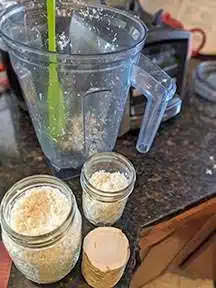
I had just opened the lid of my blender after grating up a big old root of fresh horseradish. I had always heard it’s better to process horseradish in an area with proper ventilation — out on the porch, with the windows open, etc — in order to survive its pungency. But it was cold outside, and it was only one root, and grating would just take a jiffy in my blender, so the reasons piled up for me to take the risk.

My repentance might not have come with sackcloth and ashes, but it did come with tears streaming down my face. Just like it takes a second or two after eating horseradish for it to sneak up and punch you in the face, apparently the compounds in the air also take a moment to hit. And boy, do they hit. Or rather, wallop. 

Like the genius I am, I had kept inching my face closer to the container of just-grated horseradish; it just looked so innocent and I wasn’t smelling anything much. Then I reeled back as the burn careened into my face, searing my eyes and rushing through my nose. It was like I had released a pack of wolves, or in our neck of the woods, a herd of antsy heifers, and the horseradish galloped around the kitchen. The tears would stop for a moment, and then a fresh wave would hit, and they’d start all over again.

Then, almost as quickly as it came, it left. Again like when ingesting the stuff, when horseradish wreaks havoc on your sinuses and disappears in a breath, the volatility in the air was gone. If I got too close to the jars I had desperately packed the grated bits into, I could smell it, but no longer did I have to involuntarily weep about its presence. 

This does all seem to beg the question, why was I voluntarily in the presence of such a painful ingredient in the first place? You know why: because it hurts so good! The main chemical irritant in horseradish triggers a nerve response in the same receptors on the same cells as tear gas does…but it does so in such a pleasant way. The reason it burns up your nose and then leaves, unlike the lasting burn of chili peppers on your tongue, is that horseradish’s spiciness chemical is released as a vapor. That chemical is found in more brassica family plants (think of that unique sulfurous burn of turnips, mustard, and other radishes), and is similar to the one in onions that makes us cry, too.

That compound is water soluble, which is why all the recipes also note that horseradish is the most pungent (read: assaultive) immediately upon being grated. Adding vinegar and salt to the processed root turns it into “prepared” horseradish, and it’s also where you get to try and control the level of fire. Adding the vinegar right away tones down the heat, whereas waiting a few minutes lets the compound build up intensity before being stabilized with the acid. Any grated horseradish, however, will lose its potency over time, which is why some people recommend shredding off only what you want to use right away. 

That sounds like a good idea, since I love the fresh burn zipping up my nostrils, and I love horseradish with potency. But I also can’t head into 2024 crying horseradish tears all the time, so this sobbing-once-for-all method will work grate for me (pun intended). Here’s to a happy New Year with plenty of zippiness!


Fresh Horseradish Cream Sauce

I don’t know if horseradish is supposed to bring good luck to the new year, but it definitely brings flavor, and that’s more than enough luckiness for me. You might be surprised how easy it is to locate horseradish roots, especially this time of year since it’s harvested in late fall. And it’s also surprisingly easy to make your own prepared horseradish — after you’ve mopped up all the tears you’ll cry, of course. 

Prep tips: the cream sauce totally has to be to taste; one of the recipes I looked at said ½ teaspoon of grated horseradish per 1 cup sour cream and one said ¼ cup…so be your own judge as you take your life and nostrils in your hands.

½ pound horseradish root, peeled and cut into chunks

½ teaspoon salt

½ cup white vinegar

1 cup sour cream

1 teaspoon dijon mustard

Grate the horseradish in a food processor or by hand. Mix with salt and vinegar, either right away for milder or after a few minutes for hotter, and pack into a pint jar (adding more vinegar if it seems dry). Separately, mix the sour cream and mustard, and add in however much horseradish you want. Salt to taste, and use with beef, sandwiches, roasted veg, whatever. 

Healthy plants are happy plants!

0


Healthy plants are happy plants! This may be hard to come by in Kansas in the winter. Prevent, or at least minimize, pest issues on indoor plants by choosing the right plants and providing good overall care. Learn about basic care and growing needs for your plant.

Grow plants in the best possible conditions

Select plants with growing requirements that match the indoor environment (humidity, light, temperature).
Plants cannot fight off pests when they are struggling to grow in too little light, overly wet or dry soil, too hot or too cold air temperatures, etc
Sufficient light is important for healthy plants.
Water plants properly

Know how much water your plant needs.
Water the soil at the base of the plant, not the leaves.
Be sure the plant’s pot drains well.
Avoid letting plants stand in water.
Over-watering and poor drainage can cause root rot and encourage fungus gnats as well as other pest issues.

Remove dead leaves and flowers

Apply fertilizer at half the recommended strength.
Fertilize when the plant is actively growing.
Keep plants clean

Keep soil surface free of dead leaves, stems and flowers.
Wash plant leaves with a damp cloth as dust and grime can reduce plant health. Never use leaf shine products or milk.
Prune out dead branches and stems.
Use new, sterile potting soil when potting plants

Never pot indoor plants using soil from the garden.
Avoid using soil from open bags of potting soil that have sat outside for potting indoor plants. Save it for your outside pots.
Plant in clean pots and wash soil off of plant roots.

Cup o’ Cheer News

0

As many people know, the Holidays are meant to be one of the happiest times of the year. Spreading the Holiday season to all is how we show appreciation for each other in the chilly Winter season. Part of that appreciation is the good news that we share between each one of us. This good news could be anything, from having a really great Christmas present to successful deliverance of water to communities that need it. Like we always say here, there’s plenty of good news out in the World, you just have to know where to look for it.

In Hutchinson there is a wonderful bit of good news for the people who struggle with financial means. The Noel Lodge, which is an emergency daytime and overnight shelter for people who struggle with homelessness, is set to receive 25 more beds, and just in time for the holiday season. Adequate housing and support for all is important this time of year and any support stories we hear are so important to share.

If you want a Hippopotamus for Christmas, this is the story for you. Or rather, you can consider this a sign to visit Tanganyika Wildlife Park. The Park service welcomed a newborn Pygmy Hippopotamus into the world on December 14th. What are you waiting for? Go get your tickets, and maybe the hippopotamus’s will like you too!

In McPherson, there are several good indicators of the Christmas season. One of which, was the latest Parade of Lights. The Lakeside Park is currently decorated with lights of the season for the Holidays, I would encourage you to go down and take a look if you’re in the area. They are quite spectacular. I myself, particularly enjoyed the light display on at the swimming pool area in McPherson. If you’re not in the area, not to worry, there are plenty of different light shows taking place in just about every large town in the state. Botanical Illuminations will always hold a special place in my heart for their fantastic light displays.

Meeting Santa Claus as a child is one of the most awkward and special memories you can have as a child. But for this special young deaf girl, it was certainly unlike many others. Luckily, it is becoming more common in our world to have individuals who are trained in ASL in childcare. Such a time was had when this girl went to tell Santa exactly what she wanted, but wasn’t able to communicate with him. One of Santa’s helper elves jumped right in to help her relay her message to Father Christmas. Seeing the video of her face lighting up in recognition, is just about all the Christmas cheer one needs.

If any of you visited Minnesota this Christmas season I hope you managed to see the World Snow Sculpting Championships. I have never been more impressed with the artwork, nor diminished from thinking of my own, feeble snowman making abilities. Even if you’re not visiting Minnesota, I would encourage you to look up some pictures because my goodness are they pretty good.

With all that being said, I think it’s important to note that Christmas cheer exists all around us. Not only that, but take some time to create some. The simple act of doing something nice for someone else is quite a special act to witness. Of course, as many good Christmas stories state, one good deed always sparks another.

Owl vs Owl

0
Thayne Cozart
Milo Yield


I read a lot and often find information worthy of inclusion in this column. Sometimes it’s funny. Other times its just newsy. And sometimes it’s plain ironic.

Ironic is the story I recently read from the Seattle Times about an owl vs owl competition that has forced the all-knowing federal Fish and Wildlife Service into an ironic dilemma. It is advocating to kill a half-million of one type of abundant invasive owl in an effort to save another endangered, protected owl.

According to the story writer, Lynda V. Mapes, the U.S. Fish and Wildlife Service is proposing to enlist shooters to kill more than 500,000 Barred Owls over the next 30 years in the Pacific Northwest to preserve habitat for Northern Spotted Owls, a protected species.

According to what I read, Barred Owls are native to the East Coast but since the 1950s have been expanding their range in the Northwest. They are relentless predators who eat anything that moves. They yank worms from the ground and salamanders out from under rocks. Nail birds on the wing and anything in the water, from fish to snails to crayfish and frogs. Even slugs are on the menu. They are also bigger, more aggressive and more territorial than the Northern Spotted Owls, posing a threat to their survival as a species, which is listed as threatened under the Endangered Species Act.

What makes this story so ironic? Well first off, in past decades, the federal government killed off a big chunk of the logging industry in the Pacific Northwest to save habitat for the spotted owl — which set up conditions for historic habitat-reducing wildfires. Second, well-meaning tree huggers and animal rights folks espouse to love all wild things equally and this owl vs owl throws a monkey-wrench into their thinking. Third, in recent years, the feds have actively tried to hinder hunting with firearms anywhere.

Now it is advocating that a small army of hunters use large-bore shotguns and night scopes as needed for work in darkness or low light. Any hunter may ask the agency for permission to remove the owls under the agency’s protocol, training specifications and permit. Shooters are directed to lure the owls with a recording of another owl’s call. When a Barred Owl comes within 30 yards and is stationary, the goal is shoot to kill!

Of course, folks at the Bird Conservation of Oregon organization are opposed to the owl kill. The article concludes with: “This is really a no-win, awful situation we created for ourselves. It is appalling we have to consider these kinds of measures, and incredibly sad.”

I’ll add that it’s also “ironic.”

***

I’ve got an unusual downsizing problem that I can’t find a solution to. Here’s the deal: In 1975 I subscribed to the inaugural Volume 1 issue of Gray’s Sporting Journal. I still get it 49 years later. Gray’s is not a hunt/fish how-to magazine. It’s what I call an expensive, four-color, slick paper “outdoors persons’ literary magazine.” It calls itself a “magazine for discerning sportspersons” — which is a nice way to say “snobbish.” It only publishes seven issues per year. An annual subscription today is around $40. It’s always been high priced — but worth the bucks for the enjoyment I’ve gotten out of reading it.

Now, here’s my dilemma. I have what I believe is every issue of Gray’s Sporting Journal ever published — something close to 335 issues. I can’t guarantee that I’ve every issue published because the magazine ceased publishing a couple of times in its formative years. Plus, I’ve moved myself four times since 1975. But, I know I’ve got at least 99% of all the Gray’s ever published — enuf to comprise a rare collection of a unique magazine. I’d bet my Gray’s collection is one of a mere handful in the USA.

And, I don’t have room for my collection of Gray’s in our new home. It’s got to go. The magazines need reading by newer more-appreciative eyes than my old peepers. The total subscription price I’ve paid is close to $1,500. The collection is stored in seven boxes. The total weight has to be close to 200 pounds. I’ve estimated it would take 12-feet of library shelf space to display the whole collection. Shipping would be costly.

I’ve tried to sell the collection. No buyers. I’ve tried to swap it to an exclusive hunting/vacation lodge in exchange for a short vacation stay. Ignored. I’ve tried to give it to two major university libraries as a charitable tax donation. Turned me down.

So, I’m out of ideas and I’m hopeful that some reader of this column might have a solution to my downsizing problem with Gray’s. If any reader has an creative idea about how I can sensibly dispose of my Gray’s Sporting Journal collection, please call me at 620-344-1350 or email me at [email protected].

***

I keep uncovering column material as I continue to sort through all the old papers I’ve accumulated down through the years. Below is a story sent to me years ago by a reader from Bird City, Kan., and I never got around to using the story. So, I guess better late than never:

“Back in the horse and mule days, my great-grandfather, Ray Davis, was working as a hired hand for a farmer near Bird City. One day they had hitched up a pair of mules to a wagon to go out and shuck corn The mules balked and refused to move. The farmer was slapping and hitting the mules and they still refused to move.

“About that time, a salesman drove up in an old Model T Ford. He started talking to the farmer to see what was going on and the farmer explained that the mules wouldn’t take even one step. The salesman guaranteed he could make the mules move and the farmer made a bet with him that he couldn’t.

“The salesman said, ‘wait a bit and I bet I can.’ The salesman went into the house, got two sweet potatoes and heated them on the stove. He then came out and told the farmer to get up in the wagon, get a hold on the reins and get ready to go.

He gave one hot sweet potato to my great grandfather and told him to stand behind one mule while he stood behind the other. The salesman then instructed my great grandfather to lift up the mule’s tail and deposit the hot potato at the same time he did. The mules clamped their tails down on the hot sweet potatoes and away they went!

My great-grandfather loved to tell that story and it’s a funny one too.”

***

I agree. Those old-time stories are always worth a laugh. Well, this column is running long, so here’s the words of wisdom for the week: “Save for a rainy day and some new tax comes along and soaks you.”

Hope you and yours had the very merriest Christmas. A holiday toast to you all.


Wheat Scoop: Wheat leaders take a deep dive into milling and baking during K-State short course

0
Kansas Wheat

Contact: Marsha Boswell, [email protected]

For audio version, visit kswheat.com.

MANHATTAN, Kan. – Wheat farmers, grain trade representatives and state and national wheat organization staff members got to walk a figurative mile in the shoes of their end-use customers this month during a flour milling short course at the IGP Institute at Kansas State University.


The IGP Institute organizes this course annually as a deep dive into milling and baking processes. This year’s course, conducted December 11-13, 2023, was designed to give wheat growers and industry personnel training in the basic principles of flour milling and a greater understanding of the relationship between wheat quality and flour performance. Eighteen participants representing seven states participated in this year’s course. They got a firsthand look at the ins and outs of what it takes to take wheat from the kernel to the loaf or other wheat food product.


Chris Tanner, vice president of the Kansas Association of Wheat Growers and a farmer from Norton, Eric Sperber, CEO of Cornerstone Ag in Colby, who serves as an industry representative on the KAWG board, and Kansas Wheat Vice President of Communications Marsha Boswell participated in the short course. Farmers from Idaho, Oregon, North Dakota, Oklahoma and Montana, representatives from national wheat organizations, as well as wheat breeders from South Dakota also attended the course, providing each other with a unique viewpoint of the quality needs throughout the wheat and flour supply chain.


“From a grower’s perspective, wheat is wheat. I took it for granted,” Tanner said. “I thought you just ground it into flour and made bread. That was definitely oversimplified. Most people have a mindset that you run it through the mill once, but I didn’t know it went through so many breaks.”


In addition to classroom lectures, the course included hands-on practical training in K-State’s milling and baking laboratories. The group members learned about the milling differences in the six classes of wheat, principles of wheat cleaning and conditioning, an explanation of major milling equipment and the process of wheat and flour blending, as well as the impact of grade, wheat quality characteristics and mill performance on flour extraction. At the milling laboratory in Shellenberger Hall on the K-State campus, the participants divided into groups to mill all six classes of U.S. wheat.


“There’s an intricate process to get every last piece of flour extracted to get a decent margin,” Tanner said. “The flour miller’s margin is thin, like the farmer’s. The things we do on the farm impact the mill’s bottom line.


“There are people every step along the way that care about getting the best product to the consumer. Everyone along the industry chain is trying to bring the highest quality product to market,” he said.


At the Hal Ross Flour Mill, attendees walked through the machinations and process of an actual flour mill and learned about the various products a mill can produce. They milled both hard red winter and soft white wheat in the mill.


“Having been in the wheat trading business for 30 years, I found the course to be enlightening,” Sperber said. “The milling side of the course really resonated with me. It was helpful to see the dynamics of the milling process. Milling wheat into flour is much more complex than just grinding the seed. My anticipation was that you ran the wheat through the mill once and you had bran, germ and flour. I had no concept of the streams it went through to maximize the endosperm.”


In the baking lab, attendees also learned about the different flour and dough testing methods that end-use customers use to evaluate the quality and functionality of each load of wheat. They also participated in baking tests to see the variation in products like bread, cakes and cookies when using different classes of wheat.


“The classroom instruction on the baking and flour qualities was interesting,” said Sperber. “I didn’t know about the care of trying to not damage the starch from the baking side of it.”


Tanner agreed, saying, “When you buy a bag of flour, you think it’s flour. I learned about the different flours made from the classes of wheat. In the baking lab, I didn’t get the flour I needed to make a loaf of bread, so instead I made a brick.”


Ultimately, the short course pulls back the curtain on the technical aspects of how differences in wheat class and qualities impact the final product on a consumer’s plate. The farmers and staff who attended the course left with valuable knowledge of how to better meet the needs of their customers.


Learn more about the technical, research-based training offered by K-State through the IGP Institute at grains.k-state.edu/igp/.


###


Written by Julia Debes for Kansas Wheat