Friday, February 20, 2026
Home Blog Page 549

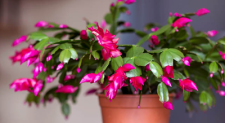
Care of Christmas and Thanksgiving Cacti 

0

Christmas cactus (Schlumbergera bridgesii) and Thanksgiving cactus (Schlumbergera truncata) look exotic but are rather easy to maintain with the right growing conditions. While in bloom, water the plants when the soil surface is just becoming dry to the touch. Never let the plants remain in standing water and well-drained soil is a must.

Holiday cacti bloom in response to the shorter days and cooler nights we experience heading into winter. If you are gifted a Christmas cactus this season, to prolong the bloom, keep the daytime temperature between 60-65 degrees F and the nighttime temperature between 55-65 degrees F. Keep your cactus in total darkness for at least 12 of every 24 hours. The plant should receive bright, indirect light for the rest of the time. Sudden changes in temperature can cause the cactus to drop its blooms. When transporting it home be mindful of the outdoor temperature and take measures to protect your plant from the cold.

The segments of the holiday cactus that look like leaves are actually stems known as “phylloclades”. When your cactus finishes blooming, you can prune it at the union of two of these segments. Each cut phylloclade remaining on the parent plant will produce one to two new stem segments. This will encourage branching and a fuller plant. The cuttings removed from the plant can be propagated into new plants. Dip the cut-end of the stem into water and then rooting hormone, which can be purchased at garden centers or online. Secure this end into potting mix and keep it moist and in a warm location with bright light. Once roots develop you can transplant it into a cactus/succulent media.

While the parent plant is not blooming, decrease the water and care for it as you would a typical houseplant. When the danger of frost has passed, holiday cacti can be moved outdoors in part shade. Beneath a tree is a great location that will provide filtered light. If the stems begin to turn pale they may be receiving too much light. Fertilize once each month in June, July and August at half-strength with a balanced houseplant fertilizer. As the temperature drops to the low 50s at night bring your cactus back indoors. When flower buds begin to develop switch to a fertilizer low in nitrogen and higher in phosphorus and potassium.

Cynthia Domenghini, Extension Agent

What can you plant in Kansas? Most areas are now warmer on the USDA’s gardening and farming map

0
The USDA has access to thousands more weather stations now than in the past. That, combined with 30 years of new data, led to big changes in its hardiness map of cold winter temperatures in Kansas.

Kansans may take a chance on some new plant varieties in gardens and nurseries and on farms next year after the U.S. Department of Agriculture changed its hardiness zone map.

Most of Kansas has been recategorized as one half-zone warmer on the map, which the agency updated last month for the first time in 11 years.

The hardiness map reflects the coldest winter temperatures recorded annually by weather stations across the U.S.

Growers use it to pick plant varieties that should survive the bitterest nights of their local winters. The federal government uses it to set crop insurance standards.

“It’s critical,” said Cheryl Boyer, a professor at Kansas State University’s Department of Horticulture and Natural Resources. “I would say everybody involved in plant production or growth of any kind is using this map.”

Boyer also directs Kansas State Research and Extension programs related to horticulture and natural resources.

“To me, the biggest change if you’re a gardener,” she said, “is in the southern part of the state.”

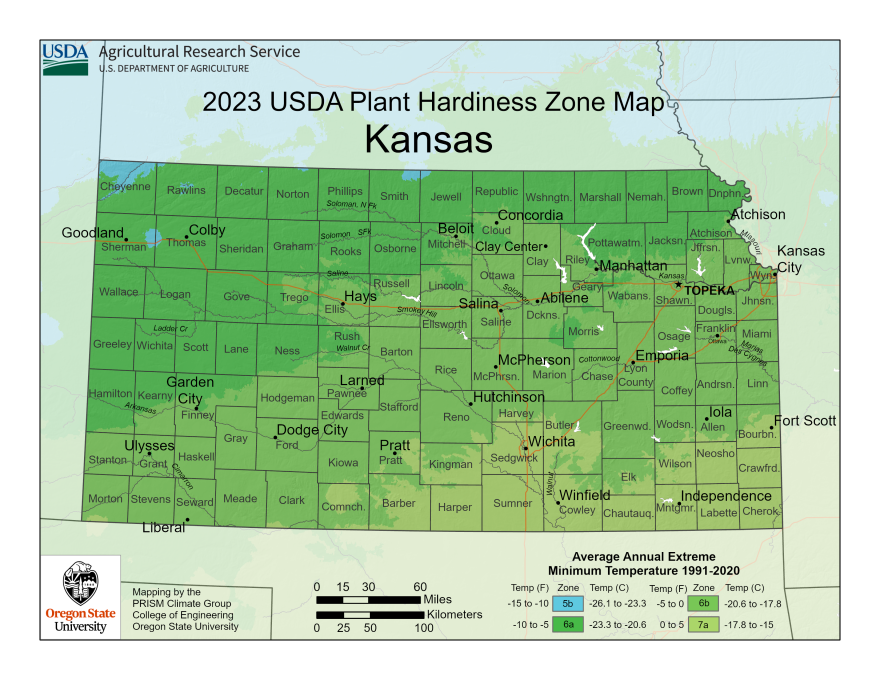
Wichita, Fort Scott and surrounding areas shifted from zone 6b to zone 7a, meaning gardeners there could check out plant recommendations from northern Oklahoma for inspiration.

“That’s open season on trying some new things,” she said, “but also being OK with losing a plant if we have a really extreme winter some year.”

A map of Kansas showing the new USDA hardiness zones.

In other words, growers should be aware that an exceptional cold snap could still buck the USDA’s adjusted map.

Based on 30 years of data, about half of the country has shifted a half-zone warmer on the map.

However, the USDA hasn’t linked this to climate change.

It wrote in a news release that the new map partly reflects efforts to record temperatures in more locations.

Several thousand more weather stations contributed to the 2023 map – 13,412 stations compared to the 7,983 that provided data for the 2012 version.

Additionally, the agency said that the lowest winter temperatures in each area can vary significantly from year to year.

“Map developers involved in the project cautioned against attributing temperature updates made to some zones as reliable and accurate indicators of global climate change,” the agency said in its release, adding that studying climate trends usually requires longer-term data.

Other groups, such as the nonprofit Climate Central, say the changing growing zones fit a trend of global warming caused by carbon pollution in the atmosphere.

If the trend continues, Climate Central says, this could expand the range for high-value crops such as oranges, but it could also allow some crop pests to spread north.

Celia Llopis-Jepsen is the environment reporter for the Kansas News Service. You can follow her on Twitter @celia_LJ or email her at celia (at) kcur (dot) org.


Former Kansas State Penitentiary now open for public tours

0

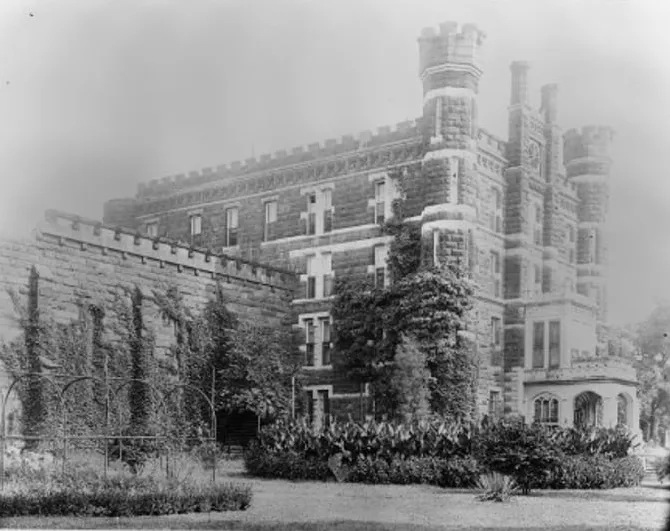
LANSING, Kansas (KCTV) — It’s not as famous as Alcatraz, but the Kansas State Penitentiary has a more interesting history than some might realize, and the Lansing Historical Society plans to share about it.

The original prison, known in modern days as the Lansing Correctional Facility, was abandoned several years ago when a new one opened right behind it. State lawmakers were discussing the cost of tearing down some of the old buildings when a local lawmaker suggested doing tours instead. It required a non-profit. The Lansing Historical Society jumped at the offer.

On Thursday, Historical Society president Debra Bates-Lamborn gave KCTV5 a preview tour of the state’s oldest prison. She recently toured the old Missouri State Prison in Jefferson City and learned it had become one of the state’s top tourist destinations. Her vision is to greet even more visitors seeing that Lansing is closer to a major airport and the county is known for its prison industry.

“A long time ago our tourism group had [the slogan] do some time in Leavenworth,” she said. “That’s because we had so many prisons.”

The state prison complex in Lansing has separate prisons for each of the three security levels. Neighboring Leavenworth has a federal civilian prison and a federal military prison.

Until 1990, the Lansing Correctional Facility was called the Kansas State Penitentiary. Construction on the original limestone building began in the 1860s using prison labor. There was a brief halt in construction due to the Civil War. The prison executed state, federal and military prisoners by hanging until 1965. Among those hanged: were the two men convicted of killing the Clutter family, a murder which was the subject of the Truman Capote novel In Cold Blood.

Perhaps the most famous person to spend time at the prison wasn’t a prisoner. It was Johnny Cash. He played on the auditorium stage in 1970 with his wife June Carter Cash.

“And then he went over and performed at the federal prison at Leavenworth,” Bates-Lamborn said. “So, we had him first.”

Leavenworth County Attorney Todd Thompson, the county’s top prosecutor, championed the plan to offer tours.

“As a lifelong resident, it’s something I think is going to bring a lot of people here to tour and see how wonderful our community is,” said Thompson. “As a prosecutor, what I hope is people wanting to come visit and learn why they don’t want to stay here.”

It can be about tourism and curiosity or something more personal. Bates-Lamborn, Thompson and Kansas Department of Corrections personnel were conducting the media tour when Thompson spotted someone familiar. Leavenworth Mayor Jermaine Wilson was there shooting a documentary. He spent nearly three years there on a drug possession conviction. He had just seen his old cell for the first time since he was released 13 years ago.

“I was in C2 cell house and my cell number was 507,” Wilson said. “It was overwhelming, emotionally overwhelming, knowing that this is where the transformation started.”

His time in prison he has strengthened his spirituality. He now mentors prisoners and speaks about second chances.

“You can’t undo what’s been done, but you have an opportunity to do something that’s never been done,” Wilson said. “I lost my freedom but I discovered my purpose.”

With tours on the horizon, he’s excited about being able to show his 16-year-old son where he wrote his letters home, the place that made him want to find a new beginning and keep his son from becoming the third generation of incarcerated men in his family. The visit Thursday was emotional, he said, but necessary.

“I needed to close the door,” Wilson stated.

He hopes it will do the same for others once tours begin. Bates-Lamborn said The Lansing Historical Society will meet with the Kansas Department of Corrections next week to get the final go-ahead. They hope to begin offering tours in February.

What happens to soil microbes during the winter months?

0

Do they become “snowbirds” and relocate to warmer climates until spring? Do they hibernate like bears? Or do they continue to do the jobs they do so well, waiting for spring and fresh plantings to support?

In regenerative and biological farming, the fate of soil microbes during the winter months plays a crucial role in shaping the overall health and productivity of the soil. Traditional farming practices can undervalue soil health post-harvest, but regenerative approaches prioritize maintaining an active and diverse microbial community, even in the winter.

As the temperatures drop and the growing season ends, the microbial activity in the soil changes. Studies show that microbial activity in agricultural soils increases in the fall when compared to other growing seasons–likely due to an increased level of nutrients and soil organic matter from crop and plant residue post-harvest. Throughout the wintertime, or non-growing season, microbial activity and composition are thought to be stagnant, but stable. An increase in microbial activity occurs after the thawing of frozen soils and can be linked to the freeze-thaw cycle that colder climates experience.

During the colder months, soil freezes over, preventing air diffusion and creating anaerobic conditions for the microbial communities. This occurrence alters the soil community structure. In turn, this change causes an increase in denitrification, respiration, and production of greenhouse gases, which are trapped under the frozen layer. When temperatures begin to rise, the soil begins to thaw, enabling oxygen to enter the soil. This process provides labile carbon and other nutrients to the soil, which increases microbial activity and biomass. Additionally, when the soil thaws, the trapped greenhouse gases are released into the air. This exact dynamic between microbial activity and the FTC is still being debated due to different soil properties greatly affecting freeze/thaw rates and as researchers use different methodologies, making it difficult to compare results between studies.

The incorporation of cover crops is a key practice in regenerative agriculture during the winter months. These cover crops serve as a protective blanket for the soil, preventing erosion and providing a habitat for beneficial microbes. The roots of cover crops, left in the soil after harvest, create a network that sustains microbial life. Additionally, the above-ground biomass of cover crops can act as a carbon source, feeding soil microorganisms even when the primary crops are not actively growing.

The winter period becomes a time for microbial communities to thrive beneath the surface, breaking down organic matter, cycling nutrients, and enhancing soil structure. This activity sets the stage for a vigorous start to the next growing season. “A plant needs a tremendous amount of energy as it breaks dormancy. We should be building that plant up as much as we can, so it comes out swinging strong next season,” says August York, a noted agronomist based in California. “Farmers need to give it more momentum, so it goes into next year at a faster pace.”

Jim Ladlie, who holds a doctorate in crop science and has been in the agriculture industry for more than 30 years, says that when soils are fed well after harvest, growth emerges sooner and more vigorously the next spring, leading to a robust start to the season. He also said that for anyone who fertilizes with products that feed the microbes, soils and plants remain strong throughout the winter, as proven by field studies conducted by Rodale Institute, The Ohio State University, and the U.S. Department of Agriculture. By promoting the health of these microbial populations, regenerative farmers ensure that the soil remains alive and resilient, ready to support plant growth when conditions become favorable again.

In contrast to conventional thinking that might view winter as a dormant period for the soil, regenerative farming recognizes it as a crucial phase in the continuous cycle of soil regeneration. The proactive management of soil health during winter pays dividends in the form of improved nutrient availability, reduced pest and disease pressure, and overall enhanced soil fertility come spring. This holistic approach to soil care during the winter months aligns with the overarching principles of regenerative agriculture—working with, rather than against, the natural processes that sustain life in the soil.


Oh Christmas tree, oh Christmas tree, how lovely are thy … insects?

0

There’s nothing like the pine scent of a fresh-cut Christmas tree during the holiday season. The aroma and beauty of the outdoors are welcome in homes, but a freshly cut Christmas tree may harbor something within its branches that’s not so welcome.

It’s not likely consumers will come face to face with a squirrel like Clark Griswold did in “National Lampoon’s Christmas Vacation,” but dealing with a variety of insects and other arthropods isn’t out of the question.

Real Christmas trees are grown outdoors and serve as a home for overwintering insects and other arthropods. These tiny creatures can remain on the limbs or under the bark after the tree is harvested and brought indoors, said Andrine ShufranOklahoma State University Extension specialist and director of OSU’s Insect Adventure.

“In the fall, insects find places to overwinter or lay eggs in preparation for the winter weather,” Shufran said. “It’s not uncommon for a tree to harbor ants, bark beetles, aphids, beetle larvae, praying mantises or even spiders. They look for micro-climates where humidity is high and the temperature is warm.”

While they may not be apparent before the tree is cut down, these insects become active when they warm up inside the home. Shufran said a praying mantis can lay enough eggs to fill two to three egg sacs, which contain up to 200 eggs each. Look for egg sacs on the undersides of branches, and if one is found, cut off the limb and place it in a protected area outside — it should hatch in the spring. Protecting some species of insects is important because they’re beneficial and eat invasive species that can harm a landscape.

“It’s important to remember that the insects or spiders that might be on the tree can be annoying to have inside the house, but they’re harmless,” she said. “If a family happens to find some insects on the tree, take it as an entomological learning opportunity. Talk about the life cycle of insects and beneficial insects versus harmful insects. The insects can be vacuumed up if necessary to get rid of them.”

In addition to insects, some trees may have a good amount of pollen on the branches. Even though most of it will fall off during the shaking process before taking it home, consumers may consider rinsing the tree once they get it home.

David Hillock, OSU Extension consumer horticulturist, said for those visiting a tree farm or cutting their tree on open land, inspect the tree for signs of insects.

“Most insects aren’t active at this time of year, so they may be hard to spot,” Hillock said. “The foliage should look clean, not sticky or like an insect has been sucking on the leaves or shoots. Families don’t want to wake up and find aphids on the floor or covering the gifts under the tree.”

When purchasing a freshly cut tree at a tree farm, make sure the tree stays on the shaker for 20 to 30 seconds. This not only removes loose needles but also most of the insects on the limbs.

“If consumers cut their tree and don’t have access to a shaker, tap the trunk of the tree on the ground multiple times to disperse loose needles and insects,” Hillock said. “Another idea is to use a leaf blower or compressed air to get rid of loose needles and insects. Also, shaking the branches over a piece of white paper before cutting it down can expose possible insects.”

Once the tree is home, water it properly to help keep it as fresh as possible through the holiday season. A fresh tree can use up to a quart of water per day for each inch of diameter on the cut end. For example, a tree with a 3-inch trunk diameter can use up to 3 quarts of water per day.