Saturday, February 21, 2026
Home Blog Page 559

KU News: Researchers shed light on how one deadly fungal pathogen makes its chemicals

0


From the Office of Public Affairs | http://www.news.ku.edu

Headlines

Researchers shed light on how one deadly fungal pathogen makes its chemicals

LAWRENCE — Investigators at the University of Kansas have played a key role in deciphering a previously unidentified cluster of genes responsible for producing sartorypyrones, a chemical made by the fungal pathogen Aspergillus fumigatus, whose family can cause a deadly infection in humans. Their findings recently were published as the cover story of the peer-reviewed journal Chemical Science, the flagship journal of the Royal Society of Chemistry.

Three graduate students claim awards in KU’s 2023 3MT competition

LAWRENCE — After weeks of preparation and just 180 seconds each to convey their research topics, three University of Kansas graduate students earned honors and cash prizes at the conclusion of the KU Three Minute Thesis Competition (3MT) on Nov. 14. Quentin Jarrell, a master’s student in bioengineering originally from Leawood, won first place and $600 for his presentation, “Unravelling our Genetic Puzzle.” As the top finalist, Jarrell will represent the university at the regional Midwestern Association of Graduate Schools 3MT Competition, which will take place April 5 in St. Louis. In addition, Jarrell took home the People’s Choice award, a $150 prize.

Full stories below.

————————————————————————

Contact: Brendan Lynch, KU News Service, 785-864-8855, [email protected], @BrendanMLynch

Researchers shed light on how one deadly fungal pathogen makes its chemicals

LAWRENCE — Investigators at the University of Kansas have played a key role in deciphering a previously unidentified cluster of genes responsible for producing sartorypyrones, a chemical made by the fungal pathogen Aspergillus fumigatus, whose family causes Aspergillosis in humans.

Their findings recently were published as the cover story of the peer-reviewed journal Chemical Science, the flagship journal of the Royal Society of Chemistry.

Aspergillosis threatens the life of more than 300,000 people each year. A better understanding of the genes responsible for the chemicals — or “secondary metabolites” — produced by A. fumigatus and its fungal cousins could help researchers develop more effective antifungal drugs.

“Fungal infections pose a significant challenge and have garnered increased attention in the media, including scientific reports,” said corresponding author Berl Oakley, Irving S. Johnson Distinguished Professor of Molecular Biology at KU. “Among the problematic organisms is a fungus known as Aspergillus fumigatus. The majority of individuals afflicted with severe pathogenic fungal infections fall into the category of immunocompromised, such as individuals undergoing cancer treatment or those living in sub-Saharan Africa, where a significant number of people that are affected by AIDS aren’t getting medication.”

Oakley and his co-authors were interested in how Aspergillus fumigatus produced secondary metabolites, which often are considered for their medicinal potential — even though they can be tough to study in the lab — because they’re so biologically active.

“Studies have identified numerous gene clusters in fungi responsible for producing these metabolites,” he said. “But these compounds aren’t typically produced under standard laboratory conditions, leaving many of their properties uncharted. These metabolites, while not essential for an organism’s growth, offer selective advantages. They can protect against factors like UV radiation and inhibit competitive species. Some of these secondary metabolites exhibit bioactivities beneficial for various purposes. Others contribute to pathogenic effects, including immune system suppression.”

To isolate and analyze the genes in Aspergillus fumigatus that express secondary metabolites, the team transferred a group of these genes — called a biosynthetic gene cluster (BGC) — to a related strain of Aspergillus, A. nidulans, then activated them. A. nidulans has been modified by researchers to be a model fungal species for this technique, dubbed “heterologous expression.”

“We then can observe the compounds they produce in the lab,” Oakley said. “In one instance, a gene cluster revealed the synthesis of sartorypyrones, a group of compounds with limited prior knowledge of their production.”

The research team named the gene cluster responsible for these compounds the “spy BGC” (spy standing for sartorypyrones). They analyzed the compounds produced by the spy BGC using high-resolution electrospray ionization mass spectrometry, nuclear magnetic resonance and microcrystal electron diffraction (MicroED) to identify 12 chemical products from the spy BGC.

Oakley led the work with longtime collaborator and corresponding author Clay C.C. Wang of the University of Southern California. At KU, Oakley carried out the investigation with C. Elizabeth Oakley and doctoral student Cory Jenkinson. Other co-authors were Shu-Yi Lin and Paul Seidler from USC; Yi-Ming Chiang from Taipei Medical University; Ching-Kuo Lee, Christopher Jones and Hosea Nelson from the California Institute of Technology; and Richard Todd from Kansas State University

They report seven of the compounds had not been isolated previously.

“The spy BGC consists of six contiguous genes involved in the biosynthesis of the sartorypyrones,” they report. “We were able to propose a biosynthetic pathway for this family of compounds. Our approach of refactoring the entire gene cluster in the dereplicated A. nidulans host system provides us with a straightforward way to dissect the biosynthetic pathway.”

Oakley said the same technique could lead to more breakthroughs in understanding A. fumigatus and other fungal pathogens. The results could lead to new therapies for fungal infection as well as eco-friendly industrial uses. For instance, one of Oakley’s other lines of research used genetically modified A. nidulans to convert ocean plastics into raw materials for the pharmaceutical industry.

He said the current paper reflects a proof-of-principle.

“We would like to express the remaining secondary metabolite gene clusters so we know what each one makes,” he said. “We know what 15 or so of them make already. We know that it’s a serious pathogen, and we know some of the secondary metabolites that contribute to pathogenesis. But we don’t know all of the secondary metabolite gene clusters. If we figure them out, then researchers can use that information therapeutically to understand the mechanisms of infection and figure out ways to limit infection.”

However, Oakley cautioned the economic realities of manufacturing antifungal medications could hamper the rapid development of new drugs.

“We need more antibiotics and more antifungals,” he said. “But they’re not profitable. A profitable compound is something that they can give to people for 30 years, not something you give for a week that solves the problem. So there’s not much financial incentive. You can come up with the best antibiotic in the world, they’re going to sit it on the shelf because it’s going to be the last resort, and they’re only going to use it when the other ones don’t work.”

-30-

————————————————————————

The official university X (formerly known as Twitter) account has changed to @UnivOfKansas.

Refollow @KUNews for KU News Service stories, discoveries and experts.

————————————————————————

Contact: Savannah Rattanavong, Office of the Provost, 785-864-6402, [email protected], @KUProvost

Three graduate students claim awards in KU’s 2023 3MT competition

LAWRENCE — After weeks of preparation and just 180 seconds each to convey their research topics, three University of Kansas graduate students earned honors and cash prizes at the conclusion of the KU Three Minute Thesis Competition (3MT) on Nov. 14.

Quentin Jarrell, master’s student in bioengineering, won first place and $600 for his presentation, “Unravelling our Genetic Puzzle.” As the top finalist, Jarrell will represent the university at the regional Midwestern Association of Graduate Schools 3MT Competition, which will take place April 5 in St. Louis. In addition, Jarrell took home the People’s Choice award, a $150 prize.

Jarrell said the competition made him reflect on the impact of his work and why he is involved in research at KU. He thanked everyone involved in the competition and reiterated that opportunities like 3MT help researchers connect with the broader community, encouraging interest in their work and reminding them of its real-world effects.

“It is really special to have the opportunity to represent KU at the regional competition,” Jarrell said. “From my experience as an undergraduate at KU through my master’s program, I know how much amazing research goes on at KU. I’m very proud to share my role in that culture and to share that with other schools throughout the Midwest at regionals.”

Kara Hageman, doctoral student in bioengineering, and Payal Makhasana, doctoral student in civil engineering, tied for second place, and each will receive a $300 prize. Hageman’s presentation was titled “The Material Team to Beat Orthopedic Infection,” and Makhasana’s was “Predicting Drought from Space.”

Hageman said it meant a lot to be recognized for her work and ability to connect with people outside of her field of study. She thanked her peers and mentors for their support and guidance.

“Building this presentation was a difficult, yet fun challenge,” Hageman said. “Condensing years of research into only three minutes made me really think about what the most important concepts were to get across. Since I come from a sports background, I felt drawing connections between a team and how that relates to my research on implant materials made sense.”

Makhasana said she also felt honored to place in the competition and doing so validated the effort and passion she’d put into making her research accessible and engaging.

“This experience has boosted my confidence not only in discussing my research within a concise timeframe, but also in making it understandable to a broader audience,” Makhasana said. “The 3MT competition is a unique opportunity to learn how to effectively communicate with individuals outside of one’s field. This isn’t just a competition, it’s a learning experience that I believe every researcher should embrace. The skills developed here are invaluable for anyone looking to make their work resonate with a diverse audience.”

Twenty-one graduate students participated in KU’s 3MT preliminary heats Nov. 7. Seven of those students advanced to the finals, and three took home awards.

The 3MT competition, a global research communication event, challenges each student to explain their graduate research in a condensed three-minute presentation using a single PowerPoint slide as their only aid.

“All of the finalists did an excellent job in breaking down complex topics and making them more approachable to the wider community,” said Jennifer Roberts, senior vice provost for academic affairs and graduate studies. “I offer my congratulations to the winners for pulling off a challenging feat among several other impressive and diverse presentations.”

The University of Queensland in Australia held the first 3MT competition in 2008. Today, more than 900 universities in more than 85 countries participate.

All of the finalists’ presentations are available to watch on KU’s 3MT website.

-30-

————————————————————————

KU News Service

1450 Jayhawk Blvd.

Lawrence KS 66045

Phone: 785-864-3256

Fax: 785-864-3339

[email protected]

http://www.news.ku.edu

Erinn Barcomb-Peterson, director of news and media relations, [email protected]

Today’s News is a free service from the Office of Public Affairs

 

KU News: Five-year grant to support KU project’s goal to make disability data accessible and inclusive for broad audiences

0


From the Office of Public Affairs | http://www.news.ku.edu

Headlines

Contact: Jen Humphrey, Life Span Institute, 785-864-6621, [email protected], @kulifespan

Five-year grant to support KU project’s goal to make disability data accessible and inclusive for broad audiences

LAWRENCE — Numbers alone can’t tell a story. That’s the foundation of a project now based at the University of Kansas that takes volumes of raw federal and state expenditure data and distills that information for everyone — including policymakers, service providers and individuals with developmental disabilities and their families — to help them make the most informed decisions.

With the support of new $2.25 million federal grant, the project, called the State of the States in Intellectual and Developmental Disabilities, is poised to build on its more than 40 years of financial information translation and dissemination to bring those data stories to new audiences.

The five-year grant from the Association for Community Living (ACL), a part of U.S. Health and Human Services, is one of only three Ongoing Longitudinal Data Projects of National Significance funded by the agency. Each of the ACL projects focus on collecting and analyzing national, longitudinal trends for people with intellectual and developmental disabilities, including information about residential services, employment services and spending on supports for people with intellectual and developmental disabilities.

In addition to funding its core longitudinal study of financial data, the grant will support initiatives to evaluate the accessibility and efficacy of storytelling platforms, training for self-advocates who engage with policymakers, raise the visibility of programs available for Tribal Nation members and improve technology accessibility and innovation with a new industry partner, Adobe.

Emily Shea Tanis, associate research professor at the Kansas University Center on Developmental Disabilities at the KU Life Span Institute, leads the project and is a cognitive accessibility researcher. She said that data accessibility is one of the key drivers of the project, which makes housing it in a university research setting ideal.

“I think there’s a sense that making data accessible only matters in certain contexts, but it affects every discipline,” Tanis said. “That includes everything from basic data representations such as charts and graphs, to the icons or symbols used to represent ideas, to the way that we share information that has the power to improve people’s lives — we need to communicate information so that we are consciously inclusive of all audiences.”

The new grant fully funds the State of the States at KU, where it has been based since 2021. It was previously housed at Colorado University. The project began in 1982 at the University of Illinois-Chicago.

The project includes quarterly webinars, comprehensive project reports, customized data briefs, special study reports and interactive data visualizations based on the data it collects and analyzes.

New components for the 2023-2027 funding:

· A partnership with the design and technology company Adobe to collaborate on an Accessible Iconography Project, an effort to investigate and design a series of cognitively accessible icons for the intellectual and developmental disability community for knowledge translation.

· A project with the University of North Carolina-Chapel Hill to evaluate different storytelling templates to communicate data, which can be used by self-advocates using data to affect policy and practice. The group will explore magazine-style visualizations, posters, charts, slideshows and a method called data comics.

· A program to train five cohorts of 10 trainees through Association of University Centers on Disability programs to advance leadership in policy, education and practice.

· Data literacy training for members of the American Network of Community Options and Resources (ANCOR) to help members with decision-making and advancing state policy.

· Providing a customized training series for state Developmental Disability Council Executive Directors to use national data in developing their five-year plans.

· Support access to public intellectual and developmental disability services and supports for Tribal Nation members through the Black Feathers podcast.

Each of the initiatives supplement the core responsibility of the project to investigate determinants of public spending for intellectual and developmental disabilities services in the United States.


-30-

————————————————————————


KU News Service

1450 Jayhawk Blvd.

Lawrence KS 66045

Phone: 785-864-3256

Fax: 785-864-3339

[email protected]

http://www.news.ku.edu


Erinn Barcomb-Peterson, director of news and media relations, [email protected]


Today’s News is a free service from the Office of Public Affairs

KDA Announces Resilient Food Systems Infrastructure Program Grant Opportunities

0

The Kansas Department of Agriculture is now accepting grant applications for the Resilient Food Systems Infrastructure program. Nearly $6.46 million was awarded to the agency through a cooperative agreement with the U.S. Department of Agriculture’s Agricultural Marketing Service for this program.

The purpose of the RFSI program is to build resilience in the middle of the food supply chain by awarding competitive grants for projects to expand capacity and infrastructure for the aggregation, processing, manufacturing, storing, transporting, wholesaling, or distribution of targeted local and regional agricultural products. This program is intended to support food system crops and products meant for human consumption excluding meat and poultry products, which are funded through other USDA programs.

Grants will be awarded to Kansas food and farm businesses and other eligible entities, including nonprofit organizations, local government entities, Tribal governments, and institutions such as schools and hospitals.

Two grant types will be offered through the RFSI program. Infrastructure Grants will range in value from a minimum award of $100,000 and a maximum award of $3,000,000. Simplified Equipment-Only Grants will range in value from a minimum award of $10,000 and a maximum award of $100,000. Infrastructure Grant recipients are required to contribute 50% of the total proposed project cost as a match to federal funding. This applies to all applicants except those who qualify for the reduced match of 25%. Simplified Equipment-Only Grants do not require cost sharing or matching.

Applications will be evaluated through a competitive review process in cooperation with the USDA–AMS. Applications will be ranked based on their project’s need, proposed outcomes, and feasibility as well as the impact they will have on the local food supply chain and their communities. KDA encourages projects that benefit underserved farmers and ranchers, new and beginning farmers and ranchers, veteran producers, and processors and other middle-of-the-supply-chain businesses owned by socially disadvantaged individuals.

Applications are due to KDA no later than 5:00 p.m. CT on January 31, 2024. For more information, please download and carefully read the Request for Applications from the KDA website: agriculture.ks.gov/RFSI.

The vision of the Kansas Department of Agriculture is to provide an ideal environment for long-term, sustainable agricultural prosperity and statewide economic growth. The agency will achieve this by advocating for sectors at all levels and providing industry outreach.

How to manage holiday spending

0

‘Tis the season for spending. Holiday gifts, decorations, special meals and travel can take a toll on anyone’s budget. Oklahoma State University Extension has tips to help consumers keep their spending in check.

“To help keep your holiday budget on track, think about intentional or mindful spending,” said Suzette Barta, community engagement coordinator for OSU’s College of Education and Human Sciences – Extension, Engagement and Continuing Education. “It can be easy to overspend due to impulse buying, lack of planning or even making guilt-driven purchases.”

First, determine how much money is available for holiday spending; figure out what categories need funding, including gifts, food and decorations, and then set a budget in each category. Use cash instead of credit because it’s easy to overspend on credit without realizing it. Also, discuss expectations with the family.

“Set a dollar amount to spend on each other’s gifts, draw names for a secret gift exchange or suggest only handmade gifts for adults,” she said. “As families continue to grow with the addition of spouses and grandchildren, it can be a financial struggle for some families to continue traditional gift giving. Planning and setting a budget will help keep spending under control.”

Although shopping online is convenient, Barta suggests shopping local whenever possible.

“When consumers shop local, they’re supporting friends and neighbors and helping to keep money in the community,” she said. “These same businesses are the ones who support youth sports leagues and other community activities. Pop-up and holiday markets are great places to find unique gifts. Consumers can further help these small businesses by posting about their shopping experiences on social media. Following and sharing local posts is beneficial to these businesses.”

Shopping local also reconnects residents to their communities. Take time to visit the business district and support small businesses.

Enjoying the holidays doesn’t mean emptying the bank account. Families can experience holiday cheer by driving around town and looking at light displays or inviting the neighbors over for hot chocolate and board games.

“Holidays, despite what may be seen in a Hallmark movie, can be stressful. Don’t add to the stress by overspending,” Barta said. “Be mindful of how you shop and spend your money.”

Compost Pile Maintenance  

0
Photo credit: K-State Horticulture

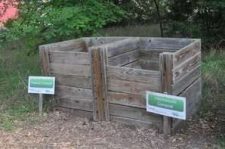
With colder weather, decomposition is still taking place, it just slows down. The interior of the pile is warmer than the edges so aerating the compost heap by turning it is not recommended as this will cool down the whole pile. If desired, you can put a layer of straw or even a tarp over the pile to capture the heat from the pile. You may notice the compost pile freezing and thawing during the cold season. Though decomposition may not be efficient during that time, this process actually does help to break down the materials and provide more surface area for bacteria to do their job when the weather warms up again.

Adding food scraps to the compost pile can cause issues since it will not decompose very quickly. This can cause odors and attract pests to the heap. To avoid this, as you add food waste add a layer of dried leaves as well to maintain the carbon to nitrogen (green to brown) ratio. Also, be sure to bury the food scraps several inches into the compost heap. When the weather warms up, thoroughly turn the pile to incorporate the food scraps.

Smaller compost heaps do not generate as much heat as larger piles, so if you are heading into winter with a pile smaller than one cubic yard you may consider limiting the amount of food scraps you add during the winter months.

Cynthia Domenghini, Extension Agent