Saturday, February 21, 2026
Home Blog Page 560

What is the “Wild” Shrub with the Bright Red Berries? 

0

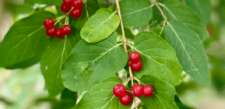
Red berries can seem festive at this time of year, and you may notice some adorning our shrubs in the eastern third of Kansas. They are likely one of two species of bush honeysuckle, Amur and Tartarian. Although they can provide a quick-growing screen or backdrop to the landscape reaching six to twenty feet tall, they can easily become invasive and are included on the noxious weeds list for many states.

The bush varieties of honeysuckle leaf out earlier than many other plants in the spring and remain into late fall. The long growing season supports vigorous growth each year enabling it to fill the woodland understory. Left ignored bush honeysuckle will spread quickly and creates competition for native woodland wildflowers and shrubs.

Hand pulling bush honeysuckle can be effective when the plants are small if the ground is wet. For larger plant chemical control is likely necessary. Cutting the stems to the ground without chemical application will result in vigorous resprouting. Research has shown one of the most effective methods for controlling bush honeysuckle is cutting the branches to the ground and spraying the cut stems immediately with concentrated (20%-50%) glyphosate (i.e., Roundup). Foliar applications of glyphosate or Crossbow (2, 4-D + triclopyr) in late summer and fall can also be effective especially if applied on young plants though damage can be caused by overspray onto nearby plants. Follow all label instructions when using pesticides.

Cynthia Domenghini, Extension Agent
$13.35 million to be invested in rural communities’ infrastructure

0

U.S. Department of Agriculture Kansas State Director for Rural Development Christy Davis recently announced $13.35 million in loans and grants to upgrade water and electrical systems in rural Kansas communities.

USDA Rural Development is working to provide rural communities with the infrastructure they need to succeed,” Davis said.

These Kansas projects are part of a larger national announcement that includes 39 other states. USDA is making the investments through the Electric Infrastructure Loan and Loan Guarantee Program as well as the Water and Waste Disposal Loan and Grant Program. The funding will help improve and repair water and wastewater treatment and connect homes and businesses in rural areas to reliable power.

The details of the Kansas investments are:

• An $8,918,000 loan will help connect 180 consumers to 184 miles of new or improved electrical line. Ninnescah Rural Electric is headquartered in the city of Pratt. It provides service across more than 2,134 miles of line to approximately 4,200 consumers in ten south central Kansas counties (Pawnee, Stafford, Reno, Edwards, Pratt, Kingman, Kiowa, Comanche, Barber and Harper).

• A $1,868,000 loan and a $2,569,000 grant will complete the replacement of the distribution system and construction of new storage towers for Russell County Rural Water District No. 3. Rural Development previously provided funding for this project with a $5,014,000 loan and a $2,783,000 grant in 2020.

USDA Rural Development provides loans and grants to help expand economic opportunities, create jobs and improve the quality of life for millions of Americans in rural areas. This assistance supports infrastructure improvements; business development; housing; community facilities such as schools, public safety, and health care; and high-speed internet access in rural, tribal and high-poverty areas. For more information, visit www.rd.usda.gov.

Irrigation and Water Management Survey needs responses

0

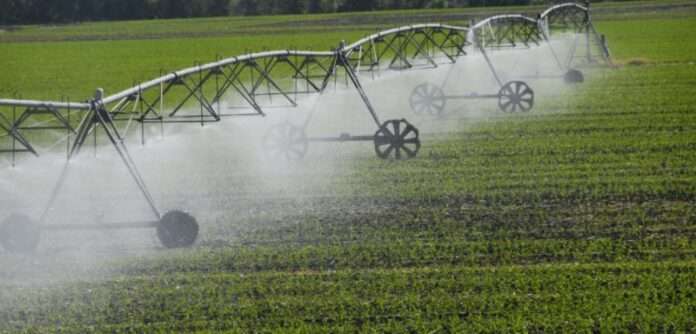
The U.S. Department of Agriculture’s National Agricultural Statistics Service recently mailed survey codes to a selected sample of irrigators across the 50 states with an invitation to respond online to the 2023 Irrigation and Water Management Survey.

The survey is a special study to the 2022 Census of Agriculture and provides the only comprehensive dataset of irrigation activities and water use across American farms, ranches, and horticultural operations. Producer input through this survey will aid USDA’s efforts to promote efficient irrigation practices and long-term sustainability of water resources across the United States.

The survey will be mailed in phases, with paper questionnaires following in January. Producers need only to respond once, whether securely online or by mail. The online option offers timesaving features ideal for busy producers. All responses are due Feb. 15, 2024.

“Water is arguably the most important resource for agriculture and horticulture operations,” said NASS Administrator Hubert Hamer. “This survey is an opportunity to provide data that will influence policy decisions that have a tremendous impact on the industry for years to come.”

Responding is more convenient than ever due to the USDA NASS Online Respondent Portal at www.agcounts.usda.gov where producers can view and complete NASS surveys, view historical reports, and access other resources.

“I strongly encourage all farmers, no matter how large or small their operation, to promptly complete and return their questionnaire. This is your opportunity to share your voice, uplift the value and showcase the uniqueness of American agriculture,” said Administrator Hamer.

Responding to the 2023 Irrigation and Water Management Survey is required by law under Title 7 USC 2204(g) Public Law 105-113. The same law requires NASS to keep all information confidential, to use the data for statistical purposes only, and to publish in aggregate form to prevent disclosing the identity of any individual producer or farm operation. NASS will release the data on Nov. 14, 2024, at www.nass.usda.gov.

To learn more, visit www.nass.usda.gov/agcensus. On the website, producers and other data users can access frequently asked questions, past ag census data, other special study information, and more. For highlights of these and the latest information, follow NASS on X @usda_nass.

Caring for poinsettias

0

K-State horticulture expert says popular holiday plant can be maintained year-round

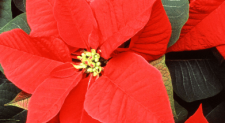
In all their colorful glory, poinsettias are a great addition to any home during the holiday season.

Ranging from red, white, green, pink or a color combination, poinsettias can be maintained year-round, says Kansas State University horticulture expert Cynthia Domenghini.

“Poinsettias do best with temperatures between 65 and 75 degrees Fahrenheit,” Domenghini said. “Consistency is key so as to avoid drafts from windows or heat sources, such as the fireplace or space heaters.”

While bright, indirect light is preferred, Domenghini advised keeping poinsettia leaves from touching cold windows. Soil should be kept moist as well.

“If it dries completely, the poinsettia will wilt and potentially lose some leaves,” Domenghini said. “Water the plant in the sink until water runs through the drainage holes of the container.”

She warns that the roots will rot if the poinsettia is left in standing water, such as in a saucer or in the plastic sleevethey are often sold in.

“Fertilizing and other maintenance is not necessary until after the holidays,” Domenghini said.

Interested persons can also send their garden and yard-related questions to Domenghini at [email protected], or contact your local K-State Research and Extension office.

Keep their paws off overwintering indoor plants

0

As winter settles in, many plants and houseplants that were growing outdoors have returned inside. Before bringing in your plants, consider animal companions, such as dogs and cats, because some plants can make them sick if ingested. Knowing what plants you have and how they will affect your furry friends can go a long way in keeping your family safe.

Plants have several natural defenses to protect themselves against pests, including physical and chemical barriers. Physical barriers might be things like fine hairs on okra, prickles on cucumbers, thorns on roses, and spines on cacti. Chemical barriers are phytochemicals that can cause various issues depending on exposure and toxicity, such as irritation or illness. Bitterness is an example of a chemical barrier.

There are plants of concern for humans, and there is another list for pets. One example of a plant that is safe for human use but can make dogs and cats sick is aloe.

With both existing house plants or when bringing plants inside, there are some ways to limit exposure to keep both your plants and pets safe. Labeling plants is key, especially when making room for all your plants as you bring them in for winter.

  • Keep non-pet-friendly plants in a room out of reach.
  • Discard plant debris and clippings into an outdoor receptacle or one away from pets.
  • Hang plants out of reach of pets.
  • Label plants and use a sticker or label on plants that are unsafe.
  • Use metal cages or terrariums for added protection if you are unable to separate by room.

The following list from University of Nebraska Extension covers plants that are poisonous to pets: Amaryllis, Andromeda, apple seeds, apricot, arrowgrass, avocado, bittersweet, boxwood, buttercup, caladium, castor beans, cherry pits, chokecherry, crown of thorns, daffodil, daphne. delphinium, dieffenbachia, elephant ear, English ivy, elderberry, foxglove, glory lily, hemlock, hemp, holly, hyacinth, hydrangea, iris, jasmine, Jimson weed, Kalanchoe species, laburnum, larkspur, laurel, locoweed, marigold, mistletoe, monkshood, mushrooms, narcissus, nightshade, oleander, peach, philodendron, Poinsettia, poison ivy, privet, rhododendron, rhubarb, stinging nettle, tobacco, tulip, walnut, wisteria, and yew.

The American Society for the Prevention of Cruelty to Animals also has species-specific poisonous plant lists for dogscats, and horses. If a pet does consume a plant, contact your veterinarian immediately.

Download a Plant and Pet Safety infosheet or connect with your local Illinois Extension county office for more information.