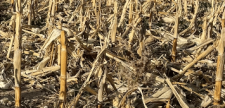
High Plains producers faced a challenging harvest because of Mother Nature’s curveballs—drought, heavy rainfall, wind, and hail.
Holly Thrasher, a technical agronomist for DEKALB Asgrow with territories that include central and western Kansas, said on Nov. 3 that harvest was behind schedule because of later re-planting dates for corn, soybeans and sorghum this spring. Some farmers unfortunately had a second round of hail that wiped out the second planting, most notably in a band in Haskell County in southwest Kansas.
Overall, harvest conditions have been good to help hasten it and she expected most of the corn and soybean harvest to be wrapped up around Nov. 10.
When compared to a year ago, the results are more promising. There was virtually no dryland corn to pick but this year there were fields that made 80 to 120 bushels an acre. The harvest appeared to have greater potential until mid-August when cooler weather was followed by nearly three weeks of above 100 degrees Fahrenheit. The heat really hit soybean fields hard in central Kansas, she said.
Although it has been a season with many ups and downs many producers reported more favorable performance and yields.
Thrasher said this growing year was a reminder about the importance of staying disciplined with fundamentals on seed selection, fertilizer and weed management.
As an example, in the Dodge City area there were farmers who reported favorable rain after mid-May for several months but subsurface moisture was lacking because of drought conditions that started in 2022. With a cool and wet late spring that continued into early summer the dryland corn did not have an opportunity to fully develop its root system. When the heat returned plants were stressed.
“When those periods came into play the corn wasn’t conditioned for that scenario versus what we normally might experience,” Thrasher said. “We did the best we could given the factors that were out of our control. You can baby a field along as much as you can but when it lacks the foundation of roots to go down underneath to get that moisture because it doesn’t have to it put us in a less than ideal situation when the heat returned.”
Looking ahead to 2024, she said dryland growers should assess what worked in 2023 but also review what works year over year. She praised DEKALB DKC70-27RIB Brand Blend and DKC62-70RIB Brand Blend as consistent hybrids for irrigated corn in central and western Kansas and other areas in the High Plains. Strong track records are valuable.
“It’s easy to say, ‘Well this hybrid was new and it’s awesome and it’s got a bright future’ but I think being able to look at products that have a really strong track record is going to be just as important,” the technical agronomist said.
Drought tolerance is an important trait but if a grower only focuses on that trait it could limit a crop’s yield potential.
A strong overall agronomic package for soybeans, corn or grain sorghum is important because Kansas producers may have to be able to withstand several unknown weather variables in a single growing season. She noted that grain sorghum, known for its hardiness and drought tolerance, also had its share of growing challenges in 2023.
“Those same weather conditions that hurt us were the heat and dry periods that caused challenges in getting the crop to head out,” Thrasher said. “Having maturity dates that range across your entire farm and not just planting one variety everywhere helps spread out that risk of when stress hits and may reduce yield potential in some fields.”
Farmers realize that water availability is always going to be uncertain from the fickleness of Mother Nature or as irrigators face more limitations in groundwater management districts but the good news is DEKALB and Asgrow track products and have skilled personnel to place products and help optimize performance.
“Knowing that you have a full arsenal of products like with DEKALB and Asgrow in your back pocket as a grower we can help growers through what is available with certainty,” Thrasher said. “Our team can answer questions like, ‘Are you placing the best genetics and traits? Do we have the right maturity or do we need to change maturities from what we’ve planted in the past?’
“The company wants growers to know they are able to help them face growing challenges and help make them profitable.”
At the end of the day there’s nothing more rewarding for the technical agronomist to hear a grower say, “that worked out pretty well for us,” she said. “For me that says we helped the grower to be profitable and help them make the right decisions. At the end of the day that’s what we really want to be able to do for them.”
As reported in the High Plains Journal