Saturday, February 21, 2026
Home Blog Page 568

East and west (2)

0
john marshal


It’s doubtful that anyone in Lawrence worries over the water supply in Hays or cattle prices in Dodge City ‒ at least not in the way they tune in to Kansas City. And yet liberal Lawrence, a leafy university town, is bound to the arid west by shotgun marriage, carved by gerrymander into the vast, rural and mostly conservative First Congressional District.

This merger takes in 400 miles of politics, culture, lifestyle and landscape, east to west.

Lawrence, home to the University of Kansas, bustles in the hills and woods along the wide Kansas River. Here is land of the southern Osage Questas, fed and watered by the many creeks and tributaries of the western High Plains and Smoky Hills.

Dodge City lies along the Ark River lowlands and High Plains, its high plateaus, dry streambeds, grassy humpbacks and tableland to the horizon.

Lawrence is inclined to the metropolitan east, drawn to the urban hives, their energy and movement, their sociability, their congestion. The western townships struggle against an exodus of people as farm cities look for affordable housing and bi-lingual school teachers ‒ tri-lingual, if they’re lucky.

In spite of the contrasting landscapes, divergent lifestyles and disparate cultures, east and west in Kansas share a long list of connective concerns. They include schools, health care, local taxes, the environment and more. Each of these mutual concerns is subverted by the meddling politics of Topeka.

Consider two of them. Health care and local taxes are genuine worries shared across Kansas, east to west. In Topeka, they are merely cornerstones for the grievance-dogma of cause lobbies, local issues nationalized and fortified with outside money.

*

Head west from Lawrence (pop. 95,000) and the vista gets bigger and the cities smaller. Along the Interstate it’s 85 miles to Manhattan (55,000), another 55 miles to Salina (46,500). Hays (21,000) is another 100 miles. Two-lane highways southwest another 112 miles to Dodge City (28,000), west 52 miles to Garden City (28,000), then south 72 miles to Liberal (19,600) ‒ 476 miles west as the roads go, not as the crow flies.

It’s about the same into the northern sector from Hays to Oakley, Colby, Goodland and north to St. Francis. In the old days, legislators would head west together from Topeka in caravans or busses, picking up colleagues en route. They walked western streets, visited farms, held town meetings and forums. Mostly they listened, made some friends, heard concerns and compliments. Those thousand-mile round trips, two or three a year, became connective threads that enlightened discussions in Topeka.

The threads remain. The listeners have gone, connections abandoned.

*

Last month the hospital in Herington closed. Next month, the Fort Scott emergency department will close; it had remained after the hospital shut down five years ago. Recent studies find at least 80 of Kansas’ 104 rural hospitals are deep in debt, more than half of them at risk of closing.

Rural hospitals and clinics cannot afford to treat the uninsured. The sick and injured poor turn to emergency rooms for “free” treatment, subsidized by the insured through higher rates. Immigration of the uninsured poor puts a squeeze

on urban medicine .

The legislature refuses to expand Medicaid for roughly 150,000 Kansans who earn too much to qualify for traditional Medicaid but not enough to buy private health insurance. Expanded Medicaid carries a 90 percent federal subsidy. Kansas is one of ten states that have not expanded Medicaid, a health care lifeline for cities as well as farm country.

*

Property and sales taxes are the chief revenue source for cities and counties. Sales taxes are at their limit in most places while property levies increase everywhere.

Over the past 20 years, the legislature has denied more than $1.5 billion in property tax relief owed to Kansas cities and counties and ordered by state law. The money, now more than $120 million annually, is derived from the Local Ad Valorem Tax Relief fund, framed in statutes that date to 1937, reinforced in the 1960s and enhanced in 1992.

Rural districts and metropolitan neighborhoods need the money. Instead, lawmakers have spent it mostly on goodies for wealthy individuals and fat corporations.

Lawrence and her western cousins share many issues that override silly culture wars and tribal snobbery. They are ties that bind, and save a lot of money.

(Next: Too stupid?)

Midwestern Regional Climate Center develops Soil Temperature Climatology Tool

0

The Midwestern Regional Climate Center, which is housed at Purdue University, is launching a new tool in partnership with the U.S. Department of Agriculture’s Midwest Climate Hub to provide soil temperature threshold information based on historical data from the last 30 years. Melissa Widhalm, the MRCC’s associate director and regional climatologist, said the Soil Temperature Climatology Tool will be crucial for the agricultural industry to better identify benchmark dates for when specific agronomic activities, such as planting and applying nutrients, should take place.

“Every spring and every fall we get numerous requests from farmers asking us at the MRCC when they should expect to be able to put seed in the ground or apply nitrogen, based on past soil temperatures,” Widhalm said. “While this isn’t a real-time monitoring program, this does clue in that piece of historical data that we didn’t have access to before so we can make better-informed decisions.”

Data for the tool was sourced from the North American Regional Reanalysis, a model produced by the National Centers for Environmental Prediction that generates reanalyzed data for temperature, wind, moisture, soil and dozens of other parameters. Widhalm said using data from NARR was necessary because several areas across the Midwest lack substantial soil temperature measurements. These soil temperature estimates provide for an accurate historical perspective.

Laurie Nowatzke, coordinator of the USDA Midwest Climate Hub, expressed excitement over the tool’s release: “Soil temperature affects so many on-farm management decisions. We consistently hear from producers and agricultural service providers that they need better access to this key piece of climate information. As with many of MRCC’s data tools, the Soil Temperature Climatology Tool can help Midwestern farmers plan ahead during complex parts of the season.”

While the Soil Temperature Climatology Tool was developed with the farming community in mind, Widhalm said the data this tool provides will be useful for several other production areas.

“This will be helpful for anyone working with soil, whether that is construction companies needing to dig in the ground or a forester needing to haul cut trees across frozen ground,” she said. “We want people to understand this tool can be versatile for a multitude of industries.”

The Soil Temperature Climatology Tool is available to the public on the MRCC’s website.

Search begins for poacher who stole deer head shot by legal hunter

0

RICE CO., Kan. (WIBW) – Game Wardens are searching for the poacher who stole the head off of a buck legally shot by a hunter in Rice County.

Game Wardens with the Kansas Department of Wildlife and Parks say that on Thursday, Nov. 9, they were contacted by an archery hunter who had attempted to locate a buck he shot with his equipment on Wednesday evening in Rice Co.

However, after the hunter found the deer he felled, he reported to Game Wardens that sometime earlier in the day, someone had taken the head and left the rest of the animal lying in a field.

KDWP noted that law enforcement officials are currently looking for the antlers pictured and the public has been asked for its help.

Anyone with information about the incident should report it to Game Warden Skucius at 785-342-7276.

Keep Risky Habits Out of the Kitchen this Thanksgiving

0
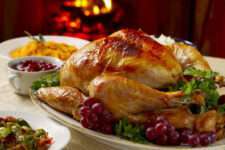
Photo courtesy: plainville farms

America’s biggest food holiday is almost here, and the U.S. Department of Agriculture (USDA) wants to remind consumers to avoid habits that increase the risk of harmful bacteria in their Thanksgiving meal.

“Unsafe handling and undercooking your turkey can cause foodborne illness,” said USDA Under Secretary for Food Safety Dr. Emilio Esteban. “To ensure your Thanksgiving meal is wholesome and memorable without the illness, follow the four steps to food safety: clean, separate, cook and chill, and avoid risky food handling habits that go against USDA guidelines.”

Here are seven dangerous habits USDA would like consumers to drop:

#1 Not washing your hands or kitchen surfaces before, during and after food prep:
Handwashing is the first step to avoiding foodborne illness. Wash your hands for at least 20
seconds with soap and water before, during and after handling food.
 Clean and sanitize any surfaces that have touched raw turkey and its juices and will later
touch food, such as kitchen counters, sinks, stoves, tabletops, etc. Cleaning with soap and
water physically removes the germs, and sanitizing kills any remaining. Many different
sanitizers can be used: an easy homemade version is to make a solution of one tablespoon
of liquid chlorine bleach per gallon of water, or you can use a commercial sanitizer or
sanitizing wipe.
 Thorough handwashing remains a concern for the USDA. The most recent USDA study
shows that 87% of participants self-reported they washed their hands before starting to
cook in the test kitchen. However, only 44% of participants were observed doing so
before meal preparation. Additionally, handwashing was not attempted 83% of the time
when it should have been done (after handling raw meat or touching contaminated
surfaces). Throughout the study, 96% of handwashing attempts did not contain all
necessary steps.

#2 Using the same cutting boards and utensils for raw and ready-to-eat foods: Cross-
contamination is the spread of bacteria from raw meat and poultry onto ready-to-eat food,
surfaces, and utensils. Avoid this by using separate cutting boards — one for raw meat and
poultry and another for ready-to-eat foods like fruits and vegetables that will be served raw.

#3 Defrosting your turkey on the kitchen counter: Leaving any frozen package of meat or
poultry for more than two hours on the counter at room temperature is dangerous. Even though the center of the package may still be frozen, the outer layer of the food is in the “Danger Zone” between 40 and 140 F — a temperature where foodborne bacteria multiply rapidly. You can safely thaw a turkey using the following methods:
 Refrigerator Thawing: When thawing in a fridge, allow roughly 24 hours for every four
to five pounds of turkey. After thawing, a turkey is safe in a refrigerator for one to two
days.
 Cold Water Thawing: When thawing in a cold-water bath, allow 30 minutes per pound
and submerge the turkey in its original wrapping to avoid cross-contamination. Change
the water every half hour until the turkey is thawed. Cook it immediately after thawing.

#4 Cooking your turkey overnight at a low temperature: It is not safe to cook any meat or
poultry in an oven set lower than 325 F. At lower temperatures, meat stays in the Danger Zone for too long. Cook your turkey at 325 F or above and ensure all parts of the turkey reach a safe internal temperature of 165 F.

#5 Relying only on a pop-up temperature indicator: While the pop-up timers found in many
turkeys tend to be fairly accurate, they only check the internal temperature in one spot when we recommend three. Always use a food thermometer to ensure your turkey has reached a safe internal temperature of 165 F in the thickest part of the breast, the innermost part of the wing, and the innermost part of the thigh to check its internal temperature.

#6 Stuffing your turkey the night before: USDA recommends against stuffing your turkey
since this often leads to bacteria growth. If you plan to stuff your turkey, follow these steps:
 Prepare the wet and dry ingredients for the stuffing separately from each other and
refrigerate until ready to use. Mixing the dry and the wet ingredients produce an
environment that bacteria can thrive in hours before being placed in the oven. Mix wet
and dry ingredients just before filling the cavity of the turkey.
 Stuff the turkey loosely — about 3/4 cup of stuffing per pound.
 Never stuff a whole turkey and store in the refrigerator before cooking. Immediately
place the stuffed, raw turkey in an oven set no lower than 325 F.
 A stuffed turkey will take 50% longer to cook. Once it has finished cooking, place a food
thermometer in the center of the stuffing to ensure it has reached a safe internal
temperature of 165 F.

#7 Keeping leftovers for more than a week: Store leftovers in small shallow containers and put them in the refrigerator. Thanksgiving leftovers are safe to eat for up to four days when stored in the refrigerator. In the freezer, leftovers are safely frozen indefinitely but will keep the best quality for two to six months.

For more food safety information, call the USDA Meat and Poultry Hotline at 1-888-MPHotline (1-888-674-6854), email [email protected] or chat live at ask.usda.gov from 10 a.m. to 6.

Lovina and Family Enjoy a Fall Day Together

0

Lovina’s Amish Kitchen
Lovina Eitcher,
Old Order Amish
Cook, Wife &
Mother of Eight

Today grandson Byron (son of daughter Loretta and Dustin) is 3 months old. He weighs 10 pounds, 12 ounces now. He’s a sweet little smiley baby. He’s cooing and an active little boy. Denzel loves his little brother but sometimes looks annoyed to have to share everyone with Byron. He likes to give Byron something to play with, which isn’t always a good thing if it’s somebody’s shoe. Haha!

On Sunday I made a breakfast haystack for brunch. Those joining us were Tim, daughter Elizabeth, Abigail, 7, Timothy (T.J.), 4, Allison, 3, and Andrea, 21 months, daughter Susan, Ervin, Kaitlyn, 7, Jennifer, 5, Isaiah, 5, Ryan, 4, and Curtis, 4, daughter Loretta, Dustin, Denzel, 16 months, and Byron, 3 months, daughter Verena and her special friend Daniel Ray, son Joseph’s special friend Grace, daughter Lovina’s special friend Daniel, and nephews Henry, Jacob, and Steven. 

For the haystack breakfast I made Mystery Biscuits (and crumbled them after baked), sausage, bacon, ham, scrambled eggs, fried potatoes, cheese sauce, green peppers, onions, tomatoes, hot peppers, salsa, and gravy. For a haystack, layer everything you like, and add more ingredients to your menu if you prefer. Lastly, pour cheese sauce and gravy over everything. It is a good meal but takes time to make everything. It is easy for children; if they only like biscuits and gravy or scrambled eggs, they can take only that. We also had rhubarb juice, grape juice, V-8 juice, coffee, milk, and cider, as well as ice cream and pumpkin whoopie pies. Some of these recipes will likely be included among over one hundred recipes in my new cookbook The Cherished Table (release date June 2024)! 

Before everyone left we had hot dog and bologna sandwiches, venison snack sticks, chips, pretzels, apples, popcorn, etc. 

It was a beautiful fall day, and the children loved being outside. Their favorite place to play is on the big pile of dirt in our field behind our house. Son-in-law Dustin and his brother Daniel (Lovina’s special friend) run an excavating business besides working construction as well. They are digging a pond for us. We needed dirt to fill in to build a new barn so we decided to have them dig a pond instead of paying for dirt to be hauled in. It will be nice once it’s all done. Our barn is very old, so we need room to store hay, etc. So we decided to build a new one instead of trying to fix up the old one. It seems there is so much work that need to be done and so little time to do it. Our goal was to have this pole barn built before the snow starts flying. 

Son Benjamin is hoping to get the okay from the doctor tomorrow to return to work. He laughs and says we were waiting to build the pole barn until he can help. We will be glad for his help. 

Son-in-law Dustin and son Joseph worked on the stair steps one night and that is another project needing attention. 

Recently one Friday evening, daughter Verena had Daniel Ray’s family and our family at her house for supper. Some of our grandchildren and Daniel Ray’s siblings are in the same school, so they had fun that evening. Dutch Blitz and dice games were played and the evening was enjoyable. Everyone helped bring food so it made it easier for Verena. 

Church services will be set at our house in 6 1/2 weeks, Lord willing, so we are trying to clean as well. My daughters were home one day helping last week. I was so glad for their help. I know they are busy with their own work. I can feel I am not as young as I used to be when getting ready to host church services. I am thankful for my good health and should not complain when my work falls behind. Take one day at a time!

God’s blessings to all!

Pumpkin Whoopie Pies

2 cups brown sugar

1 cup vegetable oil

1 1/2 cups cooked, mashed pumpkin

2 eggs

3 cups flour

1 teaspoon salt

1 teaspoon baking powder

1 teaspoon baking soda

1 teaspoon vanilla

4 1/2 teaspoons cinnamon

1 1/2 teaspoons ginger

1 1/2 teaspoons ground cloves

Filling:

1/2 cup milk

1 (8 ounce) package cream cheese, softened

2 teaspoons vanilla

3–4 cups powdered sugar

Cream sugar and oil. Add pumpkin and eggs. Add flour, salt, baking powder, baking soda, vanilla, and spices. Mix well. Drop by heaping teaspoons onto greased cookie sheet. Bake at 350 degrees for 10–12 minutes. 

For filling, mix milk, cream cheese, and vanilla with 3 cups powdered sugar. Add more sugar as needed to reach desired consistency. Spread between two cookies.

Lovina’s Amish Kitchen is written by Lovina Eicher, Old Order Amish writer, cook, wife, and mother of eight. Her two cookbooks, The Essential Amish Cookbook and Amish Family Recipes, are available wherever books are sold. Readers can write to Eicher at Lovina’s Amish Kitchen, PO Box 234, Sturgis, MI 49091 (please include a self-addressed stamped envelope for a reply); or email [email protected] and your message will be passed on to her to read. She does not personally respond to emails.

NOTES TO EDITORS: text=789 words; end material=80 words 

Contact: [email protected]; 1-800-245-7894