Saturday, February 21, 2026
Home Blog Page 567

Horticulture 2023 Newsletter No. 45

0

https://hnr.k-state.edu/extension/info-center/newsletters/index.html

Blog Post: http://www.ksuhortnewsletter.org

Video of the Week: Protecting Roses for Winter

https://kansashealthyyards.org/all-videos/video/protecting-roses-for-the-winter

UPCOMING EVENTS

Kansas Turf & Landscape Conference

The 73rd Annual Kansas Turf & Landscape Conference will be held on Wednesday, November 29 and Thursday, November 30 at the Hilton Garden Inn, Manhattan. The conference is an excellent way to learn about turf and landscape management, visit with old friends, network with new ones, and see all the latest products and supplies from local and national vendors.

The conference has been approved for commercial pesticide recertification hours:

1 Core hour

3A – 7 hours

3B – 7hours

GCSAA education points and International Society of Arboriculture CEUS will also be available by attending the conference.

For more information, go to https://www.kansasturfgrassfoundation.com/

REMINDERS

Remove annual flowers killed by frost.
Plant spring-flowering bulbs.

FLOWERS

Winterizing Roses

Although most shrub roses are hardy through Kansas winters, many hybrid teas and other modern varieties require protection. It is important to wait to winterize roses until several hard frosts have occurred, but prior to the ground freezing. Too early and the stem remains warm moist; good conditions for cankers to develop. Too late risks damage to the sensitive graft union where the rootstalk attaches to the above ground growth.

Clean up plant debris in the area surrounding the roses to prevent diseases from overwintering. Mound soil or compost eight to ten inches high around each rose plant. Bring in new soil for this rather than displacing soil from the area around the roses to avoid damaging the roots and exposing them to the cold.

Once the ground has frozen, add a 4-inch layer of straw, leaves, wood chips or other mulch over the mound and cover with a layer of soil to hold it in place. This will help protect the plants from the cold but also prevent early budding during warm winter and early spring days. As the mulch settles during winter you may need to add more.

Prune canes to 36-inches and remove weak or thin canes. Tie the remaining canes together loosely to keep them secure during windy weather. If the canes are allowed to whip in the wind it can cause damage to the crown and disturb the soil.

When the ground thaws in the spring remove the mulch and soil from the base of the plant to return the soil level to normal. (Cynthia Domenghini)

Amaryllis Culture

Amaryllis (Hippeastrum) are a classic bloom for this time of year. If you are purchasing bulbs be sure to select the largest bulbs available that are firm and dry. If growth is visible it should be bright green. Each bulb should produce three to four blooms on a one to two-foot stem. Larger bulbs will produce more flowers.

Amaryllis grow best in tight spaces so select a container that is about one-inch larger in diameter and twice as tall as the bulb with drainage holes in the bottom. Hold the bulb over the container with the roots dangling to the bottom and add a sterile potting mix. Firm the soil around the roots carefully to avoid damaging them. Leave the top third to half of the bulb visible above the soil.

Put the container in a sink and water thoroughly. When the water has stopped draining, set the plant in a warm, sunny location. As the flower opens move the plant away from direct sunlight and to a cooler location to prolong the bloom period which can last up to one month.

When blooming is complete, the amaryllis plant is still growing. Remove the bloom stalk to prevent the bulb from expending energy on seed formation. Move the container back to the sunny window. When the danger of frost has passed you can begin to gradually expose the plant to the outdoors. First secure the container in an area outdoors with dappled shade. Over time you can move it to a location that receives six hours of full sun each day. Apply a balanced houseplant fertilizer monthly.

Prior to the first frost bring the amaryllis back inside and place it in a dark location. Stop watering it and when the leaves dry cut them off just above the bulb. Allow the bulb to rest for eight to twelve weeks with no water. When new growth appears or when you are ready to force the bloom, relocate the bulb to a sunny window and begin watering and fertilizing regularly. From dormancy to bloom it usually takes four to six weeks. Though amaryllis only require repotting every three to four years, the time to do this is after dormancy. (Cynthia Domenghini)

FRUIT

Figs in Kansas?

Yes, we can grow figs in Kansas. Not well, but we can grow them.

Most fig trees are only hardy to 12 to 15 degrees F though some are hardy down to 0 to 5 degrees F. Therefore, top growth often will not survive our winters. However, some varieties will re-sprout from the roots and produce a surprisingly large “shrub” by the fall. Since fruit is borne on new wood, Kansans can often enjoy a late harvest before cold weather shuts down growth.

Many figs are self-fruitful and will bear fruit without requiring a second variety. Others require cross-pollination and therefore you must have two different varieties in order to get fruit. Read the variety descriptions to determine whether you need two different varieties for fruiting.

Choose only the hardiest varieties. Chicago Hardy, Stella, Olympic and Peter’s Honey Fig were all recommended by Matt Bunch with “The Giving Grove” out of Kansas City. Florea is recommended for cold climates by One Green World. I chose Chicago Hardy and Florea for my garden.

The flowers of figs are borne inside the fruit and therefore not visible. Therefore, do not be concerned with the lack of visible flowers.

Chicago Hardy and Florea fruit turn purple at maturity though the color of mature fruit varies with variety. The fruit is quite mushy when ripe and will not keep well. If you produce more fruit than you can eat, consider drying as dried fruit can keep for six to eight months. (Ward Upham)

MISCELLANEOUS

Trees Holding onto Leaves Longer than Usual

Have you noticed trees that typically drop their leaves in the fall are hanging onto their withered, brown leaves longer than usual? This year, once again, much of Kansas experienced a swift drop in temperature after warm fall weather. This has resulted in trees that have not hardened off and are now showing signs of marcescence.

Marcescence (mar-CESS-enss) is defined by leaves that wither but do not detach from the plant. When the temperature drops quickly, as we have experienced this fall, many trees didn’t have time to develop an abscission layer at the base of each leaf. The abscission layer is what separates the leaf from the tree and prompts it to fall to the ground. Although marcescence does not harm the tree on its own it may indicate damage has occurred to the tree.

The sharp drop in temperature may have caused damage to the phloem and cambium tissues beneath the bark. The phloem is responsible for carrying food throughout the tree, including to the roots, and the cambium produces new phloem. If these tissues are killed, the roots cannot receive food necessary for survival. Since the roots have some energy reserves available, the tree will not die immediately. Once the reserves are used up, death is imminent, typically the summer after the damage occurred. The xylem is the structure in the tree that carries water from the soil throughout the plant. Since it is not damaged in this process the tree will continue to receive water which will help maintain life until the roots run out of reserves.

Another complication that can arise from marcescence is if we experience a heavy snow or ice storm. The weight of snow and ice that can accumulate on the leaves along with windy conditions can cause branches to break.

If you are seeing trees with marcescence nothing needs to be done now except prevent further stress. Trees should enter winter with moist soil. Without knowing the extent of the damage to the tree tissue it is impossible to know what the end result will be. If only a small portion of the tissue was killed the tree may still recover. (Cynthia Domenghini)

Contributors:

Cynthia Domenghini, Instructor and Horticulture Extension Specialist

Ward Upham, Extension Associate

Department of Horticulture and Natural Resources

1712 Claflin, 2021 Throckmorton

Manhattan, KS 66506

(785) 532-6173

For questions or further information, contact: [email protected], [email protected] OR [email protected]

This newsletter is also available on the World Wide Web at:

http://hnr.k-state.edu/extension/info-center/newsletters/index.html

The web version includes color images that illustrate subjects discussed. To subscribe to this newsletter electronically, send an e-mail message to [email protected], [email protected] [email protected] your e-mail address in the message.

Brand names appearing in this newsletter are for product identification purposes only. No endorsement is intended, nor is criticism implied of similar products not mentioned.

K-State Research and Extension is committed to making its services, activities and programs accessible to all participants. If you have special requirements due to a physical, vision or hearing disability, or a dietary restriction please contact Extension Horticulture at (785) 532-6173.

Kansas State University Agricultural Experiment Station and Cooperative Extension Service K-State Research and Extension is an equal opportunity employer. Issued in furtherance of Cooperative Extension Work, Acts of May 8 and June 30, 1914, as amended. Kansas State University, County Extension Councils, and United States Department of Agriculture Cooperating, Ernie Minton, Dean.

Walnut Pear Salad

0

Road travels took me to Northeast Missouri to see my dad this past weekend. With the help of neighbors and friends we quickly trimmed bushes and plants, at my dad’s home. We did our share of running around before heading back to Branson West, for the Thanksgiving holidays. We’ve discussed many subjects through our driving times and analyzed the gas prices from north Missouri to southwest Missouri.

I still have not pinned down my Thanksgiving dinner positively. Everyone is so hesitant to tell me their desires and it drives this cook a little stir crazy! This year, as I have the last couple, I’m approaching our meal with simplicity and ease.

As I always say: ‘Even if you’re enjoying pbj’s, the presentation can be beautiful.’

It’s all about the little steps taken to make the meal ‘special’. Listen to the comments made by your loved ones and ‘hopefully’ you’ll end up with a successful and ‘relaxing’ dinner plan. One of the biggest obstacles is laying groundwork so the cook can enjoy the day too. This takes early prepping and planning to make a smooth flow.

My walnut pear salad was written almost ten years ago. The ticket is the ‘ease’ and ‘uniqueness’ of the salad. I still like to serve one cream salad at Thanksgiving, but I also enjoy a crisp green salad. This is also a good move when you don’t know the dietary needs of everyone at your table. With the salad you have a ‘lighter’ food that would compliment turkey quite nicely. If someone has given up the carbs you will definitely need a plan B at the dining table. Thus, another good reason for serving a relish tray. My mother always had a small tray of pickles, celery, carrots etc. on the table. Somewhat like a charteuterie display today!

Let’s talk a bit about how I went about putting it together. First and foremost, I love pears. Add that with toasted walnuts, craisins and the nutty undertone of Jarlsberg cheese and you’ve got a winning salad. When it came to the dressing, I tried a few different things. To bring in the warmth of fall I used light brown sugar instead of white sugar or honey. You will also note that I used pear infused vinegar. I was able to pick this up in the regular grocery store here in Branson West.

I didn’t use any sort of onion on this creation, if I were going to, I would probably go with a red onion ring. Let’s talk about the oil just a bit. I really wanted to use walnut oil in the dressing but I was afraid some folks would not be able to locate it. I find that it’s a very smooth oil, and its only drawback is the longevity is not very long with this product. I used extra virgin olive oil, but would seriously consider the walnut oil. It has a very subtle flavor and you just may get hooked.

It’s a grand time to huddle by the fire with a hearty soup and a plate of this new salad. Enjoy the week, Simply yours, The Covered Dish.

Walnut & Pear Salad

10 ounces, 50/50 blend, tender greens and baby spinach

½ pound Jarlsberg Cheese, shredded

1 cup toasted walnut pieces

½ cup dried cranberries

1-2 pears, thinly sliced and rinsed in white soda & patted dry to prevent browning

Dressing

½ cup light brown sugar, lightly packed

½ cup extra virgin olive oil or walnut oil

¼ cup pear infused vinegar

1 teaspoon ground cinnamon

Put this salad together according to the situation whether it’s presented in a big bowl or in individual plates. Arrange the pear slices to make a nice top presentation. Place all the dressing ingredients in a shaker bottle and shake until well blended. This is simple and just something different to bring variety to the opening of your dinner. Top the salad off with fresh ground pepper.

Deliberations from a Deer Blind

0
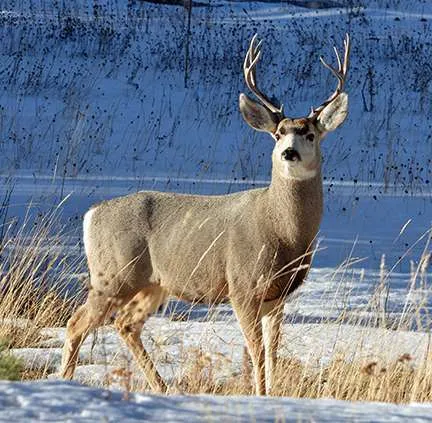
Photo by Steve Adams


After hunting for several years now from our permanent, enclosed, raised deer blind, I often take it for granted, forgetting the good, the bad and the ugly experiences of hunting deer any other way. Today, however, as I searched the cobweb cluttered attic of my mind for this week’s column, I felt a new appreciation for our nice raised blind as memories of deer hunts early in our marriage came up. Don’t ask me how I can remember any of these when I can’t remember now what I had for breakfast this morning, but here are some memories from a particular deer hunt in southwestern KS many years ago when we still hunted as a couple from a small portable ground blind.

By flashlight, we again settled into our respective camp chairs, unzipped each shooting window slightly, and prepared to greet a new day through these narrow slits in our hunting blind. Since Joyce and I often hunted together, this blind was a worthy investment. It was lightweight, quick and easy to set up, provided camouflage and protection from the wind, plus allowed for a little more noise and movement than if we merely sat in an open stand. It served another purpose as well. Even a slight breeze made enough natural noise that it allowed us to talk in quiet whispers, and talk we did. When stepping into the blind for another morning or evening of hunting, the adrenalin flowed briskly for a time, and all was business. But gradually we relaxed, and the thoughts that were born in the solitude were given voice.

My wife’s designing mind was usually going full speed. We hunted in an area of Kansas where both Whitetail and Mule Deer existed side by side, and, despite what you have heard or read, distinguishing between the two species is not so easy on very short notice. We verbally designed a deck of “flash” cards, which would show comparative views of both species, male and female, side by side, for quick reference. We designed new and better hunting blinds and stands, as well as made improvements to our own. To ours, we imagined adding removable drapes made of netting that would hang over the windows, and pouches sewn to the inside walls for storage of binoculars, etc. Joyce mentally designed and built folding camp chairs with swivel seats that could be raised and lowered, and with more padding! We also custom designed hunting clothing; from gloves with inner pouches to hold heat packets, to outer clothing with insulation that would automatically shrink or swell according to the temperature.

Occasionally, after a time of watching deer that we couldn’t shoot, we’d get a bit silly, and begin imagining conversations between them. For instance, one morning a nice Mule Deer doe grazed for several minutes on the wheat, not 30 yards away. Having “Whitetail Only” tags, we watched in silence. Deciding to have some fun with the situation, we began concocting a story that had all the neighborhood deer drawing tumbleweeds to see which one would walk onto the wheat as a decoy so the rest could slip away unseen. Ole’ Mable, now in front of us, drew the short tumbleweed, so there she stood while the rest of her buddies crept away and awaited her fate.

On the serious side, we both felt this time was good for our relationship. Activities enjoyed together always seem to draw people closer, and somehow, the silence of the hunt drowned out all the usual cares and conversations, clearing the way for discussion (in whispers) of subjects we didn’t often tackle.

I think that every presidential cabinet meeting, United Nations Assembly, world summits and especially congressional meetings should be held in a huge hunting blind. Who knows what diseases may be cured, what discoveries could be made, which mortal enemies might shake hands again and maybe congress would even get something accomplished…or maybe not! Continue to Explore Kansas Outdoors!

Steve can be contacted by email at [email protected]

Welfare Groups Condemn Bureau Of Land Management For Wild Horse Deaths

0


Animal Wellness Action and the Center for a Humane Economy are outraged by news that seven wild horses rounded up by the Bureau of Land Management (BLM) from central Nevada ended up dead after the trailer hauling them crashed along the way to a Utah holding pen, according to news reports.

The BLM is currently removing horses from their range and had contracted a semitruck to transport 36 horses from the roundup. It was bound for a holding corral in rural central Utah when it turned onto its side on the highway.

Three horses were killed in the wreck, and four more were euthanized because of their injuries. Many surviving animals had “minor cuts and bruises,” the agency said.

The Roberts Mountain Complex roundup was expected to take about two and a half weeks and round up about 1,100 horses, using helicopters to drive them into traps.

In addition to the animals killed in the crash, at least four other horses died during the roundup. The BLM opted to euthanize two horses for preexisting blindness.

Another two suffered sudden severe injuries during the roundup. A mare died of a broken neck during shipping away from the trap site, and a stallion was put down after breaking its leg attempting to jump out of a holding pen.

“After being stampeded into traps by helicopters and violently separated from their families by the BLM and its contractors, these horses then had to experience the panic, pain, and for some, death, of a truck crash,” said Scott Beckstead of Animal Wellness Action.

“American taxpayers should be outraged that we are funding inept animal handling by profit-driven contractors and gross mismanagement of our public lands by a rogue and reckless BLM.

“The American people are horrified by the ongoing crisis of roundups and removals and the equine suffering and deaths that come on its heels.”

Animal Wellness Action is a Washington, D.C.-based 501(c)(4) whose mission is to help animals by promoting laws and regulations at federal, state, and local levels that forbid cruelty to all animals.

The group also works to enforce existing anti-cruelty and wildlife protection laws. Animal Wellness Action believes helping animals helps us all.

Center for a Humane Economy is a Washington, D.C.-based 501(c)(3) whose mission is to help animals by helping forge a more humane economic order.

The first organization of its kind in the animal protection movement, the center encourages businesses to honor their social responsibilities in a culture where consumers, investors, and other key stakeholders abhor cruelty and the degradation of the environment and embrace innovation as a means of eliminating both.

+++30+++

Cows Essential For Beef

0

“Beef prices are near the highest level ever in meat markets with exception of certain specials.”

At the rate of which cows are being dispersed throughout most of the nation, prices will go higher.

There must be cows having calves annually for there to be beef for consumers to eat. Despite claimed alternatives, consumption levels continue to prove that most people like to eat beef.

While the over-the-counter beef price increases, buyers purchase beef as the cost keeps going higher.

Increasingly, producers have found enhanced income as they are offering beef direct from the farm to the consumer. While it is initially a major consumer investment requiring long term freezer storage, they appreciate the consistent quality.

Eating away from home is a common practice for many families, and they generally select beef from the menu. Incomprehensible the cost of a hamburger let alone beef steak when purchased at an eating establishment, yet that’s the choice.

There must be a factory to have beef for supper and that begins with the cow. Extensive cow slaughter largely due to producers’ short feed and water supply, cows are helping increase beef supplies now.

Cows provide beef for the table just like other cattle, steers, and heifers, produced for human consumption.

Issue of concern for the future is having enough cows to produce calves meeting beef consumer demand. Once a cow becomes meat, she must be replaced and that is not easy.

“Go buy more cows at the sale barn” is the recommended solution. But that supply is going to end at some point if heifers are not retained as replacements.

Many cowmen are selling heifer calves right along with their male counterparts. With cows gone and heifer calves sold, there is no beef production factory for years ahead.

Most cowherds were started with purchase of a few cows or heifers and herd size increased by retaining heifer calves. As numbers expanded, producers also improved quality as only the best of the annual heifer calf crop was saved.

Even though sometimes cows can be bought back, they are generally of unknown background. Retaining a herd’s heifers as replacements assures continued quality.

Reminded of Deuteronomy 12:20: “God promised that when you crave beef, say, ‘I would like some beef,’ then you may eat as much of it as you want.”

+++ALLELUIA+++

XVII–46–11-12-2023