Sunday, February 22, 2026
Home Blog Page 577

If Only I’d Have Known

0
lee pitts
With the onset of old age come the regrets and remorse of how I should have lived my younger life if only I’d have known then what I know now.
Why didn’t anyone tell me that it would be the last time I gaped in wonder at the Grand Canyon, the mighty redwoods, the beauty of Lake Tahoe and the haunting Badlands. If only I’d have known it would be the last time I saw a show in Vegas, listened to the poets in Elko, rafted the Rogue or flew into Seattle  and Sydney, Australia,  on a sunlit day. I wish someone would have warned me that I’d never again experience enchanting New Mexico, the Alamo in San Antonio, the Lincoln Memorial, the village of Williamsburg and the music on Bourbon street. If I only knew I’d have lingered a little longer.
I would have said goodbye a little differently if I’d known it would be the last time to tell my mom I loved her, to give my horse Gentleman one last carrot and my dog Aussie a big old bone. I would have been with my Grandpa the day that he died instead of regretting it the rest of my life. I wish I would have asked Grandpa to teach me how to troll for fish and how to barbecue a steak. I should’ve paid more attention when Grandma tried to teach me how to play the piano. Who knew that I’d one day become a leatherworker and would have benefitted greatly by letting my mom teach me how to put in a zipper, construct a gusset and the proper maintenance of a sewing machine, after all, she kept us all fed by working 14 hours a day as a seamstress?
I wish I’d have made a list of all the books I ever read so that I’d never read the same book again. Life is too short to read the same book twice.
If only I’d have taken advantage of the opportunities given to me to learn how to operate a backhoe, truck crane, milling machine and lathe. Why didn’t I learn to speak Spanish better than I did after studying it for five years in school? I wish I’d have read more novels, fewer People magazines and definitely more directions. (Hey, what can I say, I’m a man.)
You may laugh but I wish I’d of raised a goat. Don’t get me wrong, I’m glad I raised sheep and cattle for a living, but I’ve always been curious about goats. It seems they have several advantages: you don’t have to sheer them, they aren’t the picky eaters that horses are and the kids are so darn cute.
Speaking of kids, had I known we couldn’t have any I’d have held more babies, been a 4H leader longer and read to more toddlers. I wish I’d have known how valuable our first cars would one day become then we might have hid them away for decades. And why didn’t I collect land instead of old and rusty horse bits?
Why didn’t someone tell me to always wear a leather jacket when arc welding, to never wear flip flops in the shop and the right way to sharpen a knife? I should have paid more attention in my one computer class in college. If only I’d have properly appreciated the eight hours of undisturbed sleep I used to get instead of having to get up at least twice during the night. If only I’d have known to always floss my teeth, eat fewer sweets, run more marathons and walk every day. I should have taken more adult education courses, paid more attention to pool sharks, learned all about diesels from Uncle Buddy, kept on tooling leather after a couple sessions in Cub Scouts and gone to auctioneering school. If only I’d have known I’d one day become a writer I’d have taken a typing class in high school instead of trigonometry. I’ve regretted not knowing enough about electricity. If I knew I’d one day become a cowboy I’d have fallen in love with horses a lot sooner.
If only I’d have known… I would have fished more, worried less, done more doodling and less dawdling.
Why didn’t anyone tell me these things?
Maybe they did and I just wasn’t listening.

Cost Share Assistance Available for Irrigation Technology

0

The Kansas Department of Agriculture Division of Conservation (KDA–DOC) is pleased to announce the availability of funds in the form of cost share assistance and incentive payments to assist landowners with irrigation efficiency technology. The funding is provided by KDA–DOC through appropriation from the State Water Plan Fund and the program is administered by Conservation Districts across the state.

This initiative is designed to promote irrigation efficiency by providing cost share assistance to landowners for automated mobile drip irrigation systems, autonomous pivot systems, water meter monitoring software subscriptions, bubbler nozzle packages, and remote monitoring systems (soil moisture probes included as part of system).

Eligible projects must be located within Kansas groundwater management districts 1 through 5. Applications are currently being accepted, and projects will be approved beginning on November 1, 2023, until all funds have been allocated. Equipment purchases and subscriptions made before application approval by KDA–DOC are not eligible for this initiative.

Applications for this irrigation technology cost share funding must be made through local Conservation Districts. For application assistance and details about funding eligibility, along with more information concerning other available services, please contact your local Conservation District office. A directory of Conservation Districts can be found at agriculture.ks.gov/ConservationDistricts.

Lovina and Her Family Gather to Can Applesauce

0

Lovina’s Amish Kitchen
Lovina Eitcher,
Old Order Amish
Cook, Wife &
Mother of Eight


This is the last day of October already! Where does the time go? On Sunday, our clocks will fall back an hour, ending daylight saving time until next spring. I really do not care for the switching back and forth. I wish they would keep it one way or the other. Such is life! 

Last week, we were able to get 10 bushels of apples into applesauce for daughter Susan and Ervin. It was an enjoyable day spent together working and visiting. I hadn’t seen Ervin’s mother Esther since the wedding last year, so it was nice to visit with her again. She had six boys and one girl, so she knows all about raising boys and is going to sew pants for Susan and Ervin’s three growing little boys. They are all so close in size that they can’t do hand-me-downs. 

Daughters Loretta, Elizabeth, Verena, and I stayed to help until the applesauce was all in jars because we live closer than Esther and her daughters-in-law Rachel and Sarah. They had a driver bring them and probably had a 45-minute drive back home. Loretta, Denzel, Byron, and I went with their handicap buggy. We arrived back home at around 7:15 p.m. Later than we had anticipated, but I was glad to get the apples all done in one day for them. There were 157 quarts of applesauce canned for them, which will be a nice supply for the next year. 

Here at home, daughter Lovina had supper ready for our family and Dustin’s when we arrived. While we were gone, Joe and the boys had picked all the peppers and tomatoes from the garden and garden beds. Now, our garden is history for 2023.

Son Benjamin has only one week left until he goes to the doctor and hopefully gets the okay to have his cast off. It was a long seven-and-a-half weeks for him. 

Church services were held on Sunday at our neighbors’. Sister Verena came here after church and has been here since. She gets lonely if she’s home for too long alone. Today, we want to wash out my two cupboards. Since it only has my good china and the dishes I use on special occasions, I like to wash all the dishes when I have them out. Verena said she can do that for me today so that I can do another job. 

Lord willing, Christmas services will be held here on December 24, and we will have a potluck meal afterward. We are trying to get a head start on cleaning since the holidays are a busy time of gatherings.  

Son Joseph used the pressure washer and washed off the porch. He also moved some of the porch furniture to the basement for the winter. I like my wicker set and patio table and chairs in the basement for the winter months for protection. We wouldn’t use it out there on the porch anyhow. We do use it in the basement during the winter months sometimes. It’s always cozy in our basement with the heat down there. I’m organizing down there on the days I get to it. I want to make a play area for the grandchildren when they come. I have a bookshelf with books as well. They love reading or “looking” at books. 

We are in the process of getting a stairlift put in for son Kevin, 18. We had a used one that a kind reader had donated to us, but it finally gave up on us. Kevin’s bedroom is upstairs, and he can’t get up the steps anymore. Son Joseph carries him up every night to bed. He can still come down, but it isn’t the safest, so we decided to get another chairlift. Kevin is the tallest of our three sons—almost six feet. 

We traveled to Ann Arbor for doctor appointments last Friday. They do a lot of testing for muscular dystrophy. It makes a long day for the children (and also for Mom). It is a two-plus hour drive, so we are on the road for almost five hours. 

Until next time… God bless! Stay safe and healthy!

Broccoli and Mushroom Soup

1 cup unsalted butter

1 small onion, diced

8 ounces fresh mushrooms, sliced thinly

4 cups diced fresh broccoli

1 cup all-purpose flour

4–5 cups milk, divided

1 cup chicken broth

1 cup grated Swiss cheese

1 teaspoon salt

1 teaspoon coarsely ground black pepper

Melt butter in a large saucepan or dutch oven on medium heat. Add onion, mushrooms, and broccoli, tossing and stirring vegetables in butter for 2–3 minutes. Sprinkle flour into the pan, continuing to stir so flour is evenly distributed and mixed with vegetables and the flour is being cooked—you are making a roux for this thick nourishing soup, so stir for another 2 minutes to blend completely. 

Add 3 cups milk, continuing to stir vigorously to create a sauce. Turn the heat to low and continue stirring. As the soup thickens, add chicken broth and additional milk, a little at a time, stirring constantly so the soup stays smooth. Cook for another 2 minutes, stirring constantly. 

Add cheese, salt, and black pepper, stirring while the cheese melts. Add more milk if you want a thinner soup. 


Lovina’s Amish Kitchen is written by Lovina Eicher, Old Order Amish writer, cook, wife, and mother of eight. Her two cookbooks, The Essential Amish Cookbook and Amish Family Recipes, are available wherever books are sold. Readers can write to Eicher at Lovina’s Amish Kitchen, PO Box 234, Sturgis, MI 49091 (please include a self-addressed stamped envelope for a reply); or email [email protected] and your message will be passed on to her to read. She does not personally respond to emails.

NOTES TO EDITORS: text=887 words; end material=80 words 


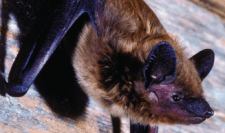
Bring on the bats

0

More friend than foe, Halloween season a good time to dispel myths

Whether you fear them, are fascinated by them, or a little of both — bats are an animal most people have an opinion on. It doesn’t help the fear factor that they are a popular motif for Halloween décor and everything “spooky” and “scary.”

With the last week in October designated as bat week, Texas A&M AgriLife Extension Service wanted to help Texans separate fact from fiction and delve deeper into these amazing and beneficial animals.

As the only true flying mammal — flying squirrels glide not fly — bats can seem a little bizarre, which probably doesn’t help their public perception. They live in dark places, come out at night to feed, and the sight of hundreds in flight can send a shiver down people’s spines.

But bats are far more friend than foe. Although, like all wildlife, they need space and a healthy dose of respect, they deserve our appreciation rather than our abhorrence.

Texas has 33 species of bats, more than any other state. And appropriately enough, since everything is bigger in Texas, it is also home to the world’s largest bat colony.

Brian Pierce, Ph.D., Texas A&M Natural Resources Institute associate director, Bryan-College Station, and Janet Hurley, AgriLife Extension senior program specialist for school integrated pest management, Dallas, shared what Texans should know about bats before the annual week of recognition starts.

Pierce is part of a team looking at ways to stop the spread and protect bats from white-nose syndrome, a fungal infection that affects and kills hibernating bats. It does not cause illness in humans but is transferred between bat populations with devastating results.

The world needs bats

Ranging from Instagram-cute to a face only a mother, or biologist, could love — all bats play key roles in their ecosystems and are crucially important to biodiversity, human health and agriculture.

Hate mosquitoes? Bats have your back. They can eat up to their weight in insects each night. Their insect-heavy diet also serves to protect crops from pests.

“Bats provide such a vital role in controlling insect pests, but because most people never interact with them, they don’t really appreciate how important they are for public health and agriculture,” Pierce explained.

Pierce said that although bats don’t rid us of all our insect pests, they put a huge dent in their populations.

“Back when southern states were fighting yellow fever and other insect-transmitted diseases, giant artificial roosts were constructed for bats,” he said. “Bats were used to minimize mosquitoes and control disease spread before the use of pesticides.”

Bats also act as pollinators for over 300 fruits and spread seeds for nuts, figs and cacao. If you love chocolate or guacamole, the work they do as pollinators helps make all those products possible. And, they serve as a food source for birds of prey as well as some other animals.

“All species have an important role to play in our environment,” said Pierce. “It just so happens that bats play a role we don’t really see. It is very much like the bee population; without bees many things wouldn’t be pollinated and the effect on agriculture would be huge.”

Myth busters

  • Bats are not blind. They have good vision but also use sound waves, or echolocation, to help them navigate and locate food.
  • Not all bats live in huge colonies in caves. Some species are loners and prefer to have a small space of their own.
  • Unlike the myth of Dracula, bats don’t live forever and aren’t afraid of the sunlight. Some species can live up to 30 years and not all bats are strictly nocturnal.
  • Only a few species of bats actually drink blood. The usual choice of host is cattle or chickens, and they don’t drink enough to kill the animal. The rest stick to a diet of insects, small reptiles, fruits and pollen.
  • Bats will not fly at you to attack your head. If one seems to divebomb you, they are probably swooping down to get the mosquitoes and insects you attract.

Fascinating facts

  • Bracken Cave Preserve, located outside of San Antonio, has the world’s largest colony, with an estimated 15 million Mexican free-tailed bats.
  • Most females can only have one baby, or pup, per year. Times of drought, food scarcity and stress can result in entire colonies not producing pups.
  • Their size varies from teeny tiny to several pounds. The bumblebee bat can weigh less than a penny whereas the flying fox/fruit bat can have a wingspan over 4 feet.
  • Each species has a unique vocalization.
  • Bats within the genus Myotis have been found to have telomeres that don’t seem to shorten with age. Telomeres, which are sections of DNA located at the end of chromosomes, affect the aging process for all mammals. This could explain why they are the longest-living known bat species and could help scientists better understand the process of aging.
  • Some hibernate during the winter while others migrate to warmer climates. Some live in Texas full time, but for others it is just a migratory stop.
  • Scientists who study bats are called chiropterologists.

Protecting bats

As people encroach on what has historically been their habitat, bat populations can be negatively impacted through habitat loss. This also can lead to more human/bat interactions.

Part of protecting bats is making sure they don’t encounter people and that they don’t make their homes in places where removal will be necessary. Hurley teaches professionals how to keep bats out of schools and other buildings and what to do should they come in contact with one.

“They traditionally return to the same place to roost again and again,” Hurley said. “So, if that grove of trees is cut down and replaced with a building or house, there’s a good chance that bats will try to make themselves at home if they can find a way to enter the building.”

Use care and caution

For centuries people have been fearful of getting rabies from bats. Nowadays, if a person does come in contact, post-exposure prophylaxis is available. This series of shots can prevent rabies from developing if given before symptoms start

It is a good precautionary practice to seek medical evaluation and care immediately following any direct contact with a bat, Hurley said.

Most years, the U.S. records zero deaths from rabies from bats, but there were five fatal instances in 2021 involving people who didn’t seek medical aid and/or weren’t properly treated in time.

“Your odds of dying from getting rabies from a bat are very slight, but proper caution around them is something children and adults need to be aware of and understand,” Hurley said.

The reality is you need to take extra caution and avoid any bat or other wildlife that is acting strangely. Never touch or hold any bat.

Like all wildlife, keep your distance and don’t enter caves or other places where they live and mate. Bats have far more to fear from us than the other way around.

Viewing bats

If you want to safely view bats in Texas, go to known sites where you can stay a safe distance and not disturb them.

Many of these locations are in the Hill Country or around Houston, but you can view bats throughout the state. From the world-famous Congress Avenue Bridge colony in Austin — the largest urban colony anywhere — to the privately owned Frio Bat Cave that houses around 10 million bats, Texas is a bat lover’s and chiropterologist’s dream.

“They are active at night, they mind their own business, and they try to stay away from people,” Pierce said. “Bats may be something out of most people’s mind, but they are an important part of our daily lives whether we know it or not. Now is a great time to learn more about a species that is key to the planet.”

As reported in the High Plains Journal.

Mysterious mutilations: Who or what is killing these cattle?

0

It was the mid-1990s when Eli Hronich of Raton, New Mexico, first stumbled upon a dead calf, with its tongue, eyes and reproductive organs removed—and completely devoid of blood. This haunting scene would become one he would discover another 40 times over the next 30 years, with the most recent death occurring in 2022. He is now in his 70s and has been ranching his entire life, and says these cattle mutilations are unlike any other deaths he has seen.

“When you find one, you know what it is immediately,” Hronich said. “People will try to play it down as a natural death or coyotes, but it’s completely different.”

Hronich’s experience with these unexplained deaths is not unlike the thousands of other reports made by ranchers over the last 50 years. Mutilated cattle are often found missing body parts of no commercial value, such as ears, tongues, udders, brains, eyes or reproductive organs—and there are no teeth marks, these animals have been sliced with what some call surgical precision.

Sometimes their bodies are drained of blood, bones are broken, scavengers avoid the carcasses and a medicinal smell is reported at some kill sites. Additionally, some animals have been found to have strange substances in their blood, such as barbiturates, mescaline, anti-coagulates and potassium cyanide.

Often times there are no tracks around the animals even from the bovine itself and strange lights or helicopters are frequently reported by witnesses. It sounds like an episode of “The X-Files,” but for the ranchers and investigators who experience these scenes, it is all too real. Chris O’Brien, noted cattle mutilation investigator and author of several books on the topic, said cattle mutilations hit a peak in the 1970s.

“At its height in October 1975, there were eight different states that reported mutilations in the same time frame,” O’Brien explained. “In Colorado, Gov. Richard Lamm called it the greatest outrage in the history of western cattle raising.”

Mutilations have been reported across the U.S. and the world for decades, but O’Brien said the Rocky Mountain States—including Idaho, Wyoming, Colorado and New Mexico—have seen the highest number of cases. Other states with numerous reports include Kansas, Nebraska, Iowa, Montana, North Dakota, South Dakota, Utah and Texas, but now the epicenter seems to be migrating to Oregon where 21 cases have been reported in the last six years.

O’Brien estimates 10,000 mutilations have been reported in total, but he believes that figure is conservative in comparison to the number of actual mutilations. He ventures a guess that only about one in 10 are actually reported. He believes the stranger the case, the less likely it is to be reported.

Perplexing doesn’t cover it

O’Brien became fascinated with these mutilation cases in the early 1990s when he was living in Colorado’s San Luis Valley—a hot spot for mutilation cases. He said he has been involved in the investigation of 200 cases, working closely with the police.

“I was very intrigued by it because these are the only blood-based, mysterious serial events and they leave behind thousands of pounds of physical evidence,” he said. “The more I started researching and digging into it, the more I was compelled to try to figure it out. But, the more you know about this stuff, the less sense it makes and the more confusing it becomes.”

One case that sticks out to O’Brien as particularly bizarre was a mutilation he investigated in March 1998 in Colorado. A rancher found a young calf that was missing its right front leg, its spine was removed from the neck to the hips and the brain was removed with no break into the cranium. It also had a slight medicinal odor. O’Brien said two separate witnesses made reports of strange lights in the area on the night the animal was killed. He even consulted a veterinarian, who said he could not explain what happened to the calf.

“There was absolutely no blood and the heart and liver were expertly excised, but left in the body cavity,” O’Brien said. “That’s the first thing scavengers would go after, but no birds or animals would go near it. We noticed the spine had been taken out in an upwards manner and because of the way the cut was performed on the front leg, it would have been impossible to remove the spine that way. To me that was a truly paranormal case.”

David Perkins, a reporter and author stumbled upon these mysterious mutilations in the mid-1970s when he became a suspect in a case in Colorado’s Huerfano Valley. Perkins was new to the area and called the sheriff when he found a dead cow with its rectum carved out in a perfect circle, udders cut off, the bottom part of the jaw missing and one eye and ear removed. Eventually the sheriff cleared Perkins as a suspect and the two developed a partnership in investigating mutilations. He has examined 60 mutilations in various stages of decomposition over the last 50 years.

“In the beginning I said I’m not going to give up on solving this because I know there is something really important behind this,” Perkins said. “That’s my intuition, gut feeling and every cell in my body tells me that.”

Perkins said the strangest case he has examined happened near Dulce, New Mexico, in 1978. He said both he and the police agreed it looked like this cow had been dropped from a great height.

“It was basically splattered and splayed out,” Perkins said. “It appeared its back leg was broken and it looked like it had fallen on its side and one horn was sort of driven back into its skull like it fell with great force. There were little specks of blood on its hooves like it had fallen through a mist of blood and it had clamp marks on the backs of its ankles like it had been held up by something.”

But what do the veterinarians have to say about these events? Perkins said veterinarians are in a complicated position when it comes to these cases.

“There’s a certain stigma associated with this stuff,” he explained. “The vets have tried to stay away from it because this is a lose-lose for them. They can’t really come up with an answer and if they verify it, they’re suspect. They don’t really have a lot to gain by going out and identifying a true mutilation.”

Perkins has been working with O’Brien to collect reports that are extremely thorough and verified by ranchers, law enforcement and veterinarians and demonstrate cases that are not natural predations.

Who or what is the culprit?

Possible explanations for these mutilations fall into several categories. Many believe they are either due to predators, government experiments, satanic cults or extraterrestrials. Now putting those four in the same sentence is shocking, but so are the nature of these deaths.

They say when you hear hoofbeats, think horses, not zebras, therefore many believe there is no conspiracy or culprit to pursue in these cases. Additionally, O’Brien, Perkins and other experts are quick to admit many cases are merely due to scavenger activity.

“Out of the 200 cases I’ve investigated, about 20% of them were highly unusual,” O’Brien said. “Of those, about eight or nine were unexplainable.”

Those in the non-conspiracy camp believe the missing body parts in these cases could be the result of dehydration or scavenger activity. After all, insects often target soft tissue. Another less macabre rationalization for the absence of blood in these deaths could be that the blood was either consumed by scavengers, absorbed into the ground or evaporated. Mutilation skeptics often point to bloating after death as an answer to the precise incisions. Bloating can cause skin to stretch and dehydration can result in cow hide shrinking and splitting.

One of the major reasons the government is often suggested as a responsible party for mutilations is that hundreds of helicopter sightings that have been reported around mutilation sites and the military claims they have no flight records for most of the reports.

“I estimate about 15% of the cases we have on record have helicopter involvement,” O’Brien said.

Some point to satanic cults as the guilty party in these mutilations, which is partly due to the satanic panic of the 1980s. Many crimes in the 80’s were blamed on satanic cults, but the majority of those accusations proved to be false. Another contributing factor was the Bureau of Alcohol, Tobacco, Firearms and Explosives’ report which surmised that devil worshipers were committing the mutilations although there has never been evidence to support that claim. It is also hard to imagine cultists wrangling 1,400-pound animals with no noise or foot prints left behind.

“It’s almost impossible for an amateur to be able to duplicate these cuts, especially the taking the tongue out from deep in the esophagus and the lymph system,” O’Brien said. “I just don’t think satanists have the knowledge, wherewithal and motivation to do these things. We’re not talking about kids going out cow tippin’.”

Another popular explanation often brought up is the possibility these mutilations could be done by extraterrestrials. Both O’Brien and Perkins believe this to be the least likely of the schools of thought.

“There are investigators who feel that’s the only answer that can explain all this, but it doesn’t make sense to me,” O’Brien said.

However, Perkins said since the answer to this mystery is not clear at this point, extraterrestrials cannot be ruled out.

“Probably 50% of the people I talk to in the areas where these mutilations have happened say it could be aliens,” Perkins said. “But from my point of view it’s a long shot.”

O’Brien believes the mutilations could have a connection to testing for mad cow disease, while Perkins brings up the possibility of testing for radiation. At the end of the day, no one theory is a perfect fit to explains these cases, and that is one of the most intriguing aspects of these happenings.

“I can win any debate about these mysterious cattle deaths if I’m playing the devil’s advocate,” O’Brien said. “No matter what you come up with as an answer, there are cases that don’t fit into that particular scenario.”

What do the officials say?

The federal government has conducted two independent investigations into cattle mutilations with totally different conclusions. The BATF began an investigation into the mutilations in the early 1970s to see if they could be connected to unidentified flying objects. BATF Agent Donald Flickinger headed up the investigation. The findings showed no connection to UFOs, but found some cattle had been tranquilized and showed signs of being given anti-coagulants prior to their deaths. The agency was unable to hold anyone responsible for the mutilations, but Flickinger later distributed a memo that has forever associated mutilations with satanic cults.

“The UFO enthusiasts convinced him to write a letter and send it to all the sheriffs in the country to be on the lookout for cultists or devil worshipers who were doing the mutilations,” O’Brien said. “The theory gained quite a bit of notoriety and still to this day, people are touting that as the potential cause of these cases.”

After a decade of a high concentration of mutilations and pressure to explain the events, the Federal Bureau of Investigation launched “Operation Animal Mutilation” in New Mexico in 1979. The investigation was headed by ex-FBI agent Kenneth Rommel and determined a majority of the mutilations were predator attacks, although certain cases could not be explained. The Royal Canadian Mounted Police also disagreed with the FBI’s explanation of the deaths after years of investigating mutilations in Canada.

“I find it difficult to understand how Rommel could make a statement such as this, without ever having personally witnessed a real mutilation firsthand,” said RCMP investigator Corp. Lyn Lauber. “I would like to see Rommel write off our confirmed cases as due to predators.”

At the same time, some of the FBI report pointed to the ranchers’ state of mind when attempting to explain the cases.

“Collective delusion has been the main go-to theory of the authorities,” Perkins said. “The Rommel report stated ranchers and were so economically stressed that they lost their minds and would go out and look at a natural death and suddenly say this one’s mutilated. To me that’s really insulting to the ranchers.”

Regardless of who or what is causing these deaths, the financial loss for producers like Hronich is palpable.

“You figure 2 to 3% natural death loss from calving to the time you sell, but when you start having phenomenal death loss, how do you manage taking 10% out for mutilations,” Hronich said.

While O’Brien believes at some point data will overwhelm the strange nature of the mutilations, Perkins is unsure if the mystery of these deaths will ever be resolved. Considering how long the mystery has lingered, fear of the unknown trumps all other concerns. If an unfamiliar noise awakens you in the night, it can be transformed into a million petrifying possibilities until the moment your cat reveals itself as the perpetrator. But without an answer, these mutilations are similar to a thief in the night—anonymous, confounding and frightening to those in their wake and they will remain that way until answers are uncovered.

As reported in the High Plains Journal.