Monday, February 23, 2026
Home Blog Page 595

 Fall is a Good Time for Soil Testing    

0
          

Soil tests are useful tools to evaluate the basic fertility of the soil. They do not provide information on soil composition, compaction, contamination or diseases and pests. Although each of these problems affect plant growth, establishing balanced nutrients in the soil is essential for a healthy lawn and garden.

Collect uniform soil from six spots within each area that needs to be tested. Uniform soil will have the same texture, color and history of growing and fertilization practices. Areas that are not similar should be tested separately. For example, soil from the lawn should be tested separately from soil in the garden. Use a soil probe, or shovel if probe is not available, to dig six- to eight-inches straight down into the soil. Shave a layer of the soil off the inside of the hole in each of the six spots and mix these collections thoroughly in a clean bucket, removing any debris. 

Scoop a total of 1.5 to 2 cups of mixed soil into a plastic container such as a resealable bag. Repeat this process for each unique area that needs to be evaluated. Label the samples with the location where they were gathered. Complete online paperwork as applicable for your extension office and include it with your sample delivery.

Soil testing in the fall allows you to sample the soil when it is less likely to be waterlogged. Additionally, more organic material is available to integrate into the soil in case the test results indicate this is necessary. Soil test laboratories are typically busier in the spring, so get a jump start on this task now to save yourself from delays next year.

Cynthia Domenghini, Extension Agent
Clean up Iris Beds this Fall   

0
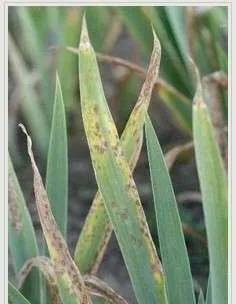
Photo courtesy: K-State Horticulture Newsletter

To prevent overwintering of iris borers and the fungus, iris leaf spot, remove and clean up dead leaves from iris plants now. Iris borer eggs and iris leaf spot survive in plant debris through the winter and reappear the next growing season. Removing debris from the garden is an effective control against these pests. Healthy iris leaves can be cut back to one-half their size.

Cynthia Domenghini, Extenison Agent

Farm Estate and Succession Planning Resources

0

Resources to better understand and enact farm succession planning

A common misconception in farm estate and succession planning is that an estate plan is only used after an individual passes away. In truth, a comprehensive estate plan should also provide for possible long-term care needs, dictate health care directives and designate a trusted individual to oversee desired funeral arrangements.

In order to help the farming community better understand estate planning, Iowa State University Extension and Outreach recently published a 100-page guide called “Estate and Succession Planning for the Farm.”

This educational resource covers property ownership, wills and trusts, estate and gift tax, income tax planning, business entity planning and more.

The workbook is designed to educate and answer questions that may arise during the planning process. It is intended to complement – not replace – advice from legal and tax experts. It includes 12 chapters, as well as a glossary of terms and blank pages for personalized input and planning.

“This workbook serves as a valuable guide during any phase of the planning process,” said Ann Johanns, program specialist with ISU Extension and Outreach. “It guides the reader through complex topics by providing illustrative examples throughout and sharing common aspects of estate planning to consider.”

The workbook will be highlighted during an Oct. 11 webinar for women farmland owners, in a session called “End-of-Life Taxes and Expenses,” featuring Kitt Tovar Jensen, staff attorney with the Center for Agricultural Law and Taxation and moderated by Johanns, from noon to 12:45 p.m.

A second webinar, called “Slowing Water Down,” will be held Dec. 13 from noon to 12:45 p.m. with Catherine DeLong, water quality program manager with ISU Extension and Outreach.

The bi-monthly series is part of a multi-year project led by the extension farm management team’s women in ag program to better understand and meet the educational needs of women farmland owners.

Participants can select specific sessions or register for the full series. A separate invitation email will be sent for each webinar you register for with the link to join the live session. (Reminder emails will also be sent shortly before each live session.) All sessions will be recorded with a link shared via follow-up emails after each live event, and archived on the Ag Decision Maker website.

The series is offered through collaborations with Iowa State’s Center for Agriculture Law and Taxation, Water Quality Initiative, and the Department of Economics, the project is bringing comprehensive land management information to audiences of women farmland owners.

Women Managing Farmland programs and resources are financially supported by a USDA National Institute of Food and Agriculture – Critical Agriculture Research and Education grant (2021-68008-34180) and a Farm Credit Services of America gift. For information on Women Managing Farmland courses, visit the Women in Ag website.

Are pumpkins a fruit or a vegetable?

0
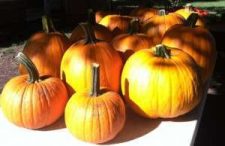
Photo credit: Rose Hill Meadowlark Farm Pumpkin Patch

Inquiring minds might want to know, is the orange orb a fruit or vegetable? The answer may surprise you! A pumpkin is, in fact, a fruit.

Joe Masabni, Ph.D., Texas A&M Agri Life Extension Service vegetable specialist in Dallas, said scientifically speaking, pumpkins are a fruit simply because anything that starts from a flower is botanically a fruit.

Why do you consider pumpkins fruit rather than a vegetable?

Usually, fruits and vegetables are named according to how they are consumed. How people eat them versus how people see them is often different.

“We tend to identify them in relation to whether we eat them as a dessert, salad or food,” Masabni said.

Consider a cucumber or tomato. People don’t typically eat those as desserts; they eat them in a salad or cooked in a meal, so they became classified as vegetables, even though they are officially fruits.

“Pumpkins are a tricky one,” he said, “because some people make soups or stews from pumpkins, which is a meal, while others make pies, which is a dessert. So that can sometimes be confusing.”

What is the difference between a fruit and a vegetable?

The difference between a fruit and a vegetable is established in how they grow.

“All plants start from seedlings,” Masabni said. “Let’s take the example of lettuce as a vegetable. It makes more and more leaves, and then you harvest it and eat those leaves. However, if you let it grow longer, it will eventually make a flower stalk and seeds for next year’s crop.”

A pumpkin starts the same; however, their flowers become the pumpkin we eat.

“It starts with a small plant and a few leaves, and as the leaves grow and more branches develop, flowers will start to bloom on the plants,” he said. “Those flowers then need to be pollinated by bees or other pollinators. Once that flower is pollinated, that flower develops into a fruit that we consume. So ultimately, any fruit relies on pollination of the flower to then grow the part of the plant that we eat.”

What other vegetables are actually fruits?

Although we may typically base our knowledge of fruits and vegetables from their sweet and savory tendencies or where they are placed in our meals, it seems that many of our regularly thought of vegetables are actually fruits, simply because they come from a flower.

Some of those often mislabeled like pumpkins include cucumbers, olives, tomatoes, eggplants, avocadoes, corn, zucchini, okra, string beans and peppers.

Now the biggest decision is how it will be consumed at your own table this holiday season. Will you consider it a vegetable in your main dish or a fruit on your dessert plate?

“The fruit and vegetable debate is a fun one that hangs on the technical horticulturist/scientific view of these plants that we consume,” Masabni said. “At the end of the day, we want to inform people, but we also want them to enjoy these plants as gardeners and at the dinner table.”