Mr. Chips
Potato Cakes
Potatoes, like beans, were a standard during the Great Depression. Potatoes were used as a side, a main entrée, or in breakfast dishes and breads. They’ve saved many families from starvation during war times and famines. I am thoroughly convinced if potatoes weren’t starches people would still be eating them in ample portions. Actually, of all starch’s potatoes are the best for us. Plus, if they are refrigerated for 24 hours, they become a resistance starch and ‘resist’ turning into 100% carbohydrate. Instead, they are absorbed at a slower rate and contain far less carbs. That’s definitely a win/win.
Potato Cakes have been a favorite in my family for generations. I grew up on them at Grandma & Grandpa Richardson’s farm, located in Monticello, Missouri. After a ‘big’ Sunday dinner there would frequently be leftover mashed potatoes.
Since the freezer was full of home-grown sweet corn it too would find it’s way into Grandma Lucy’s potato cakes. In other households it may have only been potatoes made into the cakes along with flour, egg, and leavening. Chives, green onions, herbs and other enticing flavors have made their way into the cakes through the years. Today we also find them topped with salsas, sauces,
cheeses and relishes. It’s not surprising to find them on the appetizer menu of southern and Ozarkian restaurants.’
I’ll give you a fun hint, you can actually use the real mashed potatoes found at your local grocery store. I actually used them when I wrote this recipe because at the time, they contained exactly 3 cups of ‘real’ mashed potatoes. Unfortunately, these little gems aren’t quite as reasonable these days.
Served as a side I would accompany them with a variety of main entrees: fried chicken, roasts, black eyed peas and ham, pork dishes and the lists go on.
Surprise your family with a down-home batch of these lovely cakes. Your family will beg you to make them again and again.
Many foods of the Depression are making a comeback, as I’ve noted in a couple of my columns this past month. I’ll most likely dive into some fall foods for most of October and early November. Would I scare you if I told you I’m all ready thinking about Thanksgiving Dinner? Seriously, YES!!! Actually, I’m thinking about lots of cooking and preserving I want to get accomplished before this big holiday. The kitchen is calling, I’m trying to get my house back in order after the big wedding reception I did last weekend. Go forth and do good things & your life will be so fulfilling. Simply yours, The Covered Dish.
Corn & Potato Cakes
1 (15 oz.) can whole kernel corn, drained
24 ounces (3 cups) mashed potatoes
1 ½ teaspoons baking powder
1 large egg
1/2 cup shredded cheddar cheese
¼ cup finely diced onion
½ teaspoon seasoning salt
¼ cup flour
Mix all ingredients together in a bowl. You can make these cakes/fritters in a deep fat fryer or on a griddle. Brush the griddle with oil and drop just a few cakes on at a time. Cook until the fritter is golden brown and then flip over.
Consider using chives, green chilies, green onions, roasted red peppers, and different cheeses in this dish.
In many regions folks top their fritters or corn cakes with honey & sweet jellies, jams and salsas and the like. My family wouldn’t even consider any of these embellishments, they love them just the way they’re prepared.
Contrasting Viewpoints About Overpopulation Of Wild Horses In Nevada
Welfare for the population of wild horses in Nevada was heavily debated recently in Elko, Nevada.
State Senator Ira Hansen was challenged by Scott Beckstead, director of Animal Wellness Action and Center for Humane Economy.
They debated whether federal management has been successful in its efforts to curb wild horse and burro populations on Bureau of Land Management (BLM)-controlled land.
Critics claim helicopter roundups and lack of water are hardships for the wild horse population.
The debate came after 31 horses died in a roundup this summer and a ruling by U.S. District Judge allowed federal authorities to continue gathering mustangs in Nevada over the objections of animal advocacy groups that called the method inhumane and illegal.
Outcry against using helicopters for roundups began after witnesses reported seeing horses die from broken necks and one stallion euthanized after its rear leg was injured.
U.S. Representative Dina Titus from Nevada is backing legislation in Congress to outlaw the use of helicopters in wild horse roundups.
“I don’t want to be painted that somehow because I believe that we need some serious management of the feral horses on the Nevada ranges that I hate horses. Nothing could be farther from the truth,” Hansen said.
He explained the issue began with the Wild and Free-Roaming Horse and Burro Act of 1971 that created laws to manage, protect, and study unbranded horses and burros on public lands.
“That law required the BLM manage the horse herds in the areas where they were in 1971. They were to be managed in such a way that they would have a thriving, natural, ecological balance,” Hansen said.
He noted it had been modified twice in 1976 and 1978. First with the Federal Land Policy Management Act that allows the federal government to use helicopters and motorized vehicles to round up horses.
Then again with the Public Range Lands Improvement Act that required appropriate management levels (AML).
Hansen said Nevada’s lowest population is set at 7,000 horses and the highest level is 14,000 horses.
He pointed to the original 1971 act stipulating the Secretary of the Interior was required to “immediately remove horses and get the populations back to the appropriate management level” in horse management areas.
Photographs were used to illustrate wild horses with their ribs visible through their skin, small watering holes with at least one dead feral lying next to another, and barren landscape.
“All the pictures I’m going to show in every single case there have been no other livestock on these allotments, on these herd management areas, for at least 15 to 20 years,” Hansen said. “All the ecological damage was caused by horses.
“Mr. Beckstead and his position claim that we have no need to get involved in it because the horses will naturally regulate their populations,” Hansen said.
However, a National Academy of Sciences study showed that horse population growth “would probably double every four years.”
Hansen proposed that removing animals would promote healthy animals, improve range health, and balance between uses.
Beckstead, who lives in Sutherlin, Oregon, is a law professor at Willamette University. He disputed Hansen’s claims of ecological catastrophe and cited mass BLM public disinformation to justify inhumane helicopter roundups of wild horse and burros.
Horses originated and evolved in North America more than 50 million years ago, with fossil records dating horses on the continent 5,700 years ago, according to Beckstead.
“Sheep and cattle are invasive,” Beckstead said. “Horses evolved here, they originated here, they are native. That is why horses thrive out in these harsh arid mountainous landscapes, but cattle not so much.”
In 2013, the National Academy of Sciences (NAS) “took a top to bottom review” of the wild horse and burro program. “They could not find a single science-based rationale for the BLM’s wild horse overpopulation contention.”
Beckstead said, “The politically contrived number was snatched out of the air by the BLM to drive the agenda to keep horses at a number that livestock owners can live without them being a threat to commercial livestock.”
Nevada has the most BLM managed lands after the state of Alaska, Beckstead said. “So, it follows that because Nevada has the largest amount of BLM lands, it also has the largest population of wild horses by quite a large measure.”
Beckstead disputed the number of wild horses and burros in Nevada estimated at 50,000.
The BLM’s “own data reveals the negative impact by wild horses is negligible. Wild horses and burros are responsible for a failing allotment less than 1percent of the time compared to livestock,” Beckstead said.
“Horses and cattle treat their water sources very differently,” Beckstead explained. “Cattle are far more likely to congregate around the water sources and never leave. Horses are more likely to come in once or twice a day, drink and go back out on the range.
“I think it’s very important that we expose the mismanagement by the Bureau of Land Management,” Beckstead said. “The vast majority of Americans want to see wild horses living on public lands. There are bills pending in Congress to help our wild horses and burros.”
Hansen counter pointed: “There is a severe overpopulation of wild horses in Nevada and we need to get the BLM the money they need to do the job to round those horses up and save Nevada public range lands.”
+++30+++
Square Baler To Nebraska
“It hadn’t been used for a couple of years, so the twine-tie square baler was sold on an internet auction.”
Small square bales of hay are a lot of work, but nearly essential for most livestock operations.
Big round bales of hay are much easier to handle and feed large herds. However, when there’s just one cow in a pen, a flake of hay from a small square bale works better.
Two small square hay balers have been used in the ranching operation in the past half century.
The John Deere T14 baler worked sufficiently with bales dropped on the ground and loaded by hand onto the pickup.
Most farmers had wagons pulled behind so a man could load bales as they came out of the baler. There wasn’t one available here, so additional manual labor was required during hay season. The square bales had to be stored by hand in the barn.
After considerable difficulties with the twine-tying mechanism, and lots of messy untied bales, that original baler finally just gave out.
Replacement was a well-used New Holland 276 twine-tie square baler. Exciting thing about that baler was the accumulator accompanying it, so bales were dropped in packs on the ground.
A tractor with a frontend loader picked up the packs of bales and loaded them on a trailer. Bales were much more readily stored in an open hay shed with not nearly as much handwork.
That square bale handling operation worked well for several years until the old baler developed considerable mechanical problems. Instead of finding another replacement, it was decided to have the square bales put up by a custom operator.
Important to emphasize that one big negative about the twine-tied square hay bales is that rodents frequently eat the twine. There’s a loose pile at feeding time instead of convenient easy-to-distribute tight flakes of baled hay for individual pens.
Grass for hay is swathed into windrows by the ranch manager with most of it going into large round bales.
Small square bales put up by the custom operator are tied tight with wire, which is rodent resistant.
Buyer came 250 miles from Nebraska to get the old baler-accumulator which required two hours to load on his trailer.
Reminded of First Kings 18:5: “So be we make hay to feed the cattle.”
+++ALLELUIA+++
XVII–37–9-24-2023
Bruce Austin Green
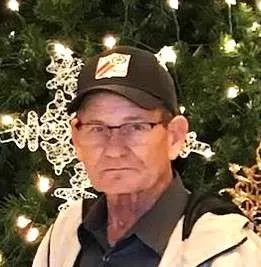
Bruce Austin Green, 74, died on September 19, 2023, at his home in Hutchinson. He was born April 18, 1949, in Hugo, Oklahoma, to Fred and Geneva (Carpenter) Green.
Bruce was a graduate of Nickerson High School in 1967. He was a truck driver and a union member of Teamsters Local #41. Bruce drove for Dillons and Yellow Freight for many years. In retirement he worked for the State testing for CDL Licenses. He was also a member of the American Truck Historical Society and Owner-Operator Independent Drivers Association.
On September 1, 2007, Bruce married Madaline Rose Burns in Hutchinson. They shared 16 years together.
He is survived by: wife, Madaline Green, Hutchinson; sons, Timothy Green, Wichita, Christian Green, Gurnee, Illinois, Troy Parks, Goddard; daughter, Carol Graham, Hutchinson; nine grandchildren; and seven great-grandchildren.
Bruce was preceded in death by: his parents; a brother Michael Green and sister Geneva Annell Reece.
A celebration of life will be announced at a later date.
In lieu of flowers, memorials are suggested to the American Truck Historical Society, in care of Elliott Mortuary, 1219 N Main, Hutchinson, KS 67501.