

Thursday, February 26, 2026
Home Blog Page 633

Is groundwater conservation bill a federal ‘buy and dry’ program? 

0

Mark Twain once famously said, “Whiskey is for drinking, water is for fighting over.” Recently, Reps. Yadira Caraveo, D-CO, and Jake LaTurner, R-KS, jointly introduced the bipartisan Voluntary Groundwater Conservation Act in the House of Representatives that should reduce fighting over water.

The goal, says the bill’s supporters, is for it to become part of the farm bill. U.S. Sens. Jerry Moran, R-KS, Michael Bennet, D-CO, and Martin Heinrich, D-NM, introduced the Voluntary Groundwater Conservation Act in the Senate earlier in July.

The act “gives farmers and ranchers the flexibility they need to protect groundwater sources while also keeping their agricultural lands in production under a new voluntary groundwater easement program at the United States Department of Agriculture’s Natural Resource Conservation Service within the Agricultural Conservation Easements Program,”according to statements by both members.

The Voluntary Groundwater Conservation Act would:  

  • Create a new Groundwater Conservation Easement Program at USDA to encourage voluntary, compensated reductions in groundwater consumption on agricultural land and advance local, regional, or state groundwater management goals;
  • Allow NRCS to reimburse transaction costs up to 5% of the federal share and requires an advance payment for limited resource producers to cover these costs;
  • Guarantee “long-term management flexibility for a producer to continue farming and choose how they reduce their water use, as long as they conserve the amount they’ve committed to reducing each year;”
  • Ensure that farmers are “fairly compensated using a payment based on the market value for the water right instead of a per acre payment;” and
  • Clarify that easement funds shall not be counted toward a farm’s adjusted gross income and that producers with an adjusted gross income of more than $900,000 are eligible for a waiver from the secretary of agriculture to participate in groundwater conservation easements.

The bill is supported by a number of farm and ag organizations, including the Colorado Farm Bureau. Zach Riley, executive director of the Colorado Livestock Association, said that while his group doesn’t officially oppose the bill, he is “wary of a federal pathway to potentially control [state-regulated] groundwater.”

Water use and transfer rights are largely regulated by the states, rather than the federal government. Unlike water quality, which is regulated by the federal Clean Water Act. Each state has a differently layered mix of water rights, using a variety of legal doctrines about water use. In Colorado water rights are like property rights that can be bought and sold. When water rights are sold and agriculture stops on the land it’s called Agricultural Water Transfer, more commonly known as “buy and dry.”

But according to its supporters, the bill is largely a fix of existing federal programs created in the last farm bill, a fix that benefits producers and gives them more flexibility. That bill—the 2018 Agriculture Improvement Act—authorized the secretary of agriculture to incentivize partnerships to conserve water, including making payments to producers to voluntarily curtail use of water rights.

Jesse Bradley, deputy director of natural resources for the Nebraska Department of Natural Resources, said he hasn’t seen the proposed bill and couldn’t comment on it directly. But he explained that under the USDA’s Conservation Reserve Enhancement Program, producers who participate are encouraged to let water-abated land return to grassland.

Under the proposed bill, landowners would be allowed to practice dryland production or grazing on the land, as long as they don’t use their water rights. “We [in Nebraska] have been having some of these conversations about water and land use with our counterparts in Colorado,” Bradley told High Plains Journal.

Bradley said the current approach to voluntarily curtailing water rights yokes together two distinct purposes: conserving water and restoring land to a “natural” state. But those two purposes need not always go together, and one doesn’t automatically imply the other.

The Inflation Reduction Act provides $4.6 billion to the Bureau of Reclamation—part of the Department of the Interior—designed in part to compensate water users who agree to water use reductions in voluntary water conservation agreements. That came on the heels of the Infrastructure Investment and Jobs Act’s $8.3 billion in emergency supplemental appropriations for reclamation, in equal installments from FY2022 to FY2026.

This funding is available to entities like cities, water districts and tribes within the 17 “reclamation states” named in the Reclamation Act of 1902 including Arizona, California, Colorado, Idaho, Kansas, Montana, Nebraska Nevada, New Mexico, North Dakota, Oklahoma, Oregon, South Dakota, Utah, Washington and Wyoming; parts of Texas were later added.

The Caraveo-LaTurner bill comes on the heels of the recently announced Colorado River water pact reported on by HPJ at bit.ly/45lOfJb. Under that deal, the Department of the Interior announced an agreement among seven Western states to voluntarily reduce their allocated water rights in exchange for short-term payments while infrastructure projects to address Colorado River shortages longer-term are being completed.

Payments to water users, including farmers, totaling about $1.2 billion, will come from the IRA, to be divided among water districts, cities and tribes that reduce their water usage. Arizona, California and New Mexico agreed to conserve at least an additional 3 million acre feet of Colorado River water in the lower basin by the end of calendar year 2026, with at least 1.5 MAF of that total being conserved by the end of calendar year 2024. That amount is about 13% of the three states’ total allotment.

In an era of climate volatility, droughts and increasing demand on aquifers, everyone agrees that voluntary conservation agreements have a big role to play in our water future. Making them easier and more attractive for farmers to participate in is a win for everyone. Whether or not they will be enough to preserve and sustain shrinking aquifers remains to be seen.

As reported in the High Plains Journal.
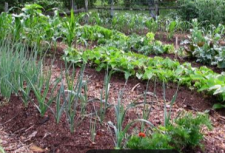
Preparing the Vegetable Garden for Next Year   

0

Put in the work now for a productive garden next year. Before removing plants, make a sketch of the vegetable layout. This will come in handy when you’re planning the layout for the next garden if you choose to rotate your crops.

Remove debris from plants that are done producing. Compost debris that is disease-free. For smaller gardens, manually remove weeds. Larger gardens may require tilling. If so, avoid tilling while the soil is saturated as this breaks down the structure.

A cover crop can be planted to return nutrients to the soil during this off season. Cover crops also reduce soil erosion and improve the quality of the soil. Small grains such as wheat should be seeded at 3/4 to 1 pound of seed per 1,000 square feet from mid-September to late October. Spring oats can also be seeded until mid-September but the rate should be 2 to 4 pounds per 1,000 square feet. Spring oats will die back in the winter and can be tilled under in the spring. Daikon radishes are another good cover crop because the large taproot penetrates the hardpan. After the radishes die back in the winter, the loosened soil is better able to retain water.

Hairy vetch, alfalfa and sweetclover are legumes which means they also fix nitrogen. Seed these cover crops at a rate of ¼ to ½ pound of seed per 1,000 square feet of garden. Hairy vetch and alfalfa can be seeded from mid-August to late September while sweetclover should be seeded only until early-September.

Cynthia Domenghini, Extention Agent

Power Raking and Core-Aeration  

0

September is the optimum time to power rake or core-aerate tall fescue and Kentucky bluegrass lawns. These grasses should be coming out of their summer doldrums and beginning to grow more vigorously. This is a good time to consider what we are trying to accomplish with these practices.

Power raking is primarily a thatch control operation. It can be excessively damaging to the turf if not done carefully. For lawns with one-half inch of thatch or less, I don’t recommend power raking but rather core aeration. For those who are unsure what thatch is, it is a springy layer of light-brown organic matter that resembles peat moss and is located above the soil but below the grass foliage. Power raking pulls up an incredible amount of material that then must be dealt with by composting or discarding.

 Core-aeration is a much better practice for most lawns. By removing cores of soil, core-aeration relieves compaction, hastens thatch decomposition, and improves water, nutrient, and oxygen movement into the soil profile. This operation should be performed when the soil is just moist enough so that it crumbles easily when worked between the fingers. Enough passes should be made so that the holes are spaced about 2 to 3 inches apart. Ideally, the holes should penetrate 2.5 to 3 inches deep. The cores can be left on the lawn to fall apart naturally (a process that usually takes two or three weeks, depending on soil-type), or they can be broken up with a power rake set just low enough to nick the cores, and then dragged with a section of chain-link fence or a steel doormat. The intermingling of soil and thatch is beneficial to the lawn.

Ward Upham, Extension Agent

Overseeding a Lawn

0

Tall fescue lawns that have become thin over the summer can be thickened up by overseeding during September. Start by mowing the grass short (1 to 1.5 inches) and removing the clippings. This will make it easier to achieve good seed-soil contact and increase the amount of light that will reach the young seedlings.

Good seed-soil contact is vital if the overseeding is to be successful. Excess thatch can prevent seed from reaching the soil and germinating. Normally we want 1/4 inch of thatch or less when overseeding. If the thatch layer is 3/4 inch or more, it is usually easiest to use a sod cutter to remove it and start over with a new lawn. A power rake can be used to reduce a thatch layer that is less than 3/4 inch but more than a quarter inch.

Once thatch is under control, the soil should be prepared for the seed. This can be done in various ways.   For small spots, a hand rake can be used to roughen up the soil before the seed is applied.

A verticut machine has solid vertical blades that can be set to cut furrows in the soil. It is best to go two different directions with the machine. A slit seeder is a verticut machine with a seed hopper added so the soil prep and seeding operation are combined. Another option is to use a core aerator.

 The core aerator will punch holes in the soil and deposit the soil cores on the surface of the ground. Each hole produces an excellent environment for seed germination and growth. Make three to four passes with the core aerator to ensure enough holes for the seed. Using a core aerator has the additional benefit of reducing the amount of watering needed to get the seed germinated and growing. Aeration also increases the water infiltration rate, decreases compaction, and increases the amount of oxygen in the soil.

Of the three methods, I prefer the slit seeder for obtaining good seed/soil contact.  However, if watering is difficult, core aeration may be a better option.  Regardless of method used, fertilizer should  be applied at the rate suggested by a soil test, or a starter fertilizer should be used at the rate suggested on the bag.

Ward Upham, Extension Agent

Fall Lawn Seeding Tips

0

The keys to successful lawn seeding are proper rates, even dispersal, good seed to soil contact, and proper watering. Evenness is best achieved by carefully calibrating the seeder or by adjusting the seeder to a low setting and making several passes to ensure even distribution. Seeding a little on the heavy side with close overlapping is better than missing areas altogether, especially for the bunch-type tall fescue, which does not spread.   Multiple seeder passes in opposite directions should help avoid this problem.

A more serious error in seeding is using the improper rate. For tall fescue, aim for 6 to 8 pounds of seed per 1,000 square feet for new areas and about half as much for overseeding or seeding areas in the shade.

Kentucky bluegrass has a much smaller seed so less is needed for establishment.  Use 2 to 3 pounds of seed per 1,000 square feet for a new lawn and half that for overseeding or shady areas.

Using too much seed results in a lawn more prone to disease and damage from stress. The best way to avoid such a mistake is to determine the square footage of the yard first, and then calculate the amount of seed. Using too little seed can also be detrimental and result in clumpy turf that is not as visually pleasing.

Establishing good seed to soil contact is essential for good germination rates. Slit seeders achieve good contact at the time of seeding by dropping seed directly behind the blade that slices a furrow into the soil. Packing wheels then follow to close the furrow. The same result can be accomplished by using a verticut before broadcasting the seed, and then verticutting in a different direction a second time.

Core aerators can also be used to seed grass. Go over an area at least three times in different directions, and then broadcast the seed. Germination will occur in the aeration holes. Because those holes stay moister than a traditional seedbed, this method requires less watering.

If the soil that has been worked by a rototiller, firm the soil with a roller or lawn tractor and  use light hand raking to mix the seed into the soil. A leaf rake often works better than a garden rake because it mixes seed more shallowly.

Water newly planted areas lightly, but often. Keep soil constantly moist but not waterlogged.  During hot days, a new lawn may need to be watered three times a day. If watered less, germination will be slowed. Cool, calm days may require watering only every couple of days. As the grass plants come up, gradually decrease watering to once a week if there is no rain. Let the plants tell you when to water. If you can push the blades down and they don’t spring back up quickly, the lawn needs water. Once seed sprouts, try to minimize traffic (foot, mower, dog, etc.) seeded areas receive until the seedlings are a little more robust and ready to be mowed. Begin mowing once seedlings reach 3 to 4 inches tall.

Ward Upham, Extension Agent