Friday, February 27, 2026
Home Blog Page 636

“Writing as therapy”

0


During the South Dakota Festival of Books, I listened to a group of five successful novelists discussing the art of writing and what they gained from creating those words. They all seemed to agree with journalist Malcolm Gladwell, who said that it takes some talent, but more importantly, about 10,000 hours of practice to become good at anything. They each also said that writing has given them joy and humor, an understanding about life and a sense of meaning.

Hearing all this, I reflected on how much room I have for improvement in my own writing. On the other hand, I realized my compositions are not for a novel but for self-help, and the goal of my latest book, Life’s Final Season, is to help people during their aging and dying process. As opposed to a novel, my writing has a different purpose. I also thought how therapeutic my writing has been for me since my cancer diagnosis.

There is a lot out there about writing as therapy. Orthopedic surgeon Dr. David Hanscom, in his book Back in Control, provides for us a writing method to help people in chronic pain. He advises those in pain to write down any random thoughts for ten to thirty minutes once or twice a day for at least several months. Hanscom reports the theory that when pain becomes chronic, the signals change from damage pain activity in one part of the brain to an emotional (fear and anxiety) response in a different part of the brain. Hanscom asserts that the daily writing exercise truly helps people break the pain cycle when nothing else helps.

Professor Dr. Gillie Bolton also recommends a daily writing program for chronic pain. She says not to worry about grammar, style or spelling and advises starting by unloading and dumping negative thoughts followed by expressive and explorative writing about any topic. She suggests focusing on the writing without distraction, finding time to do it once or twice daily and doing it for yourself (not others). Her contention: writing helps us illuminate our own suppressed feelings thereby helping people deal with chronic pain, depression and the miseries of life.

I truly hope my book helps caregivers and people who are aging and dying, but my writing has had the added benefit of helping me cope with a deadly diagnosis. A daily writing exercise may just help you too.

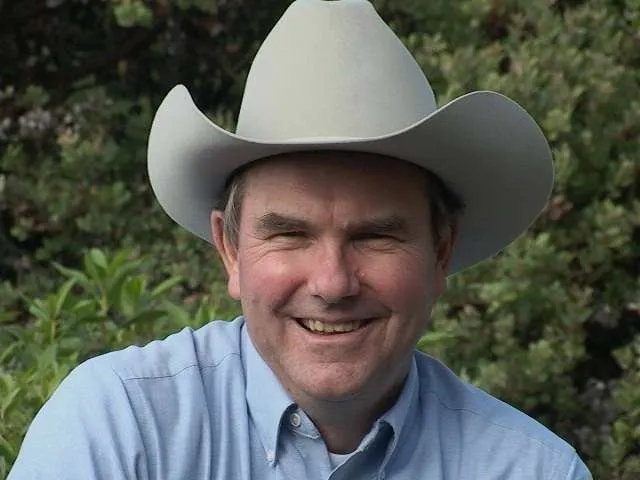
Richard P. Holm, MD, passed away in March of 2020 after a battle with pancreatic cancer. He was founder of The Prairie Doc® and author of “Life’s Final Season, A Guide for Aging and Dying with Grace” available on Amazon. Dr. Holm’s legacy lives on through his Prairie Doc® organization. For free and easy access to the entire Prairie Doc® library, visit www.prairiedoc.org and follow Prairie Doc® on Facebook, featuring On Call with the Prairie Doc® a medical Q&A show streaming on Facebook most Thursdays at 7 p.m. Central.
AJohn

0
john marshal

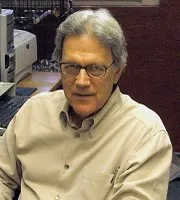
What first springs up about him is that yellow plastic shopping bag. It came with AJohn every Thursday to noon meetings of the Lindsborg Kiwanis Club. It was with him at board meetings and many conventions. Long ago it must have held something he or Carol had bought, but then it was his briefcase and for years it was as attached to him as his wristwatch. The bag looked as if it had survived floods, drought, a tornado and at least one cycle in Carol’s washing machine.
It would not surprise me if that bag is with him yet at Elmwood Cemetery, where he was buried last month. Arthur John Pearson, historian, author, journalist, archivist and devoted member of Kiwanis International, had been in hospice care at a nursing home in Salina when he died July 19 after a long illness. He was 86.
Carol survives.
To friends, he was “AJohn”. He and Carol came to Lindsborg in 1970. AJohn had been PR director at Illinois College in Jacksonville, Ill., for eight years and quickly settled in at Bethany College, not long into Arvin Hahn’s 16-year tenure as the school’s 8th president. (There have been seven presidents since.) Pearson would manage publicity and communications for Bethany College for more than 34 years, stay several more years as sports information director, and serve as archivist at the College and for the Messiah Festival. He was also a longtime sports information director for the Kansas Collegiate Athletic Conference. He retired (sort of ) in 2012.
*
Pearson was a writer and historian with an encyclopedic brain. He celebrated a community heritage, the strong ties between the Smoky Valley’s “Little Sweden” and the mother country. His many articles for the News-Record and other publications defined the history and significance of the annual Messiah Festival of the Arts ‒ the foundations of Messiah Week, the forces that inspired the Bethany Oratorio Chorus and Orchestra, their renowned performances of Bach’s “St. Matthew’s Passion” and Handel’s “Messiah.”
He was an informed and passionate broadcaster. Radio and television presentations of the “Messiah” were enriched with Pearson’s commentary, his cashmere baritone reassuring and reliable and rolling out nuggets of history in perfect sequence, as though he did this every day.
For years he was stadium public address announcer at Bethany College home football games. Pearson often spiced his reporting ‒ “pass complete…tackled by…” ‒ with notes of a player’s personal background, his studies, even a family history.
There were honors. Pearson won them for work as a journalist, sportscaster, historian, archivist, and Messiah radio host. In 2011 he received the Lifetime Achievement Award from the national College Sports Information Directors Association to a chorus of Amens from media professionals across the country.
In 2012 USA College Football established the Pearson Media and Communications Award. It recognizes an outstanding media professional for contributions to NAIA college football. It is presented annually at the USA College Football All-America Banquet on the eve of the USA Football Holiday Bowl.
*
I looked inside that yellow bag once. It was like peering into a crowded wastebasket: A short legal pad, loose sheets of paper, some documents, notes on scraps, two or three ballpoint pens, a paperback book, a couple of file folders that looked important, two or three rubber bands, a paper clip here and there, and more notes floating about ‒ hints of his tangled office once in Presser Hall.
Out of the disorder came AJohn’s penchant for method. The yellow bag held his instruments of recording and recollection, files for reference, paper and pens for his notes, any loose documents or scraps of the day that might reinforce his reporting.
The bag seemed his instrument of authority. As the longtime secretary at Kiwanis, he set down what happened at our meetings, published it for the record, for our little part in the big organization that helps children and young people. AJohn was meticulous in this. He got it right and left nothing out. At times he left nothing out so much that there seemed too much of his nothing left out.
But he wanted it all down, and over the years he came to hold most of it in memory. He didn’t really need all that stuff in the bag but it must have served as a kind of reinforcement, on the off-chance that someone might challenge his recollection.
So far as I know, it never happened.

American Eulogy

0
lee pitts
A common theme that dominates the conversation of most people my age is that they are glad they’ll be decomposing six feet under the grass and won’t be around to live in the glorious future they created. My fellow senior citizens and I feel bad for the babies born today who, on average, already owe $13,425 in state debt and $78,089 in federal debt. I, on the other hand, wish I was going to be around to witness the carnage and to say, “I told you so.”
I don’t think most younger Americans fully grasp that they’re sleepwalking into the fan blades of a giant green wind machine. As for the 31 trillion dollars they’re already on the hook for, what do they care, just like their $200,000 in student debt, they have no intention of paying it back either. Who cares if the debt is 31 trillion or 130 trillion? If we need more money we’ll just print more.
In their world young people today think they’re all gonna work from home, or sitting at Starbucks, staring at their phone all day doing what they call “work” without a boss looking over their shoulder. Or they’ll make a lucrative living being an “influencer” on You Tube, Twitter or Facebook. The Indians will make a living dealing blackjack, the blacks by playing sports and the illegal Mexicans by doing our dishes and our yard work.
We’re all gonna live in online communities of strangers and when we’re hungry our food will be delivered by Door Dash and Uber drivers and for everything else we need we’ll get it from Amazon and pay for it with Bitcoin. We won’t worry about a steady paycheck because we’ll all be getting reparations checks for something or other, so we’ll just hang around and wait for our inheritance when our parents die so we can inherit their house. And we won’t even have to move from where we’re already living.
All the pollution will disappear because all our factories will be shuttered and one third of the traffic will be parked at Tesla charging stations. We’ll live in a world of renewable energy and zero emissions and when we need more batteries we’ll just buy them at COSTCO. We’ll just take the used-up batteries back or store them with our spent nuclear fuel rods we don’t know where to warehouse.
The letters “USA” won’t stand for the United States of America any more but “Unlimited Sprawl Area” because everyone will live in the office buildings made vacant when everyone started working from home. President Biden’s 30/30 dream will be realized when at least 30% of U.S. lands will be conserved by 2030 so busloads of Japanese tourists with cameras dangling from their necks will be running from packs of wolves, marauding bears and hungry mountain lions in our national parks. Our borders will remain open to insure we’ll have someone to raise our kids.
Getting rid of all fossil fuels because of climate change will bring families closer together as we burn furniture and three generations snuggle together to share body heat. It will be just like camping! (But don’t forget to be on the lookout for the aforementioned wolves, bears and lions.)
The future we’ve created will be a kinder, gentler and smarter world as everyone will be female and boys will be boys no longer. Instead they’ll grow their own boobs, have their plumbing rearranged and have their appendage removed. (Ouch!) As for making babies, well, maybe we didn’t do a very good job of explaining the birds and the bees to our kids. And perhaps we should have come clean about Santa Claus, the Easter Bunny and the tooth fairy too. As for our birthrate dipping below “sustainable” levels, well, again that’s what the open borders are for and why our Congress looks like an LGBTQ+ parade.
If, and when, there is a World War III it will all be conducted by soldiers at keyboards with joysticks, drinking 5 Hour energy drinks, just like playing a violent video game. As for this great experiment we called America, we’ll finally come to the realization that the grand experiment just didn’t work and we’ve been the big bully on the block far too long.
The only advice I have for our inheritors is to bone up on your Chinese, North Korean and Russian.

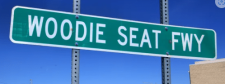
Repairs to Hutchinson’s Woodie Seat Freeway start soon. Here’s what’s on the road ahead

0

Relief from rugged driving conditions over the Woodie Seat Freeway linking Hutchinson and South Hutch will soon get underway but it may be nearly two years before all improvements are completed.

We have good and bad news for those long praying for a smooth drive on one of Hutchinson’s most prominent and busy roadways now known for deteriorating conditions that have caused our old friend and community leader Woodie Seat to turn over numerous times in his grave.

Work on the Arkansas River bridge, which Reno County is responsible for repairing, and freeway sections to the north, which City Hall must shoulder, is to get underway shortly after the Kansas State Fair closes on Sept. 17. The four-lane, 68-year-old river bridge will be totally shut down for patching and related work, all designed to extend its life for another 25 to 30 years, rather than face a $12 million total replacement, according to County Public Works director Don Brittain.

A soon-to-start detour leading over to the Frank Hart/South Main bridge will be in effect while initial work is done, then lifted when winter weather stops the project until spring when a new surface coating goes on. While bridge repairs take place by a Topeka company called PCI, the city has a contract with APAC/Shears of Hutchinson for Phase One on the Woodie Seat. That also begins after the fair and extends to the C Street bridge. The badly broken and eyesight concerning the concrete median will be removed along with stabilization patchwork, but Old Man Winter again shuts down work until asphalt can be laid sometime next spring. That means completing Phase One could stretch until next June.

Then follows Phase Two, which will include upgrades on the Avenue B bridge and a city council-approved roundabout near A and Adams where the freeway currently dumps traffic. Bonds valued at $450,000 were approved to design Phase Two after APAC was the only bidder on a $4.1 million construction tab for Phase One and includes Ark River bridge work which will cost $l,580,000. The city’s share for initial freeway construction totals $2,520,000.

The good news about all of this, along with work finally getting underway soon, is that Brittain’s contacts with the Kansas Department of Transportation secured $900,000 for the city and $600,000 grant money for the county to reduce local taxpayer expense for Phase One.

Design work and cost estimates on Phase Two are still being developed, and it will likely be the spring of 2025 before all of Woodie Seat is again a community asset rather than an embarrassment.