Friday, January 16, 2026
Home Blog Page 75

Increase flower power by dividing overgrown perennials

0

As clump-forming perennials mature, they often become overcrowded, competing among themselves for light, water and nutrients. This typically results in fewer blooms, said David Trinklein, state horticulture specialist with University of Missouri Extension.

Don’t despair. “With a little garden surgery, new life can be instilled into ragged, overgrown perennials,” said Trinklein.

While division may seem like a spring task, early fall is ideal, he said. Cooler weather and reduced water stress help plants recover and reestablish roots before winter. Root growth continues into late fall as long as soils remain warm.

Why divide perennials?

Overcrowding stresses plants and reduces flowering. Dividing them restores vigor and lets gardeners expand their beds or share plants with others.

How to divide perennials

  • A sharp spade or garden fork works best.
  • Slice the clump, making sure roots remain intact.
  • Take half the clump with as many roots as possible.
  • Refill the original hole with good soil and replant the removed portion elsewhere, or pass it along to a friend.
  • Keep the soil moist for several weeks while the plant settles in.

What to divide, and what not to

Some perennials thrive when divided, including:

  • Daylilies.
  • Irises.
  • Ornamental grasses.
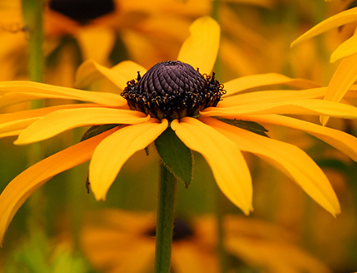
  • Black-eyed Susans.
  • Purple coneflowers.

Not all perennials require division. Peonies prefer to stay put. If unsure, check plant care recommendations or consult the MU Extension website.

Fertilizing: timing matters

Avoid fertilizing in fall, since winter cold may damage new growth. Wait until spring, when plants break dormancy. Use a balanced fertilizer and follow label instructions.

September is National Fruits and Veggies month

0
Summer’s bounty helps to make eating healthy an easy choice.

It’s not really a coincidence that the Produce for Better Health Foundation recognizes September as National Fruits and Veggies month in the United States.

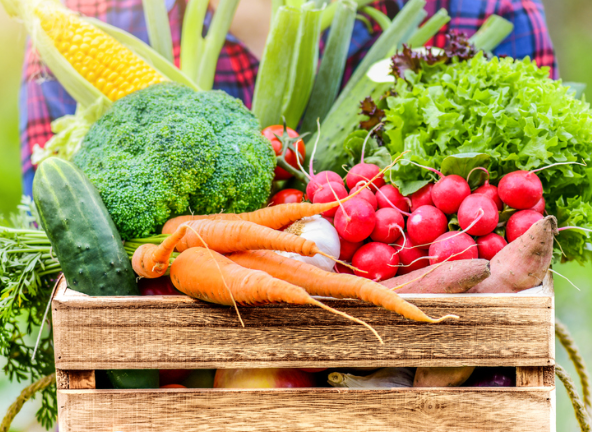
Summer is filled with colorful fruits and vegetables, from strawberries to melons, tomatoes to greens, and many more. It’s the season to indulge in foods that are tasty and good for you, too.

“There are many reasons to include fruits and vegetables every day in a meal or snack,” said Kansas State University food scientist Karen Blakeslee. “The fiber in produce helps keep you full, helps improve digestion and helps reduce risks and effects of several diseases such as heart disease, type 2 diabetes, high blood pressure and more.”

Many fruits and vegetables are packed with vitamins and minerals that our bodies can’t produce on their own, said Blakeslee, who recommends filling half of your plate during meals with fruits and vegetables.

“By consuming more fruits and vegetables, you lower calorie intake, reduce weight gain and reduce the intake of high-calorie foods,” she said. “Whether they are fresh, frozen, canned or dried, fruits and vegetables can be consumed year-round.”

In fact, with many garden foods reaching harvest, it’s a perfect time to preserve fresh produce. Blakeslee said freezing is easy and doesn’t take a lot of equipment; many foods can be frozen, though some – such as lettuce – do not freeze well.

“Canning and pickling are great options to reduce food waste,” Blakeslee said.

In a monthly newsletter she publishes in her role as coordinator of K-State’s Rapid Response Center for food science, Blakeslee suggests trying something new: Watermelon Rind Pickles.

“After enjoying the juicy watermelon fruit, save the rinds and turn them into a unique pickle,” she said. “Always follow tested recipes and instructions for best safety and quality for all food preservation methods.”

National Fruits and Veggies month also comes with a reminder to cut food waste in the United States. The Environmental Protection Agency estimates that nearly 40% of food waste occurs at home.

“When shopping, plan meals and snacks to be a better shopper,” Blakeslee said. “Before going to the store, shop your kitchen first. Incorporate what you already have into menus. Know your schedule and family likes to be sure fresh produce is used before it gets wasted.”

Other tips for reducing food waste include:

  • Add perishable foods to a casserole, salad or soup.
  • Freeze fresh produce to use later.
  • Don’t buy in bulk if it’s not an item you can use quickly.
  • Prepare fresh produce so that it’s easy to grab and go for easy snacks.
  • If food is spoiled, consider composting if you have space available.

More information on incorporating fruits and vegetables into your daily diet plan – not just in September – is available from several sources, including:

Six-man football in Kansas is keeping the Friday night lights on for rural towns

0

Small Kansas high schools are switching to six-man football to keep their teams alive, while their towns’ populations shrink. And state high school sports officials think it’s a trend that will likely grow.

INGALLS, Kansas — On the edge of town next to the railroad tracks, the sound of pads crunch and whistles echo. A train chugs by toward the grain elevator that backdrops the football field that features only a handful of players. And a bulldog painted on the town’s water tower watches over them.

High school football season is approaching, and this is what many rural Kansas towns feel like this time of year. Even if they are like Ingalls, a community with a population of less than 300.

“When I first drove into town, you see Ingalls Bulldogs everywhere,” Ingalls Head Coach Logan Hernandez said. ”The pride the town of this size has for its team, it runs deep.”

But it’s getting harder to field a football team year after year.

More towns across western Kansas are adopting six-man football, a version of football with smaller teams to help keep the sport alive.

Six-man football is a high-flying and high-scoring game that only has six players on the field for each team, opposed to the usual 11. Smaller schools usually resort to eight-man or six-man football when enrollment is low and there are only a few students who want to play.

Back in 2021, the Kansas State High School Activities Association voted to officially sanction six-man football with 15 teams taking the field that year. Last season it grew to 23 teams in Kansas. This season the KSHSAA expects similar numbers.

But each season it can fluctuate, with some towns having smaller classes and then bigger classes the next year.

Mark Lentz, assistant executive director for the KSHSAA, said keeping the football team going gives small towns a chance to bring their community together.

“When you play a varsity game on a Friday night, that’s what’s going on in town,” Lentz said. “And that’s what we want to keep and we want schools to thrive and communities to thrive and have that opportunity.”

Adapting the game 

This is Hernandez’s first year as a head coach and first year coaching six-man football.

“There’s a lot of adapting, the rules are a bit different, when I first watched the tape I had to count because I thought surely there wasn’t enough guys on the field,” Hernandez said.

The Bulldogs are coming off a successful 9-2 season. Hernandez is getting his team ready to kickoff the season against the Triplains/Brewster Titans.

They are an example of the lengths rural schools will go to keep the Friday night lights on for their communities. Triplains High School in Winona combined programs with Brewster High School to form a team.

Bucklin High School in southern Kansas also joined forces with Ashland High School’s team this year to give their students an opportunity to play.

“These towns, they’re kind of away from everybody, and with schools consolidating, if they couldn’t play, that’d be a real big issue,” Hernandez said.

But that doesn’t stop them from getting creative to keep the tradition alive for their towns and their youth.

Six-man football is heavy on offense and scoring. Take Golden Plains High School in Rexford, Kansas, for example. Last season, the team played in games with scores of 82-45, 62-16 and 58-0.

The game is played on a slightly shorter field of 80 yards opposed to the standard 100 yards. And unlike standard football rules, everyone including linemen are eligible to catch a pass, leading to wildly entertaining plays.

“A lot of teams of this size don’t have anyone real big on their team, so it’s more about speed,” Hernandez said. “When you see a running back break off a 60-yard run you drew up, it’s hard to contain your excitement.”

Shrinking towns

Lentz said more small towns that are shrinking may soon get in on that excitement.

About three out of four counties in Kansas lost population from 2020 to 2022. There’s not a lot of entertainment or amenities in small towns in the High Plains, but high school football remains a gathering opportunity for these communities.

And for the teens growing up there, six-man allows them to pursue the game they love and receive opportunities despite their rural surroundings, Lentz said.

“It’s just an opportunity for smaller schools who don’t have the enrollment, or may not have a lot of boys in their school to play the game of football,” Lentz said.

KSHSAA this year raised the maximum enrollment threshold so more small schools could join the program. Before only schools with less than 55 students could drop down to six-man football, but now the maximum is 65 students.

Lentz believes that in the upcoming seasons, Kansas might see several more teams join the trend to keep a consistent team together. He said KSHSAA hopes in the next few years the state will have up to 32 teams playing in that division.

“I’m not saying the community is going to shut down if they don’t have a football team,” Lentz said. “But, you want the community involved in your school, and football’s part of that school.”

Calen Moore covers western Kansas for High Plains Public Radio and the Kansas News Service. You can email him at [email protected].

Travis Kelce proposed to Taylor Swift in a Kansas garden. Here are 7 of state’s best

0

A Kansas garden drew national attention last week when singer Taylor Swift and football player Travis Kelce revealed they’d gotten engaged there.

More than 36 million people “liked” the Instagram post announcing Swift’s acceptance of that flower-filled proposal amid the secluded horticultural wonderland behind Kelce’s mansion in Leawood in Johnson County.

Though Kelce’s property is private, the Sunflower State is filled with enchanting gardens that are open to the public.

Following are seven of those.

The Lavender Patch Farm, Fort Scott

More than 1,000 plants and 20 varieties of lavender “turn the prairie purple during June’s peak bloom,” the kstravel.com website said of the Lavender Patch Farm at Fort Scott.

Visitors may wander the farm’s fields to pick lavender plants to purchase or take a tour to learn how the crop is grown, harvested and dried, that site said.

Lavender ice cream can be bought during an annual festival held annually on the third weekend of June at the farm, where handmade lotions and soaps are also among items available for purchase.

Reinisch Rose Garden, Topeka

Established in 1930, Gage Park’s Reinisch Rose Garden in Topeka features more than 4,500 roses of 180 varieties, said the Shawnee County Parks and Recreation website.

The garden is a popular wedding spot. It includes newly released rose varieties and numerous unusual varieties that are no longer commercially available, that site said.

Each April, Reinisch Rose Garden is among settings for “Tulip Time,” in which more than 100,000 tulips are planted at Gage Park, Ted Ensley Gardens and Ward-Meade Botanical Garden, all at Topeka.

Bramble’s Edge Farm, Rose Hill

Seasonal flowers, a market, workshops, tours, special events and gorgeous meadows for photoshoots are offered at Bramble’s Edge Farm, located on 8 acres at Rose Hill in Butler County in south-central Kansas, its website said.

Visitors may pick a bouquet of flowers to buy at a cost of $6 for 12 stems, the kstravel website said, adding that the farm also sells eggs, fresh produce, herbs, mints, berries, pumpkins and locally made candles and soaps.

The farm closes in the late fall and reopens in May, its website said. It offers fresh eggs and herbs, as well as photoshoot options year-round.

Ted Ensley Gardens, Topeka

This 37.5-acre garden area on the west side of Lake Shawnee features 1,200 varieties of perennials and 300 varieties of annuals, as well as roses, trees and shrubs, said the Visit Topeka website.

That site said Ted Ensley Gardens provides “a panoramic view of the lake and spectacular plantings in a beautiful and tranquil setting with meandering paths and seating areas.”

Ted Ensley Gardens also features water and rock gardens, a gazebo, a pergola and a pagoda with a meditation garden, said the website for Shawnee County Parks and Recreation.

Klamm Flowers-U-Pick-Flower-Maze, Bonner Springs

“Outfitted with loaned clippers and a jumbo water cup, visitors venture through the farmyard’s raised beds, snipping zinnias, sunflowers, dahlias, celosia, and basil for a take-home bouquet,” said the kstravel.com website.

“The fifth-generation farm hosts Sip and Snip (wine and flower picking) and flower-arranging classes,” that site added. “It also takes bookings for photo shoots in the fields.”

Visitors for $25 may pick and purchase enough flowers to fill a 32-ounce cup, which will produce a large bouquet or two smaller bouquets, the Klamm Flowers website said.

Ward-Meade Botanical Garden, Topeka

Visitors can “blend history with gorgeous grounds” by strolling through the 2.5-acre Ward-Meade Botanical Garden at Old Prairie Town/Ward-Meade Historic Site at 124 NW Fillmore in Topeka, said the travelks.com website.

“Its National Hosta Display Garden, one of only a few in the country, features hundreds of hostas,” that site said. “A National Daylily Display Garden and more than 500 varieties of flowers, trees, and shrubs round out the show.”

The site also offers an herb garden, a monarch butterfly way station, water features, a gazebo, bridges, paved trails, 10,000 annuals and the Asian Garden at Anna’s Place, said the Shawnee County Parks and Recreation website.

Botanica, Wichita

This 20-acre group of botanical gardens offers 4,000 plant species as well as sculptures, water features and a restored 1949 carousel, said the kstravel.com website.

“Open year-round, Botanica celebrates the seasons with flower festivals, concerts, traveling exhibits and the illuminating finale: gardens aglow with more than 2 million holiday lights,” it said.

Botanica’s Downing Children’s Garden features a “rainbow trail,” “sunflower plaza fountain,” “monster woods” and “salamander stream,” the Botanica website said.

Admission is $12 for adults, $10 for children, senior citizens and the military and free for children 2 and younger.

As reported in the Topeka Capital Journal

 

Management strategies for calves

0
K-State beef cattle experts discuss mitigating health risks in the cattle herd.

As calving season approaches, experts from the Kansas State University Beef Cattle Institute are encouraging producers to focus on proactive management strategies to support calf health and herd performance.

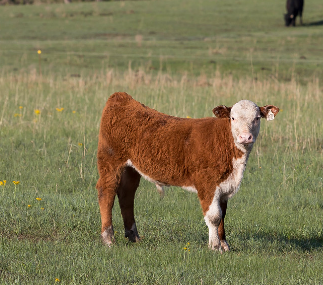
One key practice is the early castration of bull calves. K-State veterinarian Brad White explained that castration at about two months of age can reduce health risks and improve long-term productivity.

“Uncastrated bulls are 2.3 times more likely to develop bovine respiratory disease compared to steers, potentially leading to significant economic impacts,” White said. “Price discounts for uncastrated bulls could range from 3% to 15% depending on weight and age.”

Along with castration, the experts highlighted newborn calf care, emphasizing fly control and deworming. White and K-State veterinarian Bob Larson advised producers to:

  • Treat adult cows for fly control.
  • Use age-appropriate dosing for young calves.
  • Consider deworming calves around 2 to 3 months of age.
  • Tailor interventions to geographic and environmental conditions.

The experts noted that targeted, early interventions can help improve animal well-being and support profitability.

The full discussion is available on the Cattle Chat podcast at https://ksubci.org/2025/09/05/newborn-fly-control-bovin