Friday, January 16, 2026
Home Blog Page 76

Kansas warns of potential for human infestations of flesh-eating maggots

0

Kansas public health officials are advising providers to be on the lookout for humans infected with flesh-eating maggots of the New World screwworm.

The Kansas Department of Health and Environment sent a Kansas Health Alert Network notification Sept. 5. The alert warned health care providers of increased New World screwworm activity and the potential for travel-associated cases in humans.

New World screwworm, or NWS, is a fly but gets its name from its maggot larvae. The female fly lays eggs on a wound or opening, which hatch into maggots that burrow into living flesh. Screwworm infections are primarily associated with livestock, but can also affect pets and humans.

“The Kansas Department of Agriculture has been working closely with the U. S. Department of Agriculture (USDA) to develop rapid, effective reporting and response plans should an animal in Kansas be diagnosed with NWS,” the KDHE alert said.

“Humans can become infected with NWS when they travel to endemic or outbreak areas. Healthcare providers should be aware of the possibility of travel-related cases of NWS in Kansas residents and report any suspected cases to the Kansas Department of Health and Environment immediately.”

KU School of Nursing partners with McPherson College to increase nursing graduates in central Kansas

0
 
 
FOR IMMEDIATE RELEASE
 
 
Contact:     Kay Hawes, M.S.
                  Associate Director of News and Media Relations
                  University of Kansas Medical Center
       913-617-8698
[email protected]
KU School of Nursing partners with McPherson College to increase
nursing graduates in central Kansas

KANSAS CITY, KANSAS (Sept. 11, 2025) — The University of Kansas School of Nursing hopes to welcome many more graduates from central Kansas and surrounding areas with a new partnership with McPherson College.

This new partnership with KU School of Nursing will make it possible for McPherson College students to earn a Bachelor of Science in Nursing degree, with courses beginning in the 2026-27 academic year. That degree will come from KU, and the students will be able to complete courses on the KU School of Nursing’s Salina campus and online. Since there’s no need to relocate, the hope is that more students will choose to practice in Central Kansas or similar rural areas in the state.

“KU School of Nursing is excited to partner with McPherson College to help more central Kansas students become nurses,” said Jean Foret Giddens, Ph.D., FAAN, dean of KU School of Nursing. “Our Salina campus community is ready to welcome, educate and graduate nurses prepared to practice in rural communities and beyond.”

The collaboration strengthens McPherson College’s commitment to addressing health care needs in rural Kansas. “McPherson College and KU School of Nursing share the same goal of educating health care professionals to support the workforce needs of rural Kansas,” said McPherson College Executive Vice President Aaron Meis, Ed.D. “A critical nursing workforce shortage exists in many rural Kansas communities. Our collaboration with KU School of Nursing’s Salina campus will educate nurses interested in and committed to serving in rural settings, including those like the McPherson Center for Health.”

Students enrolling in the program will complete 60 credits of prerequisite nursing courses at the McPherson campus. They will be eligible for guaranteed admissions into the KU nursing program and complete the remaining 60 credits of nursing courses at the KU campus in Salina and online, while remaining at McPherson College. Nursing degrees will be awarded by KU.

Clinical experiences will be available at health care agencies located in rural communities, including Salina and McPherson.

“This program is designed for students interested in studying nursing at a strong, well-resourced public institution while retaining a small, residential liberal arts college experience,” Meis said.

A report published last fall by the Kansas Nursing Workforce Center, based at KU School of Nursing, found a direct correlation between the number of nurses per 1,000 residents and county health outcome rankings. “The number of nurses matters to the health and well-being of Kansans,” the report stated.

The second volume of the report, issued this month, anticipates continued nursing shortages as 26% of registered nurses and 23% of licensed practical nurses in Kansas are planning to retire within the next five years, and enrollment in nursing education programs is down 38% over the past 10 years. Additionally, the Kansas Department of Labor predicts the state will need more than 28,000 nursing assistants, 18,000 registered nurses, and 6,000 home health aides in 2026.
                                                                        # # #
About the University of Kansas School of Nursing
KU School of Nursing, designated a Center of Excellence in Nursing Education by the National League for Nursing (NLN), prepares hundreds of students each year for successful nursing careers as clinical nurses, advanced practice nurses, educators, leaders, administrators, scholars and researchers. Its award-winning programs are offered at campuses in Kansas City, Kansas, and Salina, Kansas, as well as online.
About McPherson College
McPherson College’s mission is to “develop whole persons through scholarship, participation, and service” within a career-focused liberal arts environment. In 2023, the college secured an unprecedented $1B commitment to its endowment, marking one of the largest single endowment commitments of any small liberal arts college in the U.S. Nationally recognized by U.S. News & World Report, Money Magazine, and the Chronicle of Higher Education’s “Great Colleges to Work For,” McPherson College is renowned for its innovative programs. Its Automotive Restoration program, the first four-year degree program of its kind, made history when a student-restored Mercedes-Benz 300 S earned a class award at the Pebble Beach Concours d’Elegance — the first time a student-restored car received such an honor at the prestigious Concours. Learn about all of its programs at www.mcpherson.edu.

Fall is great time to plant perennials

0

A Kansas State University horticulture expert says that while fall is a great time to plant perennials, selecting the right plants for the Kansas landscape is important.

Cynthia Domenghini says that for fall planting, it’s best to wait until the weather is cool, but far enough in advance for the roots to establish before the ground freezes.

She shared a list of plants that can tolerate drought once established:

Perennials: Aster, Monada, Butterfly Weed, Coreopsis, Dianthus, Gaillardia, Garden Phlox, Black-eyed Susan.

Herbs: Artemisia, Basil, Lavender, Lemon Balm, Marjoram, Oregano, Sage, Thyme.

Ornamental grasses: Big Blue Stem, Blue Fescue, Fountain Grass, Switchgrass, Porcupine Grass.

Shrubs: Lilac, Forsythia, Rose of Sharon, Cotoneaster, Viburnum, Ninebark, Mockorange, Juniper, Japanese Flowering Quince.

“Though these plants will be tolerant to drought once established, they will need supplemental water initially, especially during hot periods,” Domenghini said.

Domenghini and her colleagues in K-State’s Department of Horticulture and Natural Resources produce a weekly Horticulture Newsletter with tips for maintaining home landscapes and gardens.

Interested persons can subscribe to the newsletter, as well as send their garden and yard-related questions by email to [email protected], or contact your local K-State Research and Extension office.

How to choose and care for fall mums

0

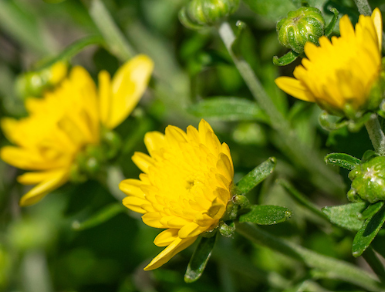
Fall chrysanthemums, or “mums,” are a seasonal favorite that brings vibrant color to porches, patios and landscapes each year.

Their colorful blooms range from sunny yellow and crisp white to autumn shades of orange, red and lavender. Mums have become as much a part of the fall season as pumpkins and hay bales.

Andrew King, Ph.D., ornamental specialist with Texas A&M AgriLife Research and assistant professor in the Texas A&M Department of Horticultural Sciences at the Texas A&M AgriLife Research and Extension Center in Overton, shares advice for buying and caring for mums so they last as long as possible.

“I grew up growing and selling chrysanthemums,” he said. “They’re widely available and synonymous with fall, but it’s not always easy to keep them looking great.”

Tips for buying the best mums

Follow these tips from King to find the healthiest plants that best meet your needs:

  • Shop early to get the best selection. The later you wait, the fewer fall colors and sizes you will find.
  • Choose buds over blooms. Look for plants full of tight, green, unopened buds. They will bloom over a few weeks, providing you with more color for a longer period.
  • Avoid stressed plants. Skip mums with yellowing leaves, spindly stems or few to no buds. Healthy, compact plants will last longer.
  • Match the plant to your purpose. Annual mums provide a pop of color for the season while perennial plants return each year in gardens or landscapes. Your nursery can help you choose the right plant.

    How to grow and care for mums

    Choosing suitable plants is only the first step. Providing the proper care will keep your mums thriving throughout the entire season. Follow some tips from King to grow mums with long-lasting blooms:

    • Water wisely. Too much or too little water can reduce bloom production or kill your mums. Check the soil with your finger and water only when the top feels dry.
    • Provide good drainage. Roots need well-drained soil, whether in a nursery pot, planter or garden bed.
    • Find the right light. Mums thrive in full sun but need to adjust slowly when moving them from a shady spot. Transition them gradually to avoid stress.
    • Watch temperatures. Mums prefer temperatures ranging from 60 to 70 degrees. Move them to the shade if it reaches 90 degrees and bring mums in containers inside before a freeze.
    • Repot if needed. Rootbound plants appreciate more room and rich, peat-based soil.
    • Deadhead for more blooms. Pinching off faded flowers encourages new buds and often a second round of blooms.

Lyon County Farm Bureau supports families with food and skills

0

Reuniting with family members after being apart should mean second chances, shared meals and hope for the future. For many parents leaving a recovery program, life after can bring new hurdles — from limited resources to the basic challenges of putting food on the table. In Lyon County, Farm Bureau leaders saw the need and stepped in to help.

Through a grant from Kansas Farm Bureau’s (KFB) Foundation for Agriculture, county Farm Bureaus can request funds to support food insecurity projects in their communities. With a Farm Bureau in every county in Kansas, these grants can impact every corner of our state. The End Hunger grants have provided more than $200,000 to projects that impact Kansans on local levels since they began in 2020. The projects range from school support programs, partnerships with local food banks or pantries, providing meals to families facing financial hardship and summer initiatives.

“The End Hunger grants allow our county Farm Bureaus to react to needs they see within their communities,” says Shannon Martin, assistant director of KFB’s Foundation for Agriculture and agricultural education. “Projects like Lyon County Farm Bureau’s show how local leaders can make a difference by ensuring families have access to the food and tools they need.”

Intentional Impact

For Emma Miller, a Lyon County Farm Bureau board member of three years, the idea of helping families who are trying to improve their lives was never just about serving food. It was about meeting people where they were.

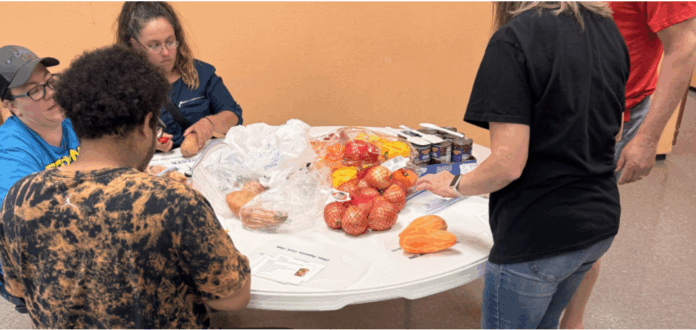
With grant funds, Lyon County Farm Bureau partnered with Supplemental Nutrition Assistance Program Education and Radical Life. Families connected to the Radical Life program are parents working to reunite with their children after a recovery program. These individuals were invited to take part in the Lyon County Farm Bureau effort. Each week, participants gathered to share a meal together before learning practical skills like meal planning, budgeting and safe food preparation. To make the lessons last beyond the classes, families were also given basic kitchen tools and recipe cards so they could recreate the meals at home.

“We decided to do skillet meals since a lot of people might not have an oven, but they’ll probably have a stovetop,” Miller explains. “It was fun to see adults get so excited about making a meal. They were grateful just to take something home to their families”.

Meals that Matter

Families who participated received food, recipe cards and essential kitchen tools to continue the lessons at home. Many expressed their appreciation through thank you notes, while others began talking about meal prepping together beyond the program.

The project also expanded awareness of Farm Bureau’s mission in Lyon County. A recent membership event drew nearly 300 attendees, an indication of the impact programs like these are making. Miller says the community is noticing the work Lyon County Farm Bureau is doing to improve its neighbors.

Programs like Lyon County Farm Bureau’s are making real impacts in communities across Kansas. If you’re interested in helping End Hunger in Kansas, visit www.kfb.org/endhunger.