Tuesday, January 27, 2026
Home Blog Page 197

“Learning to Perceive: Visual Thinking Strategies in Medical Education”

0

Effective medical diagnosis depends not just on looking, but on truly perceiving. Recognizing this, many medical training programs have adopted Visual Thinking Strategies (VTS) discussions about art to enhance students skills in nuanced observation, inference, and communication. In 2004, Harvard Medical School pioneered use of VTS within medical education to refine the diagnostic and interpersonal skills of future healthcare professionals. Now, VTS is embraced in over 30 medical schools.

Through inquiry-based, participant-centered VTS discussions about art, medical students learn to slow down, look carefully, analyze details, and refine their diagnostic reasoning. During the exercise, participants focus on an artwork while discussing their observations. The facilitator begins with: “s going on here?” Seeks evidence by asking: “ do you see that makes you say that?” Then, spurs the participants with: “ more can we find?” The facilitator remains neutral, paraphrases comments, and points to the artwork to guide discussion. Without authoritative guidance, participants explore multiple interpretations freely. The conversation often lasts 20 minutes per artwork. (Conversely, most museum visitors spend 30 seconds or less with a piece.)

A 2020 study at the University of Miami Miller School of Medicine, along with others, found that students who participated in VTS showed significantly improved observational abilities compared to peers who had not engaged with the program. By examining and discussing artwork through VTS, participants sharpen their ability to notice small but significant details and interpret ambiguous visual information, a process that mirrors patient assessments, where attentiveness and contextual understanding are key. For example, learning to analyze visual cues that might indicate emotions may enhance healthcare professionals abilities to interpret patients nonverbal cues, leading to more compassionate and attentive interactions.

VTS discussions engage participants in collaborative analysis, fostering both clear articulation of observations and active listening to others perspectives. A systematic review of studies regarding VTS in medical education, published in BMC Medical Education (2023), found that engaging in VTS improved medical students observation skills and enhanced their abilities to express their findings concisely and confidently. Further, VTS participants also support their interpretations with evidence—a critical skill in patient care, where diagnoses must be explained with clarity and justification. The structured discussion format of VTS also encourages strong communication, as well as cooperative analytical skills, which are essential for collaborative work within healthcare teams.

Attuning to a patients needs requires careful observation, but diagnosing complex cases also demands the ability to navigate uncertainty. Patients may present with overlapping or unclear symptoms, and medical professionals must carefully weigh multiple possibilities. VTS trains students to tolerate ambiguity by prompting them to analyze complex images without immediate resolution. Further, the process fosters active listening to alternative interpretations offered by others, often leading participants

to refine their own thoughts. This practice fosters adaptability, allowing future medical professionals to confidently refine their assessments rather than defaulting to initial impressions.

By engaging with works of art in VTS discussions, medical students and practitioners develop sharper attention to detail, improved communications, and increased empathy. Ideally, this reflective approach extends into clinical practice, allowing healthcare providers to take a more holistic view of their patients, ask insightful questions, thoroughly evaluate symptoms before reaching a diagnosis, and communicate thoughtfully with patients and families.

If you would like to learn more about Visual Thinking Strategies and potential partnerships, contact your local art museum.

Select Sources:

Agarwal, G.G., McNulty, M., Santiago, K.M. et al. Impact of Visual Thinking Strategies (VTS) on the Analysis of Clinical Images: A Pre-Post Study of VTS in First-Year Medical Students. J Med Humanit 41, 561–572 (2020). https://doi.org/10.1007/s10912-020-09652-4

Cerqueira, A.R., Alves, A.S., Monteiro-Soares, M. et al. Visual Thinking Strategies in medical education: a systematic review. BMC Med Educ 23, 536 (2023). https://doi.org/10.1186/s12909-023-04470-3

Rezaei S, Childress A, Kaul B, Rosales KM, Newell A, Rose S. Using Visual Arts Education and Reflective Practice to Increase Empathy and Perspective Taking in Medical Students. MedEdPORTAL. 2023;19:11346. https://doi.org/10.15766/mep_2374-8265.11346

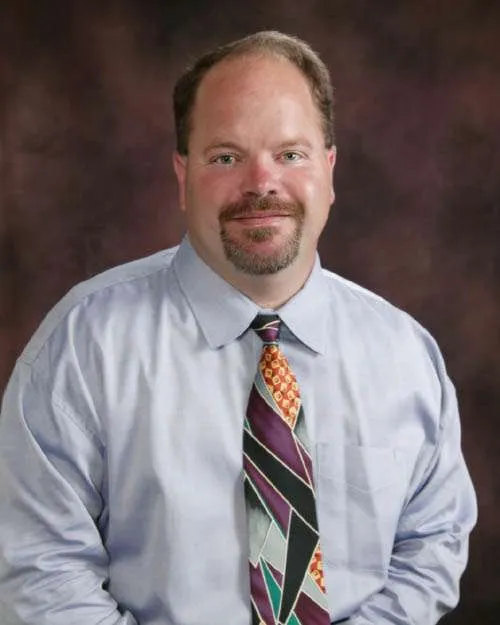
Donna Merkt is a certified VTS facilitator and has practiced VTS for more than 15 years, during which she’s led VTS conversations with thousands of students and adults, and trained numerous educators and medical professionals to use the method. She currently serves as director of the South Dakota Art Museum at South Dakota State University. Follow The Prairie Doc® at www.prairiedoc.org, Facebook, Instagram, YouTube and Threads. Prairie Doc Programming includes On Call with the Prairie Doc®, a medical Q&A show (most Thursdays at 7pm streaming on Facebook), 2 podcasts, and a Radio program (on SDPB), providing health information based on science, built on trust.

Wheat Scoop: Kansas Wheat Leadership Program offers a behind-the-scenes look at the world of wheat

0
Kansas Wheat

For the audio version, visit kswheat.com.

Ever wonder what happens to the bushels of wheat delivered to the local elevator? Or about what it took to produce the latest and greatest wheat varieties? The 2025 Kansas Wheat Leadership Program did more than simply answer these questions; the program provided a behind-the-scenes look at the complex, interconnected world of wheat from breeding programs to flour milling to grain quality.


“Farmers focus on growing their seed, harvesting their crop and finding the best basis when marketing their grain,” said Shayna DeGroot, Kansas Wheat director of membership and government affairs. “The Kansas Wheat Leadership Program intends to show participants what goes into everything before and after they purchase their seed – essentially an overview of the whole wheat industry.”


Attendees this year ranged from young wheat farmers to a social media blogger/farm wife to agribusiness professionals. This year’s program took place in Manhattan at the Kansas Wheat Innovation Center on March 5 and 6. The Farm Credit Associations of Kansas sponsored the event, making it free for all attendees. All were left with a new appreciation for the journey a kernel of wheat undertakes from seed development to the final loaf on the shelf at the grocery store.


“There are so many factors to the process that farmers are often unaware of, like what quality characteristics millers are looking for and encouraging the industry to target,” DeGroot said. “We hope this gives them a better insight into what it takes to get a seed to their farm to grow and what happens with their kernels after they send them to the elevator.”


The first morning kicked off with a Wheat 101 presentation by Aaron Harries, Kansas Wheat vice president of research and operations, followed by a tour of the Kansas Wheat Innovation Center. Asif Mohammad, chief scientist with Heartland Plant Innovations, conducted a hands-on demonstration of wheat emasculation — the process by which scientists remove the upper part of a wheat floret to better facilitate pollination. This process is an important part of developing double haploids — HPI’s technical specialty that substantially reduces the time and cost of developing new wheat varieties.


After lunch, leadership program participants received more technical information, including the “birds and the bees” of wheat breeding from K-State wheat breeder Allan Fritz. Kansas Wheat CEO Justin Gilpin shared insights on global wheat supply and demand while DeGroot discussed farm policy issues related to the wheat industry. Switching back to wheat breeding, Romulo Lollato, K-State associate professor of wheat and forage production, provided information on how yield and protein are set in a wheat crop.


Finally, Marsha Boswell, Kansas Wheat vice president of communications, rounded out the day by imparting the importance of sharing the farmers’ story and discussing the consumer-focused site EatWheat.org.


Day two of the program focused on wheat milling, with an introduction to the topic given by Shawn Thiele, associate director and the flour milling and grain processing specialist for the International Grains Program Institute (IGP), followed by a tour of K-State’s Hal Ross Flour Mill. Kathy Brower, lab manager of Grain Craft​’s Innovation & Quality Lab, located in the Kansas Wheat Innovation Center, discussed the process that takes grain to flour.


After two days, attendees left with a much larger appreciation for all of the steps in the wheat supply chain beyond their operations and how much support Kansas wheat farmers provide through their checkoff dollars to keep the pipeline running efficiently and effectively.


“The best compliment I got from an attendee this year was how he never knew so many people were working in so many different areas to help advance technology for farmers in the many facets of the wheat industry,” DeGroot said.


If you are interested in participating in the 2026 Kansas Wheat Leadership Program, please e-mail Shayna DeGroot at [email protected]. But even before next year’s program, visit https://kswheat.com/kawg to join KAWG and keep on top of the latest developments and opportunities in the Kansas wheat industry.


###

Written by Julia Debes for Kansas Wheat.

Livestock show practical joke

0
Thayne Cozart
Milo Yield

Now’s the time of the year when junior livestock shows are happening all across the U.S. Such shows, be they statewide competitions or local jackpots, are where future livestock industry leaders and breeders are developed.

And, livestock shows can also be a source of humor. And, I’ll relate one such incident of humor that I witnessed decades ago.

The prime players in this little livestock show saga were Myris Snipedown and Dr. Eiken Flert.

Snipedown, was a prominent figure in the agricultural press corps, and a well-known, sly practical jokester.

Eiken was a livestock specialist within the land-grant university system and he’d just earned his PhD degree and it weighed rather heavily on his shoulders. Eiken was also what the ladies call a “hunk” — a well-built, handsome, always-smiling “talker” and a confirmed bachelor in his late 20s.

On the day of the practical joke, Eiken wuz directing activities within the beef show ring at a state-wide junior livestock show. He escorted the show-persons and their steers and heifers into the ring and got them situated in the arena the way the judge wanted. And, he missed no opportunities to impress, or score points with, the young show-ladies leading the animals or their mothers crowded along the sideline rails.

Meanwhile, Myris stood on the sidelines for several hours and watched this he-she thing unfold — and he hatched his practical joke.

When the show came close to reaching its pinnacle with the selection of the grand champion steer, Myris quietly left the show arena and walked a few hundred yards to the show’s headquarters, which had the ability to send public address announcements to any place on the show grounds.

Myris coerced a close friend of his to time the springing of the practical joke perfectly for maximum effect. Then he returned to the arena sidelines and innocently watched his joke unfold.

When the judge had all the breed champion steers lined up in the championship drive, Dr. Flert was doing his level best to entertain all the nearby women.

And then, just before the judge slapped the champion steer on its rump, this announcement boomed into the arena from the public address system: “Attention, Dr. Flert. Attention Dr. Flert. Your wife says to please bring diapers and a box of formula home after the show.”

I’ll let your imagination lead you to your own conclusion about how this practical joke ended, but I assure you, it wuz humorous for everyone but one embarrassed new PhD.

***

The “holy grail” for global energy users is an endless, non-polluting method to generate electrical energy. That’s the purpose of solar, wind, hydro and nuclear electric projects, but none even come close to being the “holy grail.”

However, now I read in a Popular Mechanics online story about the real possibility of geothermal energy becoming a perfect energy source.

Here’s the gist of the story. The inside of the Earth is close to 10,000 degrees F. hot. And it won’t cool down for billions of years. Tapping into that heat by drilling deep into the Earth’s crust would yield a gift of virtually limitless heat energy.

The article says the entire world’s energy needs could be fulfilled for more than 20 million years if we could capture just 0.1 percent of the geothermal bounty lying a few miles beneath our feet.

Now, according to the article, the trick is how to drill a hole in Earth’s crust 12-13 miles deep where the temperature is close to 950 degrees, which is hot enuf to provide a practical source of geothermal energy.

The article sez that regular drilling is not feasible, but a new technique using laser energy beams can vaporize deep-seated rocks and let geothermal energy be harvested. At that point the geothermal heat could spin existing power plant turbines to produce limitless electricity.

I hope this new source of energy proves out. But, a word of caution, if the hole is drilled clear through the Earth to China, the electricity coming to the U.S. will probably carry a reciprocal Chinese tariff.

***

Here’s a little gripe of mine. I work crossword puzzles to keep my old mind exercised. However, recently I wuz getting nowhere with a couple of crosswords — and then I realized that the word clues weren’t for the crossword I wuz working.

That’s irritating and I don’t understand how it happens.

***

A recently lost another good friend. Mrs. Willie Jay, from Mt. Vernon, Mo., known to her friends as Connie, went to her eternal reward. She wuz around 90 years of age and had been married for 70 of them. Hers wuz a happy, productive life. RIP, good friend.

***

Words of wisdom for the week: “Stop doing what you’re doing. Take a deep breath. Then look and listen for the signs of Mother Nature waking up from her long winter’s nap.

The signs are on the tree buds, in the new dandelion emerging, in the robins hopping in the yard, and in the cardinal’s distinctive warbling song carried to your ears by a sun-warmed breeze. Spring is closer to being sprung.”

Have a good ‘un.

It’s Potato Planting Time

0

Wow, it’s potato planting time already! Don’t forget it’s also cabbage, peas, broccoli, cauliflower, and radish time too! If you are itching to get into your vegetable garden or landscape you might think of coming to the Harvey County Home and Garden Show on March 22 and 23 at the Dyck Arboretum in Hesston. You will find plants like those previously mentioned at the Prairie Wild booth and home items like outdoor furniture, and planter boxes. Renata Plant Bus will be there with an assortment of houseplants and succulents and Neff Family Farm will have herbs and vegetables for sale!


Youngsters will have an opportunity to build a birdhouse and take home at no cost. Materials are limited so don’t be late. At 1:00 pm each day in the Prairie Discovery Lab we will have this youth event along with vendors and the door prize drawing. Don’t forget about the learning opportunities with 11 home and garden seminars scheduled for the weekend!


Speaking of potatoes, St. Patrick’s Day is just around the corner, so it is time to think about getting seed potatoes in the ground. Actually, any time from mid- to late-March is fine for potato planting.


Be sure to buy seed potatoes rather than using those bought for cooking. Seed potatoes are certified disease free and have plenty of starch to sprout as quickly as soil temperatures allow. Most seed potatoes can be cut into four pieces, though large potatoes may yield more, and small less. Each seed piece should be between 1.5 and 2 ounces. Seed pieces this size will have more than one eye.


Each pound of potatoes should yield 8 to 10 seed pieces. Cut the seed 2 to 3 days before planting so freshly cut surfaces have a chance to suberize, or toughen, and form a protective coating. Storing seed in a warm location during suberization will speed the process. Plant each seed piece about 1 to 2 inches deep and 8 to 12 inches apart in rows. Though it is important to plant potatoes in March, emergence is slow. It is often mid- to late-April before new plants poke their way through the soil. As the potatoes grow, pull soil up to the base of the plants. New potatoes are borne above the planted seed piece, and it is important to keep sunlight from hitting the new potatoes. Exposed potatoes will turn green and produce a poisonous substance called solanine. Keeping the potatoes covered will prevent this.

Use sacrifice pastures now to spare best pastures for later

0
Beef Cattle

“Cattle producers welcome the rain, but it leads to muddy pastures and proper management is needed for optimum grazing the rest of the year,” says Patrick Davis, University of Missouri Extension livestock field specialist. Davis feels sacrifice pastures may be needed to help in promoting forage production for the rest of the grazing season.

“Cattle producers need to evaluate their pastures, find those pastures that need renovation, and consider using those pastures as sacrifice pastures,” says Davis. Davis urges consultation with your local MU Extension agronomy field specialist to grade pastures and to help make decisions on the pastures that need to be renovated.

“Move cattle to sacrifice pastures for hay feeding until cool-season grass pastures are at proper grazing height, which is approximately 4-6 inches,” says Davis. This strategy helps supply fertility in the form of manure and hay in these areas, which helps in the renovation process. This strategy also reduces the destruction of good pastures, which could affect their productivity throughout the grazing season.

“Proper seeding and management of sacrifice pastures is important to promote grass growth so those pastures can be brought back into the grazing system,” says Davis. He urges cattle producers to consult MU Extension agronomy field specialists as well as MU Extension guides G4650 and G4652 when making plans to reseed sacrifice pastures.

“Forage management is key to profitably of your cattle operation,” says Davis. For more information on pasture management and how to get the most out of your pastures in the upcoming grazing season, contact your local MU Extension agronomy or livestock field specialist.