Tuesday, January 27, 2026
Home Blog Page 196

Lettuce Eat Local: U Might Still Need A Glass Of Milk

0

Amanda Miller
Columnist
Lettuce Eat Local

Those little fingers flit over the counter again, sneaking another pinch of dough. “I thought you said only one more taste?” I ask Benson, giving him a look of mixed exasperation, amusement, and perplexity. 

He does this with any dough, from cookie to bread to pie crust. While I enjoy tasting things at almost any step in the cooking process, I’m usually done after a single sample of most raw doughs, unless I’m still tweaking them. They’re fine, but they’ll be so much better baked, so I might as well wait. 

My son, however, clearly didn’t inherit only his daddy’s good looks and love of farming, but also his affinity for unbaked flour-based products.

Now, before we get any farther, I know there are health concerns for consuming raw eggs, and actually raw flour is even potentially more dangerous. We use our hens’ eggs, so they are very fresh and have more of the natural protective coating of the shell, so I’m not worried about a little bit here and there. We also only use wheat from our field or from local Hudson Cream, which doesn’t take away all risks, but somehow makes me feel better. So hear me out that I know there is danger of bacterial infections, and I’m not being flippant with my family’s health; but at some point, anything is dangerous and we can’t/shouldn’t recoil from everything. Simply living on a farm like we do puts us in potential peril every day. 

On that cheerful note, back to the dough. It really doesn’t much matter what it is, but Benson likes it. He’s usually helping me mix it, so he’s all up in the tactile experience already. There is something peculiarly attractive about stretchy, glutinous bread dough, especially when it’s our favorite brown-sugar oatmeal; and of course a little smackerel of prebaked scone or heavily-flavored biscuit dough works. But plain biscuits or pastry crust are too meh for me, and cookie dough is the opposite too much for me. 

Almost hypocrisy, I know, but I just don’t do raw cookie dough. Too sweet, too rich, it cloys in my mouth and turns my stomach a little; in fact, cookie dough is even one of the very few ice cream flavors I truly do not like. Brian, on the other hand, has to hide how large of a scoop of dough he pilfers if he happens across us in the process, or his son will never be satisfied with the paltry amounts his stingy mother allows.

This appreciation for the unbaked also extends to the underbaked, at least for Brian — a little “claggy” is a good thing. (If it has sugar in it, Benson will eat it no matter the bake.) I like to know the different internal temperatures to bring baked goods to, realizing there is science behind the numbers, but if I’m just baking for us, research proves my husband will enjoy it more if I slightly undercut the temp. If there’s a question, always err on the side of underbaked. 

That is, if I have enough dough left to even bake at all. 


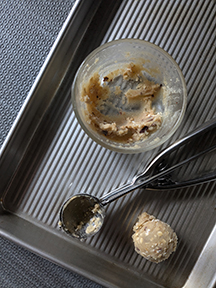
Unbaked Cookie Dough

Yes, we know regular cookie dough is unbaked, but this one is actually meant to stay that way. This version doesn’t require a mixer, just a bowl and a spoon, plus it has some redeeming healthful qualities. Did Brian think it was as good as actual cookie dough? To be honest, no, but he liked this one better than the one I tried with cannellini beans, so there’s that. I, however, liked it much better, and I’m the one who actually eats snacks. 

Prep tips: this is good right away (yay for instant “cookies”!), but I prefer it fully chilled. You can dollop it out in cookie-scoop portions, or just leave it in a bowl and snatch a little every time you open the fridge…I’ve heard that works pretty well.

2 cups almond flour

½ cup quick oats

2-4 tablespoons local honey, to taste

2 tablespoons melted coconut oil or butter

1 tablespoon of milk, or as needed

½ teaspoon salt

a good splash vanilla

2 oz chopped dark chocolate

Melt oil or butter in a glass bowl, then stir in remaining ingredients. Eat. 

More measles cases reported in Kansas

0

MORTON COUNTY —Three new cases of measles have been confirmed in Morton County, linked to a previous case identified in Stevens County last week, according to a statement from the Morton County Health Department.

Early symptoms of measles are a fever of more than 101 degrees Fahrenheit, runny nose, cough, and red, watery eyes. Usually, one to four days after these early symptoms, a red rash appears on the face and spreads to the rest of the body. Measles symptoms typically develop 10-14 days after exposure. Symptoms can develop as soon as seven days and as long as 21 days after exposure, according to the Kansas Department of Health.

Measles is a respiratory disease caused by a virus. Measles is spread through the air by breathing, coughing or sneezing. Measles can be spread from an infected person to others from four days before, to four days after the rash appears.

Because measles is a highly infectious disease, it is very important for anyone exposed and experiencing symptoms to isolate from others with the exception of visiting a health care provider.

The best way to prevent measles is to get the Measles, Mumps and Rubella (MMR) vaccine. The Centers for Disease Control and Prevention (CDC) recommends children get their first dose at 12 to 15 months of age, and a second dose at age 4 to 6 years. Infants ages 6 through 11 months old should get the MMR vaccination if traveling outside the United States. Adults are protected from measles if they have had at least one dose of the MMR vaccine, were born before 1957, or have evidence of immunity from a blood test.

If an individual has known exposure to someone with measles and they are not immune through vaccination or prior infection, they are recommended to:

Consult with a health care provider to determine if post-exposure prophylaxis is recommended.

Exclude themselves from public settings for 21 days from the last time they were exposed unless symptoms develop.

If symptoms develop, individuals should notify their local health department and stay away from public areas until four days after the rash appeared.

Individuals seeking health care are advised to call ahead to their health care provider and let them know their symptoms and exposure concerns. This will help limit exposure within the healthcare setting.

Per K.A.R. 28-1-2, measles is a four-hour reportable disease. If a health care provider, laboratory or hospital suspects, tests, or diagnoses an individual with measles, KDHE should be notified immediately. KDHE will work with the health care provider on testing recommendations. Teachers and school administrators are also required by law to report suspected cases to KDHE.

Measles cases rarely occur in Kansas and are usually associated with international travel.

For questions, call the Stevens County Health Department at 620-544-7177 or KDHE Epidemiology Hotline at 877-427-7317 (option 5).

Wheat Scoop: Wheat Rx seminars emphasize the importance of yield selection and informed management decisions to maximize wheat yields

0
Kansas Wheat

For the audio version, visit kswheat.com.

Just as Kansas winter wheat fields are greening up, producers gathered at recent Wheat Rx seminars in Salina and Colby to gain insights into the latest research recommendations for how to maximize the yield and quality of this year’s harvest. The seminars, conducted on March 11 in Salina and March 12 in Colby, provided a comprehensive overview of the combined impact of varietal selection and best management practices.


“A successful harvest is the culmination of the choices producers make throughout the growing season, from selecting area-appropriate varieties to fertilization programs to disease and pest management decisions,” said Aaron Harries, vice president of research and operations for Kansas Wheat. “Wheat Rx is about helping producers make informed decisions every step of the way.”


The seminars were part of Wheat Rx, a partnership between Kansas Wheat and K-State Research and Extension, to disseminate the latest research recommendations for high-yielding and high-quality wheat to Kansas wheat farmers. This effort includes a series of extension publications at kswheat.com/wheatrx and educational outreach.


Kicking off the event, Allan Fritz, K-State wheat breeder, discussed the most recent field data from the performance trials conducted each year across the state. Based on high variability in field data in recent years — driven largely by spotty rain and prevalent drought conditions — he encouraged growers to consider multiple years of performance testing when selecting wheat varieties and he cautioned against relying on one year’s outstanding or poor performance. Top traits to watch include not just the overall yield potential, but also stability, disease resistance and quality.


“If it works on your farm, keep using it,” Fritz advised.


Speakers also addressed the importance of fertility management, with Dorivar Ruiz Diaz, K-State associate professor and nutrient management specialist in agronomy, discussing nitrogen and phosphorus applications. He emphasized the importance of striking a balance between optimum agronomic applications and economic efficiency.


“How can we keep efficiency in our applications but cut back on rates?” he asked, highlighting the benefits of split nitrogen applications and the need to consider other nutrients like sulfur in soil testing programs.


Disease management was another crucial topic, with Kelsey Andersen Onofre providing an overview of the relative threat and varietal resistance to diseases like rust, Wheat Streak Mosaic Virus (WSMV) and its related viruses, Fusarium Head Blight (FHB), Barley Yellow Dwarf and others.


“Looking at average statewide yield loss from 2013 to 2023, stripe rust is by and far the largest disease threat to the Kansas wheat crop,” she noted, highlighting K-State’s new Stripe Rust Risk Forecasting Tool, developed in collaboration with Pennsylvania State University, which allows producers to track as rust spreads from southern states into Kansas. She also emphasized control of volunteer wheat and termination of cover crops that can serve as a green bridge for vectors like the wheat curl mite as critical for all producers.


Other topics included a discussion on weed management by Sarah Lancaster, K-State assistant professor and extension specialist, including the newly released 2025 Chemical Weed Control guide. Of note, she discussed the rise of jointed goatgrass as a weed to watch since there are limited chemical control options in certain wheat varieties.


Romulo Lollato, K-State associate professor of wheat and forage production, rounded out the day with a long-term research project examining the impacts of different management decisions when combined with specific varietal selections. He emphasized that intensive management will likely pay off for producers, particularly for susceptible varieties, but that the initial choice in varietal selection will go a long way to meeting a producer’s goals.


“If you are willing to put the time and money into management, you have more options to select from when it comes to varieties,” he stated. “But just avoiding susceptible varieties can make a lot of difference for producers who want simpler management options.”


The presenters collectively reinforced the importance of integrating research recommendations with a producer’s practical knowledge and on-the-ground experience to strike a balance between maximum yield potential and economic return on investment. Kansas growers can find research recommendations and tools discussed at https://agmanager.info/.


Specifically for wheat producers, Wheat Rx also includes a series of Extension publications and other educational outreach materials designed to address key management areas of hard winter wheat. These publications contain recent data based on novel research funded in part by wheat farmers through the Kansas Wheat Commission’s two-cent wheat assessment. Find out more at https://kswheat.com/wheatrx.


###

Written for Kansas Wheat by Julia Debes

Horticulture 2025 Newsletter No. 04

0
KSU horticulture

1712 Claflin, 2021 Throckmorton Plant Science Center
Manhattan, KS 66506 (785) 532-6173

Online access: https://hnr.k-state.edu/extension/horticulture-resource-center/horticulture-newsletter/

Horticulture Newsletter – Kansas State University
The Horticulture Newsletter page from Kansas State University offers valuable insights and resources for gardeners and horticulture enthusiasts. It features articles on plant care, pest management, and seasonal gardening tips, as well as updates on horticultural research and community gardening initiatives. Subscribers can access past newsletters, providing a wealth of information to enhance …
hnr.k-state.edu

ANNOUNCEMENTS:
Garden Spotlight
Send in your garden stories! Last year our Hort Newsletter featured six different gardeners/garden programs.

We love learning about our fellow Kansas gardeners and want to feature your home/community/school garden in our newsletter so we can all grow together.

Email [email protected] to find out more.

Harvey County Home and Garden Show “Birds and Blooms”
March 22 (8:00AM-5:00 PM) – March 23 (Noon-5:00 PM)
Hosted at the 13-acre Dyck Arboretum, the 2025 Harvey County Home and Garden Show has great food, vendors and an amazing speaker line-up addressing this year’s theme “Birds and Blooms”. For just $1 admission you can spend the weekend enjoying the scenery while getting a great education as you prepare for the growing season.
“Birds and Blooms” Speaker Schedule 2025

Johnson County Healthy Yards Expo
March 29, 2025 (9:00AM – 2:00PM)
A free family and earth-friendly event. Explore and discover sustainable options for your home and garden through expert advice and educational seminars. Plus, a native plant sale and door prizes. Visit: johnson.k-state.edu or call (913)715-7050 for more information

VIDEO OF THE WEEK:
Establishing a Native Prairie Stand at Home
(K-State Garden Hour March, 2025)
Learn how to establish a native prairie habitat at home and the benefits of creating this beautiful ecosystem.
GARDEN CALENDAR
Planting
asparagus
crowns
mid-March to mid-April
beets
seed
late-March to early-April
bok choy
seed/transplant
late-March to early-April
broccoli
transplant
late-March to early-April
cabbage
transplant
late-March to early-April
carrots
seed
late-March to early-April
cauliflower
transplant
late-March to early-April
chicories
seed/transplant
late-March to early-April
collards
seed/transplant
late-March to early-April
kale
fennel
kohlrabi
lettuce
seed/transplant
seed
seed
seed
mid-March
mid-March to early-April mid-March to early-April
mid-March to early-April
leeks
transplant
mid-March
mustard
seed
late-March to early-April
onion
parsnips
peas
sets/plants
seed
seed
mid-to late-March
mid-March to early-April
mid-March
potatoes
seed
mid-March to early-April
radish
rhubarb
seed
crowns
mid- to late-March
March to April
rutabaga
seed
mid- to late-March
spinach
seed
mid- to late-March
Swiss chard
seed/transplant
late-March to early-April
turnip
seed
mid- to late-March
Pruning
Ornamental Grasses
Blackberries and Raspberries
Deciduous trees
Summer-Flowering/Non-Flowering Shrubs
Scouting
Iris Leaf Spot
Apply fungicide for Peach Leaf Curl prior to bud swell
Pear Rust
Turfgrass
Cool season grasses:
Control broadleaf weeds
Aerate lawn now through April
Warm season grasses
Control broadleaf weeds

VEGETABLES
Asparagus
Asparagus is a perennial vegetable harvested in the spring. Begin with healthy, disease resistant crowns and plant from mid-March through mid-April. Crowns should be spaced 18 to 24 inches apart with the crown buds seven to eight inches below the soil surface. Once established, asparagus is fairly hardy to stress but it does require full sun and well-drained soil.

During year one, do not harvest asparagus spears. Each year after, harvest regularly before the spears reach 10 inches tall. Snap the spears at about ½ to ¾ inch above the soil surface. Stop harvesting after 6-7 weeks when the spears only reach the diameter of a pencil or smaller. Store the harvested spears in the refrigerator and use soon after harvest.

Asparagus should be fertilized in early spring and weed regularly to reduce competition.

FRUIT
Strawberries
From mid-March through early-April it’s strawberry planting time in Kansas. As long as the soil is ready to be worked (not frozen or saturated) you can plant. If your soil hasn’t been tested for a few years, it is best to have that done to inform your fertilization practices. Strawberry plants can be purchased from a reputable garden center.
https://bookstore.ksre.ksu.edu/pubs/mf598.pdf

If you have existing strawberry plantings and they are covered from the winter protection, wait to uncover them until the soil is about 40 degrees F. Measure the soil temperature several inches down at the center of the strawberry bed. Once the soil temperature is warm enough, remove the top layer of straw to allow new growth to emerge. Leave the bottom layer in place so the berries will develop on top and won’t have to rest in the soil.

TURF
Crabgrass
Crabgrass is a summer annual. It germinates in spring and dies in the fall. It has a different texture and color than turfgrass creating a non-uniform lawn. It also sets seeds and can spread throughout the landscape. Lawns that are not well maintained are prime targets for crabgrass invasion.

It is easiest to control crabgrass before it germinates using preemergence. May 1 is typically when crabgrass is expected to germinate throughout much of Kansas, but this does vary depending on location and weather patterns. Many homeowners use signals from nature to determine preemergence timing.

A common guideline is to apply crabgrass preemergent when redbuds are in full bloom. While this is an indicator, it’s not going to provide 100% accuracy since microclimates exist within each landscape. In warmer areas of the landscape, crabgrass is likely to germinate earlier.

Soil temperature is a useful indicator to predict crabgrass germination. Using the K-State Mesonet you can access the average soil temperature at a two-inch depth over the past seven days. When the daily average is 55 degrees F for about five days, research suggests this is the time to apply crabgrass preemergence.
https://hnr.k-state.edu/extension/horticulture-resource-center/common-pest-problems/documents/Crabgrass.pdf

Why Weeds Invade Lawns
Instead of combatting weeds all season, take a proactive approach to prevent weeds. Here are some common reasons why weeds invade lawns.
Improper Mowing: Mowing too low and too infrequently thins the turf, allowing weeds to get started.
Improper Watering: Frequent watering encourages weed seed germination, disease, thatch, and a shallow-rooted turf that is less competitive with weeds for soil moisture and nutrients.
Improper Fertilizing: Fertilizing too much, too little or at the wrong time may benefit weeds more than grass.
Insect and Disease Injury: Weeds rapidly invade lawns that are thinned by insects and diseases.
Compacted Soil: Soil compaction is a hidden stress on the turfgrass root system. The grass is unable to compete effectively with weeds.
Excessive Wear: Turf areas used for recreation and sports are subjected to wear and compaction.
Wrong Kind of Grass: The wrong kind of grass for the location will gradually decline and be invaded by weeds.
Environmental Stress: Weeds often take over a lawn after it has been weakened and thinned from weather-related stress.
Thatch: Excessive thatch causes shallow-rooted grass and contributes to insect and disease problems.
https://bookstore.ksre.ksu.edu/pubs/mf2385.pdf

Turf Substitutes
Though a thick, healthy lawn can be a beautiful part of the landscape, if you’re ready for change there are several alternatives to traditional turf. Japanese spurge, English ivy and periwinkle are three ground covers that are good options for an alternative lawn.

Certain ground covers perform well in compacted soils that are unsuitable for a traditional lawn. Areas with little sunlight may not be conducive to growing turf but can be a great environment for perennials. Keep in mind that it may take more time to establish a thick groundcover lawn, and it won’t tolerate heavy foot traffic but once established it will be less maintenance and can stand up to weeds. Here are a few ground cover options to consider:
Bugleweed (Ajuga spp.)
Periwinkle (Vinca minor)
English ivy (Hedera helix)
Creeping lily-turf (Liriope spicata)
Lamb’s ear (Stachys byzantina)
Japanese spurge (Pachysandra terminalis)
Pollinator lawns are designed to provide sustenance for bees and other pollinators by combining turfgrass with flowering ornamentals. Though aesthetically this option lacks the uniformity of a manicured lawn, pollinator lawns require less irrigation, fertilization, mowing and weeding once established. It is important to select turfgrass species that are compatible with the flowering plants and to choose ornamentals that fit the growing conditions.

Here are some plants to consider for a pollinator lawn:
Dutch white clover (Trifolium repens)
Self-heal (Prunella vulagris spp. lanceolata)
Creeping thyme (Thymus praecox spp. arcticus)
Common violets (Viola sororia)
Dandelions

When selecting a turf substitute beware of invasive growth habits. Lily of the valley and goutweed are two groundcovers that can be problematic if not managed.

MISCELLANEOUS
Right Plant in the Right Place
If you’re starting new plants in your lawn and garden this spring think ahead. Choosing the right plant to fill voids in the landscape is essential success.

Know the water needs of the plant and the water availability of your landscape. Understand the growth characteristics of the plant including height and spread at maturity, rate of growth, thorns/fruiting habit, etc. Determine if those qualities will fit within the space you have available. A small, young tree may look nice planted in front of your home, but as it grows will it block your view out the window? Will this still be a desirable location? Likewise, a thorny bush planted next to a sidewalk may be fine when the shrub is small, but as it grows and approaches the sidewalk it may become a hazard requiring regular pruning to contain it.

As you shop for new additions to the landscape keep these points in mind. Informed decisions early in the landscaping process will save you time and money.

QUESTION of the WEEK

“Am I too late to plant potatoes?”
In Kansas the ideal planting time for potatoes ranges from beginning to late March and even into April. If you have seed potatoes to plant, go ahead and get them in the ground within the next two weeks for the best harvest.

Be sure you are using loose soil with good drainage. Provide consistent water and keep up with weeding. Side-dress the rows with nitrogen or an all-purpose fertilizer per label recommendations.

Contributors:
Cynthia Domenghini, Instructor and Horticulture Extension Specialist
Kansas Garden Guide

Division of Horticulture
1712 Claflin, 2021 Throckmorton
Manhattan, KS 66506
(785) 532-6173

For questions or further information, contact your local extension agency.
This newsletter is also available on the World Wide Web at:
http://hnr.k-state.edu/extension/info-center/newsletters/index.html

The web version includes color images that illustrate subjects discussed. To subscribe to this newsletter electronically, send an e-mail message to [email protected] listing your e-mail address in the message.
Brand names appearing in this newsletter are for product identification purposes only. No endorsement is intended, nor is criticism implied of similar products not mentioned.
K-State Research and Extension is committed to making its services, activities and programs accessible to all participants. If you have special requirements due to a physical, vision or hearing disability, or a dietary restriction please contact Extension Horticulture at (785) 532-6173.

Access the HORTNEWS-L Home Page and Archives

Unsubscribe from the HORTNEWS-L List

French Onion Soup

0

Before we know it we’ll be preparing Easter Dinner. Here in the Ozark Mountains all the jonquils are in full bloom, and the Spring is definitely in the air. The heavy sweaters are getting tucked away while their lighter cousins take center stage. I realize there could still be weather surprises ahead, but it’s worth the risk as we embrace the season of new growth and beginnings.

While there are still a few cool days ahead let’s grab one more soup for the season. French onion soup has been a favorite of mine since I was a young girl. Another reason for presenting it today is the idea of sweet Vidalia’s caramelized into this delicious recipe. It won’t be too long before the first sliced Vidalia will be making their way onto a delicious hamburger!

I am beginning to salivate just a bit as I think about a piece of crusty baguette pressed into a bowl, and the top covered with cheese. Slid under a broiler until it’s lightly browned it becomes a succulent meal. To accompany, how about thin strips of beef with a cream cheese spread upon the extra baguette bread. You see the beef au jus can go into your soup and the beef can go into the open faced Sammie’s.

The only difficult chore will be slicing all those onions! There are many ways to approach the issue. Here is how I attack this little situation I wear gloves when slicing up the onions, and I wear onion goggles while I chop. You will be surprised how many onions are needed when making an onion soup.

This coming weekend I’ll be hitting the road back to Lewistown, Missouri, as I complete a few final steps, on my parents’ home. I also have the privilege of speaking to a women’s group in Hannibal, while I’m there. Looks like the weather is going to be in my favor.

Let’s dive into the simple recipe. Next week I hope to bring you a new Tzatziki recipe.

Simply yours, The Covered Dish.

French Onion Soup

6 tablespoons salted butter

6 medium/large sweet onion or 3 lbs.

½ teaspoon salt*

1 teaspoon sugar

1 teaspoon ground black pepper

1 teaspoon thyme leaves

1 ½ teaspoons Worcestershire sauce

1 cup chardonnay wine

2 heaping tablespoons flour

48 ounces beef stock

3 bay leaves

1 ½ teaspoons extra hot grated horseradish

Swiss & Gouda Cheese

Baguette bread, cut into 1-2 inch chunks

*If you are using commercial stock it is very likely this additional salt will not be needed.

Slice onions horizontally into thin slices. In a large skillet or stockpot melt the butter and begin cooking the onion. Stir in the salt, sugar, pepper, thyme and Worcestershire sauce allowing the onions to caramelize. This takes about 20-25 minutes.

Now add 1 cup of the dry white wine and reduce down until the onions are dry. Work the flour into the onions, take about 10-12 minutes to cook off the flour taste, like a roux.

Add beef stock to the onion mixture along with the bay leaves, stirring to smooth and slightly thicken. Bring to a boil and then reduce the heat and simmer for 20-30 minutes. Remove the bay leaves and stir in the grated horseradish. If you are fearful the horseradish will make it hot, put in only 1 teaspoon, stir well and sample. Then when you are convinced it is not hot, put in a chunk of baguette bread into the bottom of a soup bowl and then ladle the soup over it. Using Swiss only or both Swiss and Gouda, layer cheese across the top of the bowl. Sit your bowls on a jelly roll pan, inside a 350 degree oven and allow the cheese to totally melt across the top, you can even switch to broil at the end for the punch of color. I prefer this route, because I don’t want the cheese too dark.

This will be 5-6 main course servings. If you want an easier approach on the bread and cheese you can put the bread under a broiler with the cheese arranged on top. Cook until the cheese is melted and then float on top of the soup. This avoids the cheese baking onto the soup tureens while it is melting, and easier cleanup.

As noted in the column, the soup freezes well.