Saturday, January 17, 2026
Home Blog Page 4670

Sustainable Paradigms            

0
lee pitts

I want to be sustainable, I really do, I mean, who doesn’t want to be sustainable?

It’s just that I don’t know how.

The word “sustainable” is very trendy right now, just like “paradigm” was THE WORD of the last decade. So let me be the first to say that I’m a big supporter of “sustainable paradigms”. Now, if I only knew what that meant.

Everywhere you look these days there are Sustainability Conferences, Forums and Roundtables attended by Chief Sustainability Officers and their underlings, the Sustainability Protocol Officers. McDonalds even has their very own Vice President of Sustainability. But before you get too impressed I’m thinking that McDonalds must be like a lot of BIG banks, with more Vice Presidents than they have customers.

This whole sustainability thing is starting to make my head hurt and I don’t think I’m the only one. Although the CEO of McDonalds says that McDonalds’ customers are “demanding sustainable food” its Vice President of Sustainability says that consumers “don’t even know what sustainability means.” I wonder, how can consumers be demanding something when they don’t even know what it is they are demanding?  I told you, there’s a whole lot about this sustainable thing I don’t understand.

Ranchers better learn what being sustainable means real fast because McDonalds says they want to sell 100% sustainable beef and that’s a BIG deal because McDonalds buys 2% of all the beef produced in the world!

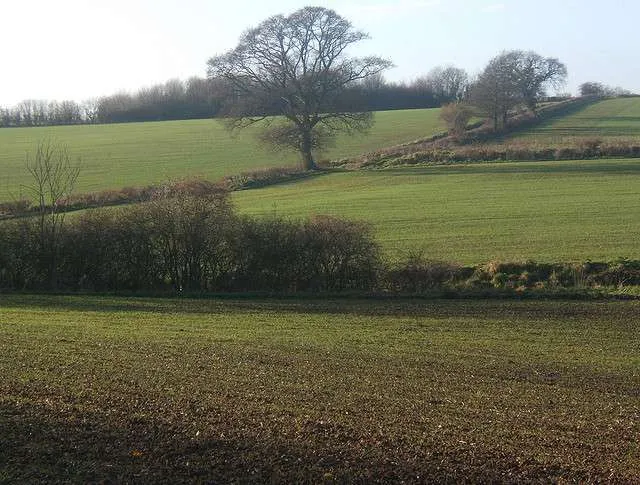
Words are my friends. I make my living with them. So pardon me for saying this but the word “sustainability” is being given meanings not found in any dictionary. I always thought that to be sustainable meant to be able to continue doing what you are presently doing. You know, like farmers and ranchers whose families have been making a living by producing life-giving food for many generations. Yet this sustainability movement seems to be largely composed of urbanite snoopy busybodies who live in high-rises living very unsustainable lives. How long do you think these folks could sustain themselves if all the grocery stores and McDonalds suddenly closed? Or the trucks carrying meat and produce from America’s farms and ranches couldn’t make their deliveries? Many who claim to be sustainable work for big corporations who could lay them off at a moment’s notice when they move their operations offshore. That strikes me as not being very sustainable.

Sometimes I think this whole sustainable thing is  just a big excuse to allow these mischief-makers to stick their noses further into our business. Are we really going to start letting city slickers, who couldn’t grow a radish if their lives depended on it, tell these farm and ranch families who have lived and worked on the same place, in some cases for over 100 years, how to grow food?

McDonalds has their own polling data that shows that nearly a third of its 70 million daily customers don’t feel good about eating there. Could all this sustainability stuff we hear just be a public relations campaign to make McDonalds customers think they won’t get fat drinking huge, sugary sodas and eating super-sized cartons of French fries because the sugar and spuds were produced in a sustainable manner?

Whenever I hear the word sustainable I am reminded of the old joke about a lazy do-gooder who always wrote letters to the editor. Even though he lived in an apartment and had never grown a garden or fed a lamb in his life, he freely criticized the terrible farmers and ranchers who fed him. One day while he was trespassing and literally sticking his nose into a rancher’s business he was chased down and crushed by an angry bull and decapitated.

Two days later he died.

So tell me again… who was being sustainable?
wwwLeePittsbooks.com
Chronicles of The Farm Woman: Snowball Battle

0
Farm woman

 As these lines are written the first round of the snowball battle at the country school is drawing to a close.  The 5-minute bell has rung, which calls for cessation of activities.

    Preparations for the battle have been going on for two days.  The four big girls in school are lined up against all the younger ones.  Each side constructed a fortification of defense.  This required all the recesses and noon inter-missions for two days.  The big girls made a high fort, not very long.  Some 20 feet away the small children constructed a longer defense and lower.  Each child worked hard and eagerly to make ready for the fray.  Little fingers flew as they made a large pile of snowballs for ammunition.  The big girls made a small reserve, not many.

    One doesn’t know exactly how or when the barrage commenced.  Suddenly snowballs were flying thick and fast through the air.  The little ones, having numbers on their side, sent more invectives.  Their fort is longer, they can stand at the ends and strike those larger girls crouched behind their tall fort.  The boy who is having the most fun is little brother who ventures right out into no-man’s land with a mammoth snowball and plumps his big sister right on the head.  It is sweet revenge for all the edicts this older sister has enforced by might through the years.  It is no matter that the big girls all pounce on him and wash his face. He got his good lick in first. When the big girls come into view such a heavy barrage greets them that they are forced to cover.  Sideline referees would say that the little tikes have the edge as the bell rings.  The big girls feel this way too because they dash toward the schoolhouse shouting, “It’s not fair!”

    If the snow holds another day there will no doubt be a change in legislation.  The battle of the snows is on.

Politics, porn, and football

0

Some of you may like my attempt, though it probably deserves more thought, to articulate why we pay little attention to big-money sports in my home. Here’s an excerpt:

Now, let’s not quibble over semantics; I know the Canadians spent millions on a national curling center, that parents of gymnasts fork over thousands for training, and so on. By “big-money,” I mean the sports swamped by wealth, and by its concomitant power over our hearts.

A power that induces fans to overlook thuggery, that induces college officials to cover up child molestation rather than jeopardize their football franchise, that encourages millions of boys to waste years perfecting the throwing and bouncing of balls at the expense of basic math and grammar skills.

I wrote much of it while listening to men down the street bark at their children during a Pee Wee football game. Not that I hold an unbending principle against barking at children, but what struck me was how that hour, other than perhaps (perhaps!) whatever time they spend in church, might be for many boys the most emotionally intense in their week. The time they feel most attuned to the true hearts of their fathers. And there’s something wrong with that, a kind of metastasis of the trivial. It’s not the inherent fault of the sport, of course, but ours for letting it get that way, or maybe for letting everything else become so drab in comparison.

If all that isn’t enough to provoke you to read it, consider how I equate big-money sports to pornography and politics. And as a side-thought, imagine a community invaded by none of those. Oh, and here’s the link.

Agriculture must answer consumers questions better, panelists agree

0
farmland
credit - Andrew Hill

LINCOLN, Neb. — Consumers are asking questions about the food-production system they’ve never asked before, and agriculture needs to do a better job of answering those questions, panelists at a University of Nebraska-Lincoln lecture agreed Thursday.


The discussion, titled “What Does Agricultural Communication Mean in the 21st Century?,” was the second lecture in the 2014-15 season for the Heuermann Lectures. Moderated by Orion Samuelson, longtime agricultural broadcaster, panelists reflected on the challenges facing the agriculture industry in explaining the science of food production in an environment of low scientific literacy.


“People are looking at the food system and asking questions they’ve never asked before,” said Kevin Murphy,  owner and founder of Food-Chain Communication, a marketing organization devoted to helping food-chain stakeholders communicate more effectively.


Those questions often focus on the ethics and morality of food production and frame agriculture “as a problem, as a culprit in social ills,” Murphy added.


Marcy Tessman, president of Charleston-Orwig, an integrated marketing business, said she encourages her clients in food production to “sit at the table with people with opposing views … We need to be accessible, we need to be transparent.”


“Everybody should understand where their food comes from,” said Barb Glenn, chief executive officer of the National Association of State Departments of Agriculture.


“That’s good for society, that’s good for public health, that’s good for stewardship of the environment.”


Murphy noted that high school and college students are being taught the work of agriculture critics such as Michael Pollan and being shown slanted documentaries such as “Food Inc.” but are not hearing voices speaking on behalf of agriculture.


Ronnie Green, vice chancellor of UNL’s Institute of Agriculture and Natural Resources, said it makes good sense, especially in Nebraska, to integrate agricultural science into middle- and high-school curricula.


Green said, “Scientists are trained to not make value judgments,” but rather to simply present their scientific findings.


“I would argue we live in a world where we can’t do that anymore,” Green said.


Heuermann Lectures, sponsored by IANR, focus on providing and sustaining enough food, natural resources and renewable energy for the world’s people, and on securing the sustainability of rural communities where the vital work of producing food and renewable energy occurs. They are made possible by a gift from B. Keith and Norma Heuermann of Phillips, long-time university supporters with a strong commitment to Nebraska’s production agriculture, natural resources, rural areas and people.


Lectures are streamed live online at http://heuermannlectures.unl.edu

Cargill employees first to complete beef cattle transportation education training

0

The company’s truck drivers are first industry-related fleet to complete the training, available online.


MANHATTAN, Kan. – Cargill employees were recently a part of the first trucking fleet to complete the National Cattlemen’s Beef Association’s (NCBA’s) Beef Cattle Transportation Education online training, which is housed and provided by the Beef Cattle Institute (BCI) at Kansas State University.


The training modules, made possible by Beef Checkoff funds, were developed by faculty members, cattle haulers and regulatory officials across the United States as part of the Master Transporter video series. These modules provide animal transporters education on how to handle cattle during loading and unloading, proper loading of trailers, how to inspect trailers for safety for the animals and drivers, how to haul cattle in bad weather conditions and many more practical, relevant issues. This program is now being offered online in hopes that other beef cattle transporters will have easy access to quality video training 24 hours a day.


According to Mike Siemens, leader in animal welfare and husbandry for Cargill, the online training is a valuable part of the industry’s efforts toward achieving continual improvement.


“Many livestock transporters have been hauling cattle for many years, if not decades, and do an excellent job of making sure that the livestock are properly handled and cared for,” he said. “I also believe that you can always learn something new every day when working with livestock, and additional training can help us achieve a greater understanding about the livestock we are hauling, continue to improve our abilities and make us more aware of the needs of the animals.”


To become certified, employees completed a set of five online training modules through Animal Care Training (www.animalcaretraining.org), a training website by the BCI that hosts online training for NCBA and many other agriculture and veterinary professionals. The beef cattle education transportation modules offer training in areas of biosecurity, animal handling, loading and unloading, in addition to weather and truck and trailer maintenance.


The Animal Care Training program was developed to educate English and Spanish-speaking beef and dairy producers, animal transporters, livestock auction market employees and bovine veterinarians. Web-based audiovisual training modules in English and Spanish feature topics such as animal husbandry, animal welfare, environmental stewardship and food safety practices.


The site is currently home to more than 200 online training modules for beef producers and 400 continuing education modules for veterinarians. The program is the result of collaborations with the BCI, NCBA, Association of Bovine Practitioners and Livestock Marketing Association.


Chase DeCoite, manager of Beef Quality Assurance, commented on Cargill’s recent completion of the online training.


“This is Cargill’s most recent action to prove its commitment to producing wholesome, nutritious and safe beef that consumers can trust was raised in a responsible manner from the farm gate to the plate,” he said.


Dan Thomson, director of the BCI, credited the success of the educational trainings to the time and effort of several groups.


“The College of Veterinary Medicine at Kansas State University has worked hard with the National Cattlemen’s Beef Association to provide producers, veterinarians and now animal transporters online education opportunities that are relevant and accessible,” he said. “Thousands of animals are transported on the U.S. highways daily. This is another tool to help people that work on a daily basis to put food on the table for all.”


To get your team started on the online training modules, visit animalcaretraining.org. For questions, contact the BCI at [email protected] or 785-532-4844.