Research shows intergenerational connection boosts wellbeing. The residents of Logan are putting that to the test.
LOGAN, Kansas — With children’s shouts echoing off of colorful playground equipment, the Logan Manor doesn’t look or sound like your typical nursing home.
That’s because it’s also a school.
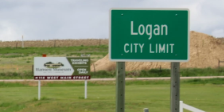
This rural farm town, with a population of 436, recently welcomed nursing home residents and students into its new intergenerational facility, called the Logan Intergenerational Family Education Center. By bringing different age groups together under the same roof, LIFE Center administrators are trying to foster connection and learning across generations.
Inside, Betty Albright — age 90 — is laughing and making May Day baskets with three of her friends: Jensen, Harper and Harper, ages 11 and 12. After a staring contest, one of the Harpers asks Albright when her birthday is.
“October,” Albright says. “Why, what are you gonna do?”
“I will sing Happy Birthday to you on that day, OK?” Harper replies.
Albright, who moved into Logan Manor recently, says connecting with the kids is a source of joy.
“I have a good time with these three,” she said. “I always do because I love them very much.”
As more young people move away from rural Kansas, many communities are aging. That can mean increased social isolation for older adults who stay. The LIFE Center is an effort to improve their quality of life while teaching kids crucial skills.
The setup lets nursing home residents volunteer in classrooms and help with science projects. They’re integrated into the daily life of the public school, meeting students for a high-five train every Friday and serving as reading buddies.
And it provides learning opportunities for kids. One class is interviewing residents and recording their life stories. High-schoolers can job shadow physical therapists and speech-language pathologists, and a few work part-time as nursing assistants and dietary aides.
Down the hall, 6-year-old Rhett is practicing his reading with 63-year-old Tom Goscha. Goscha has pulmonary fibrosis, and he’s lived in the nursing home for five years. He’s a favorite among the kids.
“My nieces and nephews are all grown and gone,” Goscha said. “They’ve got kids of their own, but they’re in Imperial, Nebraska, Texas and Omaha, and so it’s fun to have the little ones around.”
LIFE Center beginnings
The LIFE Center is the brainchild of school Principal David Kirkendall, who first became familiar with elder social isolation programs as a child helping his mother do nursing home maintenance work.
“I’d see all these residents sitting there on a Saturday with their hair done, waiting for somebody to show up that never showed up,” he said from his office in the new Logan school.
The idea of an intergenerational facility started to take shape in 2007, when he was the mayor of a small town near Greensburg, Kansas. The community was struck by a devastating tornado — and as it rebuilt its schools and medical buildings in their original locations, Kirkendall felt like it was a missed opportunity to bring the community closer together.
That idea grew when he moved to Logan a decade ago, where the existing elementary school building and nursing home were both in need of significant repairs.
“I said, ‘I’ve got this idea,’ and we started fleshing it out,” he said.
Not everyone was initially on board. Kirkendall says some parents expressed concern that the residents’ presence at the school could distract from classroom learning.
But he says the intergenerational model actually adds to kids’ learning — something that’s been borne out in the first few months since residents moved in. He gives the example of Logan’s first-grade class, where two residents have been helping students drill sight words with flash cards — freeing up the teacher to work one-on-one with students on difficult pronunciations.
“Now I have two additional learning opportunities in the classroom that I wouldn’t have had before,” he said.
For nursing home residents, having kids around and more opportunities for social interaction can ease the transition from independent living to long-term care.
“It’s a hard change for anybody,” said Logan Manor administrator Teresa McComb, “and there are increased levels of depression, anxiety and loneliness.”
She says having the nursing home more integrated into the local community — where residents are able to attend school performances and sporting events — allows them to develop new connections and a sense of belonging.
“We have some that don’t have family in the area, their family is busy, or they might even be the last one left in their family,” she said. “Even residents that are unable to verbalize how much they like the kids coming over, their faces light up. They smile. They’re just in better moods.”
And the benefits go beyond social interaction. If a resident is recovering from a stroke and needs to practice hand-eye coordination, they can go down the hall and spend time with the preschool class — which is also focusing on hand-eye coordination.
“They can come down to my preschoolers,” Kirkendall said, “and kick a ball back and forth. It helps both groups.”
A model for others
Intergenerational programming is not a new concept, but experts think the LIFE Center is one of the first of its kind. While there are examples of nursing homes with on-site daycare, it’s rare to find one attached to a public, K-12 school.
“I’m not sure I’ve seen something like this before,” said Shannon Jarrott, a social work professor at Ohio State University who studies intergenerational sites.
Leaders in Logan hope the town can serve as a model for other communities trying to improve well-being.
So do researchers at Kansas State University. They’re studying whether the new facility can boost social skills and academic achievement in kids and reduce cognitive decline and depression in residents.
“I’m looking to see how children develop over time by having these intergenerational experiences,” said Natalie Barlett, a teaching assistant professor of psychology at K-State.
“Most places that do intergenerational programming have to bus children in. In Logan, because the elementary school is attached to the nursing home, they get to interact every single day.”
Trase McQueen, project coordinator for the research team at K-State, says the study will also track whether there is any impact to the rate of resident falls and antidepressant medication use, as well as their reports of emotional well-being.
“Logan is doing something that I think could change people’s lives,” McQueen said.
Steven Cohen, a social epidemiologist who studies aging at the University of Rhode Island, says many of the health issues plaguing rural communities span generations, including a lack of geographic and financial access to care as well as shuttering rural hospitals and depopulation. But in many cases, he says, the solutions to these problems are not one-size-fits-all.
“We can certainly look for trends, but it’s also important to remember that what happens in rural Kansas may be very different than what happens where I am in rural Rhode Island, or other parts of the country,” he said.
Opportunities and challenges
Research indicates the social contact associated with intergenerational programming can reduce inflammation and improve psychological health in older adults. But Jarrott, the Ohio State professor, says children also have a lot to gain.
“One of the the misnomers is this idea that these intergenerational programs are really for the benefit of the older adults,” she said. “In reality, if the program is a good one, the children are going to get just as much out of this as the older adults will.”
Younger kids, she says, gain crucial social-emotional skills and confidence. Teenagers — who, data indicates, are increasingly isolated and who are experiencing rising mental health challenges — can develop perspective and lasting relationships.
So why aren’t intergenerational programs more common? Experts point to a range of reasons, from ageism to a lack of dedicated funding sources.
Ernest Gonzales, an NYU professor who directs the university’s Center for Health and Aging Innovation, says age-related stereotypes can make people reluctant to participate in programming. That includes an NYU home-sharing program that pairs seniors struggling to afford their homes with housing-insecure graduate students.
“Many older adults feel as though sharing their private space with a student is just not in their wheelhouse,” he said. “Often, when we follow up, it’s because they think students are impetuous; they’re risk-takers and party-goers. So older adults have a lot of negative stereotypes about younger generations.”
There are also structural challenges. Organizations dedicated to improving children’s education and welfare are often restricted to funding solely child-focused projects. It’s a similar story with funding for older adults. Money appropriated by the federal Older Americans Act cannot be used for intergenerational programs.
“Trying to get funders to recognize that their money is being stretched in novel ways — that’s a big challenge,” Gonzales said.
Jarrott says those barriers reflect a society that is not accustomed to thinking and living intergenerationally.
“We have multiple forces — cultural, political, financial — that discourage sharing of spaces, services and funding,” she said. “But (intergenerational programs) can be a really self-sustaining means of providing meaning and helping people have good health at any age.”
Successful intergenerational programs require intentional planning. Jarrott says it’s best for elders and kids to be paired up individually, in pairs or small groups, as opposed to throwing two large groups of people together.
And for relationships to form organically, those same groups of people should have the opportunity to meet regularly. For organizations interested in creating their own program, she points to guidelines from the nonprofit Generations United, which promotes intergenerational community-building.
In Logan, the LIFE Center also encounters logistical challenges — like how to keep residents safe during flu season, and how to keep them busy when school breaks for the summer. The school year is wrapping up, but Goscha thinks he and his younger friends will manage just fine.
“(The kids) tell me, ‘We’re going to come over and see you this summer.’ And I said, ‘OK, that’ll work. You can come over and visit.’ And I’ve got a jar of candy, and they’re like, ‘So will you have candy this summer?’ I said, ‘I’ll always have candy.’”
Kansas News Service