Thursday, January 29, 2026
Home Blog Page 252

You Don’t Say!

0

With deer rifle season in full swing right now, my mind wonders (more than usual) as I sit in our deer blind. Something Joyce and I used to do as we sat together in the blind, was make up animal conversations for various situations. On a fall turkey hunt years ago, we had our hunting blind set up near an old feedlot. The owner had round bales stored there and a tractor path wound around through the bales. The turkeys followed the tractor path through the bales and into the pasture surrounding the old feedlot. We put a couple hen turkey decoys just across the fence into the pasture and settled in to our blind. The resident cattle soon came to see what was up, and became enamored with the decoys. You could almost sense their thoughts, so we named the cows Clara, Elsie, Audrey and Bessie, and imagined their conversation something like this; “They look like turkeys, but they sure don’t move much,” Clara thought starring at the decoys. Elsie added “Turkeys stink but these things smell like tractor tires or something. Let’s all run at them and see if they scatter and make those funny noises turkeys make when we almost step on them.” Audrey weighed in “No I’m pretty sure they aren’t real turkeys – if they were they’d be eatin’ corn out of our poo right now.” Bessie said “Girls I’ve got an idea – let’s all back up and try to pee on them and see if they run like they usually do.”

Perhaps the funniest animal conversation we ever conjured up came about at an old farmstead where we used to hunt deer. The abandoned farmyard sits back a long lane and we would park our pickup there and walk to the nearby deer blind. We knew deer routinely wondered through the farmyard and around the old buildings, so we tried to imagine how they would react to our truck sitting there if they wandered through as we sat in the blind. Here’s the scene: One morning as we sit there in our deer blind, two deer, Bucky and Chloe wonder through and come upon our pickup in the drive. “See Bucky,” Chloe states “I told you I smelled them again.” Bucky rests his chin on the hood of the pickup and replies “Yup, sure enough; hoods still warm, they’re here somewhere.” “What doofuses,” Chloe retorts with disgust as she turns and begins to walk away. Meanwhile Bucky jumps up and sprawls out across the hood of the pickup with his front legs sticking out in front of him and his back legs out behind him, rolls his eyes back into his head and hangs his tongue out the side of his mouth. “Chloe hears the commotion, and just as she turns around Bucky calls out “Ohhhhh Chloe, they got me!” “You get off there this instant,” Chloe scolds. “That’s not funny at all anymore, especially after you got shot in the butt last season!”

The nursing/retirement home where I used to work has two dementia units and I often marveled at the strange things the residents there with dementia would say and think. Making up animal conversations may see pretty weird and even goofy, but I can only hope that filling my mind with silliness like that now will help me ramble on about silly stuff like that when I get dementia rather than being mean & nasty and cussin’ all the time…Continue to Explore Kansas Outdoors.

Steve can be contacted by email at [email protected]

Rural Water District 101 Nitrate Level

0

Reno County, Kansas – December 10, 2024 – Revised from September 9, 2024
Nitrate levels have continued to be above allowable limits in Rural Water District 101, which serves theYoder area. The last nitrate level test was collected on December 4, 2024. The level tested at 10.9 mg/L,which exceeds the Kansas and Federal (EPA) maximum contaminant level (MCL) of 10 mg/L for public water supply systems. The nitrate levels in water resources have fluctuated in many areas which come from natural, industrial, or agricultural sources (including septic systems and run-off).

Reno County provides routine notices for acute nitrate violations from KDHE. These notices provide Yoder residents education about nitrates in drinking water. Subsequent notices were sent informing residents that bottled water will be provided, upon request, to any household with members at increased risk from the nitrates, such as infants under 6 months, nursing mothers, pregnant women, and other at-risk customers as identified by a health care provider.

The Rural Water District will continue the KDHE required quarterly samples and public notifications until this issue is resolved. We appreciate your patience.

Projects continue on the Kansas State Fairgrounds

0

Kansas State Fair General Manager Bryan Schulz gave Hutch Post an update on the ways the Fair hopes to upgrade visitor experience in the coming years.

“We actually are working with Landmark Architects to see what a brand new stage area would look like inside of the racetrack,” Schulz said. “Every year, we have to bring in a portable stage and all the sound and lights that go with it. That bill is right close to $200,000 a year. If there’s a way that we could have a permanent stage, we’d probably cut that in half, if not more. Obviously, you still have to have them bring in their sound and lights, but the setup and teardown would take a lot less time and that way, we could put in other events there as well. We could bring in some other touring acts. We could do some other special events going on the grounds. It all comes down to money.”

Schulz met with the local legislative delegation on Monday as the legislature has appropriated money for the Bison Arena project and that work is underway.

“We are in the midst of phase one,” Schulz said. “Phase one is basically the new roof, new windows, new doors, working out all the brick work, tuck pointing. We are bringing up two of the sides. They were starting to sink a little bit. We leveled that all out and there’s some interior work. That is all scheduled to be done by August of 2025, and then we will be going out for phase two bidding here, I think within the next month, and that will be to do a portion of the inside that we could open that up.”

Also, there will be a change in the look of the People’s Bank and Trust Arena.

“The canopies are starting to fail a little bit,” Schulz said. “We just wanted a permanent structure because there are a lot of events that we could do on that stage, so we decided to look into putting a permanent structure there, and we just got everything finalized. So I don’t know if we’re going to get any of the footings done yet this fall, early winter, or if it’ll all take place next spring, but it’ll be a full covered grandstand over in that area now.”

The People’s Bank and Trust Arena is the second-largest venue on the grounds, second only to the Grandstand itself.


Overwintering potted plants

0

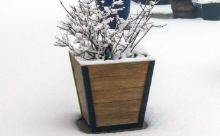
Perennial plants being overwintered in pots are subjected to much harsher conditions compared to those in the soil. Because of this, they can be damaged and killed. Fortunately, there are some steps to try to get these plants through the winter and enjoy them again come spring.

Why Take Time to Protect Potted Perennial Plants?

So, why take the time to protect potted perennial plants? Most plants’ roots are far less cold-hardy than their above-ground parts. Usually, this isn’t an issue because the soil will insulate the roots and protect them from extreme cold temperatures. While potted plants may be in a growing media, the amount of media is small and will get much colder than soil in a landscape.

Since potted plants’ roots are exposed to colder conditions than those in the ground, it’s a good idea to look for plants that will survive in a hardiness lower than the zone they will grow in. The general rule is to select plants that will survive two zones cooler than where the plant will be growing. For example, central Illinois is zone 5 or 6. Therefore, for that location, consider a plant that is hardy to zone 3 or 4 if planning to overwinter it outdoors in a pot.

Overwintering Perennial Plants in Pots

Explore a few steps that are best for hardy perennials. The following guidelines do not apply to non-hardy plants like geraniums, as those may need to be handled differently.

Before getting pots ready to overwinter, make sure the plants inside are well watered, and check throughout the winter. This is especially important for evergreens to help prevent winter burn. Even after above-ground growth has gone dormant for the year, the roots will continue to take up water. In addition to providing water to the plants, moist growing media will freeze slower than dry media, offering additional protection.

The most common way to overwinter potted perennials is by storing them indoors. Places like an unheated garage, shed, or cool/cold basement can be good locations to place potted perennials for the winter. Many perennials need a cold dormancy to properly bloom and grow, so if a garage or basement is too warm, temperatures should be between 20°F and 45°F; consider elsewhere.

A second option is to sink containers into the ground. By placing the pots in the ground, the surrounding soil can insulate the pot, providing protection from extremely cold temperatures and temperature fluctuations. Additionally, the pots and plants can be mulched to provide additional protection. Once the danger of a hard frost has passed, the pots can be removed from their holes.

Grouping pots together in a protected location. If digging a hole in the ground isn’t an option, or the pot is too large, try grouping pots. Look for an area that doesn’t receive strong winds or too much sunlight, such as the north or east side of a building. Once the pots are clustered, mulch them heavily with straw, leaves, or wood mulch. Once growth resumes in the spring, remove the mulch and return the pots to their rightful place.

For more on overwintering potted plants, check out the Good Growing blog. For questions, contact a local University of Illinois Extension office from the map.

Ken Johnson is an Illinois Extension horticulture educator for Calhoun, Cass, Greene, Morgan, and Scott counties. Gardeners Corner is a quarterly newsletter from gardening experts around the state.