Thursday, January 29, 2026
Home Blog Page 253

How to care for the festive poinsettia plant during and after the holiday season

0

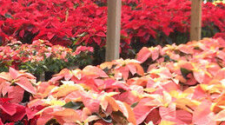
The vibrant red, green and white foliage and flowers of the poinsettia plant make it a favorite gift and decoration during the holiday season and beyond.

The festive plant also has a special connection to Arkansas history: the state’s Poinsett County and the poinsettia plant both derive their names from Joel Roberts Poinsett, a U.S. Congressman and botanist from South Carolina. Poinsett first brought clippings of the poinsettia plant to the United States from its native Mexico in the early 1800s.

Poinsett served as secretary of war under President Martin Van Buren, and though he never visited Arkansas, Poinsett was a friend of Arkansas Congressman Archibald Yell.

The poinsettia’s association with the holiday season is in part due to the plant’s geographical home. Native to southern Mexico, poinsettias are in bloom during this time of year.

“Poinsettia flower buds are initiated as our nights naturally get longer in the fall,” said Berni Kurz, extension consumer horticulture educator for the University of Arkansas System Division of Agriculture. “This is a phototropic response, and we call plants that respond to long nights ‘short day’ plants.”

The poinsettia, with its colorful leaves and bright flowers, has long been included in Mexican celebrations of Christmas. The plant’s popularity in the United States took hold in the 1960s, when the Ecke family—who owned poinsettia nurseries in California—successfully branded poinsettias as the Christmas flower by sending free plants to television studios for their holiday specials, including those of Bob Hope and “The Tonight Show.” With plenty of screen time during Christmas programming, poinsettias then became a holiday staple.

The poinsettia plant’s beauty can be maintained throughout the year with a bit of care and attention from growers—read on to learn how to care for the plant during and after the holidays:

When you first receive it:

• Avoid exposing the plant to extreme heat (above 80 degrees Fahrenheit) or extreme cold (below 50 degrees), as this can cause the plant to lose its leaves or even kill the plant. Cover and protect the plant when transporting it from the florist, greenhouse, or retailer, and once inside, avoid placing the plant near hot or cold drafts.

• Poinsettias are happiest when placed in bright environments, such as near a window, and kept at a moderate temperature (60 to 65 degrees).

• Poinsettias prefer moist soil. When the top of the soil feels dry to the touch, water thoroughly with warm tap water and allow excess water to drain from the bottom of the container. Poinsettias are susceptible to root and stem diseases, so draining the excess water is a key step. If the plant is wrapped with decorative foil, punch a hole in the foil beneath the pot to allow excess water to escape. The plant should be placed on a saucer to prevent damage to the furniture or carpet.

• Though most poinsettias do not require additional nutrients during the holiday season, you can use a standard houseplant fertilizer to maintain healthy foliage and blooms. Follow the fertilizer recommendations listed on the package.

Poinsettias are not very toxic to pets, though the plant has “received bad press in the past,” Kurz said.

Kurz said the poinsettias’ milky sap can be a mild irritant to the mouth of pets when the plant is chewed.

After the holidays, this plant can live on:

• Remove any decorative wraps from the planter and place a saucer underneath the plant. This creates better air circulation for the roots during the rest of the growing season.

• Water and fertilize at regular intervals.

• As the plant grows, move it to a larger container with new potting mix.

• If the poinsettia starts to become long and leggy, cut it back 5 to 6 inches. You can also periodically cut the tips of the branches to encourage more side branching and maintain a fuller appearance.

Throughout the year

In the summer, move your poinsettia outside to an area with indirect sunlight. This is also the time to increase fertilizer to at least twice the frequency.

In mid-summer, trim the plant as necessary to keep a manageable size and fullness, and then move to a location with full sunlight.

After Labor Day, move the plant inside to a location that gets at least six hours of sunlight, preferably more. This helps the plant start preparing for its flowers and colorful foliage. This is also when you should begin reducing the frequency of fertilizer.

Toward the end of September, your poinsettia needs long periods of darkness to achieve its bright colors. At this stage, it must have at least 13 hours of uninterrupted darkness and 11 hours of bright light each day. Try placing the plant in a basement, a closet, or beneath a box during the required hours of darkness. And during the periods of bright light, be sure to rotate your plant so it receives even light on all sides.

In the days just before Thanksgiving, you can stop the dark periods, reduce the amount of water and fertilizer used, and place your poinsettia in a sunny spot that receives at least six hours of direct light.

To learn more about poinsettias, visit its Plant of the Week entry on the Cooperative Extension website here: https://www.uaex.uada.edu/yard-garden/resource-library/plant-week/poinsettia.aspx.

Cargill to lay off 5% of its workforce globally. What does that mean for Kansas?

0

Cargill is reducing its workforce by about 5% globally, saying the layoffs are a response to a decrease in crop prices that have reduced revenue for the agricultural giant.

An annual report from the Minnesota-based company said it employed about 160,000 people worldwide in 2024, making it the United States’ largest private company. The 5% cut could impact 8,000 workers.

“Earlier this year, we set a long-term strategy that continues that legacy, while carrying forward the values and core strengths that have defined our success from the beginning. As we look to the future, we have laid out a clear plan to evolve and strengthen our portfolio to take advantage of compelling trends in front of us, maximize our competitiveness, and, above all, continue to deliver for our customers,” a Cargill representative told The Capital-Journal.

“To strengthen Cargill’s impact, we must realign our talent and resources to align with our strategy. Unfortunately, that means reducing our global workforce by approximately 5 percent. This difficult decision was not made lightly.”

The company is declining to share the office locations where it will cut staff, but there are several Cargill locations in Kansas that could see some staff reductions.

The company operates grain elevators in Topeka, Wichita, Hutchinson, Salina, Ogallah and Wakeeney. It has a meat processing facility in Dodge City, a warehouse and pet food manufacturing facility in Kansas City and a feed and nutrition plant in Emporia.

Its protein division’s headquarters in Wichita opened in 2018 and was meant to connect Cargill’s 800 Wichita-based employees with its 28,000 workers across North America.

Cargill’s major businesses are trading and distributing grain, livestock and food ingredients. It reported record-high revenues during the pandemic but declined to its lowest level of profit since 2016 this year.

The layoffs at Cargill come as Kansas saw another large agricultural employer cut back in Kansas. Tyson Foods announced Dec. 2 that its plant in Emporia will close in February and lay off the 809 employees that work there.

The U.S. Department of Agriculture’s farm income forecast from September projected a bad year for American farmers, with net farm income down 23% since 2022, following a nearly 20% decline in income in in 2023 and another 4% this year.

American Farm Bureau Federation economist Daniel Much said broad economic pressures, including increased cost of labor, higher interest rates, taxes and reduced government support are challenging farmers.

“USDA’s 2024 farm income forecast paints a grim picture for American agriculture,” Much wrote on the Farm Bureau’s market intel page. “While livestock producers may see modest gains, the outlook for many crop farmers is increasingly uncertain, with global supply and demand imbalances weighing heavily on prices.”

The September report showed declines in crop receipts for corn, soybeans, fruits and nuts, wheat, hay and cotton, while race and vegetables are expected to generate more farm income. Livestock is trending more positively, with cattle, poultry, dairy, broilers and hogs forecasting greater net incomes, with turkeys being the only livestock expected to decline in total receipts.

As reported in the Topeka Capital Journal


From ferrets to fish to gray bats, here are the 21 endangered species of Kansas

0

Kansas is the home of 21 endangered species and another 29 that are threatened.

The world has more than 7,000 endangered species, and the United States designates a species as threatened or endangered if the following occurs:

  • Its habitat or range is threatened with destruction, modification or curtailment.
  • It is overutilized for commercial, recreational, scientific or educational purposes.
  • It is diseased or overly predated.
  • Existing regulatory mechanisms to protect the animal are inadequate.
  • If natural or manmade factors are affecting a species’ continued existence.

In Kansas, there are more than 20,000 species, and some may be listed as endangered due to the rarity of an animal’s specialized adaption or to an imminent threat to the species continued existence.

Kansas’s endangered mammals

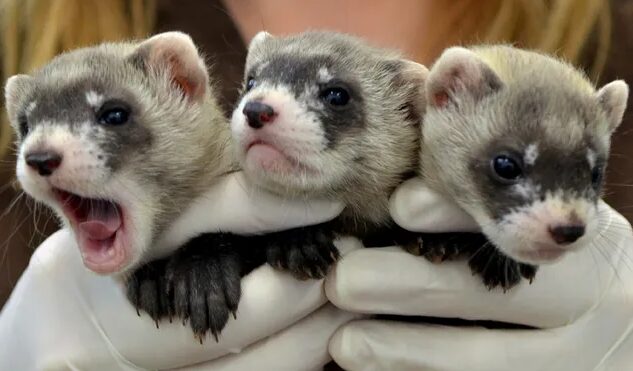
There are only two endangered mammals in Kansas. The black-footed ferret lived throughout central and western Kansas and have typically lived alongside prairie dogs, which make up about 90% of its diet.

The Kansas Department of Wildlife and Parks points to conversion of its habitat to rangeland and the poisoning of prairie dogs. The black-footed ferret was declared extinct in 1979, but later surveys discovered wild populations. It’s now believed there are about 200 mature black-footed ferret in the wild across 18 populations.

The gray bat is a species of microbat with a habitat in Kansas carving out a sliver of the Ozark Plateau in the southeastern corner of the state. Though the bat is “almost totally cave dwelling,” according to the Kansas Department of Wildlife and Parks, its only known population in Kansas is a series of storm sewers in the southeast corner of the state.

Kansas’s endangered birds

The least tern is a small migratory bird that can be found throughout Kansas during migratory periods in the summer. Of three subspecies of least terns, two are considered endangered.

The largest American bird, the whooping crane, has historical habitat in south-central Kansas, where it generally passed through during migratory periods in spring and fall. The species declined due to unregulated hunting and habitat loss, it rebounded from a low of just 21 wild whooping cranes in 1941 to about 800 birds today.

Kansas’s endangered fish

The pallid sturgeon can get as large as five feet long, and usually reside in main channels of large turbid rivers where currents are swift. The fish was common during the 20th century, but it’s believed habitat loss dwindled the numbers with the channeling and damming of the Missouri River.

Three species of chub are considered endangered:

  • Peppered chub.
  • Sicklefin chub.
  • Silver Chub.

The 2.5-inch peppered chub is found in the lower Arkansas River and its major tributaries, but due to the dewatering of western Kansas streams, it’s now limited to lower portions of the river’s basin in Kansas.

The sicklefin chub is found in the Missouri River in the northeast portion of the state, favoring areas with a strong current.

The silver chub used to be common in the Kansas and Missouri rivers, but the University of Kansas Museum of Natural History hasn’t documented a specimen in the Kansas River since 1980.

The Arkansas River Shiner was formerly common in the Arkansas River but is reliant on flood flows and has fared poorly with reduced streamflow.

Kansas endangered amphibians

The spotted cave salamander, like the gray bat, is only present in a small sliver of the Ozark Plateau in southeast Kansas. It lives in pitch-black caves or near cold springs in the forest. The second edition “Pocket Guide to Kansas Threatened and Endangered Species” says the salamander is a “unique component of Kansas natural heritage” because the habitat itself is uncommon in Kansas.

The grotto salamander resides in the same region as the spotted cave salamander in southeast Kansas. They are blind cave-dwelling salamander that grow up to 5 inches long.

Kansas’s endangered invertebrates

Of the 11 endangered invertebrates in Kansas, eight are mussels:

  • Elktoe mussel.
  • Ellipse mussel.
  • Flat floater mussel.
  • Mucket Mussel.
  • Neosho mucket mussel.
  • Rabbitsfoot mussel.
  • Western fanshell mussel.
  • Cylindrical papershell mussel.

    There are also two endangered species of beetle in the state, with the American burying beetle losing ground in the eastern third of the state and the Scott optioservus riffle beetle only known to reside in Scott State Park in Scott County.

    The slender walker snail has one isolated population in northeast Kansas wetlands. The U.S. government doesn’t consider them endangered, but Kansas does.

    As reported in the Topeka Capital Journal

Kansas Soybean Commission establishes direction for fiscal year 2026

0

Board focuses on opportunities to improve, move soybeans.

Kansas Soybean Commissioners convened in early December at the Kansas Soybean Office in Topeka to deliberate funding proposals and establish the budget for the 2026 fiscal year, which runs July 1, 2025, to June 30, 2026.

The board of volunteer farmer-leaders worked through 41 funding proposals from researchers, agricultural educators and national industry groups looking to bring value to the soybean growers, buyers and consumers. Lower prices and tough growing conditions in recent years significantly reduced soybean checkoff collections available for investment.

Following critical conversation, 27 projects were selected for implementation with the start of the next fiscal year. Objectives for the selected projects focus on field research to enhance crop viability, educational experiences to engage youth and teachers, and market development initiatives to build demand domestically and abroad. Additionally, Commissioners approved their core program budget, partially executed by contract with the Kansas Soybean Association, to implement state projects not related to membership or policy.

“We had a lot of extremely good projects presented at this meeting,” Chairman Keith Miller, Great Bend, says. “Our frustration with the recent price and weather challenges is that we currently do not have as many funds as we would like to so we can greenlight more of these projects. We do not want our researchers to back off from submitting proposals as we anticipate a rebound in funds. We did our best to fund numerous quality projects with the capital we have to benefit soybean growers in our state.”

The soybean checkoff, in which farmers contribute one-half of one percent of the sale price of their soybeans, generates the funding available for investment each year. The objective of the soybean checkoff is to improve profitability for soybean farmers, which can be accomplished through improving efficiency of soybean production and finding new ways to use the crop after harvest, among other directives.

The collective work of the national soybean checkoff has grown the impact of U.S. soybeans to add $9.8 billion in value to the U.S. gross domestic product, as announced by the United Soybean Board Dec. 6.

“The soybean checkoff exists to promote market development and drive research that focuses on managing disease, pests and more,” Miller says. “It is very important to try to get all our priorities in line with what we need for production. That’s where your checkoff dollars are making a huge difference for the future of the soybean industry.”

Further details about individual projects included in the budget are expected to be released ahead of the fiscal year. Information about how the soybean checkoff is working on behalf of farmers is always available at www.kansassoybeans.org or by contacting Administrator Kaleb Little by phone at 785-271-1040.

About Kansas Soybean

The Kansas Soybean Commission, established in 1977, includes nine volunteer farmer-commissioners who are elected by their peers. They oversee investments of the legislated “soybean checkoff” assessment in research, consumer information, market development, industry relations and farmer outreach to improve the profit opportunities for all Kansas soybean farmers.

K-State researchers aim to develop soil sensors that will measure farm fields at the nanoscale

0
National Science Foundation awards $2M for innovative project.

Kansas State University researchers have received a $2 million award from the National Science Foundation’s Global Centers program to develop sensors that can more accurately detect nutrients, chemical compounds, soil microbiomes and greenhouse gases in soil.

Suprem Das, an associate professor in K-State’s Department of Industrial and Manufacturing Systems Engineering, said advancing soil sensors –and allowing farmers to collect soil information in real time – “is essential for advancing precision agriculture and promoting sustainable practices.”

Das will lead the project of more than a half dozen scientists aiming to develop sensors using atomically thin carbon sheets in which the actual sensing events occur at the nanoscale, defined as a dimension between 1 and 100 nanometers.

To visualize the nanoscale, consider that a single strand of human hair is approximately 80,000 to 100,000 nanometers wide; a sheet of standard copy paper is about 100,000 nanometers thick.

“When you make things smaller and smaller and eventually go to a nanoscale, you can fundamentally see different properties of those things you are measuring,” Das said. “We are able to exploit some of those properties to make these sensors so they can better measure the properties we’re after.”

Raj Khosla, head of K-State’s Department of Agronomy, notes that researchers think that employing sensors at a nanoscale may help them more accurately and more quickly measure nitrogen in farm fields.

Nitrogen is a vital nutrient in agriculture, enabling crops to capture sunlight energy through photosynthesis, and thus increase growth and yield.

“The U.S. Department of Agriculture’s innovation agenda says that by 2050, our country will reduce our nitrogen consumption by 50%,” Khosla said.

“But before we can think of reducing nitrogen waste in farm fields, we need to be able to measure how much of it is in the plant and soil,” he said. “The soil sensors we will be developing will allow us to measure rates of nitrates in soil instantly, and eventually we’ll work on measuring the rates of nitrogen in plants throughout the field.”

According to the U.S. Government’s National Nanotechnology Initiative, nanostructured materials are stronger and possess transformative physical properties that often make them better at conducting electricity and heat; are strong in mechanical strength; and are suitable for chemical detection, among other desired qualities.

In 2022, Khosla and a team of K-State agronomy researchers announced that they were working on a biodegradable soil sensor – roughly the size of a postage stamp – that could measure soil properties of a farm field so that in a matter of seconds, farmers could adjust water, nitrogen and other inputs to abundantly grow crops.

“In talking with Suprem, he told me, ‘well, you’re doing this at a micro scale; we can do it at a nanoscale,’” Khosla said. “So I was very excited. My emphasis is to create the ability to collect data at a high spatial density so that – for example, you’ve heard of No Child Left Behind – well, I have a policy that no corner of the farm field should be left behind.”

“I am focused heavily on agriculture and agricultural applications. Suprem and his team are focused on nanoscale materials, physics and engineering. I couldn’t have thought of a better team to come together.”

Khosla notes that on-farm use of nanoscale soil sensors is several years away, “but unless we start working now, it’s not going to happen.”

The K-State team includes experts in chemistry and chemical engineering, data science, omics (a field of biological study that analyzes the structure and function of an organism’s biomolecules and molecular processes), microbiology and metabolic engineering. Das said the project also is focused on technology development and commercialization, involving a team from K-State’s College of Business Administration.

The initial research and testing of the nanoscale sensors will take place on K-State’s North Farm in Manhattan, but Das said it will eventually spread to sites in the United States, Canada and the United Kingdom. Das also anticipates forming a Global Center to help train students in interdisciplinary research and education and increase understanding of the capability of the proposed sensors.

“When we think of these sensors, it’s not a matter of ‘if’ they will be developed; it’s a matter of ‘when’ they will be developed,” Das said. “And we’re a lot closer today than we ever have been before.”

He notes the variety of researchers with varied expertise on the team: “Our challenge will be to develop very robust algorithms to be able to translate millions of data points from these sensors, then process them, analyze them, store them and derive decisions in near real time for farmers to use.”

The project, Das said, is the first successful example of leveraging K-State’s GRIP (game-changing research initiation program) award to attract highly competitive federal grants.

Funding for K-State’s work begins on Jan. 1, 2025.