Thursday, January 29, 2026
Home Blog Page 257

KDA Warns Poultry Owners of HPAI Risk

0
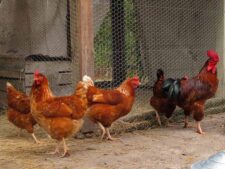
Photo credit: Kristine Paulus

The increase in migratory bird activity brings the risk of a resurgence of highly pathogenic avian influenza (HPAI), which is primarily spread by wild waterfowl. Although Kansas has not confirmed a case of HPAI in a domestic/commercial flock since April 2024, the virus has been detected in wild birds across the state over the first few weeks of November, so the Kansas Department of Agriculture reminds poultry owners that the threat of exposure to susceptible birds in Kansas is high.

Anyone involved with poultry production from the small backyard chicken owner to the large commercial producer should review their biosecurity activities to assure the health of their birds. Find guidance on biosecurity on the KDA Division of Animal Health webpage at agriculture.ks.gov/AvianInfluenza.

Highly pathogenic avian influenza is a highly contagious viral disease that can infect chickens, gamebirds, turkeys, and other birds and can cause severe illness and/or sudden death in infected birds. This outbreak has seen illness and mortality in a wider scope of bird species than past outbreaks, including wild and domestic waterfowl. Attentively monitor your birds for symptoms of HPAI which include: coughing, sneezing, nasal discharge, and other signs of respiratory distress; lack of energy and appetite; decreased water consumption; decreased egg production and/or soft-shelled, misshapen eggs; incoordination; and diarrhea. Avian influenza can also cause sudden death in birds even if they aren’t showing other symptoms.

If these symptoms are observed in your birds, immediately contact your veterinarian. If you don’t have a regular veterinarian, contact KDA’s Division of Animal Health office toll-free at 833-765-2006.

According to the U.S. Centers for Disease Control and Prevention, the recent HPAI detections do not present an immediate public health concern. Birds and eggs from the infected flock will not enter the food system. As a reminder, the proper handling and cooking of all poultry and eggs to an internal temperature of 165 ˚F is recommended as a general food safety precaution.

As part of existing avian influenza response plans, federal and state partners are working jointly on additional surveillance and testing in areas around the affected flocks. The United States has the strongest avian influenza surveillance program in the world, and USDA is working with its partners to actively look for the disease in commercial poultry operations and live bird markets and in migratory wild bird populations.

For more information about HPAI, including current status of the confirmed cases in other states as well as more information about biosecurity for your flock, go to KDA’s avian influenza webpage at agriculture.ks.gov/AvianInfluenza or call KDA at 833-765-2006.

Kansas wildlife officials make changes to trout season

0

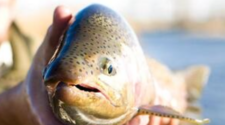
Anglers looking to hook a trout or two will find that some adjustments have been made to the special fishing season in Kansas.

Laura Clawson with the Kansas Department of Wildlife and Parks ( KDWP ) announced in a press release on Nov. 27 that wildlife officials have made changes to the season. Many of these changes were made after angler feedback. The KDWP has adjusted the season with the following:

  • Trout will be stocked around Dec. 1, Jan. 1 and Feb. 1 to align the season with the most popular months anglers go trout fishing. This also aims to reduce the risk to fish health from warmer waters still present in November.
  • Anglers can fish for trout without a permit after March 31. However, the daily creel limit of five trout and a possession limit of 15 will still be in place.
  • The KDWP will focus on fewer, higher-density stockings at each site to give anglers better opportunities to catch fish at popular locations. Cl ick here for a list of trout stocking locations in Kansas.

“The adjustments introduced last year were well-received, allowing us to offer anglers a quality experience while keeping costs manageable,” said Jeff Conley, a KDWP Fisheries program specialist. “All stocked trout will be a catchable size, with a few trophy-sized fish included to make the season more memorable.”

Clawson said the KDWP plans to stock around 62,000 pounds of rainbow trout at more than 30 bodies of water for the 2024-2025 season. Anglers can expect to occasionally catch rarer versions of the trout that are palomino or golden in appearance.

People who want to go fishing for trout in Kansas must have a fishing license and a $14.50 trout permit. Kansans who are 15 years old or younger are not required to have a fishing license but must have a $7 youth trout permit. You can learn more about trout fishing in Kansas by clicking here .

Kansas Introduces New Licenses for Hunting and Fishing After Lifetime Option for Seniors Ends

0

Following a sudden halt to the sale of certain hunting permits for the elderly, Kansas wildlife authorities are thinking about offering other choices for this demographic.

At the Kansas Department of Wildlife and Parks (KDWP) commissioners’ final commission meeting of 2024, which was held in Wichita, the matter was brought up.

In response to an oversight, the KDWP declared on October 18 that it would no longer offer its combination hunting and fishing licenses for citizens of the state who are 65 to 74 years old.

During the conference, Kurtis Wiard, the chief legal counsel for KDWP, presented a possible solution to the issue of elderly persons not being able to obtain lifelong licenses.

The inclusion of three additional multi-year licenses targeted primarily at older individuals is part of this plan, which came from Chris Kennedy, the recently appointed KDWP Secretary.

Based on his existing statutory authority, Kennedy would be authorized to create these additional licenses in order to alleviate the financial burden of license payments on Kansas’ senior citizens.

The following are included in the proposed licenses:

  • $50 for a senior hunting license for five years.
  • $50 for a senior fishing license for five years of residency.
  • A senior hunting and fishing license for five years is $90.

According to KDWP chief legal counsel, Kurtis Wiard:

“The prices are set based on current law, which permits the Secretary to offer senior licenses at one-half the price of regular licenses. There are still several steps required for this regulation to go into effect, including review by the Department of Administration, Attorney General, and Division of Budget. Following review by these agencies, the proposed fees will be presented to the Commission at a public meeting for a vote.

We understand that even this reduced rate may still be out of reach for some, and we continue to explore ways to bring back the deeply discounted 10-year senior license.”


Strategy for increasing feed efficiency for cows

0
K-State beef cattle experts say that adding ionophores to the diet is beneficial for digestion

Many people add such supplements as vitamins, minerals, probiotics and botanicals to their diet for a variety of reasons, but often it is to maintain or improve their health.

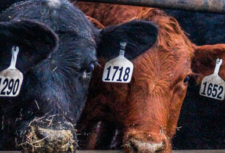
Feed additives are also incorporated in cattle diets with a similar end goal, say the experts at the Kansas State University’s Beef Cattle Institute.

Speaking on a recent Cattle Chat podcast, the experts said that adding an ionophore to the cow’s diet is beneficial for her feed efficiency. Ionophores are antibiotics that target bacteria and protozoa in the rumen.

“Ionophores change the rumen microbial population, so the animal has a more efficient fermentation of carbohydrates, and that helps improve the feed efficiency of those animals,” K-State beef cattle nutritionist Phillip Lancaster said.

When beef producers consider incorporating ionophores, more typically they are added to the rations of feeder calves, Lancaster said, adding that it does have some benefits for cows that are being fed a grain mix in the winter months to maintain or increase their body condition.

“If you are already feeding a grain and protein mix, then adding ionophores makes sense because it will increase the feed efficiency,” Lancaster said.

He added that producers are adding an expense to the budget when they offer grain to the cows, so feeding ionophores can maximize the value of the investment.

However, for producers whose cows are in good body condition, they likely won’t need to be supplemented with grain and therefore feeding an ionophore may incur additional expense, according to Lancaster.

“Because of the cost of this supplement, the benefit of feeding the ionophore may not outweigh the cost for cows who don’t otherwise need to be fed a grain mix,” Lancaster said.

For producers who opt to incorporate ionophores into the diet, K-State veterinarian Brian Lubbers cautions them to make sure they are feeling the appropriate amount due to the health implications of overconsumption.

“There are toxicity issues with ionophores and if cattle get too much it can kill them, so make sure if you are adding them to the grain mix on the farm or have that batch prepared at the feed mill that the right amount of ionophores are included,” Lubbers said. “Because if you get off a decimal place when calculating the amount, it can have drastic consequences.”

He also had an additional caution for beef cattle producers who maintain horses.

“Horses are extremely sensitive to the toxic effects of an ionophore; even the amount that is safe for cattle will kill horses,” Lubbers said. “While deaths relating to ionophores are rare, when they happen, they can be significant to that operation.”

To hear the full discussion, listen to Cattle Chat on your preferred streaming platform.

Caring for Christmas and Thanksgiving Cacti

0

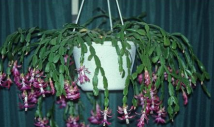
Christmas cactus (Schlumbergera bridgesii) and Thanksgiving cactus (Schlumbergera
truncata) look exotic but are rather easy to maintain under the right growing conditions.
While in bloom, water the plants when the soil surface is just becoming dry to the touch.
Never let the plants remain in standing water and well-drained soil is a must.

Holiday cacti bloom in response to the shorter days and cooler nights of winter. If you are gifted a Christmas cactus this season, to prolong the bloom, keep the daytime temperature between 60-65 degrees F and the nighttime temperature between 55-65 degrees F. Keep your cactus in total darkness for at least 12 of every 24 hours. The plant should
receive bright, indirect light the rest of the time. Sudden changes in temperature can cause the cactus to drop its blooms. When transporting it home be mindful of the outdoor
temperature and protect your plant from the cold.

The segments of the holiday cactus that look like leaves are actually stems known as
“phylloclades”. When blooming is done, you can prune the cactus between these
segments. Each cut phylloclade remaining on the parent plant will produce one to two
new stem segments. This will encourage branching and a fuller plant. The cuttings
removed from the plant can be established into new plants. Dip the cut-end of the stem
into water and then rooting hormone, which can be purchased at garden centers or
online. Secure this end into potting mix and keep it moist and in a warm location with
bright light. Once roots develop you can transplant it into a cactus/succulent media.

Poinsettia Care

Modern poinsettia varieties hold onto their beauty for a long time with proper care. Place
your poinsettia in an area with bright light, but don’t let it touch cold window panes. The
day temperature should be 65 to 75 degrees F with 60 to 65 degrees F at night.
Temperatures above 75 degrees will shorten bloom life and below 60 degrees may cause root rot.

Move plants away from drafty windows at night. Poinsettias do not tolerate saturate soil so avoid overwatering. On the other hand, if the plant is allowed to wilt, it will begin to drop leaves. To maintain proper moisture, examine the potting soil daily by sticking your
finger about one-half inch deep into the soil. If it is dry to this depth, the plant needs water. Place the plant in the sink and add lukewarm water to the soil surface until
water runs out of the drainage hole. When the pot finishes draining it can be placed in a saucer or back in the foil wrap.