Thursday, January 29, 2026
Home Blog Page 258

Caring for Christmas and Thanksgiving Cacti

0

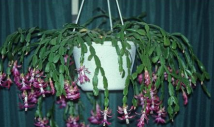
Christmas cactus (Schlumbergera bridgesii) and Thanksgiving cactus (Schlumbergera
truncata) look exotic but are rather easy to maintain under the right growing conditions.
While in bloom, water the plants when the soil surface is just becoming dry to the touch.
Never let the plants remain in standing water and well-drained soil is a must.

Holiday cacti bloom in response to the shorter days and cooler nights of winter. If you are gifted a Christmas cactus this season, to prolong the bloom, keep the daytime temperature between 60-65 degrees F and the nighttime temperature between 55-65 degrees F. Keep your cactus in total darkness for at least 12 of every 24 hours. The plant should
receive bright, indirect light the rest of the time. Sudden changes in temperature can cause the cactus to drop its blooms. When transporting it home be mindful of the outdoor
temperature and protect your plant from the cold.

The segments of the holiday cactus that look like leaves are actually stems known as
“phylloclades”. When blooming is done, you can prune the cactus between these
segments. Each cut phylloclade remaining on the parent plant will produce one to two
new stem segments. This will encourage branching and a fuller plant. The cuttings
removed from the plant can be established into new plants. Dip the cut-end of the stem
into water and then rooting hormone, which can be purchased at garden centers or
online. Secure this end into potting mix and keep it moist and in a warm location with
bright light. Once roots develop you can transplant it into a cactus/succulent media.

Poinsettia Care

Modern poinsettia varieties hold onto their beauty for a long time with proper care. Place
your poinsettia in an area with bright light, but don’t let it touch cold window panes. The
day temperature should be 65 to 75 degrees F with 60 to 65 degrees F at night.
Temperatures above 75 degrees will shorten bloom life and below 60 degrees may cause root rot.

Move plants away from drafty windows at night. Poinsettias do not tolerate saturate soil so avoid overwatering. On the other hand, if the plant is allowed to wilt, it will begin to drop leaves. To maintain proper moisture, examine the potting soil daily by sticking your
finger about one-half inch deep into the soil. If it is dry to this depth, the plant needs water. Place the plant in the sink and add lukewarm water to the soil surface until
water runs out of the drainage hole. When the pot finishes draining it can be placed in a saucer or back in the foil wrap.

Controlling Volunteer Trees

0

By now hopefully you’ve heard the phrase “Right Plant, Right Place” which emphasizes the importance of proper plant selection and placement in order to minimize problems in the landscape. Though trees are a vital part of our environment, proper placement in the
landscape is necessary for aesthetics, but more importantly for safety. There are situations where volunteer trees need to be controlled. Understanding the species can help you decide what control method is most appropriate.

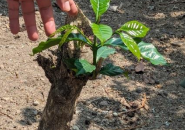
Some species of trees can be controlled by cutting the trunk down to the ground. For example, eastern redcedar is a very common species that will not resprout after cutting. Most tree species do resprout after cutting making this method ineffective on its own.

Trees that resprout, such as: Siberian elm, hackberry, Osage orange (hedgeball), oak,
ash, aspen, cottonwood, maple, sycamore, willow and many others will either need to
be dug out or treated with herbicide after cutting. Using herbicides for tree control is
specific to trees that originated from seed rather than suckers which develop from the
roots of an existing tree. Avoid using herbicides on suckers unless your goal is to
remove the entire tree. Herbicides applied to suckers may likely damage and quite
possibly kill the original tree.

This is a good time of year to evaluate your trees and determine if any volunteers need
to be controlled.

Storing Potatoes in Cold Temperatures

0

Ideally, potatoes should be stored in a cool garage or basement where the relative humidity is 90% and the temperature is between 40- and 45-degrees F. Although they can be stored for long periods of time in temperatures below 40-degrees F, the starches begin converting to sugars which alters the flavor of the potatoes. If this happens in your storage area,
keep the potatoes at room temperature for two to three days prior to consuming and the desired flavor should return. If stored above 45-degrees F for prolonged periods of time, the potatoes will begin to sprout. Potatoes will become soft and shriveled if the relative humidity is too low. Storing potatoes in perforated plastic bags will help maintain higher humidity levels.

Using Old Garden Seed

0

Seeds typically remain viable for about 3 years if kept in cool, dark, dry conditions though there are exceptions. For example, members of the carrot family (carrots, parsnips and parsley) have short-lived seeds which are usually good for only 1 to 2 years. Colorado State University has a publication with more detailed information about the longevity of specific species. (Storing Vegetable and Flower Seeds)

If you are unsure of your seed viability you can
test it by placing 10 seeds on a paper towel moistened with warm water. Cover the
seeds with a second moistened towel. Roll up the towels and place inside a plastic bag
with several holes. Keep the bag in a warm location such as the top of a refrigerator.
Remoisten the towels with warm water as needed. After the first week, check for
germination. Remove sprouted seeds and check again after another week. The percent
of seeds that sprout indicates the germination rate. You can decide if this rate is acceptable or if purchasing new seed is warranted.

Hidden Below A Kansas Town Is An Underrated, One-Of-A-Kind Museum

0

Over 60 stories beneath the ground in Hutchinson, Kansas is Strataca, a super unique museum within a working salt mine. Hutchinson is a little over three hours from Kansas City, once known as the “Paris of the Plains,” and Strataca is one of its top attractions. There are few other working salt mines in the world that allow people to visit, so it’s a pretty special experience.

The salt deposits here were discovered in the 1880s, and they’re used primarily for rock salt. They were formed around 275 million years ago, and to help give a sense of the grand scale of this massive geologic formation, it’s got 37,000 square miles of salt, according to the Kansas Geological Survey. And Strataca itself has 150 miles worth of tunnels.

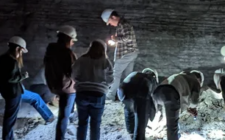
Of course, you won’t be able to explore all of them during your visit to the mine, but there are different options to see some of the coolest parts of the mine. You’ll start by checking in at the above ground lobby, and you’ll get your hard hat, a rebreather (just in case), and watch the required safety video — one of the rules is to not lick the walls. From there, you’ll take a double-decker elevator down 650 feet into the darkness.

Strataca has exhibits on mining history and Hollywood film memorabilia

After a 90-second ride, the elevator opens up into Strataca’s mining gallery, a large, lighted cavern with exhibits on the history of the mine and the salt itself. When you visit, you’re not actually in the part of the mine where the salt is being actively mined, but there’s plenty of evidence that the glittering caverns were once active work sites. Once a piece of equipment was brought into the mine, it didn’t come out, so you can see some of the historic machinery throughout the museum. They also have some of the trash that was left behind by workers over the decades, like empty soda cans, and even half a sandwich, which look like they were just dropped there yesterday.

It’s 68 degrees Fahrenheit in the mine all the time, so it can be a particularly nice place to visit during summer, when temperatures outside can get well into the 90s. With its temperature combined with its steady humidity of around 48% and protected location deep underground, the salt mine makes for the perfect place to safely store and preserve all kinds of documents and artifacts. That includes film reels, costumes, and props from hit Hollywood movies, some of which are on display. You can see one of George Clooney’s “Batman & Robin” costumes, one of Matt Damon’s “Monument Men” costumes, props from “The Matrix,” “Men In Black,” “Twister,” and more.

What to know about visiting Strataca

Strataca is closed on Mondays and Thursdays, and the base package is their Salt Blast Pass ($25 for adults, $18 for kids). It’s a self-guided experience that takes about 2.5 hours and includes access to the Hollywood displays, mining gallery, and two different rides. One of those rides is the Salt Mine Express, a 15-minute narrated train ride into a part of the mine that was last used in the 1950s. The other is the Dark Ride, a guided 30-minute tram ride, which takes you deeper into the mine, and includes a moment of complete darkness. You’ve never known true darkness until you’re deep underground. You also get a chance to mine some salt for yourself.

They have a couple of add-on options for more time underground. The Salt Safari adds on an hour, and it takes you on a guided ride deeper into the mine. On weekends, you can go on the Lantern Tour, where you’ll get to explore a part of the raw mine on foot. They hold special events throughout the year. Ever wanted to run a 5k 650 feet under the ground? You can do that here. At the holidays, they put up miles of twinkling lights for their aptly named Season of Lights celebration. They’ve also got an event center underground where they host their popular “Murder in the Mine” dinner theater nights. These themed, interactive events are for adults only.

After you check out Strataca, if you’re looking for more unique Kansas destinations, visit Lindsborg, which is America’s Little Sweden. And there’s the fun folk art in the small town of Lucas.

Read More: https://www.islands.com/1720754/strataca-kansas-underground-salt-museum-situated-below-small-town-unique-underrated/