Friday, February 6, 2026
Home Blog Page 371

Tips to keep tomatoes, from ‘breakers’ to ripened red

0

One of the simple joys of summer is access to great-tasting tomatoes.

Whether grown and picked at “color break” from a home garden or bought fully ripened at a local farmers market or grocery store, tomatoes are a treat.

There are some tips and tricks to help you get the most from your tomato harvest or purchase, according to a Texas A&M AgriLife Extension Service expert. Joe Masabni, Ph.D., AgriLife Extension small-acreage horticulturist at the Texas A&M AgriLife Research and Extension Center in Dallas and professor in the Department of Horticultural Sciences, shared his expert advice on storing and extending the life of tomatoes without compromising taste.

Timing is everything

Nothing will taste as great as a tomato at its peak, so timing is a major factor to consider when ripening tomatoes.

They can ripen in days or weeks, depending on the variety and stage at which they were picked, so buy or pick accordingly.

If all your tomato plants are full simultaneously and there is no possible way to eat them as fast as they need to be picked, there are ways to space out the ripening process to allow for extended use.

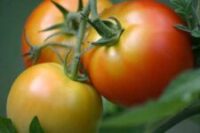
Any tomato reaching the “breaker stage” will continue to ripen off the vine, Masabni said. This is the stage where the bottom of the tomato has started to change from green to yellow.

The best place to let tomatoes ripen is on your kitchen counter. Ideally, ripe or ripening tomatoes prefer temperatures around the mid-60s, but Masabni said room temperature in most homes is fine.

However, breaker-stage tomatoes can be stored in a refrigerator to halt the ripening process. This allows you to pull them from the fridge and let them ripen as needed.

Once the tomatoes are at room temperature again, they will usually continue the ripening process over several days.

If you’ve picked an entirely green tomato, it will not ever ripen. It’s best to use these for a favorite recipe, like a relish or fried green tomatoes.

Vine ripening, or not

Once a tomato is at the breaker stage, it can be classified as vine ripened. Even though it doesn’t look ripe yet, it has all the sugars and essential compounds necessary for it to reach its mature color and full flavor.

“Once it’s physiologically ripe, it is considered vine ripened and can be picked and marketed as such,” Masabni said.

For gardeners, while it may seem like a good idea to keep the tomato on the vine until you are ready to eat it, the longer it is on the vine, the more likely it is to be eaten by birds or bugs.

If you can protect your tomato plants from pests that is best, but don’t have any qualms about picking your tomatoes and allowing them to finish ripening off the vine, because they will still have that same wonderful flavor.

Best way to store tomatoes

Make sure you store the tomatoes with a little space between them on the counter or in a container to allow air circulation, Masabni said.

“Tomatoes should be stored how you see them at the market – out in the open,” he said. “Consumers often do it wrong – they treat onions like tomatoes and tomatoes like onions when it comes to storage. Keep your onions in the refrigerator, not the counter or the pantry.”

Do not keep tomatoes in a closed bag unless you want to hasten the ripening process. Ethylene gas produced by tomatoes ripens them quicker when held in the bag.

Tomatoes will also ripen more quickly if left in warmer temperatures, like on a porch or in an outbuilding. This can happen quickly, so you’ll want to check on them daily in temperatures above 80 degrees.

Refrigeration can alter taste

As a rule of thumb, Masabni suggested not refrigerating ripe tomatoes whenever possible.

“Do not refrigerate ripe tomatoes unless you just can’t eat them,” Masabni said. “Refrigerators can affect the taste and texture of a ripe tomato, so let them ripen on a counter and then eat or cook with them.”

But for gardeners who have more than they can eat or share with friends and family, refrigeration is a way to extend the shelf life.

Let no tomato go to waste

If you have more tomatoes than you can eat, consider using them in salsa and other recipes. If they are just a little past their prime, they can also be turned into sauces.

Romas can be used to make tomato paste, but detecting if a Roma is still good is tough since they stay firm even after they go bad inside. Whole tomatoes may also be frozen to use in stews or cooked dishes.

“The only time a tomato is garbage is if it’s starting to be mushy,” he said.
Public Health Advisories for Kansas Lakes Due to Blue-Green Algae

0

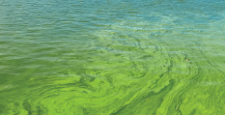
The Kansas Department of Health and Environment (KDHE) and the Kansas Department of Wildlife and Parks (KDWP) have issued a public health advisory due to blue-green algae.

A harmful algal bloom (HAB) may look like foam, scum or paint floating on the water and be colored blue, bright green, brown or red. Blooms can develop rapidly; if the water appears suspicious or there is decaying algae on the shore, avoid contact and keep pets away. These toxins can be absorbed by ingestion, inhalation of aerosols and even skin contact. Symptoms vary depending upon the type of exposure (e.g. direct contact, ingestion, inhalation) but can include rash, vomiting, diarrhea, fever, sore throat, and headache. If you, or your pets, come into contact with algae rinse the area with clean, fresh water. Suspected HAB-related health incidents, whether human or animal, regardless of season, should be reported at kdhe.ks.gov/1163.

Active Advisories

Warning

  • King Lake, Lyon County
  • Marion Lake (Reservoir), Marion County
  • Rooks Co. SFL, Rooks County
  • Webster Lake, Rooks County

Watch

  • Eagle Lake (Bel Aire), Sedgwick County (Added June 28)
  • Harvey County East Lake, Harvey County
  • Lake Shawnee, Shawnee County
  • Lovewell Lake, Jewell County
  • Woodland Park Pond (Mount Hope), Sedgwick County

Hazard status indicates that a harmful algal bloom is present, and extreme conditions exist.

When a hazard is issued, KDHE recommends the following precautions be taken:

  • Signage should be posted at all public access locations.
  • It is recommended that either a portion of the lake or the entire lake or zone, be closed to the public.
  • In some cases, the adjacent land should be closed as well. Actual setback distances will be determined on a site-specific basis, if necessary.
  • When partial closures (i.e., beach or cove) are issued, the remaining lake or zone area will carry a warning status.

Warning status indicates that conditions are unsafe for human and pet exposure. Contact with the waterbody should be avoided.

When a warning is issued, KDHE recommends the following precautions be taken:

  • Signage should be posted at all public access locations.
  • Inhalation of spray or aerosols may be harmful.
  • Lake water is not safe to drink for pets or livestock.
  • Lake water, regardless of blue-green algae status, should never be consumed by humans.
  • Water contact should be avoided.
  • Fish may be eaten if they are rinsed with clean water and only the fillet portion is consumed, while all other parts are discarded.
  • Do not allow pets to eat dried algae.
  • If lake water contacts skin, wash with clean water as soon as possible.
  • Avoid areas of visible algae accumulation.

Watch status means that blue-green algae have been detected and a harmful algal bloom is present or likely to develop. People are encouraged to avoid areas of algae accumulation and keep pets and livestock away from the water.

When a watch is issued, KDHE recommends the following precautions be taken:

  • Signage should be posted at all public access locations.
  • Water may be unsafe for humans/animals.
  • Avoid areas of algae accumulation and do not let people/pets eat dried algae or drink contaminated water.
  • Swimming, wading, skiing and jet skiing are discouraged near visible blooms.
  • Boating and fishing are safe. However, inhalation of the spray may affect some individuals. Avoid direct contact with water, and wash with clean water after any contact.
  • Clean fish thoroughly with potable water and eat fillet portion only.

Advisories are Lifted when cell densities and toxin concentrations dissipate to levels below the Watch thresholds.

KDHE investigates publicly accessible bodies of water for blue-green algae when the agency receives reports of potential algae blooms in Kansas lakes. Based on credible field observation and sampling results, KDHE reports on potentially harmful conditions.

If you observe a scum or paint-like surface on the water, small floating blue-green clumps or filaments in the water, or if the water is an opaque green, avoid contact and keep pets away. These are indications that a harmful bloom may be present. Pet owners should be aware that animals that swim in or drink water affected by a harmful algal bloom or eat dried algae along the shore may become seriously ill or die.

For information on blue-green algae and reporting potential harmful algal blooms, please visit kdhe.ks.gov/HAB and check out our interactive story and informative video.

Spots, spots, and more spots! 

0

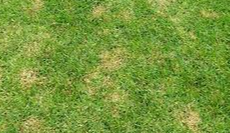
Do you have spots in your lawn?  Hopefully not, but if you do there is an answer to at least one of the causes of lawn spots.  Dollar spot is a common problem on all turfgrasses grown in Kansas, including Kentucky bluegrass, tall fescue, perennial ryegrass, bentgrass, buffalograss, bermudagrass, and zoysiagrass. The disease may occur regardless of management or soil fertility, although damage usually is most severe if there is a deficiency of nitrogen. Dollar spot results in the formation of small, roughly circular, bleached patches in the lawn. The patches are more numerous in areas where there is poor air circulation or drainage. Most spots are only a few inches in diameter; however, under favorable environmental conditions and mowing heights greater than two inches, individual spots may exceed 6 inches in diameter. Affected plants within the diseased spots wilt and eventually turn tan or brown. During outbreaks of the disease, numerous spots on the turfgrass coalesce into large irregular dead areas. This can result in substantial damage to the turfgrass.

On individual infected plants, leaves develop light yellow to tan lesions with reddish-brown borders. On cool-season grasses, such as tall fescue and Kentucky bluegrass, lesions normally are located near the middle of the leaf and extend completely across the leaf blade. The bleached area is bordered by dark red to brown margins or lines, which are characteristic of dollar spot. On warm-season grasses (bermudagrass, buffalograss, and zoysiagrass) the bleached zones on leaves may be more numerous and smaller but are still bordered by brown bands. In the early morning when dew is still present on the turfgrass, small cottony strings of the fungus can sometimes be seen growing from the diseased leaf blades. This growth can be confused with spider webs, “cotton” from plant seeds, or other fungi, and therefore is not a reliable diagnostic feature.

The fungi which cause dollar spot survive indefinitely in thatch and soil. In the presence of a thin film of moisture on leaves and favorable temperatures, these fungi will begin to grow and infect leaves. The fungus apparently does not infect the roots, although toxins produced by these fungi may affect root formation. Dollar spot is most severe in late spring and early summer and again in early fall, however it can occur throughout the summer months.

The presence of dollar spot often signals an improper fertilization program since the disease is more severe in nitrogen-deficient turfgrass. One of the simplest methods to reduce or avoid dollar spot is to maintain an adequate nitrogen fertilization program. Don’t overfertilize, since this can result in an increase of other turfgrass diseases, such as brown patch. Consult Extension publications on lawn fertilization for more complete information. Avoid night watering or other irrigation practices which allow the leaves to remain wet for long periods. Fungicides are rarely necessary for home lawns and are therefore not recommended.

Harvesting Garlic

0
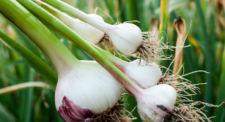
Late June through early July is garlic harvest time. When about half of the leaves have turned yellow the bulbs can be dug up. Use a broad-fork to loosen the soil and gently remove the bulbs using care to avoid bruising them. Leave the roots and leaves intact for the curing process. Tie the leaves together so the garlic is in bundles of ten and hang them in a warm, dry, well-ventilated area for several weeks. Cut the stems and roots to 1/2-inch from the bulb after curing. Remove the outer layer of skin if the bulbs are dirty, but be careful not to expose the cloves. Store the bulbs in a cool, dry location and use them within the year.
If the bulbs are dug too late the skins may start splitting and the cloves will be exposed to the soil. If harvested too early the cloves will not be fully developed.

Vegetables Produce Flowers but not Fruit

0
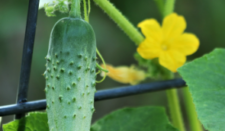
There are several reasons why healthy vegetable crops produce flowers and no fruit. Most squash, cucumbers and melons have separate male and female flowers on each plant. Usually, male flowers appear first in the season. Female flowers have a swollen area beneath the petals while male flowers have a narrow base. Check your plants to see if both flower types are present. If male and female flowers are present, observe the area for pollinators. If few to no pollinators are present, vegetables with separate male and female flowers may not produce fruit.
 
You can pollinate the flowers by transferring pollen from a male flower to the stigma of the female flower using a paintbrush. Mark that flower and notice if it is the only one that sets fruit. If this is the case the problem is likely a lack of pollinators.
Pollinator activity can be inhibited by the weather. Pollinators are less active on cold and rainy days. The use of insecticides can also harm pollinators. If using herbicides, apply them in the evening when the flowers have closed for the day.
High temperatures can cause some vegetable plants to drop their blossoms prematurely. Tomatoes will stop producing fruit in temperatures above 95 degrees F. Production will resume once the temperature decreases. Ensure plants receive adequate water during this time. Though nitrogen can promote vegetative growth, too much can inhibit flower and fruit production. Follow recommended rates for fertilizer applications.