
Friday, February 6, 2026
Home Blog Page 370

“Prescriptions for Parks”

0

Doctors write prescriptions for medications all the time. However, have you ever heard of a doctor prescribing a walk in the park? While this prescription will not fit in a bottle, it can pack some powerful health benefits. It may sound strange, but doctors actually can prescribe time outdoors to their patients with the help of a national program, ParkRx.org. This free online program can help a patient track their outdoor activity and discuss more outdoor exercise options with their doctor.


In South Dakota, health care providers can contact the Department of Health to get a ” pad that is redeemable for a free 1 day pass to any South Dakota State Park or a discounted annual pass. Minnesota, Iowa, Wyoming, Montana, and Nebraska all have Walk with a Doc” programs where you can meet at a public location to walk with a doctor and other health-minded individuals. Spending time in nature has been proven to help both physical and mental health.


A review of 20 medical trials of participants who spent time in a forest environment found that their blood pressure was significantly lower after being in a forest than it was in a non-forest environment. Additionally, this improvement lasted for several days after being in the wooded area. These participants did not need to go for hikes, simply walking in, sitting in, or viewing the forest was able to give the participants lower blood pressures. This worked both for people with high blood pressure and normal blood pressure. It also showed improvement regardless of age as children, young adults, and older adults all had similar findings.


One study found that children who spend more time outdoors have reduced rates of nearsightedness. Children who spent more time outdoors also have a lower risk of developing asthma according to another study. Increasing outdoor play also decreases BMI in preschoolers and lowers obesity in adults.

Time outside has also been shown to be associated with improved sleep and sleep quality. Spending time outdoors has been linked to improving the immune system and decreasing stress. While spending time in State Parks and Forests is beneficial, even walking around the local neighborhood and being in an outdoor green space” has shown to have health benefits.


Of course, no medication is without side-effects. The great outdoors has bugs, you can get sunburned or there are uneven surfaces and loose gravel. So when you are going outside, remember to use sunscreen or wear a wide-brimmed hat and have bug repellent if going into areas where there are mosquitos and ticks. It is also important to have proper fitting shoes for your adventures to prevent blisters and slips or falls. With all the benefits of spending time outdoors, it just makes sense that doctors should write prescriptions for outdoor activities. So get out into nature to stay healthy out there!


Jill Kruse, D.O. is part of The Prairie Doc® team of physicians and currently practices as a hospitalist in Brookings, South Dakota. Follow The Prairie Doc® at www.prairiedoc.org and on Facebook and Instagram featuring On Call with the Prairie Doc®, a medical Q&A show providing health information based on science, built on trust, streaming live on Facebook most Thursdays at 7 p.m. central.

Tomato is the vegetable that everyone likes to plant

0
KSU horticulture

Remember when I said there are about 10,000 varieties of tomatoes to choose from so you should be able to find one that works best for you here in Kansas? Tomato is the vegetable that everyone likes to plant. It’s also the garden crop that is easy to grow but seems to have about 1,000 problems for the home gardener, however we usually end up getting them to grow anyway!


Like why won’t my tomatoes produce? There are lots of reasons why so here is just one.


With the high daytime temperatures, you may notice your otherwise healthy tomato plants failing to produce fruit. When daytime temperatures reach above 85 degrees F it interferes with pollination and can cause the plants to abort their flowers. The optimal temperature for tomatoes to fruit is between 70 and 85 degrees F. Once the weather returns to more moderate temperatures the plants will resume fruit production. During the period of slowed fruiting, ensure plants are receiving proper care to reduce the amount of stress.

There are some varieties of tomatoes that are less sensitive to the heat including cherry tomatoes and some larger, slicing tomatoes, but the heat tolerance is only a few degrees different.

Increased Activity of Vector-Borne Diseases Identified in Kansas

0

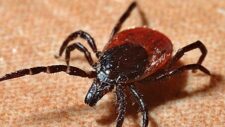
While ticks and mosquitoes are a natural part of our environment, it is important to know that some may transmit harmful diseases. The Kansas Department of Health and Environment (KDHE) tracks illnesses caused by ticks and mosquitoes, and as of May 29, 2024, has received over 200 laboratory reports of tickborne diseases. Additionally, KDHE has received several reports of tick bites and complaints of high numbers of ticks, which indicates that tick activity and density are increasing and are occurring earlier in the season this year.

Numerous tickborne diseases caused by bacteria are present in Kansas. These include Ehrlichiosis, Rocky Mountain Spotted Fever and other Spotted Fever Group Rickettsioses (SFGR), and Tularemia. Two rare tickborne viruses, Heartland virus and Bourbon virus, have also been identified in Kansas in both humans and ticks. All of these tickborne diseases are transmitted by the Lone Star tick, the most abundant tick in Kansas. Lone Star ticks can be found widely throughout at least the eastern two-thirds of the state in a variety of habitats and are aggressive human biters. This year alone, KDHE has investigated several tickborne disease cases with severe health outcomes, including hospitalizations due to Rocky Mountain Spotted Fever and Tularemia, and a fatal case of Bourbon virus.

“Vector-borne diseases, both those that are transmitted by ticks and those transmitted by mosquitoes are extremely active this year,” Dr. Erin Petro, KDHE State Public Health Veterinarian, said. “I really encourage people to take the risk of vector-borne diseases seriously and take personal protective measures for themselves and their pets to reduce their chance of acquiring an illness from a tick or mosquito bite. We’re also seeing emerging tick-associated conditions, like Alpha-gal syndrome, which can have lifelong consequences for those affected, which is why bite prevention is so important.”

In addition to increased tickborne diseases being reported to KDHE, there have been increased case reports of West Nile Virus (WNV), which is a reportable disease. While WNV cases occur every year in Kansas, the concerning trend this year is how early it’s being seen. Cases of WNV typically start in late July to early August. However, KDHE has already had two cases of WNV reported.

These cases serve as an important reminder to take precautions as you enjoy the outdoors this summer. Ticks are commonly found at the edge of trails, on tall grasses and in wooded, shaded areas. Mosquitoes are often more common at dawn and dusk and can breed in small amounts of standing water.

To reduce the risk of contracting a vector-borne disease, take the following steps:

  • Use an EPA-registered insect repellent such as DEET, picaridin, oil of lemon eucalyptus or IR3535 on all exposed skin. If going camping or hiking, treat clothing and gear with products containing 0.5 percent permethrin.
  • When doing yardwork, hiking, camping or recreating in areas where ticks and mosquitoes may be found, wear long pants tucked into socks or boots, if possible. Additionally, light colored clothing can make it easier to spot ticks.
  • Take steps to control mosquitoes indoors and outdoors, such as emptying standing water, particularly in old tires, tarps and flowerpots. Empty bird baths at least once a week to disrupt the mosquito life cycle.
  • Ensure pets remain tick free by consulting with a veterinarian about tick prevention products.
  • After spending time outdoors, shower and check for ticks again (some can be hard to spot). The vital areas to check are in and around the hair and ears, under the arms, inside the belly button, around the waist, between the legs and the back of the knees.
  • If a tick has bitten you, don’t squeeze it. Remove it with tweezers by grasping the tick as close to the skin’s surface as possible, then pull outward. Dispose of the tick by flushing it down the toilet. Don’t forget to check pets for ticks.
  • Pay attention to common signs and symptoms of vector-borne illness such as fever/chills, body aches and/or rash. If any of these symptoms are present within a few weeks of spending time outdoors in areas that may have ticks or mosquitoes, it’s important to talk with a doctor about being tested for vector-borne illnesses.

For more information, visit KDHE’s Tickborne Disease Data Stories to learn more about tickborne diseases, signs and symptoms specific to each disease, tick bite prevention and tick distribution. CDC also has additional information about vector-borne diseases on their website.

Reno County Public Town Hall Meetings

0

Reno County has scheduled three Town Hall meetings, and we were hoping you would be able to share this information.

Reno County has scheduled three Town Hall meetings, in District 1 and District 2, to gather feedback regarding possible expansion of County Wide Zoning and Solar in the unzoned areas of the county.

Town Hall Meetings Schedule:

Monday, July 8, 2024 in the Nickerson Community Center, 11 N. Nickerson St., Nickerson, at 6:30 pm

Monday, July 22 , 2024 in the Arlington City Hall, 900 W. Main Street, Arlington, at 6:30 pm

Tuesday, July 23, 2024 in the Pretty Prairie City Office, 119 W Main St, Pretty Prairie, at 6:30 pm

The Town Halls will all be attended by Reno County Public Works Director Don Brittain, Reno County Planner Mark Vonachen, Reno County Administrator Randy Partington and Reno County Commissioners Randy Parks and Ron Hirst, regarding possible expansion of County Wide Zoning and also Solar in the unzoned areas of Reno County. The informal meetings will start with information about what planning and zoning is and what it would mean to residents in the rural parts of Reno County and then gather their comments about zoning. Officials will look for feedback to see if there is any interest in commercial solar farms, either the prohibition or allowance of these farms, from people living in the unzoned areas of Reno County. This meeting is open to the public.

Hutchinson High 20 year Reunion

0

Hutchinson High School Class of 2004 to Celebrate 20-Year Reunion at the
Kansas Cosmosphere Hutchinson, KS – June 20, 2024 – The Hutchinson High School graduating class of 2004 is excited to announce its 20-year reunion, set to take place on Saturday, October 5th, 2024, at the Kansas Cosmosphere.

Salthawks from the class of 2004 are invited to reconnect with old friends and reminisce
about their high school days at this special event. The reunion will be held in the
Cosmosphere’s banquet room, offering a unique and memorable setting for the
celebration.

The reunion will feature a catered meal, non-alcoholic drinks, and the opportunity
to catch up with old friends. Early bird tickets are available now for $49 per person until August 5th. After August 5th, tickets will be $59 per person. Tickets must be purchased online in advancemat hhsclassof04.com.

Don’t miss this opportunity to reconnect with your Hutchinson High School classmates
and celebrate 20 years of memories. Get your tickets today! About Hutchinson High School Class of 2004 Reunion The Hutchinson High School Class of 2004 Reunion will feature events from Friday, October 4th through Saturday, October 5th celebrating the 20th anniversary of the class’s graduation. Stay tuned for the full schedule!

The reunion will be held on October 5th, 2024, at the Kansas Cosmosphere. Tickets
can be purchased online at hhsclassof04.com.
Contact:
Matt Adrian
[email protected]
714-253-2886
HHSClassof04.com