
Some words on behavior from four silver screen icons from long ago may be more relevant and needed now than ever before.
Today, the West continues to celebrate the “cowboy spirit” of adventure and entrepreneurial pursuits.
Still, nine times out of ten, the word “cowboy” is used as a negative or a derogatory term describing improper or distasteful behavior.
However, the principled demeanor became codes of conduct that America’s cowboy heroes promoted for viewers in early days of Western movies.
Third in a four-part series, the inspirational philosophies of movie cowboys, unknown to many today, are being shared.
Hopalong Cassidy was a fictional cowboy hero created in 1904 for a Western novel. Cassidy was shot in the leg which caused him to have a little “hop,” hence the nickname.
Portraying “Hoppy,” William Boyd outfitted in black rode his white horse Topper in 66 movies from the 1930s to the 1950s.
Boyd continued in children-oriented radio and television shows until 1952. He made personal appearances including Kansas attended by former coworkers.
At the peak of the character’s popularity in the early 1950s, enormous amounts of merchandise were developed, as well as a comic strip, additional novels, and a short-lived amusement park, “Hoppyland.”
Hopalong Cassidy’s Creed for American Boys and Girls
1. The highest badge of honor a person can wear is honesty. Be mindful at all times.
2. Your parents are the best friends you have. Listen to them and obey their instructions.
3. If you want to be respected, you must respect others. Show good manners in every way.
4. Only through hard work and study can you succeed. Don’t be lazy.
5. Your good deeds always come to light. So don’t boast or be a showoff.
6. If you waste time or money today, you will regret it tomorrow. Practice thrift in all ways.
7. Many animals are good and loyal companions. Be friendly and kind to them.
8. A strong, healthy body is a precious gift. Be neat and clean.
9. Our country’s laws are made for your protection. Observe them carefully.
10. Children in many foreign lands are less fortunate than you. Be glad and proud you are an American.
Reminded of Proverbs 19:17: “Whoever is generous to the poor lends to the Lord, and he will repay him for his deed.”
+++ALLELUIA+++
XVIII–20–5-13-2024
Cowboy Code Of Conduct

Use Of Animals In Sports Draws Heavy Criticism

From horse racing to bullfighting and circus shows, animals have historically been used in sports and for entertainment. But critical voices are getting louder.
Though humans have used animals as sources of sporting entertainment for millennia, ethical concerns and questions about welfare are becoming increasingly vocal.
“Australia has a big horse race every year, that’s becoming increasingly controversial. We can see horses fall and break their legs and die in that race almost every year,” said Heather Browning, animal welfare lecturer.
Racehorses are often housed in isolation and close confinement, which causes these social animals’ major distress.
“There’s a lot of money on the line, so obviously you have unscrupulous trainers or veterinarians who are willing to push these horses to the absolute limit,” said Joanna Grossman at the Animal Welfare Institute.
For a long time, the degree to which animals experience pain, suffering, and fear was hotly contested, which Grossman said made it all the “easier to exploit them.”
Experts say that while animals might think about and respond to pain differently to humans, they still feel pain in the same way.
“Everyone is very, very confident that mammals, dogs, horses, primates, feel pain just the way we humans do. They have brains that are structurally very, very similar to ours,” Browning said. There’s now broad consensus that birds and fish are equally sentient beings.
Some popular sporting events based on the performance of animals have already been banned in countries across the world.
Dog racing, in which greyhounds chase a mechanical lure around a track, is among them. At times, this sport drew more spectators than its more prominent rival, horse racing, and was mainstream entertainment for decades.
In 2022, the United Kingdom recorded a total of 4,354 injuries and 306 deaths of greyhound racing dogs.
However, it has recently come under scrutiny for confining the animals to lonely lives in kennels, for its brutal training methods, and for what happens to the dogs once they are no longer needed on the track.
“A lot of the training methods used to ensure the animals are performing are quite harsh and punishment based. So, what’s happening to them when they’re not on display? That’s the main concern for their welfare,” Browning said.
Dog racing remains legal in only 10 countries worldwide, four of which are in the United Kingdom (England, Scotland, Wales, and Northern Ireland.)
Animal welfare groups say keeping marine wildlife in small pools robs them of a life spent roaming the open seas.
Traditional circus acts involving animals, such as elephants, tigers, giraffes, and lions have also faced increasing backlash.
“They are outright being abused to get them to behave according to what the trainer wants them to do because that’s not naturally something that a wild, exotic animal who should be out roaming free is going to be inclined to do on their own,” Grossmann said. “So, you might have to just kind of literally beat them into submission to get them to do that.”
The use of wild animals in circuses has been banned in many countries across the world, including Bolivia, Costa Rica, India, and Iran. However, it’s still legal in many European countries.
A circus performance doesn’t show what it is like for animals to live as entertainers.
In 2021, one million citizens called for a bloc-wide ban on the use of wildlife in big-top shows after research showed that almost 90 percent of animals saved from European circuses suffered from behavioral problems, self-injury, or physical problems as a result of practices such as declawing.
France has at times held the highest number of wild animals for use in circuses.
In Germany, however, it remains legal to show wild animals at the circus. This is despite polls suggesting 75 percent of Germans are against it, alongside a rising awareness of how lions, bears, and primates are transported.
“It just doesn’t seem like there’s any possible way to house an animal in a sufficiently large and complex enclosure when you’re trying to move it around all the time,” said Browning.
Blood sports such as bullfighting, in which a bull and a matador face off in a public spectacle, have also become ever more controversial.
Mexico had banned bullfighting in 2022, but overturned the decision in 2023, after bullfight organizers claimed it violated their right to continue the 500-year-old tradition.
Approximately 250,000 bulls are killed in organized fights annually, according to a European animal welfare organization.
Grossman described it as a “very violent and very cruel sport” rooted in brutality. “If the goal is just to terrorize a poor animal and then ultimately end up killing them, to me, that stands out as a very blatant example of needless and unjustified suffering.
“But the good news is that we have seen a move in various jurisdictions and countries to ban forms of blood sports,” she added.
Bullfighting has already been outlawed in many countries where it used to be popular, including Argentina, Canada, Cuba, Italy, and the United Kingdom. Nowadays, it is only legal in eight countries worldwide, three of which are in Europe: Spain, France, and Portugal.
Mexico’s decision to overturn its ban on bullfighting in December 2023 caused massive protests.
And though Grossman said there will likely always be people who think blood sports should remain legal, she has also seen “much more concern among the public for animal welfare.”
“How the animals are housed and cared for plays a huge part. The majority of their life is spent not doing the sport. And many are simply killed when they’re no longer useful. That’s why regulations around that are vital,” Browning said.
But it’s not enough to just create these laws. “We need to make sure that there are enough inspectors who arere doing their jobs on a regular basis,” she added.
Animal welfare experts say awareness can create pressure and drive change.
Social media has also helped in showing people what’s happening behind closed doors, said Grossmann.
“It has made the public see footage of what is really going on,” she said.
Browning agreed, adding that seeing abuse could lead people to refuse to pay for something where animal cruelty is happening.
+++30+++
CUTLINE
Racehorses are often housed in isolation and close confinement, which causes these social animals’ major distress.
Good Views, Good News

Every now and then there comes a time when I get bogged down in the nuance of modern news networks. Staring at screens, reading headline after headline in a common trend known as “doom-scrolling”. There will always be an excess of bad news that fills our headlines throughout the media, but what about all the good news? It’s out there, even if it’s not quite as advertised in the current journalism market. Wouldn’t it be great if when we scrolled through our phones, we got all the good news first? Regardless of idealistic thinking, let’s take a look at some pieces of good news from today.
The popular radio station NPR (National Public Radio) in Kansas City recently featured a publication on Kansans and their attention to the environment around them. The feature included mentions of various Kansans for their work in ensuring that native prairie environments stay native and all the efforts they’ve put into fighting invasive species from other parts of the world. This specific article was about Shawnee County and its efforts in fighting back against the Rogue Ornamental Pear trees. These trees are inedible to caterpillars and as such, are promoting a lack of food for native songbirds. Unfortunately, this situation is way too common in Kansas’s present day. Things like bush honeysuckle promote tick populations and take valuable sunlight from native flowers that bees depend on. The fact that we are starting efforts in conservation for our native prairie warms my heart, and I hope it does your’s too.
Summer is coming and with it, adventure, good vibes, and a fun time with the family. If you’re beginning your plans for camping and such, I would encourage you to stop at a couple of small towns around the area. For example, for those of you in Kanopolis this summer, why not pop by the nearby town of Lindsborg, Kansas? Its Swedish attractions, not to mention Coronado Heights, are worth a visit. Up by Wilson Lake? Try the world’s biggest ball of twine or the world’s largest Czech Egg. My point is, there are so many wonderful tourist destinations in this great state of ours. Not to mention the wonderfully hospitable people you meet everywhere you go. This summer, take some time to make some of your own good news, Kansas has plenty to offer.
If you’re one for public concerts, be on the lookout for them this year. There are already many gathering up in the local areas. McPherson for example, has a lovely brass choir that just performed a couple of weeks ago. The rural areas surrounding Hutchinson and other municipalities have plenty of their own concerts to offer. Close to Land is a new group performing some of their own pieces at Twisted Pine Farms, a lovely venue in Reno County later this month. I would encourage you to look around your local towns. You never know what kind of community music and theater events are going on, and I’ve already seen lot’s of opportunities.
With all this being said, I suppose focusing more on the local areas of towns is a good way to get more of the good stuff in life. After all, the communities around us are what sustain us through thick and thin. As you go about your day and week, I would encourage you to look for the good news in every part of life. Paying strict attention to the doom and gloom will only result in you feeling doom and gloom. Regardless, take time to be intentionally happy, and if you can, spread that to someone else too.
No, No and Nope

So, have you heard or read about the big Cicada “emergence” about to happen in several other Midwest and Southern states? These are not the annual cicadas we call “locusts” that are heard every August here in Kansas, but rather some of those that have been in the ground for 13 and 17 years. Cicadas are formally identified as “broods,” and starting any day now, two of these broods, brood XIX that emerge every 13 years, and brood XIII that emerge every 17 years are set to show themselves at the same time. This is a rare occurrence that last happened in 1803, and won’t happen again until the year 2245. Their sole purpose is to breed, after which they die; eggs are laid on tree branches, and upon hatching, the young fall to the ground and burrow themselves in around the trees, to emerge again in either 13 or 17 years. It’s been estimated there could be up to half a million of the critters per acre where they will be the worst. Audiologists are worried about the noise levels of the critters screeching “love songs,” warning that the sound from this many of them at once can actually be as loud as a jackhammer or lawnmower. “Bug Doctors” and those that study this sort of thing are about to wet themselves with excitement over the rare event, which some have labeled “cicada-geddon.”
I say all this in response to a discussion I heard on the radio today about eating cicadas. Years ago, I wrote a column entitled “My Reverse Bucket List,” where I listed a few things I DO NOT ever want to do, and KNOWINGLY and PURPOSLY eating bugs was one of them. If God had wanted me to eat bugs, he would have made me an ant eater or a bird, so today I still say no, no and nope to eating bugs.
However, it seems eating cicadas is not all that far-fetched. Amazon actually lists 4 cook books completely dedicated to cooking and eating cicadas; “The Cicada Cookbook,” “Cooking with Cicadas,” “Cicada Recipes for the Zombie Apocalypse” and “The Cheeky Cicada; A Culinary Adventure with Natures Symphony.” An internet search easily provided a list of possible cicada dishes, to include pan fried cicadas, chocolate covered cicadas, boiled cicadas, crispy cicada salad, cicadas marinara, spicy popcorn cicadas, cicada chips and even a recipe for chocolate cookies, each with a toasted cicada in the middle instead of a Hershey’s Kiss. Someone even suggested gathering a bunch while they are so plentiful and available, and freezing them by the bagful for later use. I can see it all now; the wife reaches into the freezer for a bag of frozen corn or peas and comes out with a
bagful of frozen locusts instead; that should make for interesting table talk at dinner.
I also stumbled across a few little pieces of advice and ditties concerning cooking and eating the little blighters. Concerning eating them, one person said “They’re great for the summer BBQ, while they are everywhere.” Another advised “No need to tear off the legs and wings, they just add to the crispiness.” Another slogan went something like this, “If you can’t beat em’, cook em’.”
Well, there you have it, a little history lesson, a little news story and a whole lotta’ cicada 101 all rolled into one. Just to reiterate, this won’t be happening in our neck-of-the-woods…this time, but in 17 states east and south of us. Also, just to reiterate, I still say no, no and nope to eatin’ bugs. Continue to Explore Kansas Outdoors (cicada free.)
Steve can be contacted by email at [email protected].
Top barbecue tips from the ‘Three Brisketeers’
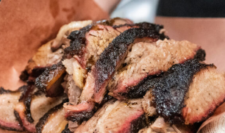
Texas A&M AgriLife experts share four tidbits every barbecue lover should know.
When it comes to barbecue, few people in the Lone Star State know more than a trio of Texas A&M University meat scientists, affectionately known as the “Three Brisketeers.”
Together, these long-time friends and colleagues share more than 120 years of collective expertise in the art and science behind smoking and grilling meat to perfection. Whether beef brisket, pork ribs or poultry, they know the way to go when it comes to “smoking low and slow.” 
The Three Brisketeers, from left to right, Davey Griffin, Ph.D., Jeffrey W. Savell, Ph.D., and Ray Riley, share some perspective about what makes barbecue a cultural and culinary experience like no other. (Michael Miller/Texas A&M AgriLife)
The Three Brisketeers are Davey Griffin, Ph.D., professor and Texas A&M AgriLife Extension Service meat science specialist, and Ray Riley, Rosenthal Meat Science and Technology Center manager, both in the Texas A&M College of Agriculture and Life Sciences Department of Animal Science, along with Jeffrey W. Savell, Ph.D., vice chancellor and dean for Agriculture and Life Sciences.
Here are some juicy tips the trio encourages every barbecue enthusiast to know.
Tip No. 1: Savor more than just the flavor
According to Savell, barbecue is not just about the food, it is about the journey. Enjoy the process of cooking and sharing a meal because smoking meat is as much about the human connection as it is the end product. So, remember to savor the time together as much as the dish.
“Barbecue brings us together,” Savell said. “Whether it’s a big festival or backyard cookout with friends and family, it’s all about that connection between us, our food and the memories we can create together.”
Tip No. 2: It’s all about quality, quality, quality
When it comes to barbecue, Riley said don’t skimp on quality. Use the highest quality cut of meat, spices, utensils and equipment that you can find. While you can make a good brisket with lower grade cut on a basic grill, upgrading to higher grades of meat and an improved smoker can really wow your guests.
“Quality matters, especially with meat and spices,” Riley said. “There are cuts for any budget and occasion, so go with the best quality meat available for your budget. Equipment like utensils and a smoker with a good thermometer make it easier to be consistent, but it all starts with the meat and what you put on it.”
Tip No. 3 – Knowledge is power
Griffin encourages everyone to learn the basics and always continue to learn. Whether learning from professional pitmasters, the Brisketeers, or through trial and error, knowledge and experience greatly improve your results. If you can learn the barbecue basics and understand your equipment, then you will be off to a strong start. However, if you can build upon that knowledge, then you will be on your way to mastery.
The Brisketeers are meat scientists – that’s right: there’s a science to meat. Their wisdom comes from applying this science, heat and seasoning at the right time, in the right ways, to allow meat to live up to its potential. It’s why they put on the Barbecue Summer Camps and Camp Brisket – to brings ideas together and share the art and science of barbecue. There’s no one tip that makes a difference – it’s the cumulative wisdom you gain that lets you make better barbecue.
“You can have the best equipment and the best meat, but grilling or using a smoker can be frustrating if you don’t know some basics,” he said. “You need to know how time and temperature work on certain cuts of meat and how spices or your wood choices play into the flavor. And knowing your equipment – the hot and cool and how it cooks – is critical to consistent success. Invest some time to learn and be ready for some trial and error.”
Tip No. 4 – Try new things and experiment in new ways
All Three Brisketeers agree that trying new things makes life more interesting, especially when it comes to barbecue. So, always be willing to try new things and experiment with different cuts and dishes.
“I encourage everyone to always try new things,” Griffin said. “Barbecue is always evolving, and different pitmasters have different tricks and techniques that you can take home and try on your own. That is one of the beautiful things about barbecue.”
So, there you have it, straight from the Three Brisketeers themselves. Fire up those smokers and grills, broaden your flavorful horizons, and enjoy the low and slow journey of barbecue. And, if you have any questions, visit them online at https://bbq.tamu.edu/.
