
Tuesday, February 10, 2026
Home Blog Page 429

KU News: Self Graduate Fellows, Tradition of Excellence Award winners, vaccines and partisan distrust

0

From the Office of Public Affairs | http://www.news.ku.edu

Headlines

KU announces new 2024-2028 Self Graduate Fellows

LAWRENCE — Fifteen doctoral students have been selected to receive the University of Kansas’ Madison and Lila Self Graduate Fellowship for the 2024-2025 academic year, marking the 35th anniversary of the program. The total value of the four-year doctoral fellowship exceeds $200,000. Recipients include current or incoming graduate students from Benton, Hays, Lawrence, Leavenworth, Olathe and Overland Park.

Tradition of Excellence Award honors student leaders

LAWRENCE — Eleven University of Kansas students were honored for their leadership on the Lawrence campus at the Tradition of Excellence Award ceremony, co-hosted by KU Endowment, the KU Alumni Association and the Student Alumni Endowment Board. The annual awards were presented April 19 at KU Endowment. Honorees include students from Leawood and Kansas City, Kansas, and from Blue Springs and Kansas City, Missouri.

Third candidate for vice chancellor for research to present April 25

LAWRENCE — Kevin Gardner, professor of civil and environmental engineering at the University of Louisville, will be the third candidate for the vice chancellor for research position to give a public presentation at the University of Kansas. His presentation will take place 3-4 p.m. April 25 at the Lied Center Pavilion, and it also will be livestreamed.

US-China vaccines collaboration leads to partisan distrust, study finds

LAWRENCE — Despite previously effective international collaborations in developing vaccines, a new study from University of Kansas political science researchers finds that people are much less likely to receive a U.S.-China flu vaccine than ones created by a U.S.-Japan collaboration or U.S. alone. The study also pinpointed a politically partisan divide in acceptance of an FDA-approved flu vaccine developed through U.S.-China collaboration.


Marginalized communities develop ‘disaster subculture’ when living through extreme climate events, study finds

LAWRENCE — A new study from a University of Kansas social welfare researcher found residents of one Seoul, South Korea, neighborhood have endured so many extreme climate events that they have developed a “disaster subculture” that challenges both views of reality and how social agencies can help.


Full stories below.


————————————————————————


Contact: Daniel Rivera, Self Graduate Fellowship, 785-864-7249, [email protected], @Selfgraduate

KU announces new 2024-2028 Self Graduate Fellows


LAWRENCE — Fifteen doctoral students have been selected to receive the University of Kansas’ prestigious Madison and Lila Self Graduate Fellowship for the 2024-2025 academic year, marking the 35th anniversary of the program since its establishment in 1989. This incoming group of fellows matches the largest cohort, bringing the total number of beneficiaries to over 200 students throughout program’s history. In fall 2024, the fellowship reaches 47 total fellows, making it the largest fellowship size ever.

The Self Graduate Fellowship’s mission is to identify and recruit exceptional doctoral students who demonstrate the promise to make significant contributions to their fields and society.

The fellowship is a four-year package awarded to incoming or first-year doctoral students who demonstrate leadership, initiative and passion for achievement. The fellowship covers full tuition and fees, provides graduate research assistant support of $34,850 per year, a $5,500 professional development award, a first-year $5,000 start-up award, $1,000 textbook and technology awards (years 2-4), and a unique professional development program.

The Fellow Development Program provides general education and training in communication, management, innovation, policy and leadership to assist Self Graduate Fellows in preparation for future leadership roles. The role of the development program is to complement the specialized education and training provided in doctoral programs. The total value of the four-year doctoral fellowship exceeds $200,000.

The late Madison “Al” and Lila Self launched and permanently endowed the Self Graduate Fellowship in 1989, motivated by their strong belief in the vital importance of developing leadership for tomorrow. Madison Self was a 1943 KU graduate in chemical engineering. Lila Self attended KU with the Class of 1943.

The new Self Graduate Fellows for the 2024-2028 cohort:

Sivani Badrivenkata of Lawrence: bachelor’s degree in pharmaceutical sciences from KU; incoming doctoral student in pharmaceutical chemistry.
Kelly Nalani Beym of Bishop, California: bachelor’s degree in individualized studies, minor in agricultural business management from New Mexico State University; first-year doctoral student in geography.
Brody Gatza of Olathe: bachelor’s degree in aerospace engineering from KU; first-year doctoral student in aerospace engineering.
Fernando Gonzalez of Brownsville, Texas: expected bachelor’s degree in chemistry from the University of Texas Rio Grande Valley; incoming doctoral student in chemistry.
Kiera Eckhardt of Virginia Beach, Virginia: bachelor’s degree in anthropology from Florida Gulf Coast University; master’s degree in anthropology from Illinois State University; first-year doctoral student in anthropology.
Kaitlyn Hinz of Benton: bachelor’s degree in behavioral neuroscience and chemistry from Drury University; first-year doctoral student in pharmacology, toxicology & therapeutics, KU Medical Center.
Ashley Howard of Overland Park: bachelor’s degree in molecular, cellular & developmental biology from KU; first-year doctoral student in the interdisciplinary graduate program in biomedical sciences, KU Medical Center.
Danielle Land of Albuquerque, New Mexico: bachelor’s degree in biology from the University of New Mexico; expected master’s degree in biology from the University of New Mexico; incoming doctoral student in ecology & evolutionary biology.
Jeb Marshall of Leavenworth: expected bachelor’s degree in aerospace engineering from KU; incoming doctoral student in aerospace engineering.
Kevin Mulcahy of Yardley, Pennsylvania: bachelor’s degree in biology and bachelor’s degree in anthropology from the University of Pittsburgh; first-year doctoral student in ecology & evolutionary biology.
Macie Proctor-Roser of St. Louis: bachelor’s degree in biology, minor in Spanish from Northern Arizona University; first-year doctoral student in molecular biosciences.
Alexis Redwine of Ponca City, Oklahoma: bachelor’s degree in chemistry, minors in biology and physics from Southern Nazarene University; first-year doctoral student in chemistry.
Marina Stoilova of San Francisco: bachelor’s degree in biology from the University of California Santa Barbara; first-year doctoral student in ecology & evolutionary biology.
Kayla Whatley of Green Bay, Wisconsin: bachelor’s degree in biomedical engineering from the University of Minnesota-Twin Cities; incoming doctoral student in bioengineering.
Sheena Zeng of Hays: bachelor’s degree in mathematics from the University of Michigan; first-year doctoral student in mathematics.

-30-

————————————————————————

The official university account for X (formerly Twitter) is @UnivOfKansas.

Follow @KUnews for KU News Service stories, discoveries and experts.


————————————————————————


Contact: Kerry Glasgow, KU Endowment, [email protected], @KUEndowment

Tradition of Excellence Award honors student leaders


LAWRENCE — Eleven University of Kansas students were honored for their leadership on the Lawrence campus at the Tradition of Excellence Award ceremony, co-hosted by KU Endowment, the KU Alumni Association and the Student Alumni Endowment Board. The annual awards were presented April 19 at KU Endowment and recognize students from diverse majors who have significantly enhanced the KU community through endeavors such as serving as teaching assistants, leading student organizations or volunteering in the Lawrence community.

Both undergraduate and graduate students are eligible for the award, which includes a $1,000 scholarship for each recipient and an additional $200 for awardees to donate to a KU area of their choice.

Friends, family and university representatives attended the private ceremony and reception. The 2024 Tradition of Excellence Award winners are:

Aisha Malik, Leawood, senior in speech-language-hearing.
Ahmad Azhar, Mailsi, Pakistan, senior in mechanical engineering.
Aarush Sehgal, Chandigarh, India, senior in molecular, cellular & developmental biology.
Audrey McBride, Kansas City, Missouri, senior in business administration.
Emmelea Schatz, Libertyville, Illinois, senior in architecture.
Hannah Brown, Monroe, North Carolina, doctoral candidate in audiology.
Adam Cory, St. Louis, master’s student in architecture.
Jenna Shaw, Kenosha, Wisconsin, doctoral candidate in occupational therapy.
Leslie Koffi, Denver, junior in architecture.
Aprajita Tripathi, Kansas City, Kansas, doctoral candidate in cancer biology.
Selia Walton, Blue Springs, Missouri, junior in project management and environmental studies.

About the award

The award is organized by the Student Alumni Endowment Board (SAEB), a student organization that provides students with leadership experience in support of the KU Alumni Association and KU Endowment. SAEB members champion alumni networking, philanthropic engagement and numerous KU traditions. The awards are funded through private support raised through KU Endowment’s Class Legacy Walk, an initiative that honors and celebrates the legacy of past generations of Jayhawks with a growing campus walkway near the Ambler Student Recreation Center.


-30-

————————————————————————

Subscribe to KU Today, the campus newsletter,

for additional news about the University of Kansas.


http://www.news.ku.edu

————————————————————————


Contact: Savannah Rattanavong, Office of the Provost, 785-864-6402, [email protected], @KUProvost

Third candidate for vice chancellor for research to present April 25


LAWRENCE — Kevin Gardner will be the third candidate for the vice chancellor for research position to share his vision and strategies for the future of research and discovery at the University of Kansas.

His public presentation will take place 3-4 p.m. April 25 at the Lied Center Pavilion. The event will also be livestreamed, and the passcode is 475861.

Gardner is a professor of civil and environmental engineering at the University of Louisville and most recently served as the university’s executive vice president for research and innovation for four years.

The final candidate will be announced approximately two business days before their campus visit. Their public presentation is scheduled for the following date and location:

Candidate 4: 2:30-3:30 p.m. May 1, 1502 Building Auditorium

Members of the KU community are encouraged to attend the presentations and provide feedback to the search committee. Presentation recordings and the online feedback form will remain available on the search page through May 7.

Additional search information, including Gardner’s CV, is also available on the search page.

During his term as executive vice president for research and innovation, Gardner managed Louisville’s research enterprise, including industry engagement, research development and administration, and technology commercialization. He oversaw growth in the university’s research activities, which reached $230 million in research expenditures in fiscal year 2022.

Gardner has served in a number of leadership roles, including vice provost for research and director of strategic initiatives at the University of New Hampshire. He served for a decade on the executive committee of UNH’s interdisciplinary Natural Resources and Earth Systems Science doctoral program and also previously taught at Case Western Reserve University and Hofstra University.

Gardner’s research has focused on environmental science and engineering, contaminant behavior in the aquatic environment, contaminant release in post-industrial byproducts and wastes, and interdisciplinary sustainability science and engineering.

He has been principal investigator or co-principal investigator on over $60 million in awards, produced more than 100 publications and mentored more than 40 graduate students and numerous faculty members, undergraduates, teachers and high school students.

Gardner earned his doctorate and master’s degrees in civil and environmental engineering from Clarkson University and his bachelor’s in civil engineering from Union College.

-30-


————————————————————————

Don’t miss new episodes of “When Experts Attack!,”

a KU News Service podcast hosted by Kansas Public Radio.


https://kansaspublicradio.org/podcast/when-experts-attack

————————————————————————


Contact: Jon Niccum, KU News Service, 785-864-7633,

US-China vaccines collaboration leads to partisan distrust, study finds


LAWRENCE — Anti-vaccine sentiments are not new. But in recent years, attitudes toward vaccines have increasingly become more politicized along partisan lines. Accompanying such hesitancy is escalating distrust of China, which is where the COVID-19 epidemic originated.

A new study titled “The politics of flu vaccines: international collaboration and political partisanship” examines the influence of international collaboration and vaccine developments on people’s attitudes toward vaccines.

“Interestingly, it was the collaboration between the U.S. and China that resulted in our annual flu vaccines,” said John James Kennedy, a professor of political science at the University of Kansas.

Despite the previously successful and effective U.S.-China collaboration in developing vaccines, Kennedy’s study finds that respondents are much less likely to receive a U.S.-China flu vaccine than ones created by a U.S.-Japan collaboration or U.S. alone. It appears in the Japanese Journal of Political Science.

Co-written with KU assistant professor of political science Jack Zhang, KU doctoral student Riago Liu and former KU doctoral students Haruka Nagao and William Hatungimana (currently of the University of Oklahoma), the survey’s results further suggest that Republicans are significantly less likely to accept an FDA-approved flu vaccine developed through U.S.-China collaboration than a flu vaccine developed through U.S.-Japan collaboration or the U.S. alone.

Historically, international collaboration has been critical to vaccine development, even with the general public being largely unaware of foreign involvement in the process.

“U.S.-China relations with medicine goes back to the 1900s,” said Kennedy, who also is chair of KU’s political science department.

“They’ve been collaborating specifically on vaccines for nearly 20 years. And it was through the World Health Organization (WHO) that they’ve been sharing the actual flu viruses — because you have to share the virus to get a piece of that virus in order to create the vaccine.”

Kennedy’s team set up an experimental design that introduced four scenarios testing for vaccine nationalism, country-specific hypothesis and partisan hypothesis. More than 1,200 respondents were surveyed.

“We knew there would be resistance in the U.S. to vaccines from China. We also assumed we would likely see Democrat and Republican differences, in terms of the Republicans being much more anti-China. But the surprise was there was greater support for the Japanese collaboration. In fact, more people would rather take a U.S.-Japan vaccine than one made solely by the U.S.,” he said.

This surprising result wasn’t merely because of the eroding trust in the FDA coming from partisan influences.

“It’s also because of overall trust in Japanese products,” Kennedy said.

“Many cars driven in the U.S. are made by Japanese countries: Honda, Subaru, Toyota. Sony is a huge product, both in entertainment and things like headphones. Anime is extremely popular. And US-Japan relations together against China have been also prevalent. I think the trust in Japanese products over time has contributed to a trust in the vaccine.”

Kennedy revealed that the impetus for this study was the conflux of seeing news reports about the anti-China legislation in Kansas coupled with advertisements touting the flu vaccine.

“I was thinking, ‘Well, I wonder if people would take the flu vaccine if they really knew that China has been engaged with helping create it?’ Because we asked people in the survey, ‘Did you ever get a flu shot in the last 10 years?’ Almost everybody said yes — which means they’ve all been affected by this collaboration. But I thought the difference between knowing and not knowing would make an interesting survey experiment,” he said.

A Los Angeles native who has taught at KU since 2003, Kennedy is fluent in Mandarin and conducts research on Chinese local governance. His first book, “Lost and Found: The ‘Missing’ Girls in Rural China,” was published by Oxford in 2019.

“The politics of vaccines could have a real influence on our public health,” Kennedy said.

“If people are refusing to take vaccines for political reasons, rather than medical reasons, that is unusual. Distrust in the FDA plays a role in some of that. Pandemics are not going away — we were losing 30,000 to 50,000 people a year due to flu-related deaths before the pandemic. So I’m hoping the biggest takeaway of this research is that people will be less political when it comes to vaccine choices.”

-30-

————————————————————————

The official university account for X (formerly Twitter) is @UnivOfKansas.

Follow @KUnews for KU News Service stories, discoveries and experts.


————————————————————————


Contact: Mike Krings, KU News Service, 785-864-8860, [email protected], @MikeKrings

Marginalized communities develop ‘disaster subculture’ when living through extreme climate events, study finds


LAWRENCE — Locations around the globe are experiencing climate disasters on a regular basis. But some of the most marginalized populations experience disasters so often it has come to be normalized.

A new study from the University of Kansas found residents of one Seoul, South Korea, neighborhood have grown so accustomed to living through extreme climate events they have developed a “disaster subculture” that challenges both views of reality and how social agencies can help.

Joonmo Kang, assistant professor of social welfare, spent a year living in Jjokbang-chon, an extremely impoverished neighborhood in Seoul, as part of an ethnographic research project. Residents there routinely live through extreme heat and cold in tiny, 70-square-foot units about the size of a closet. Over the course of a year, he interviewed residents about their experiences and worked with local social agencies to understand how they worked with the residents.

Residents regularly expressed a sort of indifference to extreme heat and climate change, stating they had no options or even that “every day is a disaster.” While that seeming difference with reality can potentially be caused by several factors, it shows that social work has a challenge in how to respond to climate disasters and their everyday effects, Kang said.

The study, published in the International Journal of Social Welfare, is part of Kang’s larger body of work in climate justice and eco social work. Through that lens, he said hopes to learn more about how climate change affects certain groups and populations and how social work can respond.

“For this paper I wanted to highlight the lived experiences of so-called slum housing in Seoul, South Korea, where I’m originally from,” Kang said. “But heat and climate disasters don’t just happen there, it happens throughout the Global North, even in the wealthiest countries. I want to see how this affects lives in the most marginalized communities.”

In his ethnographic study, Kang had informal conversations and semi-structed interviews with the residents of Jjokbang-chon. One resident reported how he simply sits still and tries not to move during the hottest times. Others reported they did not go to government-provided cooling centers because they were too far away and the effort to get there would outweigh riding out the heat.

“All year around, all four seasons are filled with distress; every day is a disaster. When every day is like that, when every day is a disaster, when our daily lives are a disaster, the weather doesn’t matter. It’s not like the summer or the winter becomes particularly hard,” one resident said.

Other residents reported living in a jjokbang was preferable to previous experiences of homelessness. Even though they were not allowed by landlords to install cooling systems beyond fans — and the facilities were not equipped to handle them — residents seemed resigned to accept living in extreme conditions.

“This research focused on how people make meaning of extreme weather. The findings revealed they developed a ‘disaster subculture,’” Kang said. “When they experience this, it causes them to reflect a sense of normalcy. One of the main things I found was even though it’s been widely reported these living conditions can be a living hell, people told me, ‘It is what it is.’ I was really struck by that.”

Building a tolerance to seemingly intolerable climate may be difficult to understand, but a community organizer who works with the Jjokbang-chon population offered insight into why residents may express such acceptance.

“It might also be their way of telling us, ‘I am trying my best to adjust,’ and at the same time even though they have a desire to get out of here, they might just be saying that because they don’t have the resources or the means to turn things around,” the organizer said. “Being stuck in that situation for a long period of time, they might have gotten used to it or even built a tolerance because they can’t change their reality, and as a result leads to a sense of acceptance, like a shrug of resignation.”

The field of social work has a responsibility, however, to serve the world’s most vulnerable populations, Kang writes, and understanding their lived experiences is key to doing so effectively.

Kang compared the situation to the boiling frog metaphor, in which a frog in a pot of slowly heated water does not jump out before it is cooked. People living in extreme conditions can be exposed to trauma for long periods, but unlike the frog, can offer insight into how to address the issue.

“Their own views of vulnerability and reality did not seem to align with what was objectively true. This shows we need to address the everyday reality and root causes and why people are living in these conditions.”

In ongoing and future work, Kang said he would further explore how to advocate for and empower marginalized communities to address climate issues that affect them every day.

“The folks who live these experiences know best. They have agency, and we need to listen to them,” Kang said. “I think it can be a waste of money and effort if we don’t listen to what people want and need and work with them to address climate-related issues.”

-30-

————————————————————————


KU News Service

1450 Jayhawk Blvd.

Lawrence KS 66045

Phone: 785-864-3256

Fax: 785-864-3339

[email protected]

http://www.news.ku.edu


Erinn Barcomb-Peterson, director of news and media relations, [email protected]


Today’s News is a free service from the Office of Public Affairs
 

KU News: KU geneticist receives Guggenheim Fellowship to work on 2nd book

0

From the Office of Public Affairs | http://www.news.ku.edu

Headlines

KU geneticist receives Guggenheim Fellowship to work on 2nd book

LAWRENCE — Jennifer Raff, associate professor of anthropology at the University of Kansas, was recently awarded a prestigious Guggenheim Fellowship for her work on the history of human populations through sequencing the genomes of contemporary peoples and their ancestors. The fellowship will allow Raff to work on a follow-up to her debut, “Origin: A Genetic History of the Americas,” a New York Times 2022 best-seller. As she works on her second book, tentatively titled “The Ancients,” Raff said one of her goals is to dispel the notion of biological races.

KU Field Station marks 75th anniversary with Visitors’ Day April 27

LAWRENCE — In celebration of its 75th anniversary, the University of Kansas Field Station will open its core research area from 10 a.m. to 2 p.m. April 27 for its first public Visitors’ Day in more than 20 years. Members of the public will be welcomed behind the scenes to tour restricted-access research areas. Visitors should check the Field Station’s Facebook and Instagram pages or the KU Calendar event page for updates in case of inclement weather.

Study shows long-standing links among disease, race, class, infrastructure

LAWRENCE — Links — both real and imagined — between race and disease are far older than the COVID-19 pandemic. A University of Kansas researcher says her new study of a 19th century Cuban aqueduct project during a cholera outbreak proves this, first in the way poor people of color were looked down upon as vectors of disease spread and then in how they were victimized by “infrastructural violence.” The work was published in Peripherica — A Journal of Social, Cultural, and Literary History.


Full stories below.

————————————————————————

Contact: Ranjit Arab, College of Liberal Arts & Sciences, [email protected], @KUCollege

KU geneticist receives Guggenheim Fellowship to work on 2nd book


LAWRENCE — Jennifer Raff is on a mission to make genetic research on human evolution something everyone can understand.

Raff, associate professor of anthropology at the University of Kansas, was recently awarded a prestigious Guggenheim Fellowship for her work on the history of human populations through sequencing the genomes of contemporary peoples and their ancestors.

The fellowship will allow Raff to work on her second book, a follow-up to her successful debut, “Origin: A Genetic History of the Americas,” which also explained her research in terms relatable to general audiences by combining science and storytelling. That book was listed for two weeks on the New York Times Best Sellers list for nonfiction titles.

As she works on her second book, tentatively titled “The Ancients,” Raff said one of her goals is to dispel the notion of biological races.

“I’m not only telling the stories about human evolution and genetics, but I’m also trying to focus more directly on the concept of biological race and what DNA shows in terms of how we are related and whether these biological races are actually a useful way of describing genetic variation. Spoiler alert: They’re not,” Raff said.

The John Simon Guggenheim Memorial Foundation created the fellowships for midcareer individuals who have demonstrated exceptional capacity for productive scholarship or exceptional creative ability in the arts and exhibit great promise for their future endeavors. Each year, the foundation receives approximately 3,000 applications and awards approximately 175 fellowships.

Arash Mafi, executive dean of KU’s College of Liberal Arts & Sciences, said Raff’s fellowship is a testament to the quality of scholarship being conducted across the College.

“Professor Raff is doing what we encourage all of our researchers to do, and that is to make their complex research findings accessible to general audiences,” Mafi said. “It’s a very effective way to have a better informed, better prepared citizenry.”

Raff said receiving the prestigious award will help take her research to the next level.

“I think it’s going to be career changing for me,” she said. “It is providing me with monetary support to travel to some of these sites in Europe, Asia and Africa, so I can actually study them and write about them firsthand. I’m really excited to see what will develop.”

Raff also plans to take a small camera crew with her to these important sites in evolutionary history, which in turn will improve the quality of education she provides to her students at KU, she said.

“We will be filming the sites and I’ll do a little bit of discussion at each one of these sites, and perhaps some interviews with the archaeologists and paleontologists that are conducting the research, and all of that will be folded back into my courses,” she said.

Raff said she is grateful to the Guggenheim Foundation and to many at KU for making her next book possible by freeing up her time so she can focus on research, writing and visiting the sites over the next two semesters.

“I want to extend my deepest thanks to my amazing colleagues and chair in the Department of Anthropology and the Indigenous Studies Program, the KU administration, the KU Center for Research, the Institute for Policy & Social Research, KU Center for Genomics and the College for all their wonderful support,” she said.

-30————————————————————————-

The official university account for X (formerly Twitter) is @UnivOfKansas.

Follow @KUnews for KU News Service stories, discoveries and experts.

————————————————————————

Contact: Kirsten Bosnak, KU Field Station, 785-864-6267, [email protected], @KUFieldStation

KU Field Station marks 75th anniversary with Visitors’ Day April 27

LAWRENCE — In celebration of its 75th anniversary, the University of Kansas Field Station will open its core research area from 10 a.m. to 2 p.m. April 27 for its first public Visitors’ Day in more than 20 years. Members of the public will be welcomed behind the scenes to tour restricted-access research areas.

Stations will be set up along a ¾-mile gravel “research road” from the Armitage Education Center to the Frank B. Cross Reservoir. Participants may walk at their own pace (the entire route or just part of the way) and talk with researchers, who will discuss their work with visitors.

Restrooms will be available inside the Armitage Education Center, and limited-edition 75th anniversary shirts will be available while supplies last.

Visitors should check the Field Station’s Facebook and Instagram pages or the KU Calendar event page for updates in case of inclement weather.

The Field Station’s 1,650-acre core research area is headquartered at 350 Wild Horse Road, about 15 minutes north of downtown Lawrence. This area was initiated as a biological field station in 1947 with the arrival of Henry Fitch, herpetologist, at KU and the establishment of the 590-acre tract now known as the Fitch Natural History Reservation.

The 3,200-acre Field Station also includes the Baldwin Woods Forest Preserve and the Anderson County Prairie Preserve. It is managed by the Kansas Biological Survey & Center for Ecological Research, a KU research center housing a variety of environmental research labs and remote sensing/GIS programs in Takeru Higuchi Hall, Smissman Labs and the West District greenhouse.

-30-

————————————————————————

Subscribe to KU Today, the campus newsletter,

for additional news about the University of Kansas.


http://www.news.ku.edu

————————————————————————


Contact: Rick Hellman, KU News Service, 785-864-8852, [email protected], @RickHellman

Study shows long-standing links among disease, race, class, infrastructure


LAWRENCE — Links — both real and imagined — between race and disease are far older than the COVID-19 pandemic. A University of Kansas researcher says her new study of a 19th century Cuban aqueduct project during a cholera outbreak proves this, first in the way poor people of color were looked down upon as vectors of disease spread and then in how they were victimized by “infrastructural violence.”

Ninel Valderrama Negrón, assistant professor in KU’s Department of Spanish & Portuguese, and her former graduate student Riya Mohan, now the Margolis Health Policy Scholar at Duke University, co-wrote the article “The Impact of the 1833 Cholera Epidemic on Havana’s Vulnerable Populations and Urban Landscape,” published in the journal Peripherica — A Journal of Social, Cultural, and Literary History.

“The structural violence made evident (here) … makes analysis of past societies, through the lens of race, gender and class, vital for the creation of policy,” the authors write.

The article examines a series of 19th century records about the construction of the Fernando VII Aqueduct — which complemented the older aqueduct called Zanja, constructed in 1592 — that brought water from the outskirts to the edge of the walled old city of Havana. That was where upper-class types had already fled from inside the walls when they thought cholera was spread through the air. No one knew it was a waterborne disease until 1854.

Valderama said the documents she studied clearly show that not only did the extension of the aqueduct destroy an Afro-Cuban neighborhood near the port, but when completed it provided far more taps, per capita, to the neighborhoods of wealthy, light-skinned colonial Spaniards than to Cubans of color.

“Infrastructure is invisible, but it governs our daily lives in ways we don’t realize until something goes wrong,” Valderrama said. “But it’s always there, and it’s always dividing people in ways we need to pay more attention to.”

Other contemporaneous official documents, held at Duke University’s Rubenstein Library, Spain’s National Archives and its Military Archive in Madrid, contained detailed information about the race, gender and class of the victims of the cholera epidemic at the time, the KU researcher said. They show, statistically speaking, that the poor, Black and mixed-race female population bore the brunt.

“In this epidemic, there were hospitals in wealthy neighborhoods where there were 10 patients for every doctor,” Valderrama said, “and in the Black neighborhood, it was 500 patients for one doctor. So that is how infrastructure can be violent … not only water infrastructure, but also medical infrastructure.”

Valderrama said she hopes to turn this research into a public-facing humanities project with a web-based interface that shows visually and easily the links between race, class, infrastructure and disease.

“This project began during the COVID pandemic,” Valderrama said. “My partner is of Asian descent, so she was suffering all the rhetoric about illness and race related to that. She really felt it that it was necessary not only to be an article, but to be also a public way of showing that these have been around for a long time.”

-30-

————————————————————————


KU News Service

1450 Jayhawk Blvd.

Lawrence KS 66045

Phone: 785-864-3256

Fax: 785-864-3339

[email protected]

http://www.news.ku.edu


Erinn Barcomb-Peterson, director of news and media relations, [email protected]


Today’s News is a free service from the Office of Public Affairs
 

KU News: KU architecture students are building a small house with big ambitions

0

From the Office of Public Affairs | http://www.news.ku.edu

Headlines

KU architecture students are building a small house with big ambitions

LAWRENCE — Dirt Works Studio, an academic design-build studio at the University of Kansas School of Architecture & Design, has designed and is currently building Phoenix House, a small, solar-powered house designed to assist members of the Lawrence community in transitioning from houselessness to a secure home.

KU Engineering to honor 2 alumni with Distinguished Engineering Service Award

LAWRENCE — University of Kansas School of Engineering alumni Zack Holland and Brian McClendon will receive the school’s highest award in a ceremony set for 6 p.m. May 2. The Distinguished Engineering Service Award is given each year to individuals who have maintained close association with the school and have made outstanding contributions to the engineering profession and to society.

Afrofuturist performance group to offer 3 world-building experiences April 24-26 in Lawrence

LAWRENCE – The AfroRithm Futures Group will offer three public events during a residency this week at the University of Kansas. Building upon this year’s KU Common Book and related programming, the group offers facilitated gameplay for participants to imagine future challenges and opportunities. Each event requires registration.

Full stories below.

————————————————————————

Contact: Dan Rolf, School of Architecture & Design, 785-864-3027, [email protected], @ArcD_KU

KU architecture students are building a small house with big ambitions

LAWRENCE — Dirt Works Studio, an academic design-build studio at the University of Kansas School of Architecture & Design, has designed and is currently building Phoenix House, a small, solar-powered house designed to assist members of the Lawrence community in transitioning from houselessness to a secure home.

Working in collaboration with Tenants to Homeowners, inc. (TTH), a Lawrence nonprofit that has helped more than 350 families become homeowners, Dirt Works Studio aims to provide TTH with a repeatable model for a home that can provide comfort and stability for occupants as they work to reach personal goals.

Dirt Works Studio allows third-year KU architecture students to explore innovative new methods of construction while serving the local community.

“The mission of Dirt Works Studio balances care for our local communities, concern for the health of the planet and a dedication to educate future leaders in the design of a more sustainable, equitable and inspired built environment,” said Chad Kraus, associate professor of architecture and founding director of Dirt Works Studio.

Phoenix House has been designed using an innovative cross-laminated timber (CLT) shell, wrapped in a highly insulated, air-tight building envelope, and clad with a wood rain screen. Designed to accommodate 1-2 people, the home’s interior is characterized by durable materials and surfaces, including CLT timber walls and ceilings and exposed concrete floors with radiant floor heating. Wood surfaces were prioritized for aesthetics and as a natural solution for humidity regulation. The color, tactility and smell of wood, along with its positive effects on interior air quality, have documented regenerative and stress reduction outcomes.

“This partnership exemplifies how innovative design, education and service-based learning can be advanced through public/private partnerships,” said Nicholas Ward, TTH assistant director. “Through Phoenix House, TTH has the unique opportunity to learn from these young, enthusiastic designers. The designers, in turn, are offered a glimpse into the world and work of affordable housing from their partners at TTH. When the designers of tomorrow are informed by the struggles of today, their work can’t help but to be infused with empathy. A great partnership, to say the least.”

Phoenix House carries on the hands-on, experiential learning focus of KU’s architecture & design school. For more than three decades, students have learned to envision, design and construct innovative built works. KU student design-build projects have included LEED Platinum and net-zero energy buildings, modular furniture systems, accessible community parks, a mobile grocery store and many other impactful projects.

Phoenix House is located on the 1100 block of Oregon Street in Lawrence. The home is expected to be completed in late spring this year.

Student Reese Gilmore of Leawood said that working directly with neighborhood residents to create something that gives back to the local community has been a fulfilling experience.

“The process of designing and building an affordable home has presented many challenges but has also provided unforgettable experiences, such as working with peers, engineers, suppliers and partnering with Tenants to Homeowners to make a one-of-a-kind affordable small home,” Gilmore said.

Spring 2024 Dirt Works Studio students include Gilmore; Corrie Bolton, Fulton, Missouri; Julia Bond, Kansas City, Missouri; Grace Beirne, St Louis; Morgan Campbell, Overland Park; Makenna Dawson, Blue Springs, Missouri; Hayley Ford, Olathe; Aidan Hall, Downers Grove, Illinois; Alyda Hunnicutt, Leawood; Morgan Kime, St Louis; Spencer Landis, Fenton, Missouri; Adin Mehanovic, Kansas City, Missouri; Samantha Weidner, Barnhart, Missouri; and Amanda Willen, Florissant, Missouri.

For more information about the project, contact Chad Kraus, KU; or Nicholas Ward, Tenants to Homeowners.

-30-

————————————————————————

The official university account for X (formerly Twitter) is @UnivOfKansas.

Follow @KUnews for KU News Service stories, discoveries and experts.

————————————————————————

Contact: Cody Howard, School of Engineering, 785-864-2936, [email protected], @kuengineering

KU Engineering to honor 2 alumni with Distinguished Engineering Service Award

LAWRENCE — University of Kansas School of Engineering alumni Zack Holland and Brian McClendon will receive the school’s highest award in a ceremony set for 6 p.m. May 2. The Distinguished Engineering Service Award (DESA) is given each year to individuals who have maintained close association with the school and have made outstanding contributions to the engineering profession and to society.

“Beyond their groundbreaking achievements in their respective fields, this year winners each have a track record of remarkable service and generosity to the School of Engineering,” said Dean of Engineering Mary Rezac. “We are honored to recognize their accomplishments and grateful for their continuing support.”

The School of Engineering Advisory Board has given the Distinguished Engineering Service Award annually since 1980. The award is made on the basis of an individual’s contribution to the public good, governmental service or the educational system, or contributions to the theories and practices of engineering, research and development in new fields of engineering or direction of an organization that has made exceptional contributions in design, production and development.

About the honorees:

Zack Holland

Over the course of his professional journey in the oil and gas industry, Zack Holland has made significant contributions at multiple companies in Kansas and Oklahoma. In addition, his good humor and conscientious engagement make him a model advocate and champion for all things KU.

Holland earned his bachelor’s degree in petroleum engineering from KU in 1996 and later received a master’s in business administration from Oklahoma State University.

After earning his degree from KU, he spent the next 17 years as an engineer for five different oil and gas companies (Anadarko, Samson, Dominion, Chesapeake Energy and Devon Energy). Through his time at these companies, he gained an understanding of the industry and how businesses needed to operate to be successful.

Because of his ability to work with diverse groups, he was consistently given higher levels of responsibility — leading teams of geologists, geophysicists, production engineers, landmen, drilling engineers and regulatory personnel.

With that experience as a foundation, in 2013, he left private employment to become a co-founder of Felix Energy, a private-equity backed startup venture in the oil and gas industry headquartered in Denver. He served as vice president for engineering for the new company and was involved in staffing and project acquisition.

Under Holland’s direction, Felix Energy identified its first significant project in 2013 in the Anadarko Basin, targeting stacked reservoirs using two-mile horizontal laterals coupled with large, hydraulic fracture treatments. The culmination of that project was a sale to his former employer, Devon Energy, for $2.5 billion in 2015.

Immediately recapitalizing, Felix Energy was on the hunt for another project and landed in the Delaware Basin in West Texas, where once again, utilizing similar technologies, it cracked the code in the Wolfcamp formation. That project was sold to WPX Energy for $2.5 billion in 2020.

After Felix came to an end in 2022, Holland traveled with his family and also became an angel investor in a few small projects in areas of interest to him, including agriculture and finance.

In 2023, Holland founded Batavia Energy to invest in a startup founded by another KU petroleum engineer, Daniel Ott, focusing on mining bitcoin. That project has been operational since late 2023 and remains active today.

Beyond his career in industry, Holland has demonstrated passion for his alma mater.

In 2021, he provided $600,000 to elevate a previously established fellowship in Professor Emeritus Don Green’s name that was initiated and funded mainly by former students. With Holland’s support, that fellowship is now the Don W. Green Chemical & Petroleum Engineering Professorship, which is awarded to a faculty member in promotion of excellence in teaching. The fund is also used to support undergraduate research, teaching fellowships and graduate student fellowships.

Holland shared his insight on the needs and direction of the petroleum engineering profession through his service on the advisory board for Department of Chemical & Petroleum Engineering from 2006 to 2010, coinciding with a period of growth for the department. Additional faculty were coming on board, and planning was under way for new buildings (Ritchie and Slawson halls) which came to fruition in 2018.

Beyond the engineering school, Holland’s philanthropic contributions to the university are significant. He received a music scholarship as a student, was a member of the KU University Band, and he remains a passionate supporter of the School of Music.

He established a scholarship to honor the memory of Thomas Stidham, professor emeritus of music, who directed the KU University Band when Holland was a student. He has also supported KU Music students by sponsoring international travel opportunities and partnering with the school in its exchange relationship with the Giuseppe Verdi Conservatory of Music in Milan.

In addition to his aforementioned support of the schools of Engineering and Music, Holland provided a $1 million gift to the KU Alumni Association. His support was critical in getting the new Jayhawk Welcome Center off the ground and into reality.

He also established the Terry Wilson leadership award at KU’s Sigma Alpha Epsilon fraternity, and in his hometown of Sublette, he established a scholarship program in honor of his high school math teacher, Richard Duncan, for graduates pursuing STEM-related programs.

Holland resides in Denver with his wife, Melissa, an Emporia State graduate. They have been married for 25 years and have three daughters – Meghan (college graduate, working in Denver), Zoe (attending college in Chicago) and Reese (a high school senior and future Jayhawk).

Brian McClendon

Brian McClendon has changed the way we view and interact with geographic information. As co-creator of Google Earth, he made Lawrence the literal center of the digital globe.

He is dedicated to excellence in engineering and to innovation in technology. He has been a lifelong friend to KU and the School of Engineering, generously giving his time, talent and support to many KU programs over the years.

McClendon earned his bachelor’s degree in electrical engineering in 1986. He then spent eight years at Silicon Graphics developing high-end 3D graphics workstations, laying a foundation for his later achievements.

In 2001, he co-founded Keyhole, where he co-developed the Keyhole Earth Viewer and Keyhole Markup Language (KML) — an XML schema for expressing geographic information. This became an open standard for GIS data in 2008, and 13 of McClendon’s 41 patents are related to KML. Keyhole was later acquired by Google and released as Google Earth, revolutionizing how we interact with geospatial data.

McClendon led Google’s geospatial division for 10 years, driving the development of Google Maps, Street View, Google Earth and Google Earth Engine — a program allowing researchers to detect deforestation, classify land cover and estimate forest biomass and carbon.

His commitment to innovation continued at Uber, where he served for two years as vice president of mapping. It continues now at Niantic, where he leads engineering in mapping and augmented reality. For 30 years, he has advised and invested in hundreds of technology founders, helping them on their own journey to innovation.

In addition to his trailblazing career, McClendon has shown a remarkable commitment to his alma mater. He has funded graduate and undergraduate engineering scholarships, the LEEP2 atrium bears his name, and he has given substantial support to the Department of Electrical Engineering & Computer Science faculty retention fund. He served on advisory boards for the engineering school and EECS.

As a research professor in the EECS department, McClendon hosted open office hours and taught Startup School, a six-week course to help technology founders realize their vision. He has provided assistance, access, inspiration and support to future engineers by giving talks to students at all levels of education.

McClendon’s career achievements have earned him national and international recognition. He was given the United Nations Champions of the Earth Award in 2013. He was elected to the National Academy of Engineering in 2015 and the National Academy of Inventors in 2023, and he received an honorary doctorate from KU in 2016. In addition, Google Earth is now displayed at the Smithsonian Institution in Washington, D.C., and the British Science Museum in London.

-30-

————————————————————————

Don’t miss new episodes of “When Experts Attack!,”

a KU News Service podcast hosted by Kansas Public Radio.


https://kansaspublicradio.org/podcast/when-experts-attack

————————————————————————

Contact: Emily Ryan, The Commons, 785-864-6293, [email protected], @TheCommonsKU

Afrofuturist performance group to offer 3 world-building experiences April 24-26 in Lawrence

LAWRENCE – The AfroRithm Futures Group (ARFG) will be in Lawrence April 24-26, offering three public events during a residency at the University of Kansas.

Building upon this year’s KU Common Book, “Parable of the Sower,” by Octavia Butler, and connected author talk April 25 by N.K. Jemisin; the University Honors Program’s Common Cause; the Center for Community Outreach’s Into the Streets Week; and The Commons’ programming theme, Fertile Soils, Abundant Worlds, partners across KU have come together to support this program.

ARFG includes three artists – Lonny Brooks, Ahmed Best and Jade Fabello. The group originated when Brooks, a professor at California State University, met game designer Eli Kosminsky, then created AfroRithm from the Future.

In 2019, Brooks met Best, professor of film and actor entrepreneurship at University of Southern California School for the Dramatic Arts, who serves as the emcee for workshop facilitation.

Fabello, operations manager, brings the work of radical imagination and world-building to new audiences.

“It’s important for us to be considering ways of addressing and imagining futures that our current systems aren’t built for,” said Emily Ryan, director of The Commons. “Afrofuturist thinkers are leaders on liberation and creative flourishing. To bring this work into our communities locally, where we can consider challenges and imagine possibilities together, will be a wonderful opportunity for folks across generations.”

Gameplay happens when a deck of ARFG cards is distributed throughout the audience. Facilitators lead attendees through imagining exercises and invite the audience into suggesting possible methods and objects for the collective future. A graphic recorder documents the process, and an illustrative banner serves as a reference for the imagined world.

Each event has a central theme, and audience members are invited to participate in facilitated gameplay.

Upcoming events

World-Building and Radical Imagination

7 p.m. April 24, Liberty Hall

Service and the Future

5 p.m. April 25, Woodruff Auditorium, Kansas Union

Butler, Jemisin, and Black Futurists

10 a.m. April 26, Hall Center for the Humanities Conference Hall

No experience or prior knowledge of Afrofuturism is required. Each event requires registration. For more information, visit the event website.

Giselle Anatol, Hall Center for the Humanities director, won a 2023 grant from the Achievement & Assessment Institute to support and expand the reach of the AfroRithms work at KU, partnering with the Lawrence Arts Center and Spencer Museum of Art to offer local artist grants to those who create artifacts for the future that result from the workshops.

“In the early 1990s, Octavia Butler penned ‘Parable of the Sower,’ which begins in the year 2024 — 30 years in the future,” Anatol said. “For many people today, looking into the future is a frightening thing. For many, it is nearly impossible; they can’t envision what our world will be like in three years, far less three decades. This is a perfect moment to participate in these workshops, allowing us to bring the spirit of play and imagination and collaboration and storytelling together in a powerfully forward-thinking way.”

Partners supporting this residency include The Commons at KU; the Hall Center for the Humanities; the Achievement & Assessment Institute; the Center for Public Partnerships & Research; the Kenneth Spencer Lecture Fund; the Office of Diversity, Equity, Inclusion & Belonging; the KU Center for Community Outreach; the KU Honors Program; the Spencer Museum of Art; the Institute for Policy & Social Research Center for Compassionate and Sustainable Communities; KU Libraries; the College of Liberal Arts & Sciences; the Peace and Conflict Studies Program and the William Allen White School of Journalism & Mass Communications.

-30-

————————————————————————

KU News Service

1450 Jayhawk Blvd.

Lawrence KS 66045

Phone: 785-864-3256

Fax: 785-864-3339

[email protected]

http://www.news.ku.edu

Erinn Barcomb-Peterson, director of news and media relations, [email protected]

Today’s News is a free service from the Office of Public Affairs
 

Wheat Scoop: For Family and Farm

0

For audio version, visit kswheat.com.

KAWG awards Herb Clutter Memorial Scholarship to Kaden Weltmer

Kaden Weltmer’s first three words were mom, dad and tractor. That combined passion for agriculture and family has never wavered as he worked on the family operation, took on leadership roles in 4-H and competed in FFA. Now a high school senior, his continued commitment to studying agriculture at Kansas State University and his plans to return to the family operation following college make him an ideal recipient for the 2024 Herb Clutter Memorial Scholarship, administered by the Kansas Association of Wheat Growers.

“Farming is in my blood, and I’ve loved it from a very young age,” Weltmer said, adding that his first tractor ride planting corn was at three weeks old. “When other people around me are asked what they wanted to be in life, they would say they didn’t know yet. For me, I have always known what I wanted to do; I love to farm.”

“The only thing better to young me than Christmas was getting out of school and getting to go out and ride in the combine with my dad.”

The Herb Clutter Memorial Scholarship was established in 2009 to honor Herb Clutter’s influential role in organizing leadership groups on behalf of Kansas wheat producers and is supported by the generosity of the Herb Clutter family.

Herbert W. Clutter was a farmer from Holcomb and the first president of the National Association of Wheat Growers, which was established in 1948. Clutter encouraged Kansas wheat farmers to organize as a strong, unified voice, which led to the formation of the Kansas Association of Wheat Growers in 1952. He encouraged research in education and industrial uses of wheat, improved variety development and methods to produce the best product at the lowest cost. Clutter’s efforts led to the formation of the Kansas Wheat Commission by the Kansas legislature in 1957.

Like Clutter, Weltmer grew up working on his family farm. On the family operation in Smith Center, they raise wheat, corn, soybeans and sorghum in addition to a cow-calf herd, a registered Angus cow herd and a registered Boer goat herd. The family also runs a small feed yard. Weltmer is already putting his lifetime of experience to work by cash-renting 93 acres of his own ground from his grandfather.

Weltmer is active in Smith County 4-H Council and FFA. His FFA agriscience project — “Digging Deeper: A Study of Stratification of Nutrients in No-till Soils” earned him a trip to nationals, where he placed second — as a high school freshman. He has also competed at the district, state and national FFA levels in multiple career development events including agronomy, agriculture mechanics, livestock judging and employability skills.

Next year, Weltmer plans to attend Kansas State University and pursue a dual major in agronomy and animal science — a combination of both of his parents’ degrees from K-State.

“I’ve always loved to do what any farm kid loves to do — running combines and tractors. But you can’t get a major in running a combine or a tractor,” Weltmer said. “I first started down the path of agronomy because I really liked projects like ‘Digging Deeper.’ That’s where I thought I would fall in love with agronomy. But then I continually worked with our cattle, and I decided I really like that too. That’s what led me down the path of finding the way I could come out with both.”

Following graduation, he wants to put what he learns to work back in Smith County as the next generation on the family operation.

“I plan to supplement our operation with an agronomy business focusing on custom soil sampling and drone work for people around our county,” he wrote in his application essay. “I found my passion at a young age, and I am excited to gain knowledge, connections and experiences and return to Smith County to do what I love — to maintain a sustainable operation and help strengthen our local community.”

Learn more about the Herb Clutter Memorial Scholarship at https://kswheat.com/clutter.

###

Written by Julia Debes for Kansas Wheat

Colorado producers work hard to prevent irrigation shutoff

0

Agricultural producers in the Republican River basin in northeast Colorado are facing the shutoff of their groundwater irrigation by the end of 2029 if they do not retire 25,000 acres of irrigated farmland in the southern portion of the basin.

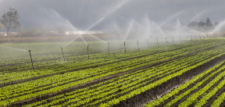
Of those, 10,000 acres must be retired by the end of this year, but voluntary retirements under two buyout programs are well on track. The above irrigation photo is courtesy of u_cq5hour74s, Pixabay.

The acreage retirements are what the state of Colorado must do to abide by a resolution approved by the Republican River Compact Administration in 2016. Over several decades, Colorado, Kansas and Nebraska have negotiated the terms of the Republican River Compact that were originally established on Dec. 31, 1943, to allocate the river’s waters.

If the state of Colorado and the Republican River Water Conservation District do not meet the acreage retirement set by the resolution within the timeframe, producers owning more than 500,000 acres of irrigated farmland could face a mandatory shutdown of their groundwater wells. The compact allocates 49% of the river’s water to Nebraska, 40% to Kansas and 11% to Colorado.

Earl Lewis, chief engineer of Kansas’ Division of Water Resources, said that meeting the 10,000-acre retirement deadline by the end of this year won’t be easy.  “Getting that last little bit will be the hardest part,” he said.

According to Deb Daniel, the RRWCD is working hard to meet the acreage retirement  goals. Daniel has spent a lifetime in water management and has served as general manager of the Republican River Water Conservation District since July 1, 2011. The RRWCD was created by the state’s legislature in 2004, to help Colorado comply with the compact. She lives near the region affected by the retirements in Kit Carson and Yuma counties.

The Republican River in Colorado is in a closed basin that does not benefit from mountain runoff water and averages 15 inches of rainfall a year. According to Daniel, about 12,000 acres are already retired, and she expects an additional 2,000 to 3,000 acres to be retired by the end of May.

The retirements are being aided by a $30 million grant from the American Rescue Plan Act of 2021, all of which will be either spent or encumbered by August 2024, Daniel said. Landowners can choose between two types of conservation programs that require the permanent retirement of irrigation. If they choose the federal Conservation Reserve Enhancement Program, which requires ceasing all agricultural activity on the land through the 15-year term of the contract, they currently get a higher total payment—up to $5,450 per acre.

Under the Environmental Quality Incentive Program, landowners give up irrigation and permanently shut off their wells but can still use the land for grazing or dryland farming. Currently EQIP payments, up to a total of $4,450 per acre, are paid over the five-year contract. Under either buyout regime, landowners retain all other rights.

Daniel said a “good percentage” of the irrigated landowners in the basin are absentee landlords renting to tenant farmers. Irrigation fees have recently gone up.  The RRWCD fees charge for irrigated acres rather than acre-feet pumped. In 2022, the water use fee of an irrigated acre in the basin doubled from $14.50 to $30 an acre, which comes out to $3,900 a year to irrigate a 130-acre center pivot circle. Daniel said Colorado was No. 1 in irrigated acre retirements through the EQIP program in 2023, with most of these retired irrigated acres in the Republican River basin.

The water issues are long-standing. The introduction of centrifugal pumps along the Republican River basin during the 1950s and 1960s lowered the groundwater table in each of the states. The crisis led water users to better understand the connection between surface water, river levels and underground aquifers. In 1969, Colorado passed the Groundwater Act, a law that integrated surface and groundwater rights under the term “conjunctive use.”

Lewis said the compact remains a good framework for coordinating water allocation in the basin. “We see this as a good compromise, collaborative approach. It may not be perfect for everyone, but it was thought to be fair at the time. The states have worked well together.”

Buyout precedents

Farmland all over the West is facing similar issues. In 2005, the Idaho Water Resource Board bought the rights to 98,826 acre-feet of water rights from the Bell Rapids Mutual Irrigation Co., which had managed irrigation of 25,000 acres of desert since 1971, making potato and beet farming possible. The issues triggering that buyout included the increasing cost of electricity to pull water from the river and the state’s need to conserve river habitat for endangered steelhead salmon.

More recently, the Westland Water District in California—covering a tract of land about the size of Rhode Island—bought out the water rights on 20,000 acres, triggering a court battle that ended when the California Supreme Court agreed with lower courts in denying a contract issued by the water district in 2020, saying it overstepped its authority.

As reported in the High Plains Journal