Tuesday, February 10, 2026
Home Blog Page 430

Colorado producers work hard to prevent irrigation shutoff

0

Agricultural producers in the Republican River basin in northeast Colorado are facing the shutoff of their groundwater irrigation by the end of 2029 if they do not retire 25,000 acres of irrigated farmland in the southern portion of the basin.

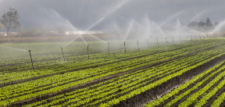
Of those, 10,000 acres must be retired by the end of this year, but voluntary retirements under two buyout programs are well on track. The above irrigation photo is courtesy of u_cq5hour74s, Pixabay.

The acreage retirements are what the state of Colorado must do to abide by a resolution approved by the Republican River Compact Administration in 2016. Over several decades, Colorado, Kansas and Nebraska have negotiated the terms of the Republican River Compact that were originally established on Dec. 31, 1943, to allocate the river’s waters.

If the state of Colorado and the Republican River Water Conservation District do not meet the acreage retirement set by the resolution within the timeframe, producers owning more than 500,000 acres of irrigated farmland could face a mandatory shutdown of their groundwater wells. The compact allocates 49% of the river’s water to Nebraska, 40% to Kansas and 11% to Colorado.

Earl Lewis, chief engineer of Kansas’ Division of Water Resources, said that meeting the 10,000-acre retirement deadline by the end of this year won’t be easy.  “Getting that last little bit will be the hardest part,” he said.

According to Deb Daniel, the RRWCD is working hard to meet the acreage retirement  goals. Daniel has spent a lifetime in water management and has served as general manager of the Republican River Water Conservation District since July 1, 2011. The RRWCD was created by the state’s legislature in 2004, to help Colorado comply with the compact. She lives near the region affected by the retirements in Kit Carson and Yuma counties.

The Republican River in Colorado is in a closed basin that does not benefit from mountain runoff water and averages 15 inches of rainfall a year. According to Daniel, about 12,000 acres are already retired, and she expects an additional 2,000 to 3,000 acres to be retired by the end of May.

The retirements are being aided by a $30 million grant from the American Rescue Plan Act of 2021, all of which will be either spent or encumbered by August 2024, Daniel said. Landowners can choose between two types of conservation programs that require the permanent retirement of irrigation. If they choose the federal Conservation Reserve Enhancement Program, which requires ceasing all agricultural activity on the land through the 15-year term of the contract, they currently get a higher total payment—up to $5,450 per acre.

Under the Environmental Quality Incentive Program, landowners give up irrigation and permanently shut off their wells but can still use the land for grazing or dryland farming. Currently EQIP payments, up to a total of $4,450 per acre, are paid over the five-year contract. Under either buyout regime, landowners retain all other rights.

Daniel said a “good percentage” of the irrigated landowners in the basin are absentee landlords renting to tenant farmers. Irrigation fees have recently gone up.  The RRWCD fees charge for irrigated acres rather than acre-feet pumped. In 2022, the water use fee of an irrigated acre in the basin doubled from $14.50 to $30 an acre, which comes out to $3,900 a year to irrigate a 130-acre center pivot circle. Daniel said Colorado was No. 1 in irrigated acre retirements through the EQIP program in 2023, with most of these retired irrigated acres in the Republican River basin.

The water issues are long-standing. The introduction of centrifugal pumps along the Republican River basin during the 1950s and 1960s lowered the groundwater table in each of the states. The crisis led water users to better understand the connection between surface water, river levels and underground aquifers. In 1969, Colorado passed the Groundwater Act, a law that integrated surface and groundwater rights under the term “conjunctive use.”

Lewis said the compact remains a good framework for coordinating water allocation in the basin. “We see this as a good compromise, collaborative approach. It may not be perfect for everyone, but it was thought to be fair at the time. The states have worked well together.”

Buyout precedents

Farmland all over the West is facing similar issues. In 2005, the Idaho Water Resource Board bought the rights to 98,826 acre-feet of water rights from the Bell Rapids Mutual Irrigation Co., which had managed irrigation of 25,000 acres of desert since 1971, making potato and beet farming possible. The issues triggering that buyout included the increasing cost of electricity to pull water from the river and the state’s need to conserve river habitat for endangered steelhead salmon.

More recently, the Westland Water District in California—covering a tract of land about the size of Rhode Island—bought out the water rights on 20,000 acres, triggering a court battle that ended when the California Supreme Court agreed with lower courts in denying a contract issued by the water district in 2020, saying it overstepped its authority.

As reported in the High Plains Journal

Kansans can show their support for the Kansas City Chiefs with a distinct license plate

0

Kansas drivers can now select a custom Kansas City Chiefs-themed license plate as one of the more than 50 custom plates offered in the state.

Legislators jumped on the idea of a chiefs-themed plate this year, as the Chiefs made a playoff run that ended in Super Bowl win, their second in a row. Now as the Chiefs seek a historic three-peat, Kansas drivers will be able to show their support for the team.

Kansas has eight new license plates

New license plates are introduced in every session, and usually all the proposals are bundled into one at the end of the session. This session there are eight new approved license plate themes to add to Kansas’s more than 50 alternative plates.

  • The Kansas City Chiefs.
  • The Kansas City Royals.
  • Sporting Kansas City.
  • The Kansas City Current.
  • Sedgwick County Zoo.
  • Topeka Zoo.
  • First City of Kansas.
  • Support the troops.

Distinct license plates come with an additional royalty fee between $25 and $100, with the proceeds going to charitable organizations.

Distinct license plates must receive 250 orders before it enters production, and it must have continual support or it risks being cycled out. If a plate doesn’t get 125 orders over a two-year period, it will be discontinued.

The practice brings in over $2 million a year to charitable organizations, and the most popular options in the latest data are the Gadsden Flag plate benefiting the Kansas Rifle Association, the In God we Trust plate and one that’s only available for firefighters.

Kansas claims professional Kansas City teams on plates

The addition of new license plates comes as the Kansas City Chiefs and Royals are negotiating the future funding of their facilities. Jackson County voters rejected an extension of a sales tax to fund the team’s stadium, leading to some speculation about one of the team’s crossing state lines.

However, statements from the Chiefs leadership suggest they hope to stay in Jackson County, Missouri, if possible. Gov. Laura Kelly said that Kansas isn’t negotiating with the organization to attract them to the state.

The Royals’ plans indicate they’d prefer to have a stadium in downtown Kansas City. Sporting Kansas City is the only professional sports team with a distinctive Kansas license plate that is located in Kansas.

As reported in the Topeka Capital Journal

Latest nitrate sample in Yoder still above EPA limits

0

Nitrate levels have continued to be above allowable limits in Rural Water District 101, which serves the Yoder area. On April 8, 2024, a 3-year routine state sample was collected, which included nitrates. The level tested at 12.0 mg/L, which exceeds the Kansas and Federal (EPA) maximum contaminant level (MCL) of 10 mg/L for public water supply systems.

The nitrate levels in water resources have increased in many areas which come from natural, industrial, or agricultural sources (including septic systems and run-off).

A test performed on August 12, 2020 resulted in a level above the maximum. Reno County received a precautionary public notice for acute nitrate violation from KDHE. A notification was then sent to the Yoder residents educating them about nitrates in drinking water. Subsequent notices were sent informing residents that bottled water will be provided, upon request, to any household with members at increased risk from the nitrates, such as infants under 6 months, nursing mothers, pregnant women, and other at-risk customers as identified by a health care provider.

The district will continue the KDHE required quarterly samples and public notifications until this issue is resolved. We appreciate your patience.

Abbyville Frontier Days Rodeo

0

Abbyville Frontier Days Rodeo, May 17th & 18th, 8:00 PM. Kids 12 & Under Free Admission. Saturday BBQ 5:30-7:30 PM. abbyvillerodeo.weebly.com For a full schedule find us on Facebook!

Off On The Wrong Foot

0
lee pitts

When I was hired as a field editor for a prominent livestock weekly I was 21 and greener than a gourd. I’d only been inside an auction market once, had no idea how to load film in a camera, never took a journalism class in my life, hated selling ads, didn’t know how to type and didn’t know a pronoun from a Pinzgauer. Other than that I was totally qualified for the job.

Why would anyone in their right mind hire me I wondered?

It didn’t take long to find out. I was hired as an independent contractor who paid all my travel expenses and got to keep one third of every ad I sold to purebred cattle and horse breeders of which there were very few in my territory. I had exactly two good accounts and another field editor had already glommed on to one of them and was trying to get my boss to give him the other one too! I was what old time cowboys called a button, an Arbuckle, a shorthorn or a chuck eater. I was a pilgrim put ashore in Indian country. And all the other field editors and magazine reps at the time were at least 20 years older than me.

I admit I made a couple tiny blunders in the beginning. I puffed up like a toad when I got my very first photo credit on the front page which clearly showed one of the biggest advertisers at a sale with his arm around who I presumed was his wife. Imagine my surprise when I got a memo from the publisher informing me that the guy’s wife was now suing him for divorce. But what did I care, the big advertiser wasn’t my account but belonged to the guy who was trying to steal any decent account I had.

Then John Wayne’s cattle manager wrote a letter to the owner of the paper demanding that I be fired because I’d hinted that some of the extremely high prices for bulls at the Duke’s bull sale seemed to be somehow linked to feeding cattle at Wayne’s Red River Feedlot. Instead of getting a Pulitzer prize for investigative journalism I got a scathing memo from the publisher.

I finally got smart and quit after I subtracted all my expenses from my total sales and discovered I was making about 13 cents per hour. When the publisher told me my writing wasn’t up to the high standards of the paper I told him that one day I’d show him by starting my own paper and that’s exactly what I did.

This meant I had to get out of my comfort zone and travel the entire country working ring at bull sales in return for big advertising budgets. I felt I needed to make an immediate impact so the first time I went to Idaho I had a bull order for what would have been the high selling bull if only I hadn’t insisted on looking at him ahead of the sale. (He was a dink.)

It had been a real wet winter and the bulls were in a feedlot and I wondered why none of the buyers were out looking at the bulls. I charged in and immediately discovered why. Much to everyone’s delight I immediately sunk up to my knees in the muck and the mire. When I lifted my right foot I left my boot buried beneath two feet of brown quicksand. I had no choice but to insert the left foot so I could get my right boot back. Then I heard a giant sucking sound when my left boot joined its partner.

This was not the impression I’d hoped to leave. I eventually unstuck my boots and carried them ashore with me right before the sale started so I had little time to get hosed off. For the entire sale every time I took a step the gooey stuff would ooze out the top of my boot like a pumping action, squish, pause, squish, pause, squish, etc. The folks at the sale seemed quite amused but not so the passengers on my Delta flight home who scattered like quail once they caught a whiff, leaving me an entire row so I could stretch out and catch some much needed shut-eye.