Wednesday, February 11, 2026
Home Blog Page 445

Instantaneous Irritating Itch

0
Thayne Cozart
Milo Yield

At my age, seldom does a week go by that I accidentally don’t do sumpthin’ that is what I call “chuckle worthy.” It happened again last week. It’s funny enough to share in this column. Here’s what happened.

As I’ve been mentioning, I’ve been trying to “soil build” for my row garden and raised garden beds. To get the job done, I’ve been scrounging rotting organic material to mix with the top soil that I had hauled in. One neighbor donated square bales of half-rotted hay.

Another neighbor saw what I wuz doing and volunteered to give me quite a few bags of half-rotted bromegrass seed that had gotten wet on a hay rack. Since bromegrass seed is organic in nature, after I took a look at the seed, I took him up on his offer because it would work perfectly in my soil building effort. I figure the small seeds should decompose rapidly in the soil and give the soil much-needed organic matter.

So, I got myself the job of hauling the brome seed back to my garden site. For the first load, I took my all-terrain vehicle to haul it. I’ll mention that the plastic seed bags had been exposed to the wind and weather long enuf for all the bags to be at various stages of deterioration and decomposition.

They were all split open on the top. They all had a layer of heavy, wet, yucky, black rotted seed on the bottom. But also, all the bags had a layer of dry, fluffy, weather dried seed on the top. The sorry condition of the bags posed a dilemma. Some of them would hold together enuf to lift and put into the bed of the ATV.

But, alas, I learned that some of the bags would fall apart when hefted. As I wuz lifting one bag from the hay rack, it gave away as I wuz transferring it to the ATV. The fluffy brome seed flew everywhere and — sad to say — a healthy portion went straight down the front collar of my shirt.

Within an instant, gravity pulled the dry seed down and embedded it tightly into my T-shirt, my inner-underwear, my long-handled underwear, and clear down to my socks. I had an instantaneous, irritating itch from my Adam’s apple to my ankles.

For those not in the know about bromegrass seed, it is very much like wild oats seed or tickle grass. It’s most disgusting trait is that the seeds penetrate any fabric and stick there until pulled out. And, pulling out the seed is like a porcupine quill. It doesn’t come out backwards. It only comes out when you pull it through the fabric.

Well, that’s the predicament I found myself in and I wuz a quarter-mile from home. I won’t go into detail about how it felt to have prickles on my skin from top to toe, but if you have an imagination, you can conjure up a funny Mental Home Video of my situation.

Continuing to work wuz not an option. Getting rid of the itch wuz the only option. So, I hopped “itchingly” onto my ATV and headed home. When I got to the security of my garage, I began the process of “deseeding” my stripped-off clothes. I used my fingers for awhile. Then a pair of tweezers. I must have spent close to a half-hour at the job.

And, even after my clothes went through the wash. I’ve been finding a few remaining bromegrass prickles. Let my experience be a precautionary tale for anyone handling prickly seed. Do it carefully or experience an instantaneous irritating itch.

***

I did eventually get the brome seed mixed with the topsoil. And, with the help of my son-in-law, ol’ Harley Ryder, we got the first two of my raised beds set and filled with mixed soil. Only two more to go.

***

Our grand-daughter in North Carolina relayed a funny little story about our great-grandkids. Our great-granddaughter is nearly five years old. Our great-grandson is a three-year-old. The kids were playing outdoors near their patio table. There wuz a pink fly-swatter laying on the table.

Soon, the sister ran into the kitchen and told her mother, “Mom, there was a big fly on the table, and we spanked it to death.”

***

At our Old Geezer Gang Gathering this morning I wuz complaining about how increasingly I think of something to do elsewhere in our home, but when I get to that room, I can’t remember what I came there to do.

One wag in our group made this suggestion: “Buy yourself some new shoes with that Memory Foam sole. Then you’ll quit forgetting.”

I just might take his suggestion — providing I remember it.

***

A overbearing farmer got so overbearing than everyone he knew avoided him. He eventually got frustrated enuf that he went to a psychiatrist for help.

When the doctor asked the farmer to describe his problem, he replied, “Well, Doc. Nobody will talk to me anymore. My neighbors won’t talk to me. My hired men won’t talk to me. My aging parents won’t talk to me. My kids and grandkids won’t talk to me. Even my wife won’t talk to me. Even my dog ignores me. So, why it it that no one will talk to me.

The psychiatrist looked up from his notebook, looked at his assistant and said, “Next patient, please!”

***

Words of wisdom for the week: “Even with the price of everything going up, writing paper remains stationery.”
And, “Old gardeners never die. They just spade away, then throw in the trowel.”

Have a good ‘un.
Legendary Horsemen Eager To Help Others Develop Their Unique Skills

0

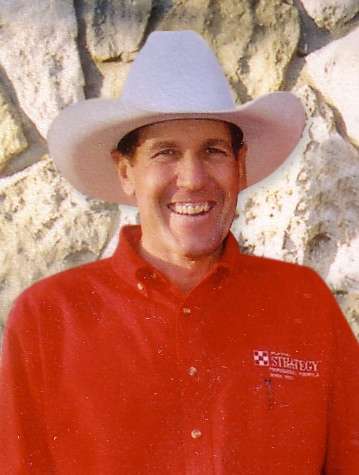
Passing along their horse working skills to others was emphasis of legendary horsemen at the EquiFest of Kansas in Salina.

Moderated by veterinarian Dr. Stan O’Neil, the Legendary Kansas Horsemen Panel was a unique combination of knowledgeable horse professionals.

Gary Wiggins of Brewster is a cowboy who has developed a business making bits and spurs demanded throughout the country. “It is a great honor to do what I do for our living. Our cup ‘runneth’ over,” he said.

Lifelong horse enthusiast, Ann White owns and is head trainer at Vermillion Valley Equine Center near Belvue. She coaches the Kansas State University Intercollegiate Horse Shows Association (IHSA) English team. “I’m all for having fun while increasing horsemanship abilities of English riders of every caliber,” she said.

Russ Wiegers, professional farrier from Leoti, started shoeing horses when he was 18 years old and has continued 46 years. “I’ve shod a variety of horses but there is always more to learn about the trade through farrier associations,” he said.

Learning to make bits and spurs from seasoned tradesmen, Wiggins is most diverse making anything to do with cowboy gear. His abilities have been honed through variety, receiving prestigious awards and considerable media coverage.

A leader in the Kansas Horse Council, White was brainchild for the now successful EquiFest of Kansas. “I attended a number of similar attractions across the country seeing the many benefits which could also serve Kansas’ horse industry,” she said.

Initially shoeing horses for feedlots over a wide area, Wiegers now works more with arena performance horses. “There are many situations that can arise with working horses due to the high level of stress. I take special pride in therapeutics extending usefulness of top horses,” he said.

A silversmith, Wiggins learned that skill from his dad Denzil Wiggins and uses many of those “hand me down” tools. “In the business two decades, my passion is making quality gear for the working cowboy,” he said.

Active in the Kansas Hunter Jumper Association for 40 years. White has trained champions on all levels collecting national titles. “This is a family operation with crops and livestock while my daughters have also become involved in training,” she said.

Achieving the Certified Farrier status in 2018, Wiegers is emphatic about continuing education to uphold integrity of the farrier profession. “I take pride in mentoring young farriers with their careers. They soon learn it can be profitable, but a lot of arduous work,” he said.

Honored as the Academy of Western Artists Bit and Spur Maker of the Year, Wiggins initially marketed his talents at major livestock shows. “I now only go to a couple of such events but have waiting lists for my work on order,” he said.

Both Wiegers and White have developed sideline businesses merchandizing equipment important to their professions.

“It got so I couldn’t find horseshoes and farrier equipment for my own use, so I started a business now with clientele nationwide,” Wiegers said.

“It is always difficult to find the right English horse equipment, so I started a store in Wamego. I also offer English horse merchandise for sale when attending shows,” White said.

Teaching shop in high school for a time, Wiggins invites young people interested in making bits, spurs, and cowboy wares to work with him. “I learned from others and want to pass those trade skills on to the next generation,” Wiggins said.

“There is always more to learn about the farrier trade. I offer as much assistance as I can and encourage all interested in horseshoeing to join farrier associations,” Wiegers said.

“I always been a horse enthusiast although my family was not initially interested. I want to help all those people fascinated with horses to learn more about them and improve their skills,” White said.

Love for horses and their unique work in diverse trades for horse enthusiasts was most apparent in the humble legends.

+++30+++


CUTLINE

Gary Wiggins, Brewster; Ann White, Belvue; and Russ Wiegers, Leoti, were on the Legendary Kansas Horsemen Panel at the EquiFest of Kansas in Salina.

Tune into Roamin’ The Range with Frank J. Buchman, KFRM 550 AM radio or computer, 1:47 p.m., April 10, 2024: For The Love Of Horses “Legendary Horsemen Eager To Help Others Develop Their Unique Skills”

Fast charge, slow learn

0
john marshal


A swift scan online shows 457 electric vehicle charging stations in Kansas. Most of them are in larger cities, where most of the state’s 4,000 electric vehicles are registered.

We’re now part of an EV campaign to change us from gas guzzlers to watt-burners. It follows a U.N. Climate Change Conference agreement last fall to phase out fossil fuels and achieve net zero emissions by 2050.

Oil barons have doubts, given the plan’s speedy deadlines and its implication that the internal combustion engine is already a relic. Oil and gas, they say, will remain crucial, stabilizing the system as it changes over the long term.

The National Renewable Energy Laboratory estimates that 33 million light duty vehicles will be on the road by 2030 and that America will need 28 million charging ports to keep them going. Most of them will be at homes, with a million (public) fast-chargers near home and work.

*

In Kansas, six new locations were announced in January for electric fast-charging stations in places with scarce EV service. They are Emporia, Garden City, Cherokee, Fredonia, Belleville and Pratt. This $5.8 million state-federal project is part of a $7.5 billion National Electric Vehicle Infrastructure Formula program.

NEVI, as it is known, is an offspring of the Bipartisan Infrastructure Law. The program (80 percent federal) envisions Kansas at mid-point in a coast-to-coast interstate vehicle charging grid. The state seeks $39.5 million in NEVI funding (matched with $10 million from Topeka) through the next five years.

Although the sticker price on electric vehicles has come down recently, $40,000 to $50,000-plus is a lot to pay for a small sedan. Finding places to charge one is a challenge. EV mechanic-technicians are rare in these parts and service is scarce, its cost elusive.

In time, motorists along the Interstate may find plenty of charging stations, but for the people who live in distant towns not much is seen of the rush to put America in electric cars.

*

Farm machines and implements, great guzzlers of gasoline and diesel fuel, seem to be out of the immediate discussion. Think of the batteries needed for an E-tractor, combine or wheat truck, where to recharge them and how to keep them running at harvest or planting time. If it takes half an hour to charge a light sedan to 80 percent, what’s required for the equipment in a milo harvest?

The love affair with EVs confronts reality. To achieve real change, the national grid must be renovated and fortified at tremendous cost to supply greater demands for electricity. It is one thing to embrace achievement, but quite another to manage its care and feeding. If we want something new and different to last, we must have a way to make it old and familiar.

Advancement comes at a price in spite of our best intentions; consider the environmental cost to produce electric vehicles and ditch their waste. The chief components in EV batteries come from cobalt, lithium and nickel, mined with brutal impact on the surroundings.

It recalls our rush to nuclear power, leaving aged reactors and piles of deadly waste simmering in vats and deep graves across America. Our craving for electric vehicles may lead to a similar spinoff. When the batteries wear out in ten years or so, what then ‒ dumping a la nuclear waste?

We have learned the price for using oil and coddling nuclear. The lesson now percolates for electric vehicles.

Legendary Horsemen Eager To Help Others Develop Their Unique Skills

0


Passing along their horse working skills to others was emphasis of legendary horsemen at the EquiFest of Kansas in Salina.

Moderated by veterinarian Dr. Stan O’Neil, the Legendary Kansas Horsemen Panel was a unique combination of knowledgeable horse professionals.

Gary Wiggins of Brewster is a cowboy who has developed a business making bits and spurs demanded throughout the country. “It is a great honor to do what I do for our living. Our cup ‘runneth’ over,” he said.

Lifelong horse enthusiast, Ann White owns and is head trainer at Vermillion Valley Equine Center near Belvue. She coaches the Kansas State University Intercollegiate Horse Shows Association (IHSA) English team. “I’m all for having fun while increasing horsemanship abilities of English riders of every caliber,” she said.

Russ Wiegers, professional farrier from Leoti, started shoeing horses when he was 18 years old and has continued 46 years. “I’ve shod a variety of horses but there is always more to learn about the trade through farrier associations,” he said.

Learning to make bits and spurs from seasoned tradesmen, Wiggins is most diverse making anything to do with cowboy gear. His abilities have been honed through variety, receiving prestigious awards and considerable media coverage.

A leader in the Kansas Horse Council, White was brainchild for the now successful EquiFest of Kansas. “I attended a number of similar attractions across the country seeing the many benefits which could also serve Kansas’ horse industry,” she said.

Initially shoeing horses for feedlots over a wide area, Wiegers now works more with arena performance horses. “There are many situations that can arise with working horses due to the high level of stress. I take special pride in therapeutics extending usefulness of top horses,” he said.

A silversmith, Wiggins learned that skill from his dad Denzil Wiggins and uses many of those “hand me down” tools. “In the business two decades, my passion is making quality gear for the working cowboy,” he said.

Active in the Kansas Hunter Jumper Association for 40 years. White has trained champions on all levels collecting national titles. “This is a family operation with crops and livestock while my daughters have also become involved in training,” she said.

Achieving the Certified Farrier status in 2018, Wiegers is emphatic about continuing education to uphold integrity of the farrier profession. “I take pride in mentoring young farriers with their careers. They soon learn it can be profitable, but a lot of arduous work,” he said.

Honored as the Academy of Western Artists Bit and Spur Maker of the Year, Wiggins initially marketed his talents at major livestock shows. “I now only go to a couple of such events but have waiting lists for my work on order,” he said.

Both Wiegers and White have developed sideline businesses merchandizing equipment important to their professions.

“It got so I couldn’t find horseshoes and farrier equipment for my own use, so I started a business now with clientele nationwide,” Wiegers said.

“It is always difficult to find the right English horse equipment, so I started a store in Wamego. I also offer English horse merchandise for sale when attending shows,” White said.

Teaching shop in high school for a time, Wiggins invites young people interested in making bits, spurs, and cowboy wares to work with him. “I learned from others and want to pass those trade skills on to the next generation,” Wiggins said.

“There is always more to learn about the farrier trade. I offer as much assistance as I can and encourage all interested in horseshoeing to join farrier associations,” Wiegers said.

“I always been a horse enthusiast although my family was not initially interested. I want to help all those people fascinated with horses to learn more about them and improve their skills,” White said.

Love for horses and their unique work in diverse trades for horse enthusiasts was most apparent in the humble legends.

+++30+++


CUTLINE

Gary Wiggins, Brewster; Ann White, Belvue; and Russ Wiegers, Leoti, were on the Legendary Kansas Horsemen Panel at the EquiFest of Kansas in Salina.

Tune into Roamin’ The Range with Frank J. Buchman, KFRM 550 AM radio or computer, 1:47 p.m., April 10, 2024: For The Love Of Horses “Legendary Horsemen Eager To Help Others Develop Their Unique Skills”


Living By Five P’s

0

“Prior planning prevents poor performance.”

It is an adage repeated in recent readings about increasing cattle operation profits, but also applies to life in general.

To produce a profitable outcome and the decisions that must be orchestrated to increase likelihood of favorable performance is demanding. It is a stringent process that mandates commitment to planning.

While most development tends to be focused on technical details, too often the human element is forgotten.

With all the pieces in place and systems organized, there is a failure to provide the right training. Workers must be properly managed with enough hours in the day to get their work done in the allotted time.

Resources need to be lined up efficiently and maintained in a feasible working order. Often, a missing link in the process of setting the stage for success is assuring the people are properly rested.

They must be refreshed, informed, and nourished going into demanding tasks of time and talent.

Sleep deprivation leads to mood changes, impaired judgement, ineffective mental processing, and reduced immune function.

When emotions are poorly regulated and mental focus is dulled, the likelihood of accidents and mistakes increases significantly.

Recordkeeping and information-heavy processes are negatively affected when the workforce is functioning on the edge of exhaustion.

Making sure that worker rotation is designed with rest periods during and following peak work sessions will have positive payoffs.

Effective training should include ongoing communication centered around well-designed processes. Training in advance of work helps to assure that people feel prepared for the demands of the task.

When employees can evaluate outcomes and adjust to workloads, they are more likely to remain more engaged and motivated.

Knowing what is expected with tools and training to perform the job with sensible processes are essential to high performance.

Providing feedback and affirmation of a job well done are important in assuring that a plan is built and executed. Most essential key to productive performance is caring for the people who are expected to do the task at hand.

“Prior planning prevents poor performance.” So, plan for the future, prepare the rested, educated working team, practicing makes perfect, provide affirmation, and production will prosper.

Reminded of Proverbs 24:4: “Any enterprise built by wise planning becomes strong through common sense, and profits wonderfully by keeping abreast of the facts.”

+++ALLELUIA+++

XVIII–15–4-8-2024