Monday, February 16, 2026
Home Blog Page 503

February Pre-gardening Checklist

0

Much can be done now to get a jump start on the growing season. The below tips, with links from the Utah State University Extension Gardeners Almanac, can help get you going.

  • Consider adding a smaller structure, such as a low tunnel or a larger high tunnel, to extend your growing season.
  • Try your hand at starting vegetables or annual plants indoors from seed to get a jump start on growing.
  • Consider growing herbs and/or microgreens indoors to add fresh greens to your diet.
  • If you are storing bulbs, check their condition to make sure they are still firm. Remove any that are soft or rotten.
  • Prune grapes and fruit trees in late February to early March.
  • Fertilize fruit trees at least 6 weeks before they bloom.
  • Monitor for deer and rodent damage in the landscape.
  • Avoid fungus gnat infestation in house plants by allowing the soil to dry between watering.
  • Specific gardening information can be found at garden.usu.edu. Here you will find fruit, vegetable and herb growing guides, as well as information on soil, lawn, yard, tree, shrub, and flower care. In addition are monthly tips, the basics of gardening, information on events, classes, and more.

Community Garden Corner

0

Community gardens serve a number of purposes including fresh produce, social interaction and learning opportunities. I once helped establish a community garden in downtown Baltimore, MD where the goal was to turn abandoned lots into productive garden spaces. City beautification is among the many benefits community gardens can bring. With all these advantages come challenges too. Some are familiar to all gardeners but some are unique to community gardening.

Everyone has their own style of gardening. Some gardeners are meticulous about weeding while others are not. In a shared space, allowing weeds to set seed has an impact on the surrounding gardeners as well. Using community garden funds to keep a large mulch pile onsite for gardeners to use is one strategy to prevent this scenario. Planning regular “community workdays” where all gardeners are encouraged to work side-by-side is another option. Turn workdays into fun social events by playing music and having a potluck lunch when the work is done.

Clear, concise rules and regular communication go a long way for success in the community garden. February is a great time to bring the gardeners together for a planning meeting. Allow everyone to contribute and establish the rules for the year based on what worked well and what needs to improve from last year. During this meeting create a contact list with everyone’s email and phone number. Plan the calendar for the year including several celebrations. Focus on building community and get everyone working towards the same goals.

Funding is another challenge for community gardens. Charging a fee to individual gardeners who grow in each plot helps to offset these costs. This also results in the gardeners being more invested (literally) in caring for their space. Another source for funding is sponsorships. You may seek funding, even small amounts, from neighboring businesses who appreciate the beautification work your group is doing. Sponsors may be recognized with their company logo on community garden t-shirts, signage or by having their name(s) engraved on the tools they helped purchase.

If you are looking for resources to establish a new community garden or find an existing community garden in your area, contact your local extension office.

Sharing the Love – Valentine’s Day Flowers

0
Photo credit: Jon Collier

Americans celebrate Valentine’s Day with gifts of flowers, candy, cards and more. In 2023, customers spent an estimated $2.5 billion on flowers for Valentine’s Day. The rose is the most widely recognized and celebrated flower. Roses accounted for about 84 percent of the 2023 sales. Sixty-nine percent were red roses.

The rose is beautiful and versatile.  Roses can be used in any type of design, from classic to contemporary. There are an abundance of commercially-grown varieties available in vibrant colors, sizes and shapes.

Bloom size, shape, speed of opening, color, petal count, petal texture, fragrance, and foliage are all points to consider as you select roses for your event.

The rose symbolizes love, romance and passion, so it’s no surprise that red roses are the most popular flower choice for Valentine’s Day. By following a few simple practices, you can ensure the longest-lasting roses.

  1. Roses often come in a plastic sleeve which retains moisture. The sleeve should be removed after purchase.
  2. Cut 1½ to 2 inches of each stem with a clean, sharp knife or flower snips. Uncut stems cannot efficiently absorb water needed by the flower to open fully. (Current research suggests that cutting stems under water is not necessary.)
  3. Remove any leaves that will be underwater once stems are arranged in the vase.
  4. Follow directions on flower food packet to mix the right amount of cold water to food ratio into the vase. Flowers need to be nourished. Professional flower food generally contains three ingredients:
    1. Carbohydrate – (sugar) nutritional source
    2. Acidifying agent – lowers the solution pH and improves water uptake
    3. Microbiocide- reduces microbial growth
  5. Arrange freshly cut stems into the vase.
  6. Check the water level daily, repeat steps 2-5 every 2-3 days so flowers last as long as possible. Keep flowers away extreme cold, heat, direct sunlight and sources of ethylene gas (fruits and vegetables). (Irina Sheshukova)

Vacated Registration of Dicamba Products Impacts Kansas Agriculture

0

On Tuesday, February 6, the U.S. District Court for the District of Arizona vacated the 2020 registration of three dicamba products which have been utilized for weed control in over-the-top applications (post-emergence) on dicamba-tolerant soybeans and cotton. The Kansas Department of Agriculture is aware that this action could have a significant impact on Kansas farmers and agribusinesses.

KDA has been in communication with federal partners including the U.S. Environmental Protection Agency to emphasize the importance of flexibility for farmers and agribusinesses, especially in the use of existing and purchased stocks for the 2024 growing season. Use of these products has been an important tool for Kansas soybean and cotton farmers; farm management decisions regarding purchases of seed and herbicides are made months prior to spring planting, and this action just weeks before planting season will negatively impact Kansas producers. The three products identified in this action are: XtendiMax with VaporGrip Technology, Engenia Herbicide, and Tavium with VaporGrip Technology.

KDA will continue to monitor this situation closely in partnership with stakeholders, producers, and other state departments of agriculture. As additional details become available, KDA will share that information on our website at www.agriculture.ks.gov/dicamba. If you have additional questions, please contact the KDA pesticide and fertilizer program at 785-564-6688.

Aquifer Depletion not Just Southwest Kansas

0

The book is Running Out by Lucas Bessire. Published in 2021, this book emanates from Lucas’ childhood home, the Little Rock House, located on the banks of the now gone Cimarron River. The book forms a quilt composed of different revelations about aquifer depletion, family strife and reconciliation, and maddening water bureaucracy in a world focused on extraction and corporate profits.

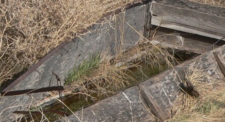
The book’s epicenter is the small but important “Wagon Bed Springs” used for millennia by tribes, mammals, waterfowl, and plants — now totally gone due to unsustainable groundwater extraction for thirsty crops.

Zeroing in on this geographical area is compelling but it is by no means the only area which is suffering from this worldwide phenomenon of groundwater depletion.

Here in the United States, several areas join western Kansas in groundwater depletion. A recent report in Nature, released in January of this year, highlights several states which are suffering from groundwater depletion.

California accounts for 21% of the total groundwater usage in the US and draws about 67% of its freshwater from its groundwater reserves. This reliance has taken its toll: of California’s 183 groundwater basins evaluated by the Nature team, 75% are in decline and for many that decline is occurring very rapidly. The most significant of the losses hitting the states Central Valley

Texas is another state that faces issues with aquifer decline. While the aquifers beneath Texas don’t face the level of critical collapse as in California, the hot, dry, southwestern state is also facing a thirsty century. According to Nature researchers’ data, 82% of Texas’s aquifers are in some form of decline. One of these, Lobo Flat, the sight of a ghost town that once thrived when the water did, is in rapid decline losing 23 inches per year.

Idaho has the dubious honor of hosting the fastest collapsing aquifer in the Nature researcher’s data set: the Mill Creek aquifer, which is losing 7 inches of water per year, is a serious concern for the 200,000 people who rely upon it for drinking water. While Mill Creek is the only aquifer in Idaho experiencing rapid decline, water levels are falling in 60% of the state’s other groundwater aquifers, and in 11% of them, that decline has more than doubled the last century.

Arizona faces similar concerns. With surface water supplies diminishing and rain famously scarce in the desert, 41% of Arizona’s water supply comes from wells, and according to the Nature study, 70% of these are in decline across the state.

In Utah, big cities can rely on the snowmelt that comes off the Wasatch Front…for now. But the state, as a whole, depends on groundwater to meet 60% of its water needs, of which 80% is consumed by agriculture. Under pressure from both cities and irrigation 82% of Utah’s aquifers are in the state of decline, 11% of them at twice the rate of the last century.

The States overlaying the Ogallala aquifer face similar troubling stories about groundwater depletion, which are well documented in Lucas Bessire’s book. And while Wagon Bed Springs and the Little Rock House may be the epicenter of this book, the shockwaves reverberate across the country and the world.

I’m Hannes Zacharias from Lenexa KS, speaking for High Plains Public Radio’s Radio Readers Book Club.