Monday, February 16, 2026
Home Blog Page 504

Bison area work continues at zoo

0

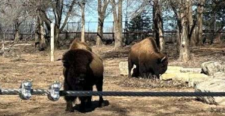
The Hutchinson Zoo posted on social media over the weekend that their bison now have access to their new yard.

The new bison and deer viewing expansion is not yet completed, but the zoo still wanted to share with some behind-the-scenes pictures of the bison exploring the new space.

The zoo said this training space will allow them to accomplish new goals with the aging herd. With all hoofstock, especially as they age, good hoofcare is essential to the wellbeing of their joints. This new space will allow the keepers better access to our herd for training the hoof trim behaviors they need as well as access to them for wellness visits with the vet.

Additionally, this new training space will be used for private animal encounters that patrons can book with the zoo. This experience will get you up close with the herd for a moment you’ll never forget.

Contact the zoo at (620) 694-2672 or online at http://hutchinsonzoo.org/.

Bill that would restrict foreign nationals from acquiring Kansas land sparks pushback

0

Powerful Kansas lobbyists came out in force against Senate Bill 446, a bill that would bar foreign nationals from owning 10 or more acres of land unless approved by a council created by the bill.

Kansas Attorney General Kris Kobach proposed the bill citing concerns about foreign countries pricing young farmers out of Kansas farmland, cartel-owned parcels used in the drug trade and the Chinese company Cnano creating a manufacturing plant in Johnson County.

The bill wouldn’t apply to foreign-born citizens or green card holders, but other residents or foreign companies would need an exemption when purchasing more than 3 acres.

The state’s largest lobbyists in agriculture, utilities, business and civil rights rose in opposition to the bill. The Kansas Farm Bureau, Livestock Association, Agribusiness Retailers Association, Corn Growing Association and Soybean Association all opposed the motion, citing its infringement on private property rights and existing laws prohibiting corporate farming.

There are anti-corporate farming laws. Not only can a foreign corporation from China or any other foreign country not own agricultural land in the state of Kansas, neither can an evil corporation from Nebraska,” said John Donley, a lobbyist with the Kansas Farm Bureau.

The Kansas Livestock Association said the rise in noncitizen ownership of land is in leases for renewable energy companies. Of the 1.2 million acres of foreign-owned land in the state, about 67,000 acres are used for things besides wind and solar farms.

The statewide Kansas Chamber of Commerce, several regional chambers and other business and economic development lobbies said the bill could impair foreign businesses from employing Kansans. Civil rights organizations said the bill could create discriminatory practices by the foreign land council.

The council itself would be made up of the attorney general, the governor, the secretary of state, the adjutant general and the director of the Kansas Bureau of Investigations. They would have sole authority over which foreign-owned companies would be given an exemption on purchases.

Kobach said the council would probably approve purchases from individuals or companies from allied nations but would oppose adversaries from buying land due to the security risk.

“The commission, as you can tell because it’s the adjutant general bringing in national defense information in, the KBI and the AG, it would be for security risks,” Kobach said. “So, obviously a plant for producing US manufactured automobiles or distributing automobiles owned by a foreign corporation would not pose any sort of risk and presumably would be approved.”

Despite pushback from lobbyists, Kobach stressed that nearly half of all states have some prohibitions on the acquisition of land by a foreign entity. He said SB 446 avoids issues other states make when doing similar legislation by making it a blanked decision against foreign ownership, rather than targeting it at specific countries that are deemed adversaries by U.S. Department of State.

Kobach said relying on official adversaries doesn’t address cartels, can change at the whims of the state department and is more prone to legal challenges claiming ethnic discrimination.

KBI supported the bill and said neighboring states have seen an increase in cartel-owned marijuana growing operations, and that they have classified information that would “shock” people but that they aren’t able to share.

“There are many things that we are aware of in law enforcement that we can’t share with you. So, I’m coming to you with trepidation saying we’re asking for your trust at some level,” said Robert Stuart, executive officer of KBI.

As reported in the Topeka Capital Journal

Four tips for easier mowing and keeping lawns lush

0
Source: Kansas Turfgrass Foundation

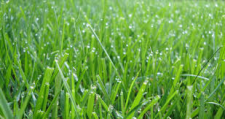
As the weather starts to get warmer and homeowners are preparing their lawns for spring, many may be dreading the idea of mowing in the hot sun in the coming months.

However, turfgrass mowing doesn’t have to be as tedious and exhausting as many may think. There are practices to make mowing quicker and easier to keep lawns looking lush with less work.

Pablo Agustin Boeri, Ph.D., Texas A&M AgriLife Extension Service turfgrass specialist, in the Department of Soil and Crop Sciences of the Texas A&M College of Agriculture and Life Sciences, shares tips for homeowners to make mowing as pleasant as possible this spring.

Tip one: The right mower matters
The kind of mower you use can make or break your mowing habits. The sharper you keep your blades, the quicker and easier it will be to cut your grass.

Boeri said if you let your blades get too dull, your turfgrass will be damaged. This can cause grass to be cut at uneven lengths, which makes mowing more tedious.

Autonomous mowers or robot mowers have been gaining popularity due to various benefits, such as reduced labor, energy consumption and gas emissions compared with traditional, gasoline-powered mowers.

“Robot mowers have small blades that only need to be changed every month or two to keep them sharp,” Boeri said. “Which is nothing compared to the larger task of changing a rotary mower’s blade.”

Tip two: Reducing mowing
Once the temperatures start to increase, mowing can be a daunting task to many homeowners, especially if their yard doesn’t get much shade. Boeri said there are practices you can take to reduce the amount of mowing without making your yard look overgrown.

“If you irrigate too much and use more than the recommended amount of fertilizer, your grass will grow too quickly and you will have to mow more often to avoid scalping the turf,” Boeri said. To learn how much water your specific yard needs, AgriLife Extension offers the WaterMyYard program, which will send you weekly watering advice specific to your irrigation systems and lawn.

If you choose to use a nitrogen-based fertilizer for your grass, Boeri said it should be kept at a minimum for less frequent mowing.

“It’s better to use a fertilizer that will release slowly,” he said, “If you use a quick-release fertilizer, your grass will grow significantly in a shorter amount of time and can be hard to keep up with.”

If you want to avoid mowing in the summer, you can maintain irrigation at a minimum and let your grass go dormant. Check the drought tolerance of your turfgrass and the soil conditions before doing so. Boeri warned that if you are concerned with the color of your grass, your lawn will look brown if you let it go into dormancy.

Tip three: Select the right turfgrass

How often homeowners need to mow is also dependent on the kind of grass they have. Some grasses have slower vertical growth rates than others, which can produce greener looking lawns with less maintenance.

“If you’re looking into picking a new turfgrass, buffalograss is a native grass that can be left unmowed,” he said. “Species like Bermuda grass tend to recover faster than other turfgrasses from scalping damage.”

Boeri said ProVista, a St. Augustine grass variety, is also a good low-maintenance breed of turfgrass. This variety has a gene that makes the grass denser and lower to the ground, requiring less mowing than other grass varieties.

Tip four: Don’t cut your grass too low

One of the most important things to remember when taking care of your lawn is to follow the recommended mowing height. Boeri compares the practice of mowing your lawn to pruning a plant.

“We need to follow proper maintenance practices and to make sure we aren’t reducing the grass’s ability to deal with stressors such as drought,” he said.

Boeri said the general rule is to mow less than one third of the leaf each time you mow. It’s important for homeowners to be wary of the height of their turfgrass and the frequency of mowing to ensure lawns are kept happy and healthy.

Four tips to creating the perfect garden plan

0

Want to grow your own produce but not sure where to start? Follow our tips for creating the plan that’s right for you!

January and February are sleepy planting months, but we gardeners are cheered by the arrival of seed catalogs in our mailboxes! The beautifully colorful pictures make us a little starry-eyed and get us excited for all the possibilities of things we can grow this year.

If you’re like me, you’ve got to pull the reins back on what you will allow yourself to order. I remind myself that as a working mom I wouldn’t have time to do justice to all the vegetables I would love to grow if I allowed myself to order everything that caught my eye.

Some of us have been gardening for years but others turned to growing fruits and veggies out of necessity (or boredom!) during the pandemic. Home gardening in Arkansas really caught on and we get a LOT of calls about gardening now at our Extension office here in Arkadelphia.

The trend in home gardening is great! Growing your own vegetables allows you to try different, fun varieties that you probably can’t find in the stores, relieves stress, provides the freshest of produce, and allows full control of what pesticides are used. It also teaches kids where food comes from and the labor involved in putting fresh produce on the table.

Whether you’re an experienced gardener or first-time gardener, it’s always best to start with a garden plan.

Did you start gardening for the first time during the pandemic, or are you wanting to start this year? The first thing to do for a more organized, enjoyable experience, is to create a garden plan. This plan will also be important in the years to come, so that you have records of what you planted where. Then you can rotate your crops accordingly.

Don’t be intimidated! Just start with these 4 easy steps to creating a garden plan:

1. Location, location, location

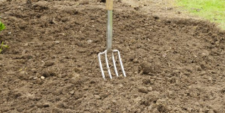
Choose a well-drained, sunny spot for your garden. By sunny, I mean an area that receives at least 6 hour of sunlight each day. Hopefully, you have a nice loamy soil to plant your garden in, but if you are like me, your lawn could be a gravel pit, so raised beds it is! Here’s a link to how to build a raised bed garden.

Make sure the area is near enough to your water hydrant that irrigation is easy. Dragging a 100-foot hose each time you need to water can become a chore. Consider trying drip irrigation to conserve resources.

Locating the garden close to your home will make it more convenient. Better yet, place the garden near the kitchen to make it easier for the cook to get the veggies washed up and ready to cook.

2. Determine what crops that you and your family will actually eat.

This sounds obvious, but I have been known in the past to plant 6 eggplants, when I am the only one in the family that actually eats eggplant. That is far too many eggplants for one person!

Planting a quarter acre of turnip greens sounds cool unless your kids don’t eat turnip greens. You’ll be inviting the entire neighborhood over to pick greens, but you know what? That’s cool too.

Most families have their favorite vegetables. I know in my family, we’ll eat squash, zucchini, tomatoes, potatoes, bell and jalepeno peppers, okra, and sweet corn. While I might try different varieties within that list, I generally don’t stray outside it.

Having said that, I think it’s a great idea to try new things. Just try them on a small scale the first year to make sure your family will eat them.

Poll your family and make a list of their favorite vegetables. I encourage you to keep it simple at first. Check out our Year-Round Home Garden Guide to see when you plant different vegetables in Arkansas. Then visit online seed companies, look through seed catalogs, or visit your local farm store to find your seeds. Bonus tip: look for varieties that offer disease resistance.

If you end up with too much produce, consider donating it to a local pantry.

3. Be realistic about your time.

I’m so gung-ho during spring planting. It’s finally getting a little warmer, the trees are putting out new leaves, and nature feels like it’s being reborn. I want to contribute to that!

I grew up a farmer’s daughter in the Arkansas delta, and there’s something in me that just needs to till the earth and plant seeds that promise to bring a crop. The smell of freshly turned soil just does something for my soul. So, I plant eagerly and excitedly.

Then, life happens. Both of my kids play ball which leads me to being at either a softball or baseball field several nights a week and many weekends throughout the spring and on into the summer. It’s also growing season for the farmers I work with, so that means I’m scouting fields, sometimes past regular work hours. Oh, and we also enjoy boat time on our local lake. By mid-July, my garden can start to look a little ragged.

Because of all these things, I know realistically that I cannot maintain a large garden. For the season of life I am in, I need to keep my garden fairly small. Maybe that’s not the case for you.

When determining how big your garden will be, just be realistic about how much time you can spend weeding, monitoring insects and diseases, watering, fertilizing, and harvesting your garden before you bite off more that you can chew.

You also need to consider how much freezer and pantry space you have for food storage. If your garden is large, and it produces more that you can consume fresh, then you can preserve it. Do you have the space for that? For those of you with very limited space, consider creating a straw bale garden which can be both affordable and portable!

4. Put the plan to paper

Make a drawing of your garden plan. How long will your rows be? Where will you locate the tomatoes? Will you need trellises for anything?

This doesn’t have to be fancy. Even a rough drawing will help when it comes time to plant.

In my opinion, the most important reason to draw out a plan is so you can use it in upcoming years to make sure you are rotating your crops as you should.

Crop rotation ensures that you don’t plant the same family of crops in the same spot each year. This reduces insect and disease pressure.

So, jot down your plan and file it away where you can find it next year. Check out our garden planning page with fact sheets for more information.

I know it’s still winter, but planting season will be here before we know it! Many cool season crops like potatoes and onions can be planted in February in south Arkansas. Create your garden plan and start dreaming of warmer temps and getting your hands in the soil.

Remember these four simple steps to creating a garden plan for beginners:

  1. Properly locating your garden will set the foundation to the success of your garden.
  2. Only plant what you know your family will eat.
  3. Determine how large of a garden you can maintain realistically
  4. Draw out a plan of what you will plant and where you will plant it, and keep for your records.

Total solar eclipse will cross the US soon. These Kansas cities will have the best view

0

In about two months, Kansans will be able to see this year’s solar eclipse making its way across North America .

The last solar eclipse, a partial eclipse, occurred in October and was an annular eclipse , meaning the moon passes between the sun and the Earth when it is farthest from the Earth. Because the moon is so far, the moon cannot cover the sun completely, which causes a ring effect around the moon, often referred to as the “ring of fire.”

April’s event is a rare total solar eclipse, which means the sun will be completely blocked out for those in the path of totality. The eclipse will pass over Mexico, Canada and the U.S. Monday, April 8. Mexico will be the first place to see the complete eclipse, peaking at 11:07 a.m.

The total eclipse will be viewable in the U.S. in Texas, Oklahoma, Arkansas, Missouri, Illinois, Kentucky, Indiana, Ohio, Pennsylvania , New York, Vermont, New Hampshire and Maine. Other states, like Kansas, will only see partial coverage.

The next total solar eclipse won’t occur until Aug. 23, 2044 , according to NASA. If you’d like to catch a glimpse of this year’s event from Kansas, here’s what to know.

Kansas cities with the best view of the 2024 eclipse

In Wichita, the eclipse will begin at 12:31 p.m. and end at 3:06 p.m. Viewers will be able to see maximum coverage at 1:48 p.m., according to online global clock Time and Date.

Those who are in the path of totality will see a total obstruction of the sun, while those outside the path will see only partial obstruction.

Overland Park is the city in Kansas that will have the most obstruction at 89.5%, while Wichita will have 87.59%.

Here are some other cities in Kansas where the partial eclipse will be viewable and how much of the sun will be blocked out:

  • Lawrence (88.35%)
  • Olathe (89.49%)
  • Osage City (88.10%)
  • Salina (83.66%)
  • Topeka (87.18%)
  • Remember, just because part of the sun is partially blocked during the eclipse does not mean it’s safe to stare directly at it without eye protection. If you plan to take a peek April 8, be sure to wear eclipse glasses or handheld solar viewers — anything with a special-purpose solar filters.Otherwise, there are ways you can view the eclipse indirectly, like creating a pinhole projector.