

Lettuce Eat Local: Making a list, Chex-ing it twice
Amanda Miller
Columnist
Lettuce Eat Local
The last weeks before Christmas are here, and the air is filled with sweet anticipation — and sweet everything. Forget visions of sugar plums dancing in our heads, we’ve got plenty of other holiday treats to dream of!
Gingerbread men, chocolate crinkles, monster cookies; peppernuts, decorated sugar cookie cut-outs, snickerdoodles. Chocolate-covered this and that and the other thing. Candy canes, peanut brittle, and hot chocolate…does the list of possibilities have an end?
Now I’ll admit, Christmas baking in the Miller household has been extremely lacking so far this year. We are not a big desserts family — we, as in Brian and me; our poor children would love to be — and we struggle to finish up a batch of anything, especially baked things like cakes, cookies, or crisps. (Dairy-based desserts such as ice cream, custard, and pudding are the exception, and chocolate goes without saying.)
So we’re not actually feeling the absence of all these holiday sweets; it just seems unfestive to not be working on a stockpile of such goodies. I like to make Christmas cookie plates for the neighbors, but that’s going to be a bit more difficult this year since I haven’t baked a single cookie!
There’s still time, I know. I also know that we will be driving to Ohio for a quick Christmas trip, and I’m sure my mom has been hard at work making the classics, so our cookie deprivation is only temporary. In addition, since my kitchen time this week will be devoted as much as possible to a Christmas party I’m catering, I would need a sudden surge of motivation (and time) to get many cookies done…which is unlikely when it doesn’t seem necessary to add more sugary things to life at this point anyway.
That said, I did have more motivation to bake up some crunchy and munchy things that are sweet and salty. Although not traditional Christmas baking per se, Chex mixes are very popular during the holiday season; I thought if I do get around to cookie plates, the addition of something not quite so buttery and sugary would be a pleasant counterbalance. If cookies don’t happen, a bag of snack mix is always a nice little gift to share, too.
And in the meantime, I can snack on it.
I felt my enthusiasm wane slightly when I researched the history of Chex mix. Wheat Chex was created in 1937, followed respectively in the ‘50s by Rice Chex, a recipe for Chex party mix, and Corn Chex. That’s all fine of course; the mildly disconcerting part being that the creator of these cereals was the Ralston-Purina brand. If you read that and think, huh, Purina sounds like the pet food brand, well, you’re right. The “chex” name even comes from the red-and-white checkerboard on Purina’s labeling, which I think is still a step of improvement considering the cereal was originally called Shredded Ralston.
The more you think about those brown Wheat Chex squares in comparison to dog food kibble, the more uncomfortable it gets. I suggest you simply pocket that information away as holiday party trivia, and then continue happily munching on your Chex party mix.
That, or stick to your cookies, while I gladly finish off the Chex.
Brown Butter Honey Mustard Chex Mix
THE party mix recipe is on the back of all the Chex boxes, and of course it’s a classic for good reasons. But I wanted something a little more unique, without having too strong of flavors that would be off-putting gifted next to a snickerdoodle (goodbye, dill pickle and ranch flavor mixes). There are tons of good ideas out there, but when I saw a honey mustard version, I knew that was the right idea. I tweaked it to fit what I wanted, and I’ll admit it was very hard to stop snacking on it while I bagged it up.
Prep tips: the base mix is endlessly customizable, so throw in what you want: wheat thins, cheez-its, bugles, other nuts, etc.
12 oz [8 c] total of Chex cereals of choice: wheat, corn, rice
2 oz plain Cheerios
4 oz pretzels
4 oz cashews
4 oz butter
4 oz honey
3 oz dijon mustard
1 T dry mustard powder
½ – 1 t salt
Mix the Chexes, Cheerios, pretzels, and cashews in a large bowl; set aside. Lightly brown the butter in a steel skillet, then whisk in the honey, mustard, dry mustard, and salt. Pour this over the mixed Chex. Transfer to two rimmed baking sheets, and bake at 275° for about 45 minutes, stirring a few times.
Wheat Scoop: Registration Now Open for 2026 Women Grow the Farm Conference For the audio version, visit kswheat.com.

Registration is officially open for the 2026 Women Grow the Farm Conference, the premier event dedicated to inspiring, connecting and empowering women shaping every facet of agriculture. The conference will be held February 12–13, 2026, in Manhattan, Kansas, and will feature two transformative days of cutting-edge knowledge, powerful networking and professional inspiration.
Building on the foundation of the Women Managing the Farm Conference since 2006, this annual gathering has grown into one of the most dynamic events in the industry. The conference equips female farm owners and agribusiness professionals with the tools, strategies and community support needed to navigate the evolving challenges and opportunities in agriculture.
New Format & Preconference Sessions
Feedback from past participants inspired a slight change to the conference format this year. Optional preconference sessions will be held Thursday morning, with the full conference beginning at noon Thursday and concluding Friday afternoon.
Preconference sessions include:
· Pre-Partum Conditioning and Calving School
· Artificial Intelligence (AI) Applications in Farming
· Building Resilience Surrounding Mental Health
Keynote Speakers
Erica Leubner is a Farm Business Consultant and recognized expert in communication, conflict resolution and interpersonal challenges affecting farm families, including stress, anxiety, depression and substance abuse. She will draw on her experiences growing up on a dairy farm, as co-owner of Tim’s Pumpkin Patch, the wife of a diversified dairy and crop farmer and the mother of three daughters, formerly known as the NY Farmgirls.
Marilyn Vetter will talk about her path to becoming the president and CEO of Pheasants Forever and Quail Forever in February 2023 when her professional and personal worlds combined. Her professional background also includes 30 years of strategic leadership, business management and political advocacy in the biopharmaceutical sector. Vetter has also been a board member for several nonprofits and will share with participants how they can get involved and bring their expertise to organizations and communities looking for leadership.
Janice Person brings deep experience in communications, suggesting a focus on actionable strategies: how attendees can take what they’ve learned during the conference and turn it into real-world growth, both personally and in their operations.
These keynote speakers exemplify the evolving vision of Women Grow the Farm: combining technical expertise with holistic leadership, intergenerational perspectives and community-building.
Attendees will also select from 25 breakout sessions covering production, risk management, financial and legal issues, succession planning, agritourism and more.
Special Evening Event
On Thursday evening, attendees can explore the Museum of Art and Light (MoA+L), the first contemporary museum designed to showcase immersive, digital and permanent collections from inception. The event will highlight the intersection of art, technology and creativity, providing a unique networking experience.
Key Conference Takeaways
· Unrivaled Expertise: Industry trailblazers will lead action-oriented sessions, covering everything from smart business growth and next-level management strategies to vital risk mitigation in today’s complex market.
· Forge A Powerful Network: The conference offers attendees a chance to build authentic, lasting relationships with fellow female producers, ranchers and agribusiness leaders, creating a strong, local support system.
· Post Conference Support: The inspiration continues long after the final session ends: participants will gain access to an exclusive online discussion group, ensuring ongoing support and learning.
Registration Registration is available at womengrowthefarm.com. Rates are $175 before January 10, increasing to $200 afterward. Optional preconference sessions are $25. College and high school students may register for $75.
For questions or more information, contact the Women Grow the Farm team at [email protected].
The conference is made possible with the support of generous sponsors, including Farm Credit Associations of Kansas, Kansas Soybean Commission, Kansas Bankers Association, Kansas Wheat and many more. Visit womengrowthefarm.com/sponsors to see the full list or become a sponsor.
###
Bird hunting nostalgia
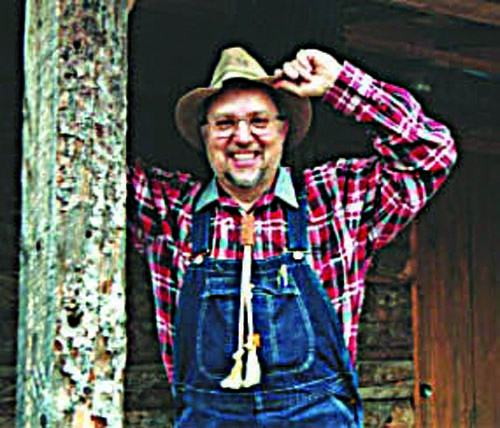
Getting old brings many irreversible life-changes. Most of those changes I’ve taken in stride as unavoidable. But, the life-change that I regret the most, — and the one that makes me both nostalgic and melancholy — is that bird hunting with good bird dogs is in my rear view mirror.
Inhaling the air on these crisp fall mornings, sometimes with light snow on the ground, brings memorable bird hunting experiences back into focus. To me, there’s little outdoor recreation that can match seeing a good bird dog slam onto point over a covey of quail or a colorful cock pheasant, quivering all over, waiting for me to flush the birds, hopefully bringing a feathered target down for the dog to joyfully retrieve to hand — then watch it eagerly snarf down the head of the bird as a rewarding treat.
Lest this column devolve into a pity party, let me emphasize that I’m eternally grateful for the more than 70 years of bird hunting that I enjoyed with both good bird dogs and good hunting companions who loved the sport as much as I did.
My bird hunting was mostly confined to bobwhite quail and pheasants in Kansas, Oklahoma, Iowa and Nebraska. But it often branched off into hunting doves, and ducks — with an occasional woodcock thrown into the mix by accident. I even spent two years hunting chukars, Hungarian partridges, pheasant and valley quail in the Palouse region of Washington state.
To me, the biggest enjoyment of bird hunting is watching the bird dogs do what they are bred to instinctively do — point and retrieve game birds. Bird hunting without bird dogs is like trying to enjoy Christmas without a tree. Bird dogs are a must to max out the enjoyment. Shooting the birds and eating them are only nice side benefits.
My introduction to bird hunting came early in life, when I wuz in elementary school. The first bird dog I witnessed doing its thing wuz Lady, an English pointer owned by a rural neighbor. Watching her mesmerized me and must have imprinted bird dogs into my DNA.
In high school, a classmate Ronnie Mack owned the first Brittany I ever saw. After just one day of hunting over his registered dog, I wuz hooked on pedigreed Brits for the rest of my hunting days.
Now I’m going to switch to reminiscing and memorializing some of the best of the many Brits that I’ve owned, bred and hunted over. I didn’t get the chance to get my first Brit until I wuz married and working in Stillwater, OK. It wuz there I wuz given a female Brit pup by my co-worker and mentor, ol’ Myris Snipedown. He acquired a pregnant Brit and I helped bring the litter into this world. My reward wuz a pup I named Ginger.
Ginger, an orange roan, proved to be one of my best all-time bird dogs. She hunted until she wuz 13 years old. She wuz a prodigious puppy producer — having litters of 9, 7, 11, 13, 7, and 11. In those early married years, selling registered Brittany pups for $20 or $25 was a big financial windfall. I hunted with Ginger and some of her pups in Oklahoma, Kansas, Washington, and back to Kansas.
Ginger excelled at figuring out on her own how to hunt various birds. She hunted quail by simply winding their scent and trailing them until they stopped and she froze on point. But, she quickly learned to hunt running pheasants and chukar by leaving their scent trail and racing to get in front of them — which often stopped the birds from running and gave her a point and me a shot. Ginger would retrieve dove and ducks, but they weren’t her favorites. My most memorable hunting moment with Ginger wuz one time hunting chukars in the breaks of the Snake River in Washington when she pointed four chukar and I downed three of the birds with one shot. That sounds like fantasy, but I had a witness, my hunting buddy Mike.
Then I moved to Parsons, Kan. and my next memorable Brit wuz Carrie, a female pup out of my friend Mike’s dam and sired by a field champion belonging to Herman Bonine. Carrie live to hunt for 12 years. She, too, wuz excellent on point and hunted dead and retrieved without fault. She, too, had many litters of pups that I profited from by selling. She also wuz the dam of the two field champion Brits that I bred. I hunted over Carrie so many years that if I missed shooting a bird she’d pointed, she immediately looked back at me with a disgusted, disappointed look in her eyes.
The two field champions Carrie produced were Zach and Topper. Zach wuz a big almost all-white male who could run like the wind, cover a ton of ground, but would hold a point as long as it took for me to arrive at the scene with my shotgun. However, Zach would shorten up his range for me when I hunted him. Topper, another orange-roan, wuz head-strong and always fill of vigor. He was the national champion derby-age Brit before becoming a field champion
I’ll have to quickly run through some of my other notable Brits from when I lived in Iowa and back to Chase County, Kan. Most of them were out of my bloodlines. They included: Gracie, an athletic female, whose hunting career wuz cut short by canine leukemia. Rags and Ranger, littermate orange-roans that I rated as about average. Then there wuz Suzy, an orange and white female that my best hunting buddy Jerry gave up on. He just needed to give her more time. Once I lost her in the field for half-an-hour and when I found her, she wuz pointing a single quail. She wuz a solid all-around bird dog and producer.
Then came Flash — a big almost-all-white male. His speciality wuz hunting pheasants in CRP in Iowa. He held points and reliably retrieved and got skunk-sprayed multiple times. Then came Goldie and Deacon, orange and white littermates. They both hunted into old age.
My final two Brits were both orange-roan females that I bought, but they had a bit of my bloodlines in their pedigree. Annie got arthritic in middle age, but hunted like a trooper for as long as she could last in the field. And, my last Brit wuz Mandy, a fire-brand out of a national champion. She wuz the most personable Brit I ever owned. And, I sold her to an avid hunter after I had to give up going afield. Mandy deserved a hunter-owner, not a pet-on-the-head owner. Her new owner, Ray, just last week texted me a photo of Mandy retrieving a cock pheasant in western Kansas.
In closing this column, I’ll just say that remembering good dogs, good hunting companions, and good trips afield is a poor substitute, but the next best thing to actual hunting.
Go afield while you can and have a good ‘un.
Silent but Serious: How to Spot and Manage Gum Disease
Gum disease is one of the most common chronic health conditions in adults. For those 40 and older, it’s also the leading cause of premature tooth loss. Unlike cavities, which often cause sensitivity or pain, gum disease is silent. Because the infection starts under the gums, you may not notice symptoms right away.
There are two types of gum disease: gingivitis and periodontitis. Gingivitis is an early, reversible infection of the gums caused by bacteria and hardened plaque (calculus). Once the bacteria and calculus are removed, the gums can return to their healthy state. Think of it like a sliver in your skin: once it’s out, the redness and swelling go away.
Periodontitis is irreversible and develops when the infection reaches deeper structures: the gum tissue, the ligament holding the tooth, and the bone beneath. Over time, this leads to gum recession, loose teeth, and tooth loss if untreated. Signs include gum recession, teeth appearing longer, shifting teeth, or changes in your bite. These symptoms reflect permanent damage to the tooth’s support system.
Because gum infections are deeper in the gingival pocket, they can go unnoticed. Signs of both gingivitis and periodontitis include red, swollen gums and bleeding when brushing or flossing. This is often called “pink in the sink.” Other symptoms may include bad breath, a bad taste in the mouth, or irritated or “itchy” gums. If you notice these, it may be time to get your gums professionally evaluated. Most dental hygienists recommend a cleaning every six months, as that’s when gingivitis commonly returns.
When periodontitis is diagnosed in a dental office, the first step is usually nonsurgical periodontal therapy. This involves scaling and root planing; a thorough cleaning to remove bacteria, plaque, and calculus. Dental hygienists will use special instruments, including ultrasonic scalers, to clean the roots of the teeth and allow the gums to heal. For advanced cases, they may even recommend laser treatment, localized antibiotics, and other adjuncts individualized for your needs. Patients with advanced disease may be referred to a specialist called a periodontist for surgical options to repair the damage that the infection has caused. This might include flap surgeries or bone grafting.
Home care is an essential part of managing both forms of gum diseases. Brushing twice a day with a soft-bristled toothbrush and cleaning between teeth is not just about preventing cavities, it’s about the gums too. The infection starts in the gum pocket, so cleaning under the gumline is key. Interdental brushes and water flossers often outperform traditional floss at removing bacteria from the gingival pocket around the tooth.
Gum disease may be silent, but its effects are not. Periodontitis has lasting consequences not only for your smile but for your overall health. Fortunately, with early recognition and consistent care it can be managed effectively. If your gums bleed, your breath smells bad, or it’s been more than a year since your last dental visit, now is the time to act. A healthy mouth is a vital part of a healthy body.
Sources: National Institutes of Health. Oral Health in America: Advances and Challenges. U.S. Dept of Health and Human Services, National Institutes of Health, National Institute of Dental and Craniofacial Research; 2021.
Katie Pudwill, RDH, PhD, is a registered dental hygienist and educator in South Dakota. She teaches periodontics, ethics and jurisprudence, and dental anatomy at the University of South Dakota Department of Dental Hygiene. Katie is passionate about improving oral health through education, prevention, and advocacy. Follow The Prairie Doc® at www.prairiedoc.org Facebook, Instagram, YouTube, and Tik Tok. Prairie Doc Programming inludes On Call with the Prairie Doc®, a medical Q&A show (most Thursdays at 7pm on YouTube and streaming on Facebook), 2 podcasts, and a Radio program (on SDPB, Sundays at 6am and 1pm).
