Sunday, January 11, 2026
Home Blog Page 33

Veterans Day

0

By the time you are reading this, Veterans Day 2025 has come-and-gone, and I have used this column before, but I believe it is worthy of using again. I come from a family where many have served in the military in one way, shape or form. My dad was an infantryman in the Army during WW II and served in Italy for a time. His older brother served as Flight Engineer on a B-24, flying 13 missions over Germany during WWII. I was a Field Artillery Meteorologist, collecting atmospheric data for the artillery for 20 years in the Army National Guard, and was in Bosnia for 6 months. My wife Joyce spent 8 years in the Air National Guard as a photographer and as a plane cargo loader. Three of her uncles, all from Mennonite families, served in the army and navy during WWII and the Korean Conflict. Two of my cousins were in the Air Force, one of my nephews was a marine and another nephew served in the navy. When asked by her siblings, (all who are also Conscientious Objectors,) why she joined the military, my wife Joyce replied “Cause daddy never told me not to.” I say all this not to brag, but to say that we are a family who believes in and supports maintaining a strong military in these United States.

The person who suggested I write this column a couple years ago, told me of an office conversation discussing whether or not to do anything special that year for Veterans Day in their paper. One coworker replied “Yes, absolutely. Patriotism has to be taught.” That got me thinking about ways we can teach our kids and new citizens to be proud of our country and of our military, both current members and veterans.

First of all, by example, teach your kids respect for our flag, for the pledge of allegiance to our flag and for our National Anthem. When reciting the pledge of allegiance, honoring our flag as it is displayed or paraded past you or when singing the Star-Spangled Banner, stand, come to attention and face the flag with your right hand over your heart. Now, some will say the flag is only a piece of cloth, the pledge of allegiance only something we recite and the national anthem only a song. While those statements are true, these things are symbols of our freedom and of our country. Teaching our youth respect for these things will help teach them appreciation for God’s allowing us to live in a free country like the United

States, appreciation for the soldiers that currently serve, soldiers that have served in the past and soldiers that have died protecting that freedom.

Most places you go, be it Walmart, the mall, a fast-food restaurant or some large event, you will see men and women wearing a hat or another item of clothing giving the appearance that they are military veterans. Ask those people if they are veterans, and if so, offer your hand and thank them for their service, and urge your kids to do the same. This is also a great gesture toward law enforcement personnel, firefighters and all manner of first responders, for they, like soldiers are the ones who run toward dangerous situations, allowing the rest of us run to safety.

I agree with the assessment that “Patriotism has to be taught,” and we as parents and grandparents must be the teachers. Be creative with other ways to honor our veterans; offer to pay for their Big Mac and fries, their morning coffee at Scooters or at the local café, let them go ahead of you in line at Dillons, etc. Also, take your kids and grandkids to church and be the example of wholeheartedly thanking God for these freedoms we have. As Lee Greenwood so eloquently sang, “God Bless the USA”

Steve can be contacted by email at [email protected].

Chiefs, Royals weigh stadium options as deadline approaches

0

As a deadline approaches for a stadium deal between the Kansas City Chiefs and Royals, the Chiefs are soliciting requests for a 65,000-seat domed stadium near the Kansas Speedway.

The Chiefs have been negotiating with Kansas since a vote in Jackson County, Missouri, to renovate the stadium with a sales tax extension failed in April of 2024.

The Chiefs and Royals lobbied for a bill in the Kansas Statehouse that could fund up to 70% of the costs for a new stadium via sales taxes that they generate and from taxes levied on online sports betting.

KCMO talk radio host Pete Mundo broke the news that the Chiefs requested proposals for stadium designs for a 65,000-seat domed arena. Mundo said the team will whittle a list of proposals from ten firms to two finalists, but it doesn’t mean the Chiefs are certain to end up on the Kansas side of the border.

On Nov. 10, another Kansas City-area talk show host, Kevin Kietzman said the Chiefs were negotiating with NASCAR to buy land west of the Kansas Speedway in Kansas, City, Kansas.

The Kansas Department of Commerce has negotiated with the Chiefs and Royals, but have repeatedly stressed that negotiations are confidential.

Deadline approaching

Kansas lawmakers set a deadline of the end of the year for stadium negotiations. Kansas passed its bill authorizing the negotiations in July 2024, and over the summer extended its negotiating deadline to June 30, 2026, but set a self-imposed deadline of Dec. 31.

Mundo reported that the Chiefs are hoping to be down to two finalists by early next year.

Both teams’ leases end at the Jackson County Sports Complex in January 2031.

Chiefs could remain at Arrowhead

The sales tax extension in Jackson County, Missouri, would have funded a new Royals stadium and renovated Arrowhead, where the Chiefs currently play.

On Nov. 4, the Royals released a survey asking fans where they’d prefer a new stadium to be, which included Overland Park, Downtown Kansas City Missouri and North Kansas City.

Border war

The states competing for the two professional sports teams is reminiscent of the “border war,” where Kansas and Missouri offered rivaling tax incentives to businesses to attract them across the state line.

Jackson County, Missouri, Kansas City, Missouri, and the state of Missouri have offered their own proposals to the Chiefs and Royals.

On Nov. 12, Missouri Gov. Mike Kehoe proposed that the state could purchase a partial or retractable roof for the Chiefs at its current location.

The Show Me State has also offered a plan to cover up to 50% of the costs and provide $50 million in tax credits if they spend $500 million of their own dollars on stadium renovations.

The Kansas plan, on the other hand, could fund up to 70% of a stadium up to $3 billion for either team.

As reported in the Topeka Capital Journal

Fall Knotweed Control 

0
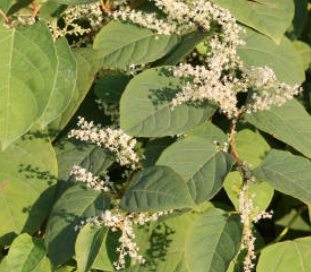
Knotweed, or knotgrass, is an aggressive warm season annual that reproduces by seed. It germinates in early spring resembling grass. Later in the season it develops into a flat mat up to two feet in diameter. The stems are slender and wiry with a papery sheath at each node giving them a knotted or swollen appearance.
Knotweed is commonly found in poor quality soils. This includes areas of compaction with poor fertility as often occurs near busy walkways. Lawns with thin turf are susceptible to knotweed, particularly those with heavy traffic such as athletic fields.
Proper maintenance is the first step to controlling knotweed. Minimize/reduce soil compaction and manage turf density with recommended care protocols.
Knotweed germinates in late February to early March so if you plan to use a preemergence, it should be applied in late fall. If you will be re-seeding your lawn in the spring, DON’T use a preemergence. Contact your local Extension agent for recommendations on knotweed control.
To read more about knotweed, visit K-State’s Turfgrass resource: Knotweed.

Amaryllis

0
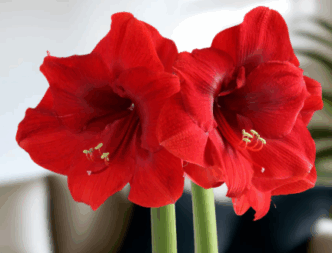
Amaryllis (Hippeastrum) is a classic bloom during the holidays.  If you are purchasing bulbs, select the largest ones available that are firm and dry. If growth is visible, it should be bright green. Each bulb should produce three to four blooms on a one to two-foot stem. Larger bulbs will produce more flowers.
Amaryllises grow best in tight spaces. Select a container about one-inch larger in diameter and twice as tall as the bulb with drainage holes in the bottom. Hold the bulb over the container with the roots dangling to the bottom and add a sterile potting mix. Firm the soil around the roots carefully to avoid damaging them. Leave the top third to half of the bulb visible above the soil.
Put the container in a sink and water thoroughly. When the water has stopped draining, set the plant in a warm, sunny location. As the flower opens move the plant away from direct sunlight and to a cooler location to prolong the bloom period which can last up to one month.
When blooming is complete, the amaryllis plant is still growing. Remove the bloom stalk to prevent the bulb from expending energy on seed formation. Move the container back to the sunny window. When the danger of frost has passed, you can gradually expose the plant to the outdoors by first moving it to an area with dappled shade. Over time move it to a location with six hours of full sun each day. Apply a balanced houseplant fertilizer monthly.
Prior to the first frost bring the amaryllis back inside and place it in a dark location. Stop watering it and when the leaves dry cut them off just above the bulb. Allow the bulb to rest for eight to twelve weeks with no water. When new growth appears or when you are ready to force the bloom, relocate the bulb to a sunny window and begin watering and fertilizing regularly. From dormancy to bloom it usually takes four to six weeks. Though amaryllises only require repotting every three to four years, the time to do this is after dormancy.

Hutchinson/Reno County Chamber of Commerce Farm Family of the Year 2025

0
The Farm Focus Family Award began in 1985 as part of National Farm City Week.  There have now been over 100 families in Reno County that have been recognized for their contributions to Reno County Agriculture. This year’s Farm Focus Family Award goes to the Royer family.
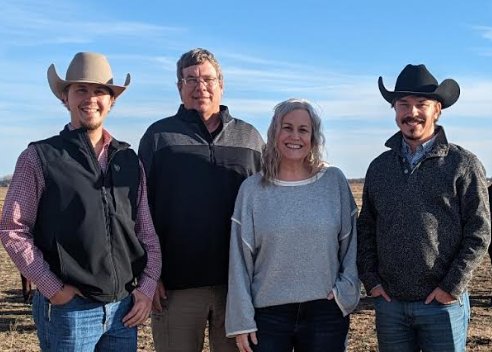
Bill and Kelly Royer, along with their sons Alek and Koby, represent six generations of farming in Reno and Harvey counties, with roots that trace back to 1886.
The Royer family primarily raises wheat, soybeans, and oats, and maintains a small cow-calf operation. Bill has farmed full-time for 38 years, while also working part-time as a Senior Bank Representative at First National Bank of Hutchinson. He’s served on the local school board and continues to volunteer with Haven High School’s Clay Target team.
Kelly is an Account Manager and Senior Interior Designer at the John A. Marshall Company in Wichita. She’s also an active volunteer, lending her time to school, church, 4-H, and community events over the years.
Both Alek and Koby earned agricultural degrees from Kansas State University and returned home to help continue the family legacy. Alek operates a swathing business and volunteers as a firefighter, while Koby works part-time in seed sales with Ohlde Seed.
Recently celebrating their 30th wedding anniversary, Bill and Kelly are proud to farm alongside Bill’s parents, Bill Sr. and Leta, and their sons—three generations working together to meet the challenges and opportunities of modern agriculture.